Over a decade after first donning the cape in Zack Snyder’s “Man of Steel,” Henry Cavill’s nuanced portrayal remains the definitive modern interpretation of comic books’ greatest icon. By grounding unmatched physical power in raw vulnerability, the British actor bridged the divide between an alien savior and a conflicted Kansas farm boy. His multifaceted legacy across multiple DC films continues to shape how global audiences perceive the Last Son of Krypton.
The Landmark Debut in Zack Snyder’s Vision
When director Zack Snyder cast Henry Cavill in “Man of Steel,” cinema witnessed the dawn of a fundamentally transformed superhero landscape.
The ambition behind the 2013 blockbuster was not merely to reboot an iconic franchise, but to reconstruct an enduring mythology for the twenty-first century.
Prior cinematic iterations had long leaned into bright nostalgia and effortless moral certainty.
Snyder and Cavill envisioned something far more profound, intricate, and psychologically resonant.
They chose to explore what it truly means for an alien orphan to grow up in isolation among fragile mortals.
The narrative stripped away easy comfort and thrust the character into an unforgiving world marked by skepticism, geopolitical anxiety, and fear of the unknown.
From the opening frames of Clark Kent wandering as an itinerant laborer across rugged coastlines, audiences realized this journey would defy traditional comic book tropes.
This version of Clark Kent was an introspective seeker who concealed his miraculous abilities while quietly intervening to protect innocent lives.
His journey was defined by restraint rather than glory.
Every heroic intervention risked exposing his extraterrestrial origins to a world unprepared for his existence.
The collaborative synergy between Snyder’s striking visual style and Cavill’s solemn presence established an authentic foundation for the entire cinematic universe.
Cavill approached the role not as a mythic caricature, but as a living individual carrying the weight of two extinct civilizations.
Through careful pacing and deliberate emotional restraint, the debut film positioned Superman as an empathetic figure whose divine strength was constantly tested by human vulnerability.
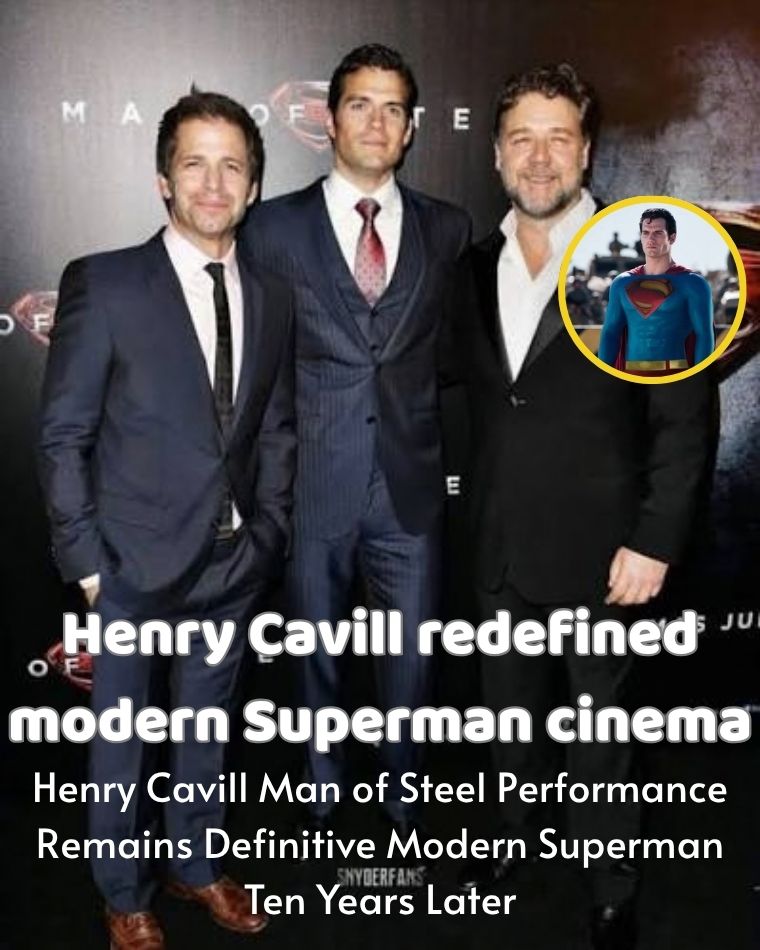
Nguồn: Wikimedia Commons — Creative Commons Attribution-Share Alike 2.0 Generic
Sculpting the Hero: Unprecedented Physicality and Presence
To inhabit the legendary hero convincingly, Cavill underwent an astonishing physical transformation that set an unprecedented benchmark for superhero cinema.
The role demanded far more than visual aesthetics; it required an authentic display of functional power that made every superhuman feat feel believable on screen.
Cavill committed to rigorous athletic conditioning, bulking up through months of relentless training routines and disciplined dietary regimens.
When audiences witnessed Superman hoisting falling oil rig steel columns or enduring explosive shockwaves, Cavill’s frame conveyed pure structural mass and physical conviction.
He filled the redesigned Kryptonian suit with natural muscularity, eliminating the need for synthetic padding or artificial camera illusions.
Every movement across the screen carried weight, kinetic force, and purposeful gravity.
Yet his physical command extended well beyond raw strength.
Cavill mastered an economy of posture that subtly distinguished Clark Kent from the majestic protector of Earth.
In civilian clothes, he carried his shoulders with quiet humility and restrained his gait to appear unthreatening.
When wearing the family crest of the House of El, his posture transformed instantly into an imposing pillar of unwavering resolve.
This deliberate contrast allowed the audience to visually grasp Clark’s dual identity without relying on comedic exaggeration.
His physical authenticity grounded the fantastical elements of space travel, laser vision, and flight into palpable reality.
Even during high-intensity combat sequences against invading Kryptonian forces, his facial expressions conveyed kinetic strain, pain, and fierce determination.
Cavill ensured that physical invulnerability never translated into emotional detachment.
Viewers could feel the sheer exertion behind every punch and the bone-chilling impact of every collision.
This intense physical dedication permanently altered Hollywood expectations for casting leading men in comic book adaptations.
Embracing Vulnerability Beneath God-Like Invulnerability
While comic books celebrate the hero’s indestructible nature, Cavill distinguished his performance by mining the deep emotional loneliness inherent to the character.
Superman possesses the power to shatter mountains, yet he remains powerless against human prejudice and emotional loss.
Cavill allowed genuine vulnerability to flicker beneath the legendary invincibility.
His eyes often communicated silent anguish, longing, and profound hesitation before making irrevocable choices.
Growing up on a quiet farm in Smallville, Clark Kent lived in constant dread of hurting the mortals around him.
The performance captured the sensory overload Clark suffered as a child learning to filter out global cries for help.
Cavill brought this inner turmoil to the surface in moments of quiet contemplation.
When speaking with his adoptive mother Martha Kent or seeking guidance from the holographic consciousness of Jor-El, Clark was an inquisitive son yearning for belonging.
He was caught in an eternal tug-of-war between his cosmic birthright and the gentle Midwest values instilled by Jonathan Kent.
The tragic climax of his battle against General Zod encapsulated this emotional complexity.
Forced into an agonizing choice between executing the last living military commander of his home world or letting an innocent human family perish, Clark made the ultimate sacrifice.
His guttural scream of absolute grief following Zod’s death laid bare the raw humanity of a savior who hated violence.
It was a stark reminder that holding god-like power is an agonizing moral burden rather than an effortless privilege.
Critics and audiences who looked beyond the explosive action recognized an actor portraying a soul in profound spiritual crisis.
Cavill proved that Superman’s true strength lies not in his physical resilience, but in his capacity to feel empathy and heartbreak.
Expanding the Legacy Across Batman v Superman and Justice League
The foundational narrative established in “Man of Steel” evolved into richer philosophical territory across subsequent DC films.
In “Batman v Superman: Dawn of Justice,” Cavill faced an even harsher public trial as society grappled with his unchecked power.
The world divided itself into worshipers who viewed him as a deity and skeptics who feared him as an existential threat.
Cavill played this elevated conflict with stoic heartbreak and unwavering dignity.
Standing silently before a congressional hearing in Washington, his posture conveyed a servant of peace baffled by political cynicism.
He wanted nothing more than to help, yet every rescue mission ignited political controversy and international suspicion.
The burden of choice deepened as he navigated complex relationships with Lois Lane and Bruce Wayne.
His dynamic with Amy Adams provided the emotional anchor of his existence, depicting Lois as Clark’s vital tether to humanity.
When he gave his life to destroy Doomsday, his ultimate sacrifice served as a transcendent testament to his love for mankind.
Cavill demonstrated that a hero’s greatest triumph is laying down one’s life for a world that has questioned his right to exist.
In “Justice League,” his resurrection completed a transformative character arc from isolated wanderer to legendary champion of unity.
Returning from the grave, he brought unyielding optimism, boundless energy, and righteous determination to the newly formed coalition of heroes.
Across each successive film, Cavill charted an arduous moral evolution.
He guided the character through doubt, isolation, political scrutiny, sacrificial death, and triumphant rebirth.
This expansive cinematic voyage showcased the actor’s impressive dramatic range across diverse thematic tones and complex ensembles.
Deep Reverence for the Source Material and Comic Mythology
Behind the captivating on-screen presence was an actor possessing profound respect and genuine love for comic book history.
Henry Cavill never treated Superman as a routine commercial acting job or a generic Hollywood stepping stone.
Long before he ever wore the red cape, he was an avid consumer of graphic novels, fantasy literature, and science fiction lore.
He immersed himself deeply in seminal graphic novels such as “The Death of Superman,” “Superman: For Tomorrow,” and “Red Son.”
This extensive familiarity with decades of comic storylines allowed him to defend the integrity of the character during production discussions.
He consistently fought to preserve the moral compass, compassion, and emotional truth that defined Clark Kent throughout comic history.
Cavill understood that Superman must always symbolize aspirational hope, even when confronting realistic modern dilemmas.
In media interviews and public fan conventions, his thoughtful explanations revealed an actor who genuinely cared about the character’s legacy.
He articulated the delicate balance required to portray a character whose greatest super-power is his enduring faith in humanity’s potential.
This genuine reverence resonated deeply with generational comic book enthusiasts who are often skeptical of Hollywood reboots.
Fans recognized in Cavill a fellow devotee who took the cultural weight of the emblem seriously.
He saw the famous “S” not just as an artistic trademark, but as the Kryptonian glyph for hope that inspires people across generations.
His dedication to maintaining that standard of reverence earned him unwavering respect across pop culture fandom.
Even during extended intervals between film productions, Cavill remained an exemplary ambassador for the character’s core ethos of decency and courage.
An Enduring Cultural Impact That Defined an Era
More than ten years after his debut, Henry Cavill’s interpretation of Superman continues to stand as a monumental benchmark in modern cinema.
Great superhero portrayals are rare phenomena that fundamentally redefine how an icon is perceived by the global public.
Just as previous generations found their definitive champion in earlier decades, modern moviegoers found their ultimate hero in Cavill.
He re-established the Man of Tomorrow as a multidimensional being who could survive the scrutiny of cynical contemporary storytelling.
His performance proved that Superman does not need to be simplistic or naive to remain good.
True goodness is a deliberate, difficult choice forged in the fires of isolation, suffering, and moral adversity.
Cavill’s Clark Kent chose to love Earth despite knowing humanity’s flaws, fears, and capacity for cruelty.
That conscious choice made his heroism inspiring, moving, and profoundly relatable to millions of viewers worldwide.
Artists, animators, and subsequent storytellers continue to draw direct inspiration from his commanding presence, visual aesthetic, and stoic dignity.
The striking imagery of Cavill hovering in sunlight above Earth has become permanently etched into the tapestry of cinematic history.
Online communities, film retrospectives, and enthusiast discussions consistently praise his work as one of the finest casting alignments in blockbuster history.
He captured both the awe-inspiring grandeur of a mythic demigod and the down-to-earth warmth of an honest Kansas farmer.
His legacy demonstrates how a dedicated actor, equipped with deep respect for canon and authentic physical craft, can breathe fresh life into an eight-decade-old legend.
The cape may eventually pass to other performers as the endless cycle of Hollywood myth-making continues forward into the future.
Yet for millions around the globe, Henry Cavill will forever remain the man who made them believe that an alien savior could carry the heart of a human being.
His performance stands as a masterclass in modern mythology, proving that the greatest hero of all is the one who chooses kindness when he possesses the power to conquer.
Để lại một phản hồi