After spending a full decade embodying the world’s most famous boy wizard across eight blockbuster films, Daniel Radcliffe faced an immense creative crossroad that has historically derailed young screen icons. Rather than chasing another multi-picture studio franchise or retreating into safe commercial predictability, the British actor deliberately charted an unconventional path defined by independent storytelling, supernatural horror, literary drama, and surreal dark comedies. His artistic trajectory highlights how a performer tied to an era-defining childhood role can successfully craft an enduring adult identity through fearless reinvention.
A Historic Childhood Role and the Inevitable Turning Point
Daniel Radcliffe was cast as the lead in the film adaptations of J.K. Rowling’s global literary phenomenon in 2000.
Between 2001 and 2011, he portrayed Harry Potter across eight monumental feature films.
Those ten years placed Radcliffe under unprecedented global media scrutiny throughout his formative adolescent years.
The franchise became one of the highest-grossing cinematic sagas in entertainment history.
For countless moviegoers around the globe, Radcliffe’s face was inseparable from round glasses and Gryffindor robes.
Yet, child stars who spearhead monolithic franchises frequently find themselves permanently typecast by Hollywood studios.
The intense public identification with a singular pop culture figure can severely limit an actor’s future creative opportunities.
Industry analysts wondered whether Radcliffe would be able to break free from the towering legacy of Hogwarts.
When the final film debuted in theaters in 2011, the actor made an intentional choice regarding his long-term career.
He possessed the financial freedom and professional leverage to pursue roles purely for creative exploration rather than commercial security.
His post-2011 career became an inspiring study in artistic autonomy and narrative courage.
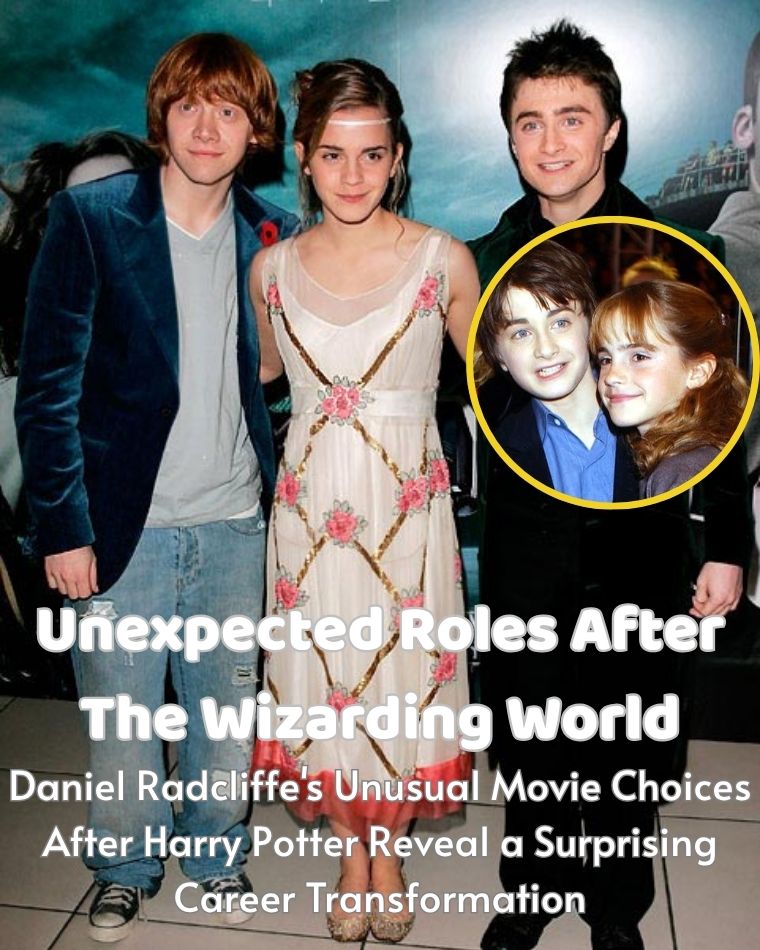
Cre: Wikimedia Commons
Stepping Into the Shadows with The Woman in Black
Radcliffe’s first major cinematic move following the conclusion of Harry Potter arrived swiftly in 2012.
He chose to headline the period supernatural horror feature The Woman in Black.
Directed by James Watkins, the atmospheric ghost story placed Radcliffe in the role of Arthur Kipps.
Kipps was a grief-stricken young lawyer mourning the loss of his wife while investigating an eerie estate.
The role required emotional gravity, quiet solemnity, and palpable vulnerability.
Playing a widowed father in an Edwardian ghost story represented a decisive break from youthful coming-of-age wizardry.
The project carried significant creative risk because audiences had never seen him lead a mature horror narrative.
Nevertheless, the film was praised for its atmospheric dread and disciplined tension.
Audiences and critics responded positively to Radcliffe’s measured and grounded dramatic performance.
The box office success demonstrated that moviegoers were willing to buy a ticket to see him outside the fantasy genre.
More importantly, it proved to industry directors that Radcliffe could carry adult dramatic weight.
The Woman in Black set an unmistakable precedent for the daring artistic path that was to follow.
Literary Depth and Unflinching Portrayals in Kill Your Darlings
Having proved his footing in classic horror, Radcliffe ventured deeper into American independent cinema.
In 2013, he took on the demanding role of iconic Beat poet Allen Ginsberg in Kill Your Darlings.
The biographical drama chronicled the early university days of Ginsberg alongside Lucien Carr, Jack Kerouac, and William S. Burroughs.
Portraying Ginsberg required Radcliffe to adopt an authentic American accent and immerse himself in countercultural literary history.
He captured Ginsberg’s intellectual awakening, poetic passion, and complicated sexual identity with honesty and nuance.
The character pushed Radcliffe far beyond the safe parameters of conventional studio dramas.
Critics celebrated his willingness to inhabit a historically significant, emotionally complex queer literary pioneer.
The independent film circuit recognized that Radcliffe was not merely picking dark material for shock value.
Instead, he was systematically seeking out demanding scripts that challenged his range as a dramatic performer.
Kill Your Darlings served as undeniable evidence that the actor possessed serious arthouse credentials.
Working alongside celebrated ensemble casts reinforced his reputation as a dedicated and collaborative craftsman.
Embracing the Absurd in Swiss Army Man
Perhaps no project in modern cinema history better illustrates Radcliffe’s creative bravery than the 2016 indie feature Swiss Army Man.
Directed by Daniel Kwan and Daniel Scheinert, known collectively as the Daniels, the film baffled industry onlookers on paper.
The premise sounded completely outrageous: a stranded man, played by Paul Dano, befriends a flatulent, washed-up corpse named Manny.
The corpse gradually develops supernatural utility, acting as a bizarre multi-tool that helps the protagonist survive in the wilderness.
Many Hollywood actors would have run away from such an unorthodox, risqué concept.
Radcliffe, on the other hand, was instantly captivated by the script’s emotional ambition and unique voice.
Speaking to Vanity Fair in 2016, Radcliffe discussed his profound enthusiasm for the eccentric production.
He acknowledged the humorous initial reception but insisted that the heart of the project was something deeply moving.
Radcliffe observed that while the film was undeniably funny, it was also genuinely beautiful and epic in its philosophical themes.
He praised the Daniels for executing ambitious emotional sequences using ingenious camera angles, editing, and sheer imagination.
Playing a corpse required astonishing physical discipline, intense facial control, and fearless dedication.
Instead of a disposable gross-out comedy, Swiss Army Man blossomed into a poignant exploration of isolation, human shame, and friendship.
The daring gamble paid off, earning cult adoration and cementing Radcliffe as one of cinema’s bravest independent actors.
Action Satire and Unapologetic Mayhem with Guns Akimbo
As the decade progressed, Radcliffe continued to lean into energetic, boundary-pushing projects.
In 2019, he starred in the hyper-kinetic action comedy Guns Akimbo, written and directed by Jason Lei Howden.
The film cast him as Miles, a mild-mannered video game developer trapped in dead-end digital monotony.
After trolling an online deathmatch forum known as Skizm, Miles is kidnapped and forcibly altered.
He awakens to discover that two handguns have been surgically bolted onto his hands.
Miles is then thrust directly into a lethal, real-world survival game broadcast to millions of viewers.
The high-octane setup demanded extreme physical comedy, frantic panic, and non-stop action choreography.
Radcliffe threw himself into the absurdity of trying to survive daily tasks with guns fused to his fingers.
Images of him running through city streets wearing a bathrobe and bear slippers instantly became viral internet sensations.
Beyond the online memes, the performance underscored his extraordinary comfort with comedic self-deprecation.
He demonstrated an intuitive understanding of campy, genre-bending entertainment designed for enthusiastic audiences.
Guns Akimbo reaffirmed that Radcliffe had zero interest in cultivating a pristine, self-serious movie star image.
Transformative Brilliance in Weird: The Al Yankovic Story
In 2022, Radcliffe found another ideal match for his eccentric talents in Weird: The Al Yankovic Story.
Rather than delivering a straightforward musical biopic, the movie operated as a lavish satire of the entire genre.
Directed by Eric Appel and co-written with Yankovic himself, the movie fabricated an outrageous, exaggerated parody of the parody artist’s life.
Radcliffe stepped into the lead role, sporting an iconic afro, a thick mustache, Hawaiian shirts, and an accordion.
He approached the preposterous fictional events with complete earnestness and fierce conviction.
Whether depicting exaggerated romantic trysts or absurd action sequences, Radcliffe never broke character to wink at the camera.
His absolute commitment to the comedic reality of the script was widely lauded by major entertainment critics.
The performance earned Radcliffe critical accolades, including major award nominations across prime-time television and comedy categories.
It highlighted his mastery of satire and physical humor, proving his comedic instincts were as sharp as his dramatic skills.
Radcliffe demonstrated that genuine reverence for unusual material produces unforgettable cinematic experiences.
The biopic stood as a triumphant testament to the vibrant creative identity he had spent over a decade constructing.
A Lasting Blueprint for Career Longevity and Independence
Looking across Daniel Radcliffe’s post-Potter filmography, a clear artistic philosophy emerges.
He never allowed the monumental legacy of Harry Potter to dictate what he could or could not attempt.
Instead of fighting his past, he treated the commercial windfall of his youth as a creative passport to take unlimited artistic chances.
He has performed on Broadway, starred in theatrical revivals, and stepped into obscure independent movies with equal vigor.
Directors know that hiring Radcliffe guarantees an actor who will fully commit to the vision without ego.
His choices have inspired a generation of young actors seeking to redefine themselves in the modern media landscape.
The transition from child prodigy to versatile character actor is one of the hardest transformations in show business.
Radcliffe navigated that perilous transition with humor, humility, and an unrelenting passion for original stories.
He has built a body of work where audiences never quite know what genre or character he will tackle next.
That element of surprise is the ultimate antidote to the threat of permanent typecasting.
Today, Daniel Radcliffe is celebrated not merely as the boy who lived, but as one of Hollywood’s most fearless and original artists.
Để lại một phản hồi