An unexpected theater encounter in London transformed an exhaustive international talent search into one of cinema history’s most defining casting breakthroughs.
Before eleven-year-old Daniel Radcliffe was introduced as the boy wizard in August 2000, his path to the role appeared completely closed due to valid parental reservations.
The alignment of a director’s vivid memory, a producer’s persistent vision, and a chance seating arrangement ultimately launched an iconic eight-film saga.
The Ambitious Search for an Authentic Screen Harry
In the year 2000, filmmaker Chris Columbus and producer David Heyman undertook an almost insurmountable creative mission.
Warner Bros. had acquired the rights to J.K. Rowling’s rapidly expanding literary phenomenon with plans for a multi-picture cinematic adaptation.
The central creative directive required finding a child actor capable of carrying a massive global franchise on his young shoulders.
Finding an individual who could project vulnerability, resilience, intelligence, and an underlying sense of wonder proved exceptionally challenging.
Thousands of hopeful young boys attended open calls and private auditions across the United Kingdom.
Tapes poured into casting offices from every corner of the country as production deadlines loomed closer.
Despite reviewing endless reels, Columbus and Heyman repeatedly encountered auditioners who felt either overly rehearsed or entirely unsuited to the role’s unique emotional weight.
The search demanded someone who felt authentic rather than polished by conventional stage-school habits.
The production team knew that casting the lead was an existential decision for the entire cinematic universe.
If the audience failed to connect with the central character, the entire ambitious enterprise would collapse before the cameras ever rolled.
Chris Columbus, known for directing child-led blockbusters, understood that instinct and natural screen charisma could not be manufactured.
The ideal candidate needed to inhabit the screen with quiet depth rather than theatrical bluster.
Weeks of reviewing audition tapes began turning into months of mounting creative exhaustion.
Every prospective candidate seemed to satisfy one aspect of the character while lacking another essential dimension.
The casting directors surveyed schools, community theaters, and drama agencies without discovering that unmistakable spark.
An Early Performance That Caught a Director’s Eye
Long before audition deadlines tightened, Chris Columbus had already noticed a potential solution on British television.
In late 1999, the BBC broadcast a celebrated television adaptation of Charles Dickens’s classic novel David Copperfield.
The title character as a young boy had been played by an expressive newcomer named Daniel Radcliffe.
Radcliffe’s portrayal conveyed deep innocence paired with an undeniable undercurrent of sorrow and resilience.
Watching the television adaptation, Columbus was immediately struck by the boy’s expressive eyes and natural presence.
Columbus pointed out the performance to his creative team, convinced that the young actor possessed the rare qualities required for Harry Potter.
Radcliffe was not merely reciting scripted dialogue; he was projecting complex inner thoughts directly through the camera lens.
His subtle screen acting stood out against the often theatrical style typical of child performers of the era.
Columbus felt strongly that Radcliffe looked like Harry Potter stepped directly off the cover of the book.
The director believed he had discovered the emotional compass for the entire film project.
However, identifying a promising young talent on screen is far different from securing their participation in a multi-year studio endeavor.
When inquiries were made to explore the possibility of an audition, the production team hit an immediate obstacle.
Radcliffe’s parents were deeply reluctant to expose their young son to the overwhelming machinery of a major Hollywood production.
They respectfully declined invitations to put the boy forward for formal casting considerations.
The film’s producers were forced to return to open auditions, leaving Columbus to wonder if his ideal lead had slipped away permanently.
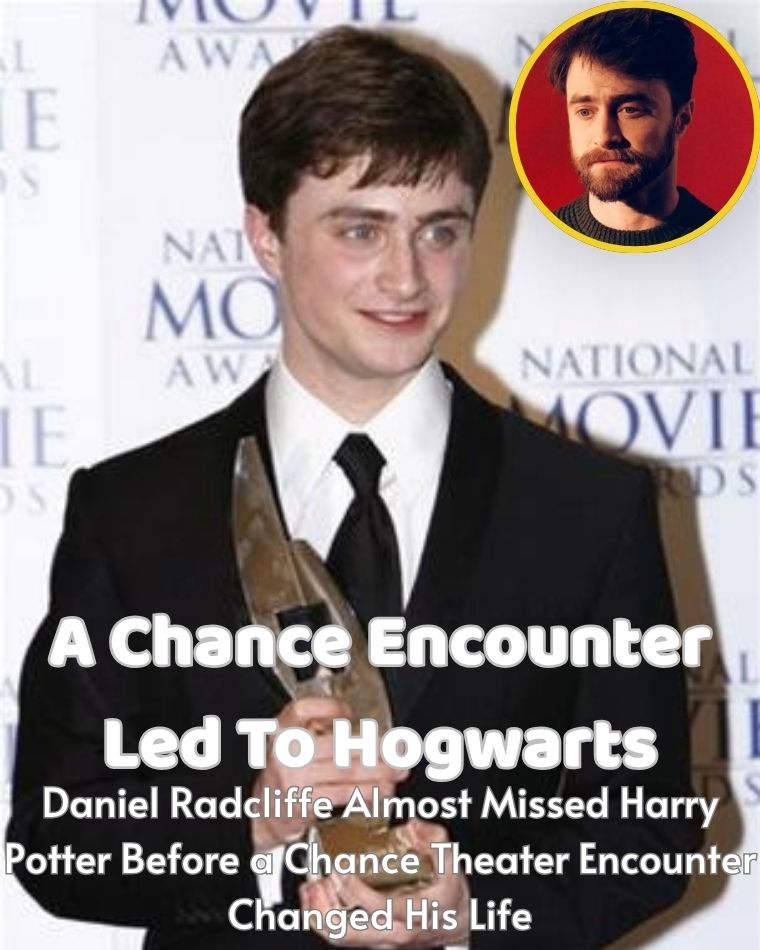
Cre: Wikimedia Commons
Parental Protective Instincts and Hollywood Pressures
The decision of Daniel’s parents, Alan Radcliffe and Marcia Gresham, was rooted in profound parental care and industry awareness.
Both parents had direct professional experience with the entertainment business and understood its severe hazards.
They recognized the unique emotional and psychological burdens placed upon young performers inside the studio system.
Early discussions about the Harry Potter contract suggested an extraordinary commitment of time, energy, and freedom.
Initial studio proposals contemplated long-term options and potential filming commitments spanning multiple sequels.
There were even preliminary studio discussions about shooting several installments outside of the United Kingdom to manage budgets.
For the Radcliffe family, the prospect of uprooting a young boy’s schooling and personal development sounded alarming.
They feared their son would lose the stability of a normal childhood in exchange for ruthless commercial pressures.
Child stardom has historically left a tragic trail of personal difficulties in its wake across Hollywood history.
Alan and Marcia wanted their son to attend school, keep his friends, and grow up grounded in reality.
They were wary that signing a long-term studio agreement would permanently alter the family’s everyday life.
Consequently, their initial refusal was not a negotiating tactic to secure higher compensation or better billing.
It was an authentic protective boundary erected by caring parents to shield their child from an overwhelming enterprise.
They viewed Daniel’s earlier performance in David Copperfield as a positive, self-contained creative experience.
They had no burning ambition to push him into a lifelong career as a child star under intense global scrutiny.
Because of that protective boundary, the production team’s inquiries were politely shut down.
David Heyman and Chris Columbus were forced to move on, continuing their exhaustive search through hundreds of audition tapes.
The door appeared firmly locked, and Radcliffe seemed destined to remain an intriguing what-if in casting folklore.
The Chance Encounter at a London Theater
Fate intervened on an ordinary evening during the summer of 2000 in the heart of London’s West End theater district.
Producer David Heyman, accompanied by screenwriter Steve Kloves, decided to take a brief respite from their grueling production schedule.
The pair bought tickets to see a performance of the hit stage comedy Stones in His Pockets.
As they settled into their seats in the theater, Heyman noticed familiar acquaintances sitting nearby.
Seated in the row right by them was literary agent Alan Radcliffe, whom Heyman already knew professionally.
Sitting beside Alan was his young son, Daniel, who immediately drew Heyman’s curious attention.
Throughout the theatrical performance, Heyman found his attention repeatedly wandering from the stage to the boy.
In the dim glow of the theater lights, Radcliffe displayed an arresting presence, an engaging curiosity, and an innate gentleness.
During the intermission, Heyman struck up a cordial conversation with Alan Radcliffe and young Daniel.
Heyman was instantly struck by how unaffected, charismatic, and emotionally expressive Daniel was in casual conversation.
The producer had spent months staring at polished, desperate child actors trying too hard to impress casting directors.
In contrast, Radcliffe was completely unpretentious, polite, and naturally engaging.
Heyman looked at the boy and experienced an overwhelming creative epiphany.
He recognized that this quiet, thoughtful child sitting in the theater was the living embodiment of the boy wizard.
Screenwriter Steve Kloves shared Heyman’s sudden conviction after speaking briefly with Daniel during the interval.
Both filmmakers realized that this accidental meeting was an opportunity that could not be allowed to slip away.
The theater outing had transformed from an evening of light relaxation into a turning point for modern film history.
Rebuilding Trust and Addressing Parental Hesitations
Recognizing the delicacy of the situation, David Heyman avoided applying heavy-handed studio pressure during the theater encounter.
Instead, the producer followed up with Alan Radcliffe the following day to discuss possibilities thoughtfully.
Heyman understood that the parents’ initial refusal had been motivated purely by parental concern for Daniel’s well-being.
He arranged to sit down with Alan and Marcia to discuss how the production would actively protect Daniel’s childhood.
Heyman assured them that Warner Bros. was prepared to structure the filming environment around the boy’s welfare.
Filming would take place primarily in the United Kingdom, allowing Daniel to stay close to home and family.
The studio was prepared to offer contractual assurances ensuring robust on-set tutoring and strict adherence to working hours.
Heyman pledged that the production would cultivate a family atmosphere where young actors were treated as children first and professionals second.
The producer’s warmth, integrity, and genuine empathy helped break down the wall of hesitation built by the family.
Alan and Marcia realized that Heyman was not an impersonal Hollywood executive viewing their son as a commercial commodity.
He was a passionate British producer committed to creating a safe creative haven for everyone involved.
The parents agreed to let Daniel participate in a preliminary screen test without committing to a full binding contract.
This crucial compromise allowed Daniel to explore the opportunity while keeping control firmly in his parents’ hands.
The informal meeting at the theater had successfully reopened a door that had seemed permanently barred.
Without that careful dialogue, the history of the entire franchise would look drastically different today.
The Crucial Screen Tests and Natural Chemistry
Securing parental permission for an audition was merely the first step toward a final casting decision.
The production team still needed to verify that Daniel could translate his natural charm into an intense screen performance.
Radcliffe was brought to Leavesden Studios to participate in a series of rigorous camera screen tests.
Chris Columbus directed the screen tests personally, keen to see how the young actor responded to dynamic scene instructions.
When the cameras rolled, any remaining doubts within the creative team evaporated immediately.
Radcliffe possessed an uncanny ability to convey profound interior emotion through quiet stillness.
He carried an air of innocence, yet his gaze held the weight of a character who had survived a difficult, lonely childhood.
During the screen testing process, Columbus also tested Radcliffe alongside other prospective child actors.
Among them were Rupert Grint, who had impressed casting directors with an imaginative home-made audition, and Emma Watson.
When Radcliffe, Grint, and Watson were placed in front of the camera together, an instantaneous spark ignited.
Their natural dynamic mirrored the endearing camaraderie of Harry, Ron, and Hermione on the printed page.
Radcliffe provided the steady, observant emotional anchor around which Grint’s comedic energy and Watson’s sharp intellect could orbit.
The filmed tests were sent to author J.K. Rowling for her personal reaction and creative approval.
Rowling later remarked that watching Radcliffe’s audition footage felt like seeing her literary creation come directly to life.
The collective reaction from the studio, the director, the producer, and the author was unanimous.
Daniel Radcliffe was the definitive choice to play Harry Potter.
The August 2000 Announcement That Shook the Industry
On August 21, 2000, Warner Bros. brought months of relentless global media speculation to an abrupt end.
At an official press conference in London, eleven-year-old Daniel Radcliffe was formally introduced to the world as Harry Potter.
Alongside him stood Rupert Grint, also eleven, and ten-year-old Emma Watson, cast as Ron Weasley and Hermione Granger.
The international media descended on the young trio with relentless cameras, flashing lights, and rapid-fire questions.
Newspapers and television networks across the globe broadcast images of the three British schoolkids holding hands and smiling shyly.
Radcliffe handled the sudden whirlwind of press attention with an endearing modesty that charmed journalists worldwide.
He expressed genuine excitement about portraying the legendary wizard while admitting he was still processing the magnitude of the news.
For Columbus and Heyman, the announcement marked the triumphant conclusion of an exhausting search.
Columbus publicly stated that the casting process had been intense and fraught with moments of uncertainty.
He emphasized that Radcliffe was chosen because he possessed the rare inner depth required to convey Harry’s complex journey.
The announcement was greeted with overwhelming enthusiasm by fans who had followed the search with nervous anticipation.
Radcliffe’s physical features, thoughtful demeanor, and genuine British upbringing matched the collective imagination of readers everywhere.
With the central trio firmly in place, the production was finally able to proceed into pre-production and set building.
An unprecedented chapter in modern filmmaking was ready to begin at the historic Leavesden Studios complex.
The young boy who had nearly missed the opportunity entirely was now the focal point of a massive entertainment empire.
Growing Up in Front of the Entire World
Filming commenced on Harry Potter and the Sorcerer’s Stone shortly after the August casting announcement.
Radcliffe found himself stepping onto expansive sets designed to replicate the magical halls of Hogwarts School of Witchcraft and Wizardry.
The young actor had to adapt quickly to the rigorous technical demands of film lighting, green-screen effects, and stunt choreography.
Yet the production team remained steadfast in their promise to safeguard the children’s developmental well-being.
A dedicated team of tutors ensured that daily school lessons were integrated seamlessly between camera setups.
Columbus cultivated a supportive, lighthearted atmosphere on set to help the children feel comfortable making creative choices.
Radcliffe’s natural curiosity and discipline quickly earned the deep respect of veteran British actors sharing the set.
Screen legends like Maggie Smith, Alan Rickman, and Richard Harris treated the young lead with equal measures of kindness and artistic respect.
When the debut film premiered in November 2001, it shattered international box office records and confirmed Radcliffe’s star power.
Radcliffe’s performance anchored the narrative, transforming an elaborate fantasy spectacle into an emotionally resonant human story.
As the series progressed, Radcliffe grew from an eleven-year-old schoolboy into an accomplished young adult right before the audience’s eyes.
Each subsequent installment demanded greater emotional complexity and physical stamina from the lead actor.
Across an eight-film run that spanned a full decade from 2001 to 2011, Radcliffe never wavered in his commitment to the character.
He navigated the immense pressures of global celebrity with remarkable maturity, avoiding the pitfalls common to child stardom.
The protective foundation laid down by his parents and producer David Heyman during those early 2000 meetings bore enduring fruit.
The Anatomy of an Unrepeatable Casting Miracle
Looking back at cinema history, few casting decisions have carried higher commercial stakes or yielded greater long-term success.
Studio franchises frequently suffer from recasting disputes, actor exhaustion, creative divergence, or behind-the-scenes scandals.
The Harry Potter franchise stands virtually alone in maintaining its central lead actor across eight monumental films over ten years.
Radcliffe’s dedication provided emotional continuity for an entire generation of moviegoers who grew up alongside him.
His casting was not the result of corporate data analysis, focus grouping, or algorithmic calculations.
Instead, it was the product of a delicate intersection between artistic intuition, parental wisdom, and pure serendipity.
Had Chris Columbus not caught a late-night television broadcast of David Copperfield, Radcliffe might never have crossed the director’s radar.
Had David Heyman chosen a different play or an alternate evening for his theater outing, that crucial interaction would never have occurred.
Had Heyman failed to demonstrate genuine empathy and respect for the Radcliffe family’s legitimate boundaries, the parents would have remained firm in their refusal.
Each separate link in that chain of events was fragile and could easily have snapped under ordinary circumstances.
The story illustrates the vital human element that remains indispensable in the high-stakes entertainment industry.
While modern studios often rely on automated metrics and broad digital searches, genuine artistic chemistry often reveals itself in unexpected corners.
Radcliffe’s eventual casting proved that authenticity cannot be faked or rushed by corporate ambition.
A quiet boy sitting quietly in a London theater audience possessed the exact interior magic that millions of dollars in studio testing could not manufacture.
Enduring Legacy Beyond the Wizarding World
When the final film, Harry Potter and the Deathly Hallows – Part 2, premiered in the summer of 2011, Daniel Radcliffe completed an extraordinary journey.
He had spent almost half of his life inhabiting the world’s most recognizable literary persona.
Yet rather than retreating from the craft or resting upon immense financial comfort, Radcliffe leveraged his unique position to pursue adventurous artistry.
He embraced demanding stage performances on Broadway and the West End, tackled complex independent cinema roles, and developed into a versatile character actor.
His fearless post-Potter career choices demonstrated that his initial discovery was rooted in authentic dramatic talent rather than mere luck.
Radcliffe has consistently expressed profound gratitude for the sequence of events that brought him into the role as a child.
He frequently acknowledges the thoughtful guidance of his parents, who prioritized his mental health and education above celebrity appeal.
He maintains warm, affectionate relationships with David Heyman and Chris Columbus, viewing them as vital mentors throughout his life.
The story of how Daniel Radcliffe became Harry Potter remains one of the most beloved legends in entertainment history.
It reminds audiences and filmmakers alike that great cinematic magic often begins far away from the movie sets.
Sometimes, all it takes to change the course of film history is a director paying attention to a quiet television broadcast.
And sometimes, all it takes is a producer looking across the aisle in a dimly lit London theater during a summer evening intermission.
Để lại một phản hồi