Director David Ayer has reunited with Brad Pitt for the wilderness survival drama Heart of the Beast, marking an intimate shift from their previous wartime epic.
In an extensive interview with the Motion Picture Association, Ayer revealed that the emotional core of the survival narrative belongs entirely to Odin, a loyal German Shepherd combat dog.
The director explored the rigorous challenges of staging a stripped-down two-hander in harsh wilderness conditions while emphasizing the unique bond between soldier and beast.
The Heart of the Beast Belongs to a Canine Hero
“The heart of the beast is a dog named Odin,” director David Ayer emphasized when discussing the driving force behind his latest project.
When audiences first heard about the reunion between David Ayer and Brad Pitt, many anticipated another explosive, high-octane spectacle in the vein of their celebrated World War II collaboration.
Instead, the filmmaker has delivered an introspective, deeply soulful drama about grief, loyalty, and sheer survival against unforgiving natural elements.
The movie follows retired Special Forces Command Sergeant Major James Belmont, portrayed by Pitt, alongside his combat dog Odin as they navigate a grueling Alaskan wilderness ordeal.
Belmont and his canine partner share deep psychological scars and traumatic memories of combat before enduring a disastrous plane crash far from safety.
Ayer noted that although Brad Pitt commands the screen with quiet authority, the German Shepherd serves as the undeniable emotional engine across every critical scene.
The director reflected on his immediate reaction upon reading the original screenplay penned by writer Cameron Alexander.
Ayer described the script as a tone poem, combining a gentle sensibility with a fierce character portrait about love and unconditional devotion.
The material hit such a profound personal chord with Ayer that he openly admitted to weeping before he could even finish the initial read.
Ayer connected with the story because he lost his own father at a young age, turning the narrative into a cathartic mirror for grief and companionship.
When Pitt evaluated the script, the actor experienced an identical emotional reaction and confessed that the pages brought him to tears as well.
That shared vulnerability immediately convinced both creator and star that they needed to embark on this cinematic journey together.
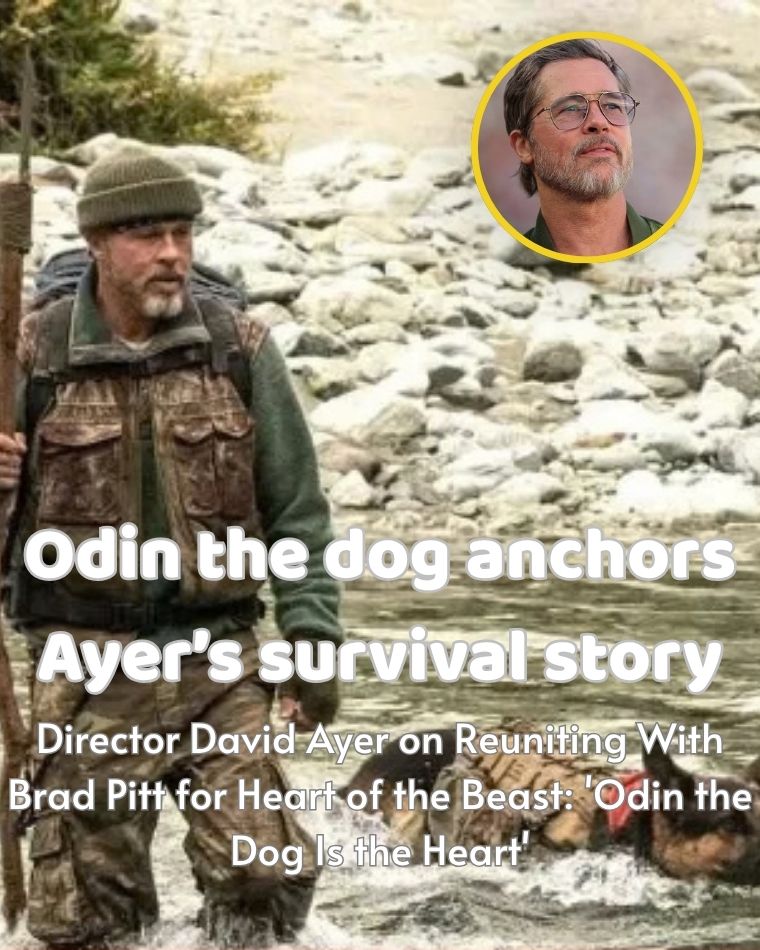
Cre: Paramount Pictures / Motion Picture Association
From the Claustrophobic Trenches of Fury to Vast Wilderness Isolation
The creative partnership between David Ayer and Brad Pitt began a decade prior on the critically acclaimed World War II drama Fury.
That earlier war picture forced five battle-hardened soldiers inside the suffocating steel confines of a single Sherman tank advancing across enemy territory.
In stark contrast, Heart of the Beast strips away heavy artillery, tanks, and massive ensemble casts to embrace an expansive outdoor canvas.
Ayer pointed out that while Fury relied on intense claustrophobia, this survival piece draws its power from boundless, terrifying isolation.
Belmont and Odin are forced to trek 58 perilous miles through wilderness with zero outside communication and no incoming rescue teams.
Pitt’s protagonist faces harrowing physical crises, including a mid-flight medical emergency and a broken limb sustained while saving his companion from river rapids.
Throughout every brutal obstacle, the soldier’s primary instinct is not merely self-preservation, but protecting the four-legged comrade who previously saved his life.
The director explained that the sheer exposure of the filming environment demanded complete dedication from Pitt every single day on set.
“He really carried the film in a way I think neither of us expected,” Ayer remarked regarding his leading man’s unflagging work ethic.
The filmmaker observed that Pitt never enjoyed the luxury of a day off because his presence was required in virtually every single outdoor camera setup.
The production exposed the veteran star to freezing rain, mud, fast-moving rivers, and brutal alpine winds with nowhere to escape or hide.
Ayer explained that cast and crew had to rise before dawn each morning to catch the rising sun across the rugged ridgelines.
Pitt had to maintain a deeply internalized, traumatized character state while simultaneously handling complex canine interactions and cues.
The raw physical exhaustion experienced on set mirrored Belmont’s fictional odyssey through remote landscapes, elevating the authenticity of the final film.
Directing Odin: Auditioning Canines Across New Zealand
Bringing an animal companion to life as an equal dramatic lead required a meticulous casting search overseen by premier animal trainer Andrew Simpson.
Ayer praised Simpson as one of the world’s finest animal coordinators, noting that the trainer traveled extensively across New Zealand to discover the right dog.
Simpson scoured both the North Island and the South Island, visiting local communities and even knocking on private residential doors to evaluate candidates.
Ayer joked that evaluating canine screen tests differed considerably from ordinary casting because dogs obviously cannot submit self-taped digital auditions.
The extensive search eventually led the production team to an exceptional German Shepherd named Uber, who lived comfortably with a local family.
Uber possessed an extraordinary screen presence and soulful eyes that instantly mesmerized Ayer and the creative team through recorded audition footage.
The director realized immediately that Uber could convey deep narrative nuance without relying on human dialogue or artificial mannerisms.
While Uber performed the principal dramatic acting and intimate emotional beats, executing the film’s demanding action sequences required a broader family effort.
Ayer revealed that the production actually utilized four related German Shepherds to complete the character’s challenging physical journey.
Uber was supported on location by three of his biological canine sons, each possessing distinct physical proficiencies and specialized training.
One dog was trained specifically to perform complex stunts while suspended on safety wires across high mountain elevations.
Another canine son took charge of dangerous aquatic sequences, swimming through rushing waterways where physical stamina was vital.
The third sibling handled high-speed sprint work through rugged brush, rocky pathways, and muddy wilderness terrains.
Because Uber is an older canine performer, his athletic sons functioned as dedicated stunt doubles to ensure the senior dog’s safety and well-being.
Building Trust Through Boiled Chicken and Real-World Kennels
Establishing genuine, palpable screen chemistry between a Hollywood superstar and a canine lead cannot be faked through digital post-production tricks.
David Ayer explained that Brad Pitt invested immense personal time away from the cameras to form an unbreakable bond with Uber before filming commenced.
Pitt regularly visited the animal kennels to socialize, walk, and play with Uber long before stepping onto the movie sets.
The actor learned the animal’s daily rhythms, studying how the German Shepherd transitioned energy levels and focused attention during long shooting days.
Ayer revealed a humorous behind-the-scenes detail about Pitt’s daily wardrobe on set throughout the demanding wilderness production.
The actor kept his pockets stocked with dog biscuits at all times to reward his four-legged counterpart after successful scene takes.
Whenever Uber required additional motivation to hit a complicated blocking mark, Pitt relied on his secret culinary tactic: freshly boiled chicken.
Pitt understood how to capture the animal’s undivided gaze and build a reciprocal connection that radiated across the camera lens.
Ayer emphasized that when viewers witness Belmont tenderly checking Odin’s injuries, they are seeing real affection between actor and animal.
Their authentic off-screen relationship allowed scenes of mutual trauma and reliance to resonate with raw, unvarnished honesty on screen.
Both characters bear physical and mental scars from past battlefield deployments, finding comfort and salvation solely in each other’s quiet presence.
Odin’s calm demeanor in moments of panic grounds Belmont, demonstrating how therapy and service animals help combat veterans manage persistent PTSD.
The filmmaker observed that this emotional synchronicity transformed the dynamic from an actor handling a pet into a true partnership between equal performers.
Nature as a Living Character and the Crew’s Endless Grit
Beyond the central duo of man and canine, the unforgiving landscape operates as a dominant, living character throughout Heart of the Beast.
The production deliberately favored remote, authentic exterior locations over sterile green screen soundstages or computer-generated nature backdrops.
Filming on steep mountain faces and beside freezing rivers forced the entire film crew to demonstrate remarkable endurance alongside the cast.
Ayer recalled watching dedicated lighting technicians and electricians haul massive 18K illumination units up slick, muddy hillsides in pouring rain all day long.
Crew members endured identical freezing temperatures, muddy trails, and sudden mountain downpours to capture the unfiltered reality of survival.
The director noted that the crew’s relentless resilience mirrored the on-screen struggle of Belmont and Odin battling harsh elements.
Every gust of wind, drifting fog layer, and splashing river current helped the terrain become an imposing antagonist in the narrative.
The natural environment constantly tests the boundaries of Belmont’s endurance and Odin’s fierce instincts as they navigate treacherous ravines and marshlands.
Along their arduous path, the duo must confront dangerous predators, including aggressive bears and a territorial wolf pack hungry for vulnerable prey.
During these encounters, the German Shepherd steps forward fearlessly, putting his own body on the line to defend his human handler.
Ayer explained that nature strips away modern human pretenses, reducing life to its most primal questions of survival, mutual trust, and sacrifice.
The expansive vistas captured by the cinematographic team emphasize human insignificance against ancient, untamed wilderness terrain.
This visual contrast between vulnerable living beings and indifferent mountain ranges reinforces the profound gravity of their survival quest.
Why Odin Anchors the Soulful Narrative Arc
At its core, Heart of the Beast explores what it means to be devoted to another creature until the final breath.
Ayer pointed out that while traditional adventure films highlight explosive stunts, his picture locates its highest drama within silent exchanges of trust.
In Belmont’s darkest moments of despair, Odin’s steadfast presence prevents the veteran soldier from succumbing to exhaustion and surrender.
The narrative reveals that Belmont originally rescued Odin during heavy military operations abroad, forging an unbreakable bond in conflict zones.
Now, stranded in the Alaskan wilderness with a life-threatening heart condition and severe injuries, the roles slowly and poignantly reverse.
Belmont realizes that his ultimate mission is ensuring that his loyal canine friend survives the ordeal and reaches human civilization safely.
Ayer emphasized that Odin’s unconditional love serves as Belmont’s ultimate redemption after enduring years of devastating wartime violence.
The dog asks for nothing beyond simple affection, companionship, and safety, contrasting sharply with the destructive brutality of human warfare.
Even when suffering from terrifying PTSD-induced nightmares, the canine responds with gentleness whenever Belmont speaks to him in calm, soothing tones.
The final stretch of the film tests their loyalty to its absolute limits, culminating in Belmont’s poignant final testament written on behalf of his animal friend.
Belmont leaves behind instructions for anyone who encounters the dog, pleading for compassion and celebrating Odin’s heroic, loving soul.
Ayer reflected that the film’s title holds a deliberate dual meaning that challenges traditional audience assumptions about ferocity.
While society often perceives a combat-trained military working dog as a formidable beast of war, Odin possesses a gentle, boundless heart.
Simultaneously, the title honors Belmont himself, a soldier shaped by violence who discovers his humanity through selfless love for an animal.
By placing Odin at the absolute center of the frame, David Ayer and Brad Pitt have crafted an enduring wilderness survival tale of extraordinary heart.
Để lại một phản hồi