When Tom Hiddleston stepped into an audition room in 2009, he arrived with roughly twenty pounds of extra muscle and hopes of wielding Mjolnir.
Instead, director Kenneth Branagh and Marvel Studios saw the complex vulnerability required for Loki, setting off a transformation that altered modern franchise cinema.
That solitary casting choice launched an iconic fifteen-year journey across six blockbuster feature films and a landmark Disney+ television series.
The Audition for the God of Thunder
Before 2011, Tom Hiddleston was widely regarded as a gifted British stage performer with an impressive classical repertoire.
He had earned widespread respect across London’s theater scene and secured small television parts, but global cinema recognition remained elusive.
When Marvel Studios announced auditions for the live-action adaptation of Thor, Hiddleston approached the opportunity with serious determination.
He followed a rigorous physical training regime for months, dedicated to testing for the titular role of the God of Thunder.
Standing over six feet tall, he committed to a strict high-protein diet to bulk up his frame for the screen test.
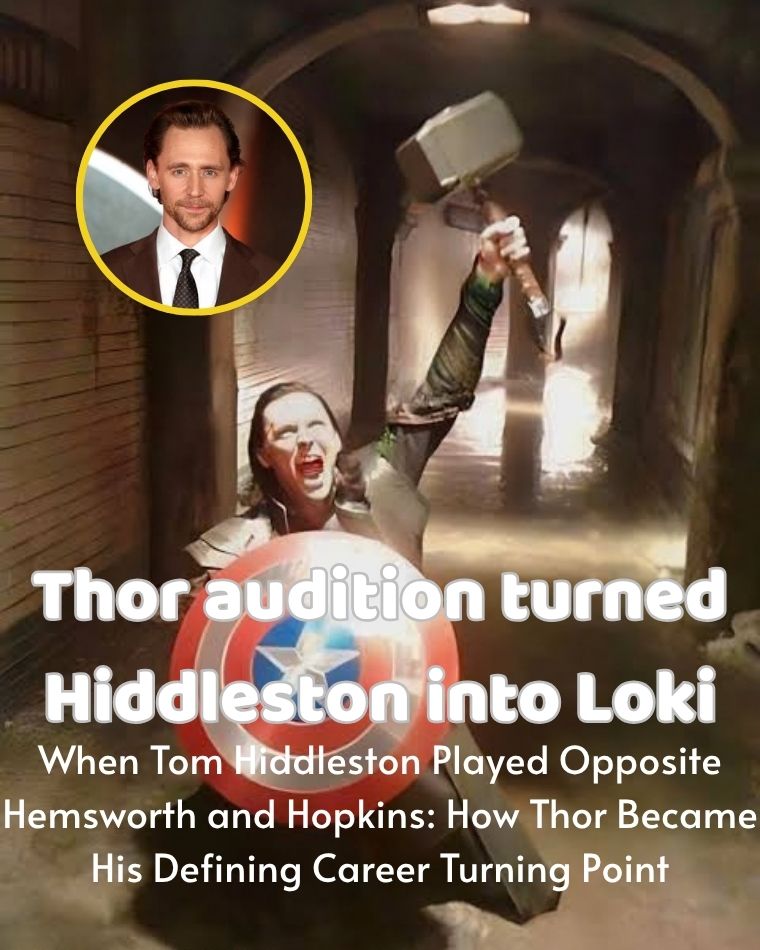
He even dyed his hair blonde and picked up a replica hammer to deliver an earnest, physically demanding audition for Thor.
However, the creative leadership at Marvel Studios recognized that his true strength lay elsewhere.
Director Kenneth Branagh, who had previously worked with Hiddleston in theatre and television, recognized a distinctive emotional depth in his screen presence.
While Australian newcomer Chris Hemsworth possessed the booming physical presence required for Thor, Hiddleston brought an intense interiority.
Branagh and Marvel Studios head Kevin Feige quickly recognized that Hiddleston was suited for Loki, the God of Mischief.
The casting team contacted Hiddleston to deliver the unexpected verdict: he would not play the thunderous hero, but rather the troubled antagonist.
Rather than viewing the shift as a disappointment, Hiddleston embraced the opportunity with open artistic curiosity.
He immediately leaned down, traded heavy weightlifting for agility and martial arts, and prepared to play a figure driven by psychological torment.
That single studio decision shifted the entire course of his career, placing him on a trajectory toward international stardom.
Cre: Wikimedia Commons — Gage Skidmore / CC BY-SA 2.0
The Influence of Kenneth Branagh and an Elite Ensemble
Stepping onto the set of a major Hollywood production was an intimidating prospect for an actor with modest film experience.
Yet Kenneth Branagh made the expansive Marvel universe feel as nuanced and rigorous as a production of William Shakespeare’s King Lear.
Branagh treated the royal family of Asgard not merely as colorful comic characters, but as a classical royal dynasty fractured by pride and jealousy.
This Shakespearean framing proved indispensable for Hiddleston, who had trained extensively at the Royal Academy of Dramatic Art.
Working opposite screen veteran Sir Anthony Hopkins, who portrayed the all-powerful Allfather Odin, elevated Hiddleston’s dramatic confidence on set.
Hopkins modeled quiet, authoritative restraint, encouraging Hiddleston to root Loki’s betrayal in genuine heartbreak rather than melodramatic villainy.
Every confrontation between Odin and Loki in the throne room crackled with palpable dramatic friction.
At the same time, Hiddleston established an immediate personal and professional chemistry with his screen brother, Chris Hemsworth.
Hemsworth and Hiddleston were both young actors on the brink of global fame, sharing long hours on set and mutual creative support.
Their off-screen friendship translated naturally into a complex, nuanced fraternal dynamic on screen.
Hemsworth provided the radiant charm of the golden son, while Hiddleston served as his restless, shadowed counterpart.
Branagh directed their scenes with a relentless focus on family tragedy, ensuring the audience sympathized with both brothers.
This classical staging transformed the 2011 film from a basic superhero origin story into an enduring study of family conflict.
The resulting production offered Hiddleston an exceptional platform to demonstrate his dramatic range before a worldwide audience.
Redefining the Modern Superhero Antagonist
When Thor debuted in theaters in May 2011, comic book adaptations were frequently criticized for one-dimensional villains.
Most franchise antagonists had been portrayed as power-hungry conquerors or manic sadists without relatable motives.
Hiddleston completely inverted that paradigm by approaching Loki through the lens of psychological trauma.
Loki was not motivated by a superficial desire to destroy the cosmos, but by a desperate longing for paternal validation.
The discovery of his true parentage as an orphaned Frost Giant provided the emotional centerpiece of his entire narrative arc.
Hiddleston captured the devastating moment of revelation with raw, unvarnished emotional pain.
His tearful confrontation with Odin demonstrated a degree of theatrical vulnerability rarely witnessed in major studio blockbusters.
Instead of playing Loki as an evil mastermind, Hiddleston portrayed a younger brother desperate to step out of a favored sibling’s shadow.
Even as Loki orchestrated destructive schemes, audiences understood the private anguish fueling his rebellion.
Hiddleston balanced this emotional depth with dry humor, theatrical elegance, and sharp wit.
He gave Loki a charismatic intelligence that made him immensely captivating whenever he occupied the frame.
Audiences found themselves unable to dismiss Loki completely, sympathizing with his pain even while condemning his crimes.
This multi-dimensional performance established a new standard for writing and portraying antagonists in comic book adaptations.
Critical reaction singled out Hiddleston’s performance as the dramatic highlight of the entire 2011 film.
The Immediate Global Breakthrough
The box-office success of Thor immediately reshaped Tom Hiddleston’s professional standing across the film industry.
Within weeks of the film’s international debut, the actor transitioned from an English stage performer to a widely sought-after Hollywood talent.
Directors and producers quickly took note of his rare ability to blend classical dramatic weight with mainstream commercial appeal.
Legendary filmmaker Steven Spielberg cast Hiddleston in his 2011 World War I epic drama, War Horse.
Renowned director Woody Allen subsequently selected him to portray iconic author F. Scott Fitzgerald in the acclaimed comedy Midnight in Paris.
Acclaimed auteur Terence Davies also cast him alongside Rachel Weisz in the 1950s romantic drama The Deep Blue Sea.
All three of these prestige feature films arrived in cinemas in the very same calendar year as Thor.
Few working actors have experienced such a swift, artistically diverse breakthrough across high-profile studio cinema.
Yet Marvel Studios had even grander plans for Hiddleston’s breakout antihero.
Director Joss Whedon recognized that Hiddleston’s Loki possessed enough narrative weight to challenge the entire Marvel superhero roster.
Marvel promptly designated Loki as the primary antagonist of 2012’s groundbreaking crossover spectacle, The Avengers.
Anchoring an ensemble that featured Robert Downey Jr., Chris Evans, and Scarlett Johansson represented an extraordinary vote of studio confidence.
Hiddleston delivered once again, anchoring the billion-dollar blockbuster with grand theatrical bravado and sharp comedic timing.
His commanding, charismatic performance in The Avengers cemented his status as a permanent fixture in global popular culture.
He became a celebrated fan favorite at comic conventions worldwide, frequently greeted by thousands of cheering admirers.
Laying the Groundwork for Fifteen Years of the MCU
The success of the original 2011 production established a creative foundation that endured for well over a decade.
Rather than disposing of Loki as a single-film villain, Marvel continuously expanded his narrative arc across multiple franchise phases.
He returned to deliver a memorable dramatic turn in 2013’s Thor: The Dark World, exploring an uneasy truce with his brother.
Director Taika Waititi later reinvented the franchise’s tone in 2017’s Thor: Ragnarok, allowing Hiddleston to showcase brilliant comedic versatility.
By the time Avengers: Infinity War arrived in theaters in 2018, Loki had completed a full redemption arc, sacrificing his life to protect Thor.
Even that tragic demise proved incapable of concluding Hiddleston’s extraordinary creative partnership with Marvel Studios.
In 2021, Marvel launched the ambitious Disney+ original series Loki, placing Hiddleston at the center of his own standalone episodic story.
The series explored an alternate variant of the character forced to confront his past mistakes while navigating the Time Variance Authority.
Over two critically acclaimed seasons, Hiddleston guided the character from an insecure trickster to the protector of the Marvel multiverse.
The second season finale in late 2023 offered one of the most poignant, celebrated conclusions in comic book television history.
Loki willingly accepted eternal, solitary duty, weaving the dying timelines together into an immense cosmic tree of life.
The heroic act fulfilled the character’s long-sought glorious purpose in the most selfless manner imaginable.
Few actors in modern cinema history have enjoyed the opportunity to evolve a single character continuously across fifteen years.
Through it all, the emotional core established in Kenneth Branagh’s 2011 film remained the character’s guiding creative compass.
The Artistic Legacy of a Defining Career Choice
Reflecting on his expansive career, Tom Hiddleston has consistently identified Thor as the pivotal turning point of his creative journey.
He has frequently shared that accepting the role of Loki forever altered the direction of his personal and professional life.
It provided him with creative security, international visibility, and the freedom to pursue adventurous theater and television projects.
Outside the Marvel Cinematic Universe, Hiddleston has continued to earn widespread critical acclaim across diverse dramatic roles.
He received prestigious Golden Globe recognition and Emmy Award nominations for his commanding lead performance in BBC’s The Night Manager.
He maintained his lifelong devotion to the stage, earning a Tony Award nomination for his work in Harold Pinter’s Broadway revival of Betrayal.
He has balanced major studio epics like Kong: Skull Island with independent genre features like Guillermo del Toro’s Crimson Peak.
Yet regardless of how broadly his creative portfolio expands, his defining legacy remains inextricably linked to the Asgardian trickster.
Hiddleston has always honored that association, treating comic book audiences with unyielding warmth, dignity, and sincere respect.
He recognized earlier than most that popular mainstream entertainment could carry profound psychological and emotional weight.
His portrayal of Loki demonstrated that vulnerability, wit, and sorrow could make an antagonist far more memorable than sheer brute force.
Today, the 2011 production of Thor stands as a masterclass in Hollywood franchise casting.
Had Kenneth Branagh chosen Hiddleston as the God of Thunder, modern blockbuster cinema might look remarkably different today.
Instead, the decision to cast him as Loki provided the Marvel Cinematic Universe with its most layered, charismatic, and timeless antihero.
From an ambitious audition with a foam hammer to presiding over the threads of the multiverse, Hiddleston achieved his own glorious purpose.
Để lại một phản hồi