When Jason Moore’s musical comedy Pitch Perfect arrived in theaters in the autumn of 2012, few could have anticipated the profound cultural footprint it would leave across mainstream cinema.
The project emerged during an era when cinematic musicals frequently relied on earnest theatrical conventions, wide-eyed ambition, and soaring show tunes.
Yet at the center of this college a cappella comedy stood Beca Mitchell, played by Anna Kendrick with an astringent, cynical edge that completely upended expectations.
Instead of an ingénue eager to please, audiences met an introverted college freshman clutching her headphones like armor against the world.
Beca had no burning desire to blend her voice into an ensemble or capture trophies on a competitive stage.
Her goal was singular, pragmatic, and decidedly anti-communal: produce mashups on her laptop and escape college as swiftly as possible to pursue a music career in Los Angeles.
This fundamental resistance to the story’s central premise provided the engine for a character study that transformed musical comedy tropes forever.
Kendrick’s performance delivered a heroine who felt startlingly grounded, deeply relatable, and radically distinct from the archetypes that preceded her.
Through deadpan comedic timing and understated emotional honesty, Kendrick elevated Beca Mitchell into an unforgettable pop culture icon.
Over a decade later, the character remains a masterclass in how subtle, nuanced acting choices can invigorate an entire cinematic genre.
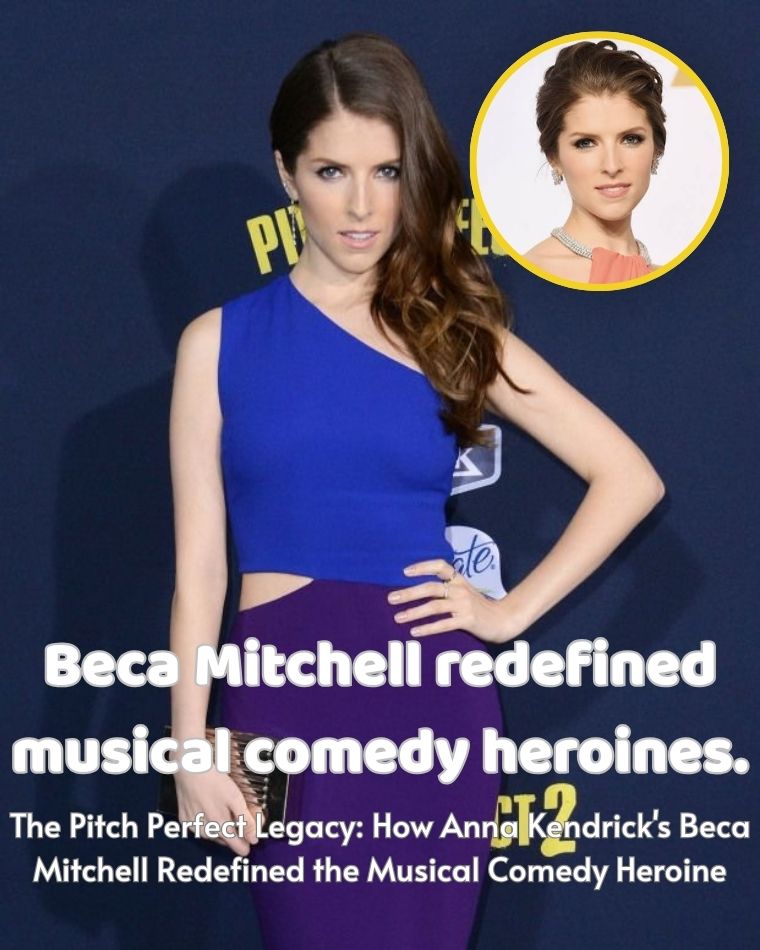
Cre: Wikimedia Commons
Breaking the Mold: The Reluctant Loner in a World of Harmonies
Before Beca Mitchell arrived on screen, the traditional musical comedy protagonist followed a predictable dramatic blueprint.
From classic Hollywood musicals to modern teenage film productions, heroines were routinely characterized by radiant optimism and transparent ambitions.
Their desires were typically declared through sweeping opening numbers designed to win immediate audience sympathy.
Pitch Perfect boldly dismantled that formula from Beca’s very first introduction on the Barden University campus.
Beca was guarded, sardonic, and unapologetically skeptical of campus traditions.
She wore dark eyeliner, casual layered flannel, and bulky over-ear headphones that signaled an explicit desire to be left alone.
She did not seek approval from her peers or authority figures, least of all from her estranged professor father.
Her emotional posture was defensive, treating genuine enthusiasm with dry mockery rather than naive wonder.
Such an attitude ran directly counter to the effervescent spirit usually demanded of a musical theater protagonist.
Yet this prickliness never alienated the audience, because Kendrick infused Beca’s cynical armor with unmistakable authenticity.
Viewers recognized that Beca’s hostility was not rooted in cruelty, but in vulnerability and self-protection.
She was an artistic introvert who had learned to hide her feelings behind sarcastic quips and digital audio tracks.
When she was dragged into the Barden Bellas audition process, she did not arrive seeking glory or companionship.
She entered the competition merely to fulfill a domestic wager with her father to secure his blessing for her career dreams.
This reluctant buy-in gave the film an infectious friction that conventional musicals often lack.
Watching a resistant cynic discover artistic chemistry among eccentric peers created a much richer narrative reward than watching an optimist simply fulfill her destiny.
Beca made independence look modern, turning introversion into an undeniable source of comedic and personal strength.
The Chemistry of Deadpan: Anna Kendrick’s Masterful Performance Choices
Anna Kendrick brought an uncommon set of dramatic instincts to the table when taking on the role of Beca.
Having earned an Academy Award nomination for her dramatic work in Up in the Air, alongside early Broadway accolades, Kendrick understood pacing and psychological realism.
In less capable hands, a character as sarcastic as Beca could easily have tipped into annoying detachment.
A perpetual cynic runs the severe risk of feeling smug, arrogant, or thoroughly unlikable across a two-hour running time.
Kendrick navigated this creative minefield by anchoring Beca’s deadpan delivery in total sincerity.
Her comedic lines were never played toward the camera or delivered with an overt plea for laughs.
Instead, Kendrick used rapid, understated line readings that treated absurd campus dynamics as mundane reality.
Whenever the high-strung Bella leader Aubrey Posen issued rigid commands, Kendrick’s reaction shots spoke volumes.
A slight roll of the eyes, an amused tilt of the chin, or a barely audible sigh allowed the humor to emerge organically.
At the same time, Kendrick took care to reveal the sensitive human underneath the aloof demeanor.
When Beca listened to music in her quiet dorm room, Kendrick allowed genuine wonder to wash across her face.
Her interactions with Jesse Swanson, portrayed by Skylar Astin, were marked by subtle flickers of hesitation and reciprocal warmth.
She allowed Beca to blush, to falter, and to show hesitation whenever someone managed to slip past her defensive barriers.
This precise balance between caustic wit and tender insecurity turned what could have been a stock character into a breathing human being.
Beca’s vocal style also reflected Kendrick’s calculated choices as a musician.
She sang with clear tone, dynamic restraint, and effortless contemporary phrasing rather than performative grandiosity.
Every vocal choice felt born from Beca’s private bedroom studio rather than a polished concert hall.
By treating the musical performances as extensions of Beca’s inner world, Kendrick ensured every note felt deeply personal.
The ‘Cups’ Phenomenon: How a Humble Audition Captivated Global Pop Culture
No analysis of Beca Mitchell or Pitch Perfect can overlook the singular magic of the audition sequence.
Arriving unprepared for the formal Barden Bellas tryouts, Beca steps onto the empty auditorium stage holding nothing more than a yellow plastic cup.
Sitting cross-legged on the floor, she launches into “Cups (When I’m Gone),” tapping and flipping the container in intricate rhythm.
The performance lasts little more than a minute, yet it altered the cultural zeitgeist for years to follow.
The song itself had deep folk roots, tracing back to the Carter Family in the 1930s before being adapted by British indie act Lulu and the Lampshades.
Kendrick had learned the percussion routine from an internet video and demonstrated it to the film’s creative team during production.
Director Jason Moore immediately recognized its potential and wove it directly into Beca’s narrative introduction.
What made the scene electrifying on screen was Kendrick’s casual, effortless execution.
She did not posture as a virtuoso demanding applause.
She sang the rhythmic folk melody with serene concentration, treating the plastic cup as an organic extension of her hands.
The contrast between her stripped-down audition and the overwrought, nervous theatricality of the other candidates was startlingly refreshing.
Almost overnight, the audition turned into a viral worldwide movement across schools, universities, and social media platforms.
Young people across continents scrambled to find plastic drinkware to master the precise sequence of claps, taps, and flips.
Demand was so ferocious that Universal Music released an extended, folk-pop studio remix of the track for radio stations.
Against all modern pop radio conventions, a song centered on a plastic cup climbed into the top ten of the Billboard Hot 100.
It eventually achieved multi-platinum sales certification, becoming one of the defining radio staples of 2013.
The cultural triumph of “Cups” proved the sheer magnetic power of Kendrick’s portrayal.
Audiences were not merely drawn to the catchy beat; they were captivated by the quiet, defiant confidence of the girl performing it.
It proved that a genuine musical moment did not require pyrotechnics or a full orchestra to stop people in their tracks.
All it needed was raw emotional clarity, rhythmic ingenuity, and an artist who knew exactly who she was.
Evolution Across Three Films: Maturing Without Losing the Sharp Edges
Character arcs across Hollywood comedy franchises often suffer from progressive dilution.
All too frequently, a rebellious protagonist is domesticated by sequels, stripped of the jagged qualities that made them interesting in the first place.
Remarkably, Beca Mitchell managed to avoid this trap throughout the entire Pitch Perfect cinematic trilogy.
Her character evolution over the course of three feature films felt measured, earned, and true to life.
In the original 2012 film, Beca’s central challenge was overcoming her defensive isolation.
She had to realize that collaborating with other women did not require surrendering her individuality or artistic voice.
Her triumphant remix at the national finals symbolized that reconciliation: modernizing the group while honoring their sisterhood.
When Pitch Perfect 2 premiered in 2015, Beca faced the daunting anxiety of impending adulthood.
While her teammates focused entirely on defending their title at the collegiate world championships, Beca secretly took an internship at a recording studio.
This development reflected the genuine tension many ambitious young adults feel between peer loyalty and individual career survival.
Kendrick played Beca’s burnout and split focus with relatable vulnerability.
Beca made mistakes, struggled to produce original music under pressure, and dealt with harsh critiques from professional mentors.
Yet through those tribulations, she never turned into a passive martyr.
She retained her cutting wit, often firing back sharp rejoinders even while scrambling to balance her conflicting schedules.
By the time Pitch Perfect 3 closed the trilogy in 2017, Beca was navigating post-graduate disappointment.
Working as a frustrated music producer stuck dealing with incompetent clients, she confronted the harsh gap between youthful dreams and harsh industry realities.
When an opportunity for solo stardom emerged during the USO European tour, Beca experienced profound moral conflict.
She agonized over the prospect of stepping out alone while leaving her closest friends behind.
Kendrick ensured that Beca’s eventual step into the solo spotlight carried bittersweet emotional resonance.
Across all three films, Beca grew from an aloof, mistrustful girl into a compassionate leader and self-assured professional artist.
Most importantly, she accomplished this maturation without sacrificing her wry sense of humor or dry skepticism.
She remained the cynical voice of reason in an eccentric ensemble, showing that personal growth does not require erasing one’s core personality.
A Lasting Legacy: Reshaping the Modern Musical Comedy Landscape
The cultural influence of Beca Mitchell ripples well beyond the box-office receipts of the Pitch Perfect franchise.
Her arrival signaled a fundamental shift in how female protagonists in music-driven comedies could be conceptualized and written.
Prior to 2012, female musical leads were overwhelmingly expected to represent cheerfulness, theatrical virtuosity, and emotional accessibility.
Characters were frequently punished by the narrative if they exhibited cynicism, detachment, or unapologetic career ambitions.
Beca Mitchell shattered those obsolete storytelling boundaries with resounding commercial success.
She demonstrated that an audience would passionately champion a female protagonist who was prickly, moody, and resistant to social conformity.
Her sarcastic commentary did not render her unlikable; on the contrary, it made her deeply trustworthy to a generation of viewers tired of artificial cheer.
In the years following Pitch Perfect, mainstream film and television witnessed an explosion of complex, unconventional musical leads.
Projects like Crazy Ex-Girlfriend, Zoey’s Extraordinary Playlist, and modern Broadway adaptations embraced heroines with messy internal lives, flawed coping mechanisms, and nuanced worldviews.
Writers and directors realized that modern audiences craved characters whose musicality emerged from anxiety, alienation, and raw human imperfection.
Beca also altered the representation of female camaraderie on screen.
Her dynamic with the Barden Bellas was not defined by romantic competition, petty catfights, or glossy perfection.
Instead, the franchise celebrated the messy, unglamorous work of building trust among women from wildly diverse backgrounds.
Beca did not change the Bellas alone; they pushed her out of her comfort zone just as much as she expanded their musical palette.
Her journey affirmed that finding chosen family does not require conformity.
You can be the girl who prefers dark clothes and headphone cords and still find an irreplaceable home among a chorus of misfits.
This empowering narrative resonated deeply with millions of young women who had never felt represented by traditional musical archetypes.
Hollywood took note of the formula, permanently loosening the rigid conventions of musical cinema.
📸 [ẢNH: Dàn diễn viên Pitch Perfect hội ngộ tại một sự kiện giải trí lớn]
Link: https://commons.wikimedia.org/wiki/File:Cast_Of_Pitch_Perfect_3_-YouTube_Night_of_Awesome.jpg
Nguồn: Wikimedia Commons — Ảnh chụp đoàn phim Pitch Perfect, giấy phép Creative Commons Attribution-Share Alike 2.0 Generic
Why Anna Kendrick’s Beca Mitchell Remains Truly Iconic
Looking back over more than a decade of cinema history, Beca Mitchell stands tall as one of the definitive comedic characters of the 2010s.
The character’s enduring resonance cannot be attributed simply to sharp screenwriting or clever a cappella arrangements.
It was Anna Kendrick’s singular artistic voice that turned Beca into a timeless pop culture archetype.
Kendrick arrived at the project with a unique dual identity: a legitimate Broadway-trained vocalist and a critically acclaimed indie film actress.
She possessed the vocal chops required to execute intricate mashups alongside the grounded comedic timing necessary to sell deadpan banter.
She never indulged in vanity, never played for easy tears, and never let Beca become a generic caricature.
Instead, she fought for the character’s internal integrity at every turn.
She understood that Beca’s quiet rebellion was an expression of artistic seriousness in a world that often demands superficial conformity.
When Beca mashed up songs, she treated the music not as competitive cheerleading, but as emotional architecture.
She searched for surprising connections between disparate melodies, mirroring her own struggle to find common ground with the people around her.
That creative depth elevated Pitch Perfect from a fluffy collegiate divertissement into a beloved cinematic touchstone.
Beca Mitchell proved that a modern musical heroine could be cynical yet hopeful, sharp-tongued yet loyal, and fiercely independent while thriving in an ensemble.
She gave permission to an entire generation of viewers to embrace their own inner weirdness and creative independence.
Whenever someone taps out a rhythm on a plastic cup or puts on headphones to drown out the noise of the world, Beca’s spirit remains alive and vibrant.
Anna Kendrick did not simply play a role; she defined an era, carving out an indelible legacy that continues to sing in perfect pitch.
Để lại một phản hồi