The enduring debate over which Harry Potter movie ranks supreme continues to captivate cinephiles and dedicated fans across generations. Central to this cinematic legacy is Daniel Radcliffe, who grew from an eleven-year-old child prodigy into a seasoned dramatic actor before the world’s eyes. Examining the franchise’s full trajectory reveals how Radcliffe’s emotional depth, technical maturity, and layered portrayal shaped the Boy Who Lived across a transformative decade.
The ranking of the eight Warner Bros. Harry Potter films remains one of the most passionately debated topics in modern fantasy cinema.
For over two decades, viewers across the globe have revisited the wizarding world to determine which installment reached the pinnacle of visual and narrative brilliance.
Every chapter presents a distinctive aesthetic vision, ranging from the warm storytelling of early releases to the atmospheric dread of the final battles.
Yet, beyond directorial shifts and groundbreaking visual effects, the heart of the franchise rests squarely upon Daniel Radcliffe’s multifaceted performance.
Radcliffe was cast at eleven years of age, embarking on an unprecedented journey that spanned eight monumental feature films.
By the time the franchise concluded its theatrical run, Radcliffe was in his early twenties and had evolved into a mature dramatic performer.
This remarkable decade of artistic development allowed audiences to witness a young actor confront increasingly complex psychological hurdles on screen.
Film critics frequently analyze the series not only by directorial prowess, but also by how Radcliffe navigates Harry’s transitions from innocence to profound trauma.
Each successive chapter asked Radcliffe to expand his emotional toolkit and abandon childhood comfort zones.
Consequently, evaluating the best entries in the franchise requires understanding the synchronicity between Harry’s coming-of-age journey and Radcliffe’s burgeoning craft.
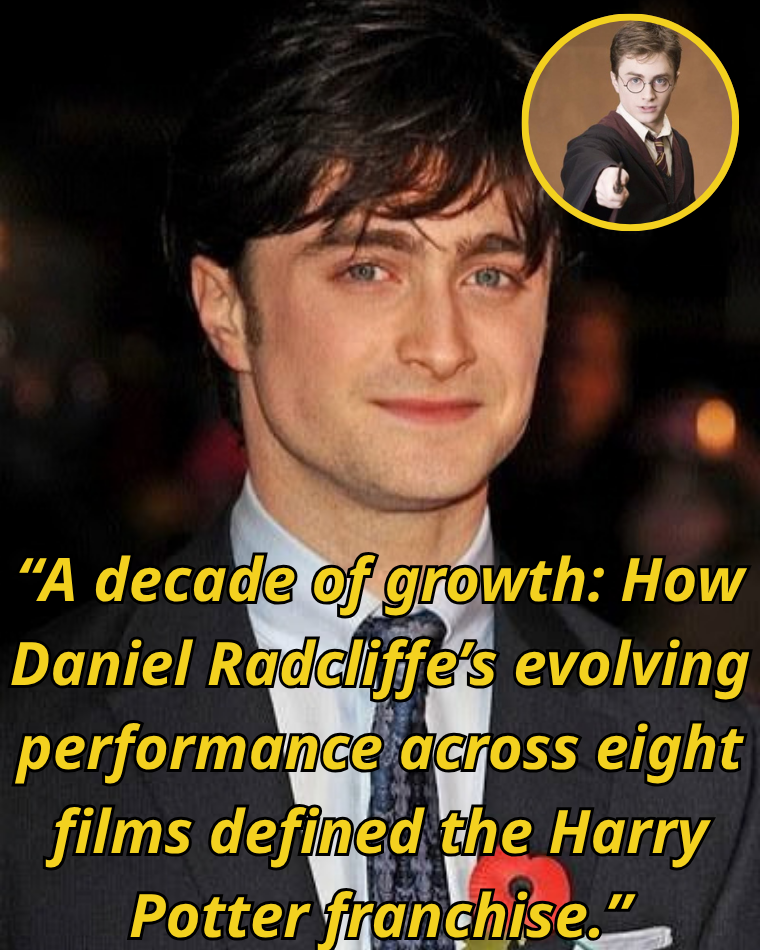
Cre: Wikimedia Commons — CC BY-SA 2.0 (Ảnh chụp Daniel Radcliffe tại sự kiện điện ảnh London)
The Early Years: Childhood Wonder and the Foundation of Harry’s Vulnerability
The journey began with Harry Potter and the Philosopher’s Stone, directed with genuine warmth and visual wonder by Chris Columbus.
In this foundational film, Radcliffe captured the pure curiosity and deep loneliness of an orphaned boy discovering his extraordinary heritage.
His wide-eyed demeanor and natural sincerity immediately endeared Harry Potter to millions of moviegoers worldwide.
The performance here relied heavily on genuine reactions, child-like awe, and an innate sense of decency.
Radcliffe projected an instinctive humility that kept Harry relatable, even as magical feasts and flying broomsticks enveloped him.
Harry Potter and the Chamber of Secrets deepened this emotional palette by testing Harry’s burgeoning sense of self-worth.
Radcliffe had to convey Harry’s creeping alienation as the school turned suspicious eyes toward him.
The young actor successfully channeled feelings of insecurity, quiet anxiety, and resolute bravery in equal measure.
Working closely alongside veteran British acting royalty allowed Radcliffe to absorb essential technical habits during long shooting days.
His timing improved, his line delivery gained vocal weight, and his physical reactions became visibly sharper on screen.
These foundational years established Harry not as an untouchable savior, but as a tender youth burdened by immense destiny.
Without this grounded innocence, the profound psychological pain of later chapters would not have resonated so deeply with audiences.
The chemistry between Radcliffe, Emma Watson, and Rupert Grint also solidified during these two formative years.
Their dynamic laid the groundwork for an enduring emotional triangle that anchored the narrative throughout the subsequent entries.
Radcliffe carried the weight of the production with admirable professionalism despite intense international scrutiny.
His early work remains beloved because it reflects the raw, unpolished wonder of childhood adventure.
The Turning Point: Stylistic Evolution and Coming of Age in the Third and Fourth Films
A major paradigm shift occurred when Mexican auteur Alfonso Cuarón assumed directing duties for Harry Potter and the Prisoner of Azkaban.
Cuarón altered the visual rhythm of the universe, implementing moody handheld camerawork and a grounded cinematic style.
Many cinephiles and franchise rankings place this third film at the absolute peak of the entire catalog.
Radcliffe was around fourteen years old during filming, mirroring Harry’s explosive adolescent emergence.
In this pivotal chapter, Radcliffe moved away from wide-eyed reaction shots to explore authentic teenage angst and righteous anger.
He had to convey Harry’s turbulent emotions upon discovering painful secrets about his family’s tragic past.
The performance demanded raw, unbridled grief and a palpable desire for vengeance against those who wronged his parents.
Radcliffe’s trembling voice and intense physical posture elevated key dramatic sequences into unforgettable franchise milestones.
Furthermore, his interactions with seasoned performers like Gary Oldman and David Thewlis brought out a new level of depth in his acting.
Harry’s search for parental figures became the emotional backbone of Radcliffe’s creative interpretation.
The momentum of adolescent maturity continued under director Mike Newell in Harry Potter and the Goblet of Fire.
This fourth installment placed immense physical and psychological pressures on Harry as an unwilling competitor in dangerous trials.
Radcliffe’s screen presence shifted perceptibly toward that of an emerging action lead.
He balanced romantic awkwardness and high school tension with the life-or-death panic of perilous arena confrontations.
The film’s chilling climax marked a devastating watershed moment for both the protagonist and the lead actor.
Radcliffe delivered an agonizing portrait of shock and panic as Harry witnessed the grim realities of mortality firsthand.
His desperate, weeping breakdown upon returning to safety demonstrated an actor capable of sustained emotional resonance.
It was no longer just a lighthearted children’s adventure, but a somber coming-of-age tragedy unfolding in real time.
Critics took notice of Radcliffe’s determination to push his physical limits and embrace psychological turmoil.
This middle phase of the series proved that Radcliffe possessed the emotional stamina necessary to carry the darker sagas awaiting him.
Navigating Psychological Trauma: The Darker Challenges of the Late-Series Films
When director David Yates took the helm for Harry Potter and the Order of the Phoenix, the tone grew noticeably grim and politically charged.
Harry entered this chapter isolated, ostracized, and suffering from acute post-traumatic stress.
Radcliffe leaned into unvarnished emotional realism, showcasing Harry’s volcanic temper and lingering resentment.
The young actor embraced an abrasive edge that defied traditional expectations of a polished fantasy hero.
Radcliffe portrayed a young man alienated from his mentors and frustrated by a world refusing to acknowledge uncomfortable truths.
His visceral screams during moments of devastating personal loss rank among the most emotionally wrenching beats in the series.
Radcliffe reportedly threw himself completely into these intense dramatic scenes, leaving crew members deeply moved on set.
The physical exhaustion and mental torment radiating from Harry’s eyes felt entirely authentic to the viewer.
This performance confirmed that Radcliffe was no longer relying on charm, but applying deliberate dramatic technique.
In Harry Potter and the Half-Blood Prince, the film balanced atmospheric horror with bittersweet teenage melancholy.
Radcliffe demonstrated surprising comedic timing during lighthearted sequences influenced by magical concoctions.
Yet, this tonal levity made the film’s haunting, operatic final act feel even more devastating by contrast.
Radcliffe conveyed Harry’s deep helplessness as he watched his beloved mentor crumble under immense physical torment.
His quiet resolve during the somber aftermath highlighted an actor who understood the power of restrained stillness.
Instead of shouting, Radcliffe utilized quiet eye contact and subtle body language to convey Harry’s solemn acceptance of duty.
The character had fully transitioned from an insecure student into a resolute warrior preparing for an inevitable final war.
The Final Reckoning: Physical Exhaustion, Moral Clarity, and the Deathly Hallows
Dividing the final literary installment into two separate cinematic features allowed the production to explore intricate character beats.
In Harry Potter and the Deathly Hallows – Part 1, the familiar security of Hogwarts was entirely stripped away.
Harry, Ron, and Hermione spent large stretches of time wandering desolate landscapes in constant fear of discovery.
Radcliffe embodied the heavy, physical weariness of a fugitive burdened with the fate of an entire society.
He portrayed Harry’s quiet self-doubt with nuanced maturity, depicting a young man running low on hope.
The wordless, bittersweet dance between Harry and Hermione remains one of Radcliffe’s finest understated character moments in the entire series.
In that quiet scene, Radcliffe conveyed warmth, unspoken grief, and deep camaraderie without uttering a single line of dialogue.
His performance reflected an actor who understood that vulnerability is often most potent when spoken softly.
When Harry Potter and the Deathly Hallows – Part 2 arrived, the stakes escalated into an explosive, all-out war.
Radcliffe brought a battle-hardened gravity to Harry’s decisive march toward his own mortality.
The emotional zenith arrived as Harry calmly prepared to face supreme evil without defending himself.
Radcliffe’s hollowed gaze, steady breathing, and peaceful acceptance transformed Harry into a tragic, transcendent figure.
There was no bravado in his posture, only the profound peace of a young soul embracing ultimate sacrifice.
This climactic sequence remains a masterclass in screen acting, highlighting how much Radcliffe had mastered over ten demanding years.
The sheer physical exhaustion etched onto his face captured the true toll of long-term psychological warfare.
When Harry finally returned to the courtyard for the decisive magical duel, Radcliffe projected fierce moral conviction.
He concluded the decade-long journey by cementing Harry as a resilient survivor rather than an untouchable icon.
Evaluating Fan Perspectives: Which Film Captures Radcliffe at His Absolute Best?
Franchise rankings invariably spark intense discourse among long-time enthusiasts and film analysts alike.
Devotees who value artistic cinematography and bold cinematic reinvention frequently champion The Prisoner of Azkaban as the gold standard.
In that third chapter, Radcliffe demonstrated the most sudden, breathtaking leap in his developmental journey.
His portrayal of raw teenage frustration established a fresh, sophisticated standard for what a young actor could accomplish.
Conversely, fans who prioritize intense dramatic range often point to The Order of the Phoenix as his pinnacle.
In that fifth film, Radcliffe tackled complex themes of alienation, psychological manipulation, and agonizing grief with ferocious honesty.
His willingness to make Harry flawed, moody, and occasionally unlikable proved his commitment to authentic storytelling.
Meanwhile, admirers of classic heroics and atmospheric mood often place The Half-Blood Prince near the very top of their rankings.
That installment allowed Radcliffe to blend dry comedic instincts with deep dramatic pathos in seamless harmony.
Finally, supporters of the concluding two-part finale argue that Radcliffe’s most enduring work lies in the Deathly Hallows duology.
In those final films, the accumulated weight of Harry’s entire history rests plainly in Radcliffe’s eyes and posture.
He delivered a fully realized, emotionally exhausted hero carrying unbearable responsibilities on his young shoulders.
Regardless of which specific entry takes first place on an individual’s personal list, Radcliffe’s consistency across eight films is undeniably extraordinary.
Child actors frequently struggle to maintain dramatic momentum as they transition through teenage and adult roles.
Radcliffe defied the odds by growing increasingly capable and technically accomplished with every passing chapter.
His performance arc remains an indispensable pillar supporting the legacy of the entire cinematic franchise.
The Lasting Legacy of a Decade Spent as the Boy Who Lived
Looking back across the eight-film epic, Daniel Radcliffe’s contribution to modern cinema history is truly profound.
Very few actors in the history of cinema have spent a complete decade inhabiting one iconic character across eight blockbuster releases.
Radcliffe carried the expectations of a massive global fandom while undergoing his own private maturation under intense public scrutiny.
He never allowed the monumental commercial machinery of Hollywood to compromise his creative curiosity or dedication.
Instead, Radcliffe treated the franchise as a rigorous, decade-long masterclass in dramatic storytelling and collaborative filmmaking.
He absorbed wisdom from legendary British actors and diverse directors who each brought distinct perspectives to the set.
This rigorous experience gave Radcliffe the technical confidence to pursue daring stage, independent film, and television roles after the series concluded.
Rather than remaining trapped by the iconic character that made him famous, he used that foundation to explore unpredictable creative territory.
Yet, despite his eclectic later career, his performance as Harry Potter remains his most beloved cultural gift to global audiences.
He successfully humanized a legendary literary figure, giving him warmth, flaw, courage, and relatable tenderness.
When viewers rewatch the movies today, they are not merely viewing a series of magical fantasy adventures.
They are watching a real human life and an evolving artistic talent unfold across ten unforgettable years.
Radcliffe’s honesty on screen transformed Harry Potter from a fictional symbol into an empathetic companion for generations of viewers.
His work ensures that whether an audience revisits the first film or the eighth, the emotional core remains permanently intact.
Ultimately, the cinematic legacy of Harry Potter endures because Daniel Radcliffe breathed authentic humanity into every single spell, battle, and quiet tear.
Để lại một phản hồi