When HBO launched its fantasy epic in 2011, few could have anticipated that an untested 23-year-old drama school graduate would anchor the biggest television phenomenon of a generation.
Through artistic resilience and undeniable screen presence, Emilia Clarke transformed from an unknown British actress into a worldwide icon whose breakout journey remains a masterclass in Hollywood risk-taking.
The Obscurity Before Westeros: A Fresh Graduate in Search of a Breakthrough
Before stepping onto the sands of Essos, Emilia Clarke lived the precarious life of an aspiring young actor in London.
She had completed her studies at drama school with big dreams but very few professional credits to her name.
Like thousands of British drama school graduates entering the industry, Clarke took on odd jobs to support herself while attending auditions.
Her resume prior to 2010 consisted of minor television appearances and student stage productions.
She had no international profile and no major agency clout behind her name.
In the cutthroat world of television casting, leading roles in massive prestige dramas are rarely handed to relative newcomers without established commercial value.
Fantasy adaptations were viewed with immense skepticism by television executives across the entertainment industry.
HBO was mounting an unprecedented production that required immense emotional depth and unquestionable charisma.
The role of Daenerys Targaryen was the absolute emotional backbone of the foreign continent storyline in George R.R. Martin’s sprawling world.
Whoever took the mantle had to shoulder immense narrative weight across multiple shooting locations around the world.
For a young actress with almost no on-camera experience, carrying that burden seemed like an impossible expectation.
Yet Clarke possessed a rare combination of vulnerability, expressive range, and quiet authority that caught the eye of casting directors.
Her journey stands as proof that raw talent and proper preparation can outshine years of commercial credits.
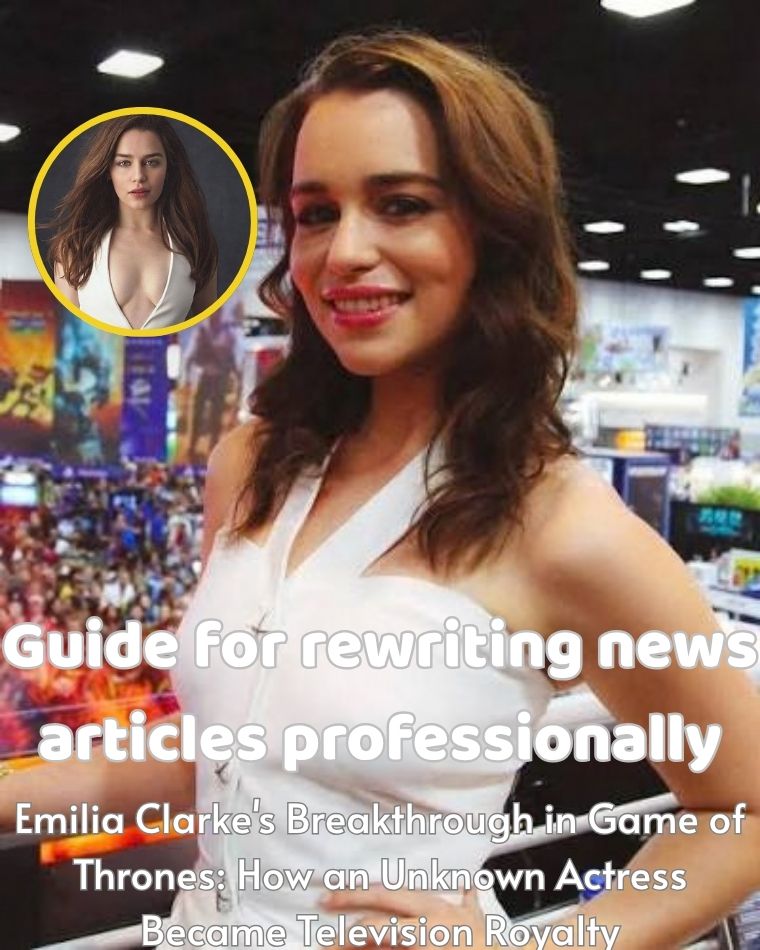
Cre: Wikimedia Commons
The High-Stakes Recast: Seizing the Second Opportunity
The road to Clarke’s casting was far from conventional in the traditional timeline of television production.
The original unaired pilot of Game of Thrones had experienced significant creative hurdles and structural problems.
Among the major adjustments made during the retooling of the production was the difficult decision to recast the role of Daenerys Targaryen.
Recasting a leading character after filming a full pilot is an extraordinary financial and creative risk for any major network.
Showrunners and executives were desperate to find a performer who could make the exiled princess believable from her first frame.
Clarke was called in to audition for the newly reconfigured production amidst extreme secrecy and intense pressure.
She walked into the audition room knowing that the role demanded an actress who could project both fragility and terrifying resolve.
Her audition impressed the producers immediately because of her natural ability to inhabit two extreme emotional spaces at once.
She won the part against seasoned candidates who had competed fiercely for the career-defining opportunity.
Winning the role was a life-altering victory, yet Clarke could not have foreseen the staggering cultural storm awaiting her.
At just 23 years old, she was suddenly cast into the center of a production operating on an unprecedented international scale.
She was handed scripts that placed her character at the moral and philosophical center of an epic struggle.
The network was betting millions of dollars on her ability to connect with audiences who had never seen her work before.
The casting became a monumental test of intuition over established star power.
Embodying the Dragon Queen: The Emotional Depths of Season 1
When Game of Thrones premiered in the spring of 2011, viewers were introduced to a frightened young woman sold into a political marriage.
Clarke immediately captured the suffocating helplessness of Daenerys in her opening scenes across the Narrow Sea.
Her performance did not rely on grand theatrical gestures but on subtle facial expressions and wounded silence.
Audiences sympathized with her isolation in an unfamiliar and hostile cultural environment.
Yet beneath the apparent fragility, Clarke infused the character with subtle flashes of an unyielding inner steel.
As Daenerys learned to navigate the Dothraki culture, Clarke gradually shifted her physical posture and vocal delivery.
The transformation was deliberate, organic, and grounded in emotional truth.
The gradual evolution of Daenerys from an exploited sibling to an autonomous leader became the first season’s most compelling character arc.
Clarke handled complex relationship dynamics with nuance, ensuring that every shift in loyalty felt entirely earned.
Her ability to convey emotional maturity belied her young age and limited screen history.
Viewers watched an actress discovering her own creative power in parallel with the character she portrayed on screen.
Critics immediately noted that the Essos storyline succeeded largely because of Clarke’s magnetic central presence.
She made high-concept fantasy feel intimate, visceral, and deeply human.
Pivotal Milestones: Anchoring Fantasy with Raw Reality
The concluding chapters of the first season presented challenges that would test even the most experienced veteran actors.
The tragic illness and subsequent passing of Khal Drogo demanded unvarnished grief and devastating emotional honesty from Clarke.
She had to portray the collapse of a woman’s entire world while maintaining the dignity of a royal leader.
Her mourning scenes brought genuine psychological realism to a genre often criticized for prioritizing spectacle over heart.
Every tear and broken whisper felt tethered to authentic human pain.
Then arrived the legendary funeral pyre sequence that would define the franchise’s mythology forever.
Stepping into the raging flames was a symbolic rebirth that required complete physical and spiritual conviction.
Clarke anchored that iconic moment with a serene, unblinking stillness that resonated across television screens globally.
When she emerged unscathed from the ashes holding newly hatched dragons, the scene became an instant cultural milestone.
The visual effects were groundbreaking, but Clarke’s expression of ancient destiny was what truly sold the moment to the world.
She made the supernatural birth feel awe-inspiring rather than absurd or campy.
The sequence signaled to audiences everywhere that a major acting talent had arrived on the international stage.
It remains one of the most famous season finales in the history of premium cable television.
Her first season performance silenced any lingering doubts about HBO’s decision to cast an unknown newcomer.
Rapid Industry Recognition and the 2013 Emmy Breakthrough
As the show transitioned from a critical darling into a global phenomenon, Clarke’s profile rose exponentially.
Her work in Season 2 explored the agonizing trials of leadership during drought, betrayal, and political manipulation.
By the time Season 3 arrived in 2013, the character had blossomed into a triumphant conqueror liberating enslaved peoples.
Clarke delivered commanding speeches in fictional languages with effortless authority and fiery conviction.
Her performance during the liberation of Astapor demonstrated an actress operating at the absolute peak of screen presence.
The television industry took formal notice of her extraordinary contributions to the narrative.
In 2013, Emilia Clarke earned her very first Primetime Emmy Award nomination for her exceptional work in Season 3.
Receiving an Emmy nomination for a high-fantasy series was an uncommon and prestigious achievement in the television landscape.
The recognition placed her alongside veteran performers with decades of prestigious film and stage work.
It affirmed that fantasy storytelling could achieve the highest levels of dramatic acting when anchored by authentic talent.
The nomination permanently validated HBO’s bold choice to place faith in an untested 23-year-old actress.
Industry peers recognized that Daenerys Targaryen was not merely an aesthetic figurehead but a deeply layered psychological character.
Clarke’s portrayal demonstrated that dramatic subtlety and blockbuster spectacle could thrive in perfect harmony.
Navigating Global Stardom: The Challenges of Instant Fame
Stepping from total anonymity into the blinding glare of worldwide fame presents intense psychological and professional obstacles.
Virtually overnight, Clarke became a recognizable face on billboards, magazines, and fan conventions worldwide.
Her silver-wigged character adorned merchandise, internet memes, and cultural debates across every continent.
Maintaining artistic focus amidst such overwhelming public scrutiny requires extraordinary discipline and humility.
Clarke remained dedicated to the grueling production schedule, which took her to remote international locations for months at a time.
She braved freezing winds, sweltering heat, and intense physical demands throughout multiple seasons.
Behind the scenes, she earned a reputation among crew and castmates as a profoundly kind and grounded professional.
She consistently deflected personal credit, highlighting the collective effort of the writers, crew, and ensemble.
Her grounded approach allowed her to survive the turbulent pressures that frequently derail young Hollywood stars.
She understood that the character belonged as much to passionate fans as it did to her own creative instincts.
Yet she never allowed the immense scale of the phenomenon to swallow her personal voice or acting craft.
Her grace under pressure became as admirable as her striking on-screen performances.
Opening New Creative Doors: Transitioning Beyond the Throne
The global success of Game of Thrones fundamentally altered Clarke’s career trajectory and professional opportunities.
Prestigious film studios and major theatre productions immediately sought her name for high-profile projects.
Hollywood executives viewed her as a versatile performer capable of leading romantic dramas, action spectacles, and character studies.
Broadway and London’s West End opened their doors to welcome her formal dramatic training.
She proved capable of transitioning seamlessly from massive digital green-screen environments to intimate theatrical stages.
Directors praised her disciplined work ethic and exceptional emotional vulnerability in every genre she touched.
The industry quickly realized that her talents were not confined to the mythical universe of Westeros.
She possessed a radiant comedic timing and natural warmth that contrasted beautifully with her stoic television persona.
Her post-breakthrough choices demonstrated an actress committed to exploring every facet of the dramatic spectrum.
Her career became proof that a single transformative role can alter an artist’s entire professional universe.
The Art of Selectivity: Maintaining Integrity After an Iconic Role
Many actors who experience explosive early breakthroughs succumb to the temptation of signing onto every lucrative commercial offer.
Clarke chose a deliberately cautious and thoughtful path in navigating her subsequent career decisions.
She resisted the pressure to repeat the exact same archetype that brought her initial worldwide acclaim.
She remained remarkably selective about the scripts, directors, and artistic themes she agreed to pursue.
Her career choices reflected a desire for genuine storytelling challenges rather than mindless box-office chases.
She returned periodically to classical theatre to keep her fundamental acting instincts sharp and uncompromised.
Clarke prioritized working with creative visionaries who pushed her into unfamiliar and demanding emotional territories.
She understood that longevity in the entertainment industry depends on continuous reinvention and creative courage.
By protecting her artistic choices, she preserved the respect she had fought so hard to earn from critics and peers.
Her measured approach to fame serves as a guide for young actors facing sudden commercial success.
She proved that true artistic power lies in knowing when to decline easy opportunities.
Her discipline ensured that her legacy would remain defined by artistic growth rather than commercial overexposure.
A Legacy of Courage: Why the Casting Gamble Matters
The transformation of Emilia Clarke from an unknown graduate into a global icon remains a defining Hollywood case study.
Modern franchise casting often retreats into corporate risk aversion, relying strictly on proven box-office names.
The producers of Game of Thrones demonstrated the transformative power of trusting pure creative potential over social media followings.
They took a monumental gamble on an untested 23-year-old artist and created television history.
Clarke repaid that faith by crafting one of the most enduring and tragic characters ever seen on television screens.
Her portrayal elevated genre storytelling and challenged standard conventions of modern television stardom.
She showed how an actor can bring immense emotional truth to fictional worlds governed by myth and magic.
Aspiring actors continue to examine her breakthrough as an inspiring reminder that preparation meets opportunity in unexpected ways.
Her journey reflects the enduring romance of the acting profession: an unknown performer answering a single call that changes history.
Decades from now, when critics analyze the Golden Age of television, her work will remain an undeniable cornerstone of the medium.
Emilia Clarke’s ascent is not simply a Hollywood success story; it is an enduring tribute to the transformative magic of creative risk.
Để lại một phản hồi