Television journalism often leaves behind a treasure trove of unguarded moments that never make it past the final edit of a major broadcast.
When CBS launched its digital extension platform, 60 Minutes Overtime, viewers were granted unprecedented access to the intricate machinery of network news production.
One of the most talked-about segments in the digital series pulled back the curtain on veteran journalist Anderson Cooper’s comprehensive profile of rap icon Eminem.
While the primary television broadcast delivered a tightly focused narrative on the Detroit artist’s tumultuous upbringing and career resurgence, the digital extra offered something entirely different.
It provided a relaxed, unscripted window into how two vastly different cultural figures built an unexpected rapport under the intense glare of television lights.
Examining this extended footage illuminates not only the meticulous technical setup of broadcast journalism but also the private personality of a famously guarded superstar.
What the Overtime Segment Reveals Beyond the Main Broadcast
The standard 60 Minutes television segment required sharp pacing, narrative efficiency, and adherence to strict broadcast timing constraints.
Consequently, hours of recorded footage, casual conversations, and spontaneous exchanges hit the cutting room floor before the final master tape was approved.
The Overtime segment rescued these discarded treasures, giving audiences a chance to observe the natural breathing room between formal interview questions.
Viewers saw the rapper walking through familiar Detroit neighborhoods, interacting naturally with local fans, and reacting to the chaos of a documentary crew.
These expanded sequences demonstrated that the artist’s off-camera persona was considerably warmer and more self-aware than his fierce public image suggested.
The digital extra transformed a standard celebrity profile into a multi-dimensional study of human interaction and media perception.
Building an Unexpected Rapport Between Cooper and Eminem
One of the most fascinating takeaways from the behind-the-scenes footage is the palpable chemistry that developed between Anderson Cooper and Eminem.
Cooper, known for his polished, unflappable journalistic composure, approached the interview with careful professionalism and deep respect for his subject’s craft.
Eminem, historically known for being intensely skeptical of mainstream media outlets, matched that professional curiosity with surprising candor and dry humor.
In moments when the formal cameras paused, the two men could be seen sharing lighthearted laughs and discussing the mechanics of language.
The journalist did not shy away from asking pointed questions, yet his calm demeanor helped disarm a musician who had every reason to remain guarded.
This mutual respect created a safe conversational space where genuine human connection could pierce through the corporate television environment.
Behind-the-Scenes Technical Setup and Production Realities
The Overtime segment offered media students and curious viewers a masterclass in the logistical complexity of shooting a high-profile television interview.
Cameras, boom microphones, and lighting rigs filled the room, creating an atmosphere that could easily feel intimidating to any interview subject.
Production staff members whispered cues, checked audio levels, and managed the delicate balance of capturing authentic moments without breaking the spell.
The footage highlighted the physical reality of what it takes to document a cultural phenomenon in real-time across multiple locations in Detroit.
Cooper could be seen reviewing interview notes, adjusting his positioning, and coordinating closely with producers between takes.
These glimpses into the technical craftsmanship remind audiences that television journalism is an arduous, highly collaborative team sport.
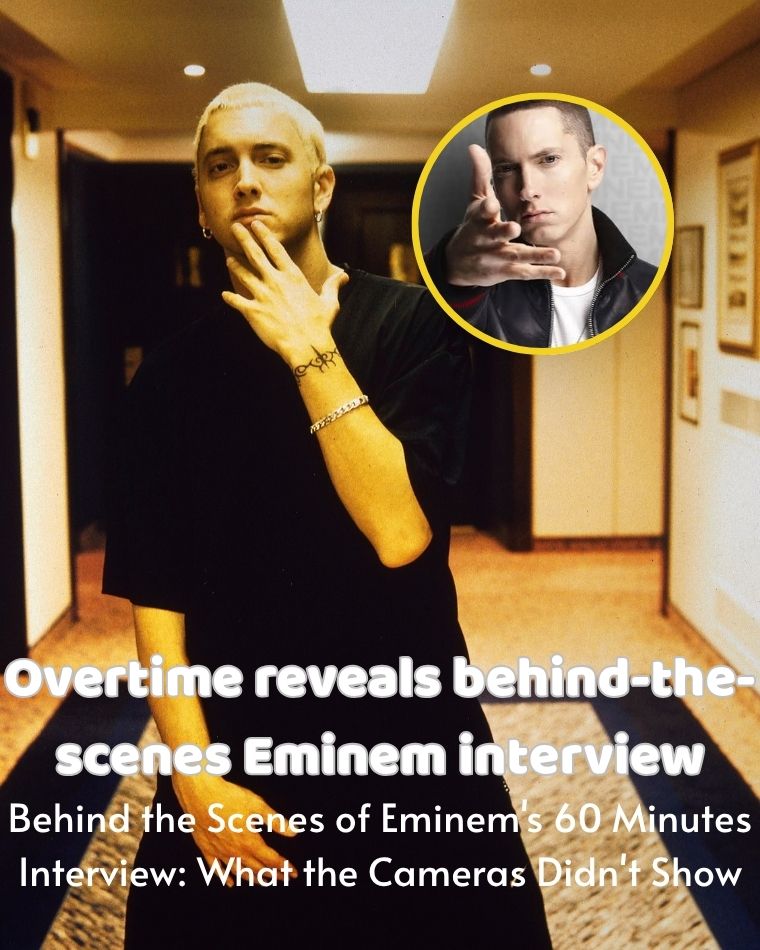
Cre: CBS News / Paramount
Unseen Exchanges and Playful Moments That Didn’t Make the Cut
Among the most memorable treasures preserved in the digital archive were unscripted demonstrations of Eminem’s peerless linguistic mastery.
While cameras rolled for the web audience, the rapper playfully dismantled the myth that certain English words possess no viable rhymes.
He effortlessly strung together multi-syllabic rhymes for notoriously difficult words, showcasing the obsessive dedication he applies to his songwriting craft.
Another charming moment captured the musician playfully attempting his own version of the traditional 60 Minutes reporter station identifications.
These lighthearted interactions added immense color and warmth to a figure who was frequently stereotyped by the media as perpetually brooding.
Omitting these playful beats from the main broadcast was necessary for narrative focus, but including them online completed the true portrait of the artist.
What the Extended View Tells Us About Media Strategy
For decades, Eminem maintained a reputation for avoiding extensive television interviews, selecting his media appearances with extreme caution.
The behind-the-scenes footage illustrates that his participation in the CBS special was approached with professional discipline and tactical awareness.
He understood that sitting down with a respected journalist like Anderson Cooper provided a premier platform to frame his own narrative on his own terms.
Rather than appearing media-trained or evasive, his willingness to let cameras capture the quiet pauses revealed a mature comfort in his own skin.
He permitted viewers to see the man behind the complex lyricism, stripping away years of tabloid myths through simple, direct eye contact.
This media strategy redefined how legacy artists can engage with mainstream networks without compromising their authentic artistic integrity.
Why CBS Chose to Expand the Narrative via Digital Platforms
The decision by CBS producers to carve out exclusive content for the Overtime platform reflects a brilliant evolution in modern broadcasting strategy.
As television viewership fractured across digital channels, audiences began craving transparency, outtakes, and unfiltered access to their favorite media figures.
Providing behind-the-scenes context satisfies viewer curiosity while driving web traffic back to the primary broadcast archive on Paramount platforms.
It demonstrates an understanding that modern fans want to witness the construction of journalism, not just the finished polished product.
By pulling back the curtain, the network validated the immense public interest surrounding one of rap music’s most elusive legends.
The digital experiment paid off by extending the cultural shelf life of an already iconic television interview by many years.
📸 [ẢNH: Thiết bị quay phim và âm thanh chuyên nghiệp thiết lập tại hiện trường phỏng vấn]
Nguồn: CBS News — Ảnh tư liệu minh họa công nghệ sản xuất truyền hình hiện đại
Capturing the Urban Soul of Detroit Through the Lens
The behind-the-scenes cameras also captured the vital geographic context that shaped the rapper’s worldview and professional ethos.
Returning to familiar Detroit haunts with a national news crew allowed the musician to reflect on his turbulent youth with grounded perspective.
The Overtime footage lingered longer on the urban landscapes, abandoned buildings, and neighborhood streets that forged his lyrical resilience.
Cooper’s interactions with local residents added a layer of journalistic authenticity that deepened the overarching narrative of survival and triumph.
These environmental details reinforced why the artist fiercely protects his hometown roots despite achieving global superstardom.
The camera movements reflected a quiet reverence for a city that experienced profound economic shifts alongside its most famous musical export.
The Evolution of Celebrity Profiles in the Digital Age
Analyzing the 60 Minutes Overtime segment today highlights how deeply celebrity interview standards have shifted over the past decade.
Modern audiences are increasingly skeptical of heavily sanitized, highly rehearsed television publicity tours that avoid all traces of real human friction.
When viewers witness unscripted pauses, technical adjustments, and genuine laughter between a journalist and a superstar, trust is immediately established.
The transparency demonstrated in this CBS digital extra set a high benchmark for how documentary profiles should treat complex cultural subjects.
It proves that humanity always shines brightest in the margins, away from teleprompters and strict broadcast runtimes.
Future media producers continue to study this archival footage to understand the delicate art of disarming guarded icons.
Examining the Psychology Behind the Guarded Exterior
Eminem’s legendary reluctance to embrace traditional celebrity culture has been a defining characteristic of his multi-decade career.
The extended footage provides subtle psychological clues regarding how he erects and maintains boundaries under public scrutiny.
When interacting off-camera with crew members, he displays a watchful awareness of his surroundings while remaining unfailingly polite.
He chooses his words with surgical precision, reflecting a mind that constantly evaluates how language will be parsed by millions.
Yet, moments of spontaneous humor reveal that beneath the armor lies an artist who deeply appreciates authentic human connection.
The digital extra allows psychology enthusiasts and fans alike to appreciate the complex interplay between public fame and private vulnerability.
The Enduring Cultural Impact of the 60 Minutes Collaboration
Years after its initial airing, the collaboration between CBS, Anderson Cooper, and Eminem remains a landmark achievement in music journalism.
It successfully bridged the gap between elite television reporting and raw street-level hip-hop culture without resorting to cheap sensationalism.
The Overtime digital extension cemented that legacy by preserving the human moments that made the encounter so unforgettable.
Viewers streaming the segment today continue to marvel at how two men from completely different worlds found common ground on camera.
The project stands as a shining example of what happens when journalistic rigor meets peerless artistic genius.
Its presence in network archives ensures that future generations will always have access to a masterclass in media storytelling.
Reflections on Media Transparency and Authentic Storytelling
The enduring popularity of 60 Minutes Overtime clips proves that modern audiences value honesty above all else in media production.
By inviting viewers behind the velvet rope, CBS transformed a routine television feature into an immersive historical document.
Anderson Cooper’s willingness to share the unpredictable moments of the Detroit shoot showcased the humility required great journalism.
Eminem’s participation demonstrated a rare willingness to let the mask slip just enough for the world to see the person underneath.
As digital media platforms continue expanding our access to archival treasures, these behind-the-scenes windows remain invaluable.
They remind us that behind every polished television broadcast lies a web of human effort, mutual respect, and unexpected magic.
The legacy of this Detroit encounter will continue resonating across digital screens for many years to come.
Để lại một phản hồi