Crafting a truly memorable antagonist in a legendary, long-running action franchise is one of Hollywood’s most difficult creative challenges.
Most films rely on theatrical over-the-acting, predictable monologues, or cartoonish evil schemes to establish their villains.
When Henry Cavill stepped into the role of CIA assassin August Walker for Mission: Impossible – Fallout, he took a radically different path.
Working opposite Tom Cruise in the 2018 blockbuster, Cavill proved that controlled menace and psychological restraint could yield devastating results.
Instead of screaming commands or chewing scenery, his performance relied on icy professionalism and terrifying physical presence.
This thoughtful approach instantly elevated what could have been a standard heavy into one of the most celebrated adversaries in cinematic history.
The Ultimate Challenge of Crafting an Iconic Franchise Villain
Long-running action properties carry massive expectations because audiences have already witnessed dozens of master criminals and corrupt masterminds.
When a franchise reaches its sixth installment, viewers can easily grow fatigued by recycled tropes and repetitive villain arcs.
The creative team needed an adversary who could stand toe-to-toe with Ethan Hunt both intellectually and physically.
The character had to feel dangerous without relying on mustache-twirling villainy or excessive dialogue exposition.
Henry Cavill recognized this hurdle immediately upon signing onto the high-stakes production.
He chose to lean into a cold, transactional demeanor that completely subverted expectations for a major studio blockbuster.
That deliberate casting choice paid off dividends, creating an unforgettable counterweight to Tom Cruise’s frantic, relentless energy.
Cold Professionalism Versus Typical Over-the-Top Action Villains
August Walker is introduced to audiences not as a raving madman, but as a hyper-competent, blunt-force instrument of state power.
He operates like a human sledgehammer, sent in when subtle diplomacy fails and absolute devastation is required.
While traditional action villains often pace around elaborate lairs outlining their evil plans, Walker stays rigorously grounded in reality.
His dialogue is delivered with smooth assurance and an unsettling lack of emotional turbulence.
This chilling coldness makes his sudden bursts of extreme violence all the more jarring and memorable for viewers.
He views collateral damage merely as an unfortunate mathematical necessity rather than a personal emotional victory.
By stripping away theatrical outbursts, Cavill turned bureaucratic ruthlessness into a genuinely frightening cinematic weapon.
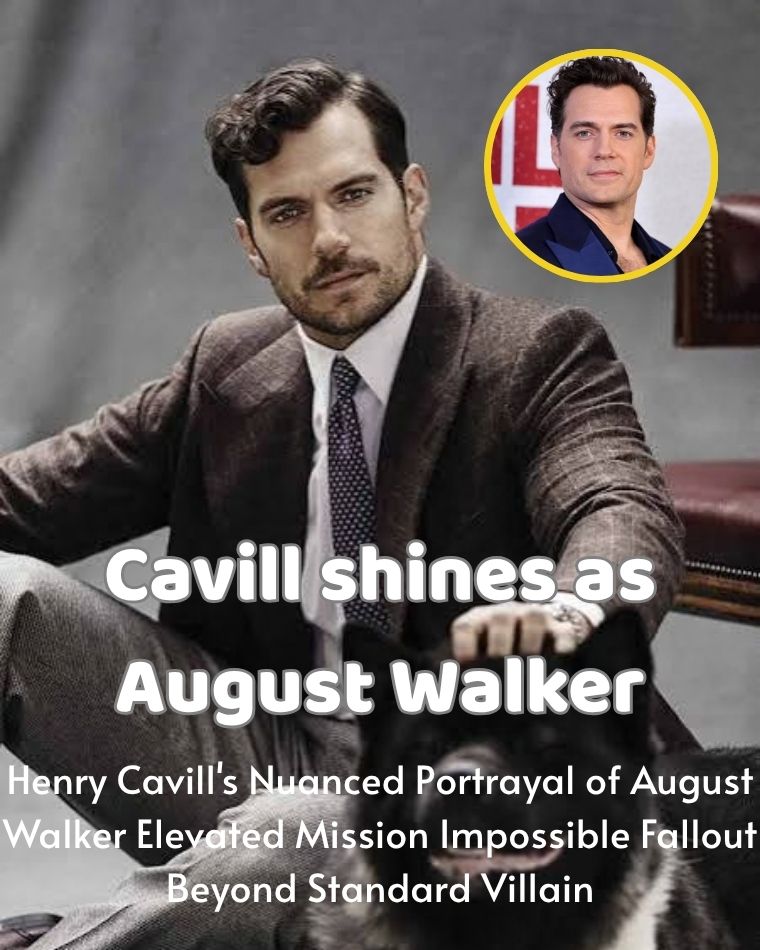
Cre: Paramount Pictures
Imposing Physical Presence Opposite Tom Cruise’s Ethan Hunt
Physical contrast is vital when constructing an iconic cinematic rivalry between a protagonist and their primary antagonist.
Tom Cruise’s Ethan Hunt has always relied on relentless agility, desperate improvisation, and sprinting endurance to survive impossible odds.
Henry Cavill introduced an imposing, statuesque physical bulk that completely altered the spatial dynamics of every scene they shared.
Standing noticeably broader and taller, Cavill projected an immovable force of nature that felt entirely impervious to standard tactics.
When the two actors shared a frame, the visual tension was palpable and immediate.
Hunt’s frantic problem-solving style clashed brilliantly against Walker’s unyielding, forward-moving momentum.
This stark physical opposition made every confrontation feel hazardous and unpredictable for the beloved IMF agent.
The Legendary Bathroom Fight Sequence and Practical Stunts
No discussion of August Walker’s cultural impact is complete without analyzing the infamous, bone-crunching bathroom fight sequence.
The grueling hand-to-hand combat scene required both actors to commit fully to grueling physical choreography without relying on digital shortcuts.
Cavill and Cruise spent weeks rehearsing intense, brutal blows inside a tightly confined tile room alongside professional stunt performers.
The choreography emphasized messy, desperate survival tactics rather than clean, stylized martial arts displays.
Every punch and body slam felt heavy, grounded, and exhausting for the participants on screen.
Fans across digital platforms quickly immortalized a tiny moment right before the brawl where Cavill flexed and adjusted his fists.
That viral gesture became a defining pop-culture meme, humorously dubbed “reloading his arms” by enthusiastic internet commentators.
The Iconic Mustache That Captured Global Media Attention
While Cavill’s performance commanded critical praise, an unexpected physical attribute became an international talking point during production.
To fulfill his commitments to the film, he sported a thick, authentic facial mustache that quickly took on a life of its own online.
The facial hair sparked massive media debates across entertainment news outlets and social media channels for months.
Fans analyzed the mustache’s thickness, styling, and how it dramatically transformed Cavill’s clean-cut public image into something rugged and sinister.
Instead of distracting from his performance, the rugged look added an extra layer of old-school toughness to his portrayal of a rogue operative.
It proved that even minor aesthetic choices could generate immense organic buzz long before a film ever hit theaters.
The cultural footprint of the mustache remains a hilarious footnote in modern blockbuster history.
Conveying Threat Through Stillness and Measured Delivery
One of the masterclasses of Cavill’s performance is his strategic use of absolute stillness during high-tension conversational scenes.
Many inexperienced actors feel compelled to gesture wildly or raise their voice when attempting to convey menace or anger.
Cavill did the exact opposite, lowering his vocal cadence and minimizing his physical movements to draw the audience’s gaze.
When August Walker speaks quietly in a crowded room, everyone else instinctively stops talking to listen.
This calculated restraint creates an aura of dangerous unpredictability because viewers never know when the calm exterior will shatter.
His steady, unblinking gaze during interrogation scenes communicates volumes without requiring a single overwritten monologue.
This mastery of non-verbal intimidation separates mediocre villains from truly legendary cinematic antagonists.
Why August Walker Remains a Fan-Favorite Franchise Adversary
Years after the theatrical release of the film, fans and critics consistently rank August Walker near the absolute top of franchise villains.
He broke the mold of disposable bad guys by matching the hero’s competence and forcing Ethan Hunt to absolute exhaustion.
The character’s ideological motivation—believing that extreme suffering is a necessary prerequisite for genuine peace—gave him a chilling philosophical weight.
Viewers appreciate when a blockbuster antagonist possesses a clear, terrifying internal logic rather than acting purely out of cartoonish malice.
Cavill’s ability to infuse the role with effortless charm made his eventual betrayal feel all the more shocking and impactful.
The performance cemented his reputation as an actor capable of dominating the screen outside of traditional heroic archetypes.
Discussions surrounding the best modern action villains inevitably always circle back to his unforgettable work in this film.
Expanding the Boundaries of Modern Action Antagonists
The legacy of August Walker extends far beyond a single successful box-office run, influencing how casting directors view dramatic actors in action roles.
Too often, handsome leading men are typecast exclusively as virtuous heroes without ever being permitted to explore their darker impulses.
Cavill shattered those limiting boundaries by proving he could project absolute ruthlessness with a smile on his face.
Future action projects frequently look back at his grounded, physical performance as a gold standard for physical threat modeling.
The cinematic grammar of hand-to-hand fights and tense espionage standoffs was permanently enriched by the commitment shown on set.
Audiences proved that they are more than ready to embrace complex, morally bankrupt characters when portrayed with high-level craftsmanship.
The risk taken by the filmmakers to cast against type yielded a timeless masterclass in villainous pacing.
Cementing a Masterclass in Cinematic Villainy
Looking back at the sweeping scope of modern action cinema, Henry Cavill’s turn as August Walker stands as an undisputed triumph.
By prioritizing icy restraint, brutal physical presence, and psychological depth over cheap theatricality, he created a timeless adversary.
The character’s clash against Ethan Hunt provided some of the most heart-stopping sequences ever captured on celluloid.
From the claustrophobic bathroom brawl to the sprawling aerial chases, every moment was anchored by absolute performance conviction.
Fans will continue revisiting the film for generations to come, marveling at the sheer magnetic force of a villain who spoke softly and carried a very heavy punch.
The role redefined what audiences expect from a blockbuster heavy, proving that quiet stillness is often much louder than screaming.
August Walker remains an immortal high-water mark for franchise antagonists, ensuring his legendary status in pop culture history.
Để lại một phản hồi