Before he ever crawled through the ventilation shafts of Nakatomi Plaza or shouted his iconic catchphrase, Bruce Willis was best known as David Addison Jr.
He played the wisecracking, charismatic private detective on the hit ABC comedy-drama series Moonlighting, which aired from 1985 to 1989.
This career-defining television role not only turned the young actor into an overnight household name across America.
It also established the exact screen persona that would eventually dictate his legendary trajectory as a global action movie superstar.
The series blended sophisticated romantic tension, rapid-fire screwball comedy, and high-stakes dramatic investigations into a totally unique television formula.
For millions of viewers tuning in weekly during the mid-to-late 1980s, Willis represented a refreshing new kind of leading man on the small screen.
This comprehensive look examines how Moonlighting served as the ultimate launchpad for Willis, transforming him from an unknown theater actor into a Hollywood icon.
The Pre-Moonlighting Struggle and Landing David Addison
Before breaking into mainstream television, Bruce Willis spent years cutting his teeth in off-Broadway theater productions and working odd jobs in New York City.
He auditioned relentlessly for minor television guest spots and commercials while honing his natural flair for improvisational comedy and dramatic timing.
When ABC began casting its ambitious new private detective series opposite established film star Cybill Shepherd, competition was fierce.
Hundreds of hopeful actors auditioned for the role of David Addison, a slick, fast-talking partner at the Blue Moon Detective Agency.
Show creator Glenn Gordon Caron needed someone who could match Cybill Shepherd’s poise while bringing an entirely unpolished, kinetic energy to the screen.
Willis walked into the audition room and immediately threw away the strict script boundaries to improvise with raw charisma.
His magnetic chemistry with Shepherd was so undeniable that producers immediately knew they had found their leading man.
Defining Traits of a Groundbreaking 1980s Television Character
David Addison instantly shattered the traditional mold of the stoic, humorless television detective that dominated 1970s and 1980s television schedules.
The character was defined by his relentless wisecracks, pop-culture references, and an infectious, high-energy charm that masked deeper emotional vulnerabilities.
Unlike traditional sleuths who solved crimes with cold logic, Addison relied heavily on improvisation, psychological bluffing, and sheer verbal agility.
Beneath his sarcastic exterior and constant stream of witty remarks lay a fiercely loyal partner who genuinely cared for Maddie Hayes.
The dialogue was delivered at a breakneck speed, drawing heavy inspiration from classic 1930s screwball comedies like His Girl Friday.
This verbal sparring created an electric dynamic that kept viewers hooked week after week.
Willis brought an unscripted authenticity to the role, frequently breaking the fourth wall to address the audience directly.
Critical Acclaim, Emmy Recognition, and Industry Status
As Moonlighting surged in popularity throughout its multi-season run, critical praise followed the production team and its breakout star.
The television industry officially recognized Willis’s immense talent when he earned a Primetime Emmy Award nomination for Outstanding Lead Actor in a Drama Series.
He ultimately captured the coveted Emmy trophy in 1987, cementing his status as a legitimate heavyweight in television acting.
The show itself garnered multiple Emmy and Golden Globe nominations, breaking new ground for genre-bending television aesthetics.
This wave of critical recognition elevated Willis from a television newcomer to one of the most bankable and respected performers in the industry.
Network executives realized they had a generational talent on their hands who could effortlessly command both comedic timing and dramatic weight.
The global profile he built during those prime broadcast years opened doors to major film studio opportunities that few television actors ever secured.
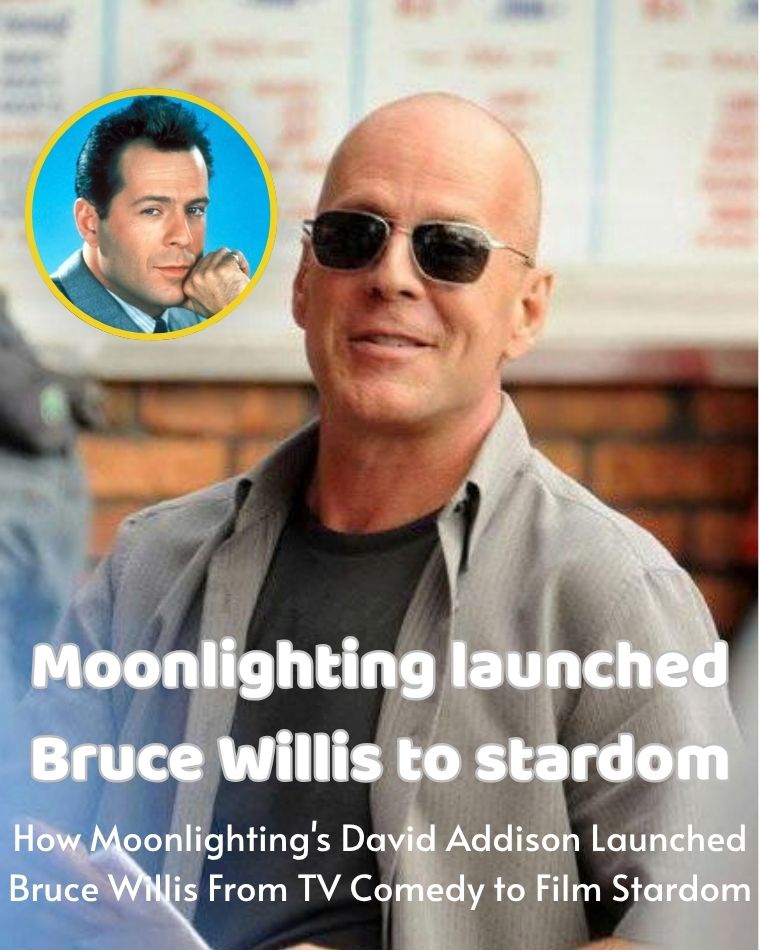
Cre: ABC / Photofest
How Moonlighting’s Tone and Persona Translated to Film Roles
The specific persona that Willis perfected as David Addison served as the foundational DNA for every iconic character he would later play.
Hollywood studio casting directors quickly noticed that his unique brand of vulnerable machismo was tailor-made for blockbuster action cinema.
Audiences loved heroes who possessed immense strength and combat skills, but who also bled, complained, and doubted themselves along the way.
Willis proved that an action lead did not need to be an emotionless monolith like Arnold Schwarzenegger or Sylvester Stallone.
Instead, he could be an ordinary guy caught in extraordinary circumstances, relying on sarcasm and grit to survive.
This vulnerability beneath the bravado became the hallmark of his cinematic career across multiple decades of hit releases.
The witty banter he perfected on the set of Moonlighting translated directly into classic cinematic one-liners delivered right before defeating villains.
The Direct Path From Moonlighting to Die Hard and Action Stardom
The culmination of his television success arrived in 1987 when 20th Century Fox began casting its gritty new action thriller adaptation titled Nothing Lasts Forever.
The project, which eventually transformed into the legendary 1988 blockbuster Die Hard, needed an actor who could project exhaustion, humor, and toughness.
A-list movie stars of the era repeatedly turned down the role of John McClane because the character spent most of the film bruised, barefoot, and terrified.
Producers ultimately approached Bruce Willis, recognizing that his television fame and relatable everyman persona made him an ideal fit.
Transitioning from a lighthearted romantic comedy-drama to an intense, high-octane action epic was a monumental gamble for the studio.
However, Willis brought the exact same vulnerable wisecracking energy from David Addison straight into Nakatomi Plaza.
When John McClane muttered his iconic sarcastic remarks while dodging bullets, viewers instantly recognized the evolution of the television detective they loved.
Die Hard became an unprecedented critical and commercial smash hit, instantly redefining the modern action genre.
Cementing a Lasting Cultural Footprint Across Entertainment
The legacy of Moonlighting extends far beyond its four-season broadcast window from 1985 to 1989, shaping the landscape of modern television writing.
The snappy, overlapping dialogue style pioneered on the show influenced dozens of subsequent comedy-drama series across major networks and streaming platforms.
More importantly, it proved that television could serve as an effective incubator for movie superstars when paired with exceptional writing and magnetic chemistry.
Willis’s journey demonstrated that versatility is the ultimate asset for any actor looking to sustain a multi-decade career in Hollywood.
Even as he transitioned into producing and starring in legendary action franchises, science fiction epics, and gritty crime dramas, his television roots remained visible.
The charming, sarcastic detective persona he introduced to the world in the mid-eighties never truly left his screen presence.
Fans and critics alike continue to study those early television episodes as a masterclass in charismatic performance and genre-blending artistry.
Navigating Production Demands and Television Exhaustion
Bringing a technically demanding, fast-paced television series to life each week required immense physical and mental stamina from its lead actors.
The shooting schedule for Moonlighting was notoriously grueling, often involving marathon overnight sessions and massive dialogue scripts.
Willis and Cybill Shepherd spent endless hours on set navigating the complex emotional beats required by the scripts.
Despite the intense production pressures, Willis maintained a high level of performance quality that earned him deep respect from directors and crew members.
The experience taught him how to anchor a multi-million-dollar production under tight deadlines and high public expectations.
This professional discipline proved invaluable when he stepped onto large-scale Hollywood movie sets where similar time constraints and physical demands awaited him.
The resilience he developed during those demanding television years forged the work ethic that sustained his career through dozens of blockbuster features.
The Chemistry That Ignited a Cultural Phenomenon
At the very heart of the show’s massive success was the palpable romantic and comedic chemistry shared between the two lead performers.
Their verbal sparring sessions felt authentic because the writers and actors embraced the natural friction of workplace dynamics.
Viewers were captivated by the “will-they-won’t-they” narrative structure that kept millions tuning in week after week.
This romantic tension was balanced skillfully against murder mysteries, corporate espionage, and surreal fourth-wall-breaking episodes.
The ability to pivot seamlessly from screwball comedy to high-stakes emotional drama showcased an impressive range that few television shows achieved.
Willis anchored this tonal versatility with an effortless coolness that made complex storylines feel accessible and deeply entertaining.
The cultural footprint of their partnership remains a defining watermark of 1980s television history.
Unlocking Hollywood’s Next Generation of Leading Men
The seismic impact of Willis’s transition from television star to cinematic icon permanently altered how Hollywood talent scouts viewed small-screen actors.
Prior to his breakthrough, studios were often hesitant to anchor massive blockbuster films with actors primarily known for network television comedies.
Willis shattered that industry glass ceiling, proving that television popularity could translate directly into massive international box office ticket sales.
His success paved the way for numerous other television actors to successfully cross over into major action and drama cinematic franchises.
Directors realized that television performers brought a disciplined work ethic, strong dialogue delivery, and immediate audience rapport to film sets.
The cultural shift opened up new pathways for talent acquisition that continue to benefit the global entertainment industry today.
Bruce Willis stood at the forefront of this modern casting evolution, changing the rules of Hollywood stardom forever.
Reflections on a Legendary Television Launchpad
Looking back at the trajectory of Bruce Willis’s legendary career reveals just how vital his time on Moonlighting truly was.
The role of David Addison gave him the platform to showcase his unique blend of charm, comedy, and vulnerability to a global audience.
Without those formative years spent mastering witty dialogue and on-screen chemistry, the cinematic landscape of modern action movies would look entirely different.
John McClane may have saved Nakatomi Plaza, but the blueprint for his survival was forged right inside the offices of the Blue Moon Detective Agency.
The enduring popularity of both the television series and his cinematic masterworks ensures that his cultural footprint will never fade.
Fans around the world continue to celebrate the brilliant performances that established him as one of the most beloved icons in entertainment history.
The journey from a wisecracking television detective to an immortal action legend remains one of Hollywood’s greatest success stories.
A Masterclass in Career Transformation
The comprehensive evolution of Bruce Willis from television comedy-drama star to global action titan is a testament to natural talent and seizing opportunity.
Every smart career choice, every iconic one-liner, and every display of vulnerable heroism traces back to the foundations built during the late 1980s.
The television industry changed forever once David Addison graced television screens, bringing humor and heart to the detective genre.
Film history shifted permanently the moment John McClane took off his shoes and stepped into action.
The bridge between these two unforgettable cultural milestones was built entirely on Willis’s unmatched charisma and versatile performance craft.
As new generations of viewers discover these classic titles across streaming platforms, the brilliance of his early work shines brighter than ever.
The legacy of Moonlighting and its charismatic star will forever remain a golden standard for what television acting can achieve.
Bruce Willis secured his immortality in Hollywood by staying true to the witty, resilient everyman persona that launched a thousand cinematic adventures.
Để lại một phản hồi