More than a decade after the cinematic saga concluded, Daniel Radcliffe joined his longtime co-stars to revisit their formative years in Harry Potter 20th Anniversary: Return to Hogwarts.
Premiering on New Year’s Day 2022, the retrospective special looked past fictional storylines to examine the shared childhoods, lifelong bonds, and complex layers of nostalgia experienced by the original cast.
Marking Two Decades Since the Journey Began
The release of Harry Potter and the Philosopher’s Stone in late 2001 introduced global audiences to a cinematic universe that would span a decade across eight blockbuster films.
Over twenty years later, the cultural footprint left by the adaptation of J.K. Rowling’s books remains virtually unmatched in modern popular culture.
To commemorate the milestone of the first film’s release, Warner Bros. organized an extensive retrospective special.
The program was designed to bring together the principal actors and creative directors who shaped the cinematic journey from beginning to end.
Instead of presenting an extension of the fictional narrative, the retrospective chose to explore the genuine human experiences behind the production.
For audiences across the globe, the release marked a rare opportunity to see the beloved trio gathered together once again on the familiar sets of Leavesden Studios.
The special carried an emotional weight rooted in real-world memory rather than scripted fantasy.
Fans who had grown up alongside the characters were invited to watch the actors reflect on their own parallel journeys into adulthood.
The project served as both a historical record of an unprecedented production undertaking and an intimate family reunion.
It placed a spotlight on the unique reality of growing up under intense international public scrutiny.
Cre: Wikimedia Commons — Gage Skidmore / CC BY-SA 2.0
The Premiere of Return to Hogwarts
On January 1, 2022, Harry Potter 20th Anniversary: Return to Hogwarts officially premiered on HBO Max.
The premiere was scheduled to ring in the new year by giving viewers an extended look inside the production of the eight films.
The timing offered longtime fans a nostalgic retreat into the settings where the cinematic magic had been originally staged.
Viewers were guided through meticulously reconstructed sets including the Great Hall, the Gryffindor common room, and Dumbledore’s office.
The retrospective made it clear from its opening frames that it was not a new fictional installment or narrative continuation.
It stood strictly as an unscripted documentary and interview special honoring the twentieth anniversary.
The feature emphasized honest retrospection over Hollywood spectacle.
Archival behind-the-scenes footage was interwoven with modern conversations between the cast and crew.
Directors Chris Columbus, Alfonso Cuarón, Mike Newell, and David Yates each offered perspectives on guiding the young cast across different eras.
The filmmakers detailed the evolution of the technical craft required to bring the magical universe to life.
Yet, despite the complex visual effects discussed, the human core of the cast remained the program’s primary focal point.
The premiere quickly became a major talking point worldwide, sparking widespread discussion about the enduring legacy of the franchise.
Reconnecting with the Core Trio
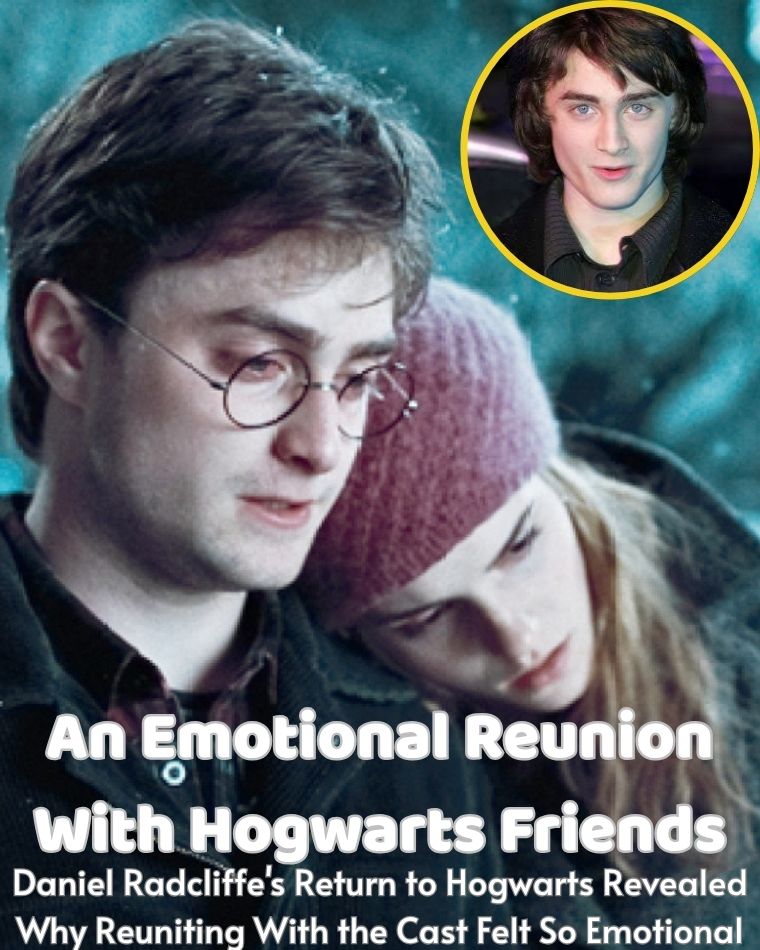
At the very center of the anniversary special was the reunion of Daniel Radcliffe, Rupert Grint, and Emma Watson.
The three performers were cast at ages eleven, twelve, and ten, spending ten consecutive years working side by side.
Seeing Radcliffe, Watson, and Grint seated together inside the reconstructed Gryffindor common room created an instant emotional anchor for the broadcast.
Their dialogue moved seamlessly between lighthearted childhood memories and deeper conversations about the weight of sudden fame.
Emma Watson shared candid thoughts about the intense pressure she felt at various points during the demanding filming schedule.
Rupert Grint mirrored those sentiments, discussing how the line between his own identity and Ron Weasley’s often blurred during his teenage years.
Radcliffe acknowledged how deeply intertwined their real-world adolescence had been with the characters they portrayed.
The trio recalled how their chemistry on screen was built on countless hours of real friendship, schoolwork, and downtime between takes.
They had essentially experienced every major adolescent milestone together on soundstages away from traditional childhood environments.
Because of that shared experience, the bond between the three performers was described as impossible to fully explain to anyone outside the bubble.
They expressed deep gratitude that they had one another to lean on during the height of the worldwide media spotlight.
Their modern interactions demonstrated that despite years of pursuing separate artistic paths, their foundational rapport remained completely intact.
Daniel Radcliffe on the Complexity of Nostalgia
For Daniel Radcliffe, participating in the twentieth-anniversary retrospective elicited mixed and intricate emotional reactions.
Radcliffe candidly explained that revisiting memories from his youth was not an entirely simple or straightforward process.
He noted that deep nostalgia can often feel overwhelming, given how completely the franchise dominated his formative years.
Spending ages ten through twenty-one playing Harry Potter meant that nearly every childhood memory was attached to a film set.
Re-examining that concentrated decade of life required confronting the sheer scale of what they had gone through as kids.
He reflected on the awkwardness inherent in having your entire adolescence documented on high-definition film for public view.
At the same time, Radcliffe pointed out that confronting those memories allowed him to see the experience with mature perspective.
He explained that stepping back onto the set helped him realize just how special the working relationships had truly been.
The veteran crew members and older actors had created an environment that protected the children as much as possible from commercial chaos.
Radcliffe expressed deep appreciation for the guidance provided by the late Alan Rickman, Richard Griffiths, and other industry legends.
He recognized that the enduring gift of the series was not just career success, but the lifelong creative discipline instilled in him.
He acknowledged that while he does not live constantly in the past, honoring that specific past in the special brought genuine closure.
His reflections offered viewers a mature, grounded assessment of child stardom and its lasting psychological footprint.
A Gathering of Key Cast and Creative Visionaries
Beyond the central three leads, Return to Hogwarts featured an extensive ensemble of returning performers from all eight movies.
Helena Bonham Carter, who portrayed Bellatrix Lestrange, joined Radcliffe for an animated conversation regarding their memorable scenes together.
Gary Oldman, who played Sirius Black, reunited with Radcliffe to discuss the mentorship dynamic that crossed over from character to real life.
Ralph Fiennes reflected on finding the voice, physicality, and sinister subtlety required for Lord Voldemort.
Tom Felton, Jason Isaacs, and Matthew Lewis offered candid anecdotes about how the ensemble cast bonded across age divides during production.
Robbie Coltrane appeared in emotional interview segments, reflecting on Hagrid’s enduring presence for future generations.
Evanna Lynch and Bonnie Wright shared their experiences growing into their roles and finding their voices within the sprawling narrative.
Directors Chris Columbus and Alfonso Cuarón explained how they approached transitioning the franchise from whimsical childhood wonder into darker teenage conflict.
Producers David Heyman and David Barron shared recollections about the unprecedented logistical challenges of managing a decade-long production cycle.
The special also dedicated poignant moments to honoring departed cast members who had passed away in the years since filming ended.
Performers paid heartfelt tribute to Alan Rickman, Richard Harris, John Hurt, and Helen McCrory, among others.
These memorial segments underscored the irreversible passage of time since the cameras first rolled in autumn 2000.
The breadth of participation illustrated just how many creative lives were shaped by the film series over its ten-year run.
Why the Retrospective Resonated Around the World
The immense popularity of Harry Potter 20th Anniversary: Return to Hogwarts stemmed from its genuine emotional vulnerability.
Rather than relying on marketing hype or teasing future franchise expansions, the special respected the audience’s emotional investment.
Fans who grew up reading the books and attending midnight film releases were now adults in their twenties, thirties, and beyond.
Watching the cast navigate the same passage of time mirrored the audience’s own growth and life transitions.
The honesty with which the actors discussed burnout, uncertainty, and self-doubt grounded the magical world in relatable human reality.
The special avoided presenting an idealized, problem-free portrait of child fame, choosing instead to acknowledge the strain alongside the joy.
Radcliffe’s contemplative approach to his childhood legacy resonated strongly with viewers who have complicated relationships with their own pasts.
The palpable, enduring affection between Radcliffe, Grint, and Watson reassured fans that their shared history was authentic.
Social media platforms saw widespread circulation of emotional clips, particularly moments highlighting the actors’ mutual respect.
The special demonstrated that the true magic of the franchise lay in the enduring community it built on and off the screen.
It stood as an authentic, reflective tribute to a singular era in contemporary cinematic history.
Looking Back to Move Forward
In the years following the conclusion of Harry Potter and the Deathly Hallows – Part 2, Daniel Radcliffe built a remarkably diverse acting career.
He deliberately chose challenging stage roles, independent films, and unconventional television projects to expand his artistic range.
His participation in Return to Hogwarts showed that he no longer feels a need to distance himself from his breakout role.
Instead, Radcliffe was able to engage with his iconic past with grace, gratitude, and clear-eyed maturity.
His discussions illustrated how an artist can honor an all-consuming early project while maintaining a totally separate contemporary creative identity.
Rupert Grint and Emma Watson have similarly navigated adulthood by cultivating distinct professional and personal paths outside the franchise.
The retrospective made clear that while their lives have diverged significantly, the bond forged at Hogwarts remains an unshakeable foundation.
For the international film community, the special served as a reminder of an era before digital streaming dominated cinema culture.
It honored the craftsmanship of thousands of crew members, from set builders and prop makers to costume designers and makeup artists.
The legacy of the production continues to live on through the permanent studio tour, stage plays, and generations of new readers.
Ultimately, Harry Potter 20th Anniversary: Return to Hogwarts succeeded because it focused on truth rather than illusion.
It provided closure to a formative chapter of cinema while celebrating the enduring power of human connection.
Để lại một phản hồi