In 2012, British cinema star Daniel Radcliffe turned that expectation completely upside down by headlining an intense, single-take music video for Sheffield indie-folk duo Slow Club.
Directed by Lucy Needs and filmed inside the Faltering Fullback pub in North London, the video for “Beginners” transformed a global film icon into an emotionally unraveling patron and introduced an independent band to an entirely new worldwide audience.
The unusual creative endeavor remains one of the most distinctive pop-cultural crossovers of the early 2010s.
It proved that artistic enthusiasm and genuine mutual respect can produce work far more enduring than conventional promotional tie-ins.
To understand how this creative collision came together, one must look at the musical trajectory of Slow Club.
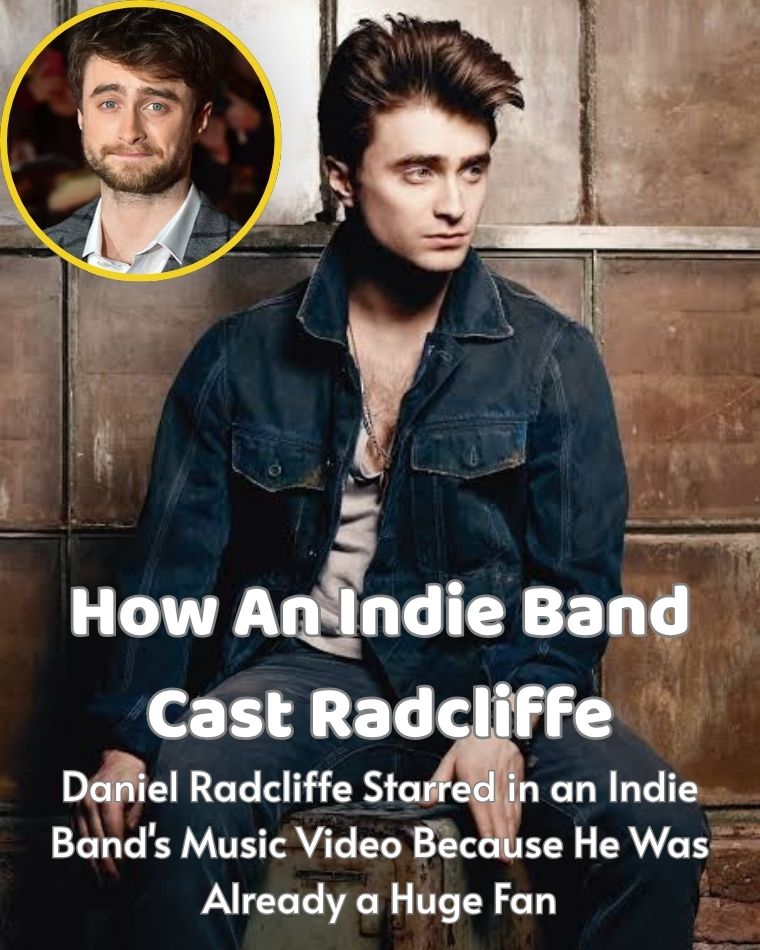
Cre: Wikimedia Commons — Ảnh chụp bởi Elen Nivrae / Creative Commons Attribution 2.0 Generic
Formed in Sheffield in 2006, Slow Club consisted of multi-instrumentalists Charles Watson and Rebecca Lucy Taylor.
The duo originally built a devoted underground following with their charming, scruffy indie-pop melodies and intricate two-part vocal harmonies.
Their debut work introduced listeners to an intimate world of conversational lyrics, percussion-driven acoustic arrangements, and witty narrative storytelling.
By 2011, however, the band had reached an artistic crossroads and sought a more mature, expansive sonic direction.
That creative evolution manifested in their sophomore studio album, titled Paradise.
Released through Moshi Moshi Records, Paradise showcased a dramatic shift away from twee bedroom folk toward lush, soulful indie rock.
Among the standout tracks on the record was “Beginners,” a poignant song layered with melancholic guitar lines, steady rhythmic pacing, and bittersweet emotional vulnerability.
The track explored the fragile mechanics of human connection, personal hesitation, and romantic fatigue.
Music critics praised the track as one of the emotional centerpieces of the entire album.
Yet within the crowded landscape of British independent music, even exceptional songs often struggled to find ears outside specialized indie circles.
Slow Club had accumulated dedicated supporters, but they operated comfortably outside the mainstream commercial spotlight.
Meanwhile, Daniel Radcliffe was navigating one of the most pivotal transitional periods of his professional life.
Having wrapped up his decade-long tenure as the titular wizard in the world-renowned Harry Potter film franchise, Radcliffe possessed total creative freedom.
Rather than sticking strictly to conventional Hollywood blockbuster formulas, Radcliffe intentionally gravitated toward adventurous and boundary-pushing artistic endeavors.
He took on challenging theatrical productions in London and on Broadway, and sought out complex, character-driven independent film roles.
Beyond his rigorous acting schedule, Radcliffe was an avid music enthusiast with an authentic passion for underground indie and folk bands.
He routinely followed independent labels, attended intimate concerts, and kept up with emerging British songwriters.
Slow Club, in particular, had caught Radcliffe’s attention long before any conversation about a joint video shoot ever surfaced.
He regularly listened to their catalog and admired how Watson and Taylor balanced vocal vulnerability with raw musical energy.
Radcliffe’s genuine appreciation for the duo soon crossed into his media commitments.
Earlier in 2012, Radcliffe was invited by Time Out magazine to conduct an interview with Slow Club.
Celebrity interviews conducted by fellow artists often run the risk of feeling superficial or orchestrated for quick public relations buzz.
However, the exchange between Radcliffe and the Sheffield musicians proved to be remarkably substantive.
During the conversation, Radcliffe surprised Charles Watson and Rebecca Lucy Taylor with his encyclopedic knowledge of their discography.
He demonstrated a deep familiarity with their song lyrics, recurring musical themes, and past live performances.
Rather than a detached movie star making polite small talk, Radcliffe engaged them as an authentic fan who truly understood their songwriting craft.
The musicians were visibly flattered and impressed by his humility and genuine curiosity.
That initial meeting laid a firm foundation of mutual trust and creative alignment.
Shortly after the Time Out encounter, Slow Club began brainstorming promotional ideas for the release of “Beginners” as a standalone single.
They enlisted the vision of music video director Lucy Needs to spearhead the visual concept.
Needs envisioned a narrative that would step away from traditional band-performance clips or polished, cut-heavy studio productions.
Instead, she pitched a raw, uninterrupted single-take concept centered entirely around a solitary protagonist experiencing an emotional breakdown.
The visual narrative required an actor capable of carrying several minutes of intense, unbroken emotional weight on screen without relying on camera cuts or digital trickery.
Because the concept called for a magnetic, fearless solo performer, the band thought back to their recent conversation with Radcliffe.
They wondered whether their famous admirer might be open to stepping into their creative world.
Knowing Radcliffe’s enthusiasm for the track and the band, the team decided to approach the actor with the proposal.
To their delight, Radcliffe embraced the invitation without hesitation.
For Radcliffe, the opportunity offered a rare creative canvas that standard feature films rarely afforded.
In mainstream cinema, performances are inevitably constructed across dozens of takes, variable camera angles, and intricate editing rooms.
A music video captured in a continuous single take, by contrast, resembled a high-stakes piece of live theater.
Every physical movement, subtle facial twitch, and emotional beat had to unfold organically in real time.
The production crew selected the Faltering Fullback as their primary filming location.
Nestled on Perth Road in Finsbury Park, North London, the Faltering Fullback is a beloved traditional pub renowned for its labyrinthine layout and cozy neighborhood charm.
With its dark wood fixtures, patterned walls, and vintage pub atmosphere, the venue provided the ideal backdrop for a narrative of quiet desolation.
The setting felt distinctly grounded, authentic, and lived-in.
Filming took place directly inside the pub, turning its interior tables and bar counters into a miniature theatrical stage.
Director Lucy Needs orchestrated the production with meticulous technical precision.
In a single-take shoot, the camera operator, lighting crew, and lead performer must move in absolute synchronicity.
If a camera missteps, a focus pull slips, or the performer misses a cue toward the end of the take, the entire four-minute sequence must start over from the beginning.
Rather than singing his own vocals on the audio track, Radcliffe committed himself to lip-syncing the words performed by Slow Club.
He inhabited the perspective of a man drowning his sorrows, grappling with regret, and slowly succumbing to intoxication.
As the camera begins rolling, the audience finds Radcliffe seated alone at a pub table, looking worn, disheveled, and contemplative.
He wears an unbuttoned denim shirt over a t-shirt, blending effortlessly into the modest pub environment.
When the music starts, Radcliffe begins mouthing the melancholy lyrics with striking emotional precision.
He does not treat the lip-syncing as a comedic exercise or a detached parody.
Instead, he pours genuine sorrow, manic frustration, and desperation into every line.
The single unbroken shot follows him as he stands up from the table, stumbles across the pub floor, and interacts with the empty room.
His character moves through waves of erratic energy, switching from numb stillness to bursts of expressive physical movement.
At various points in the take, he grabs furniture for balance, mimics playing air guitar, and clumsily climbs onto wooden tables.
The performance captured a delicate balance between tragedy and dark, agonizing humor.
Viewers could feel the weight of heartbreak radiating through Radcliffe’s frantic eyes and uncoordinated movements.
The continuous camera movement heightened that sense of intimacy, trapping the viewer inside the protagonist’s personal spiral.
There were no cuts to relieve the tension or hide any performance flaws.
Radcliffe’s complete willingness to appear vulnerable, unglamorous, and unhinged became the video’s greatest strength.
When the final take was successfully completed, the team had captured an extraordinary visual document.
The video for “Beginners” premiered officially online in June 2012.
The reaction across the music and entertainment industry was immediate and overwhelming.
Major cultural publications including The Guardian and NME quickly published features highlighting the video.
Headlines expressed widespread astonishment at seeing one of the most recognizable faces in modern cinema starring in an indie video.
Online music blogs and entertainment forums circulated the clip rapidly across international social networks.
Viewers who were accustomed to seeing Radcliffe in massive fantasy blockbusters were captivated by his raw intensity.
The video demonstrated an entirely different facet of his dramatic range.
Critics singled out his expressive commitment to the material, noting that he treated the independent project with the same seriousness as a major dramatic film.
Importantly, Radcliffe never attempted to overshadow the band or hijack their artistic identity.
Instead, his performance acted as a narrative conduit for the emotional resonance of Charles Watson and Rebecca Lucy Taylor’s songwriting.
The video generated a massive surge in exposure for Slow Club.
Listeners who had never heard of the Sheffield duo found themselves captivated by the haunting melodies of “Beginners”.
Streaming numbers and views skyrocketed, drawing thousands of curious listeners directly to the Paradise album.
Comment sections beneath the video filled with praise from both die-hard indie fans and newfound listeners discovering the group for the first time.
Many admitted they had initially clicked solely out of curiosity about Radcliffe, only to fall deeply in love with Slow Club’s sound.
This creative crossover provided an invaluable spotlight for independent British music during a highly competitive digital era.
For Slow Club, the video served as a career milestone that brought widespread critical validation to their ambitious musical transition.
For Radcliffe, the project was a definitive statement of artistic intent during a transformative chapter of his career.
In the years following the conclusion of the Harry Potter series, many commentators speculated about how child actors might handle the pressures of global celebrity.
Some anticipated that Radcliffe would pursue safe, commercial Hollywood franchises to maintain his box-office status.
Instead, Radcliffe consistently demonstrated that his career choices were guided by creative curiosity, artistic risk, and authentic passion.
Stepping into a local pub in North London to shoot an unglamorous indie music video without standard corporate fanfare proved how committed he was to challenging himself.
The collaboration underscored a broader trend of major film actors seeking artistic liberation within the music video medium.
Because music videos operate outside the commercial constraints of Hollywood feature films, they offer performers a playground for experimentation.
In a music video, an actor can embody an extreme emotional state, test a new physical acting style, and connect with niche audiences in an immediate manner.
Radcliffe’s appearance in “Beginners” set a high standard for how celebrity cameos in independent music should be executed.
Rather than treating the band as a stepping stone or a novelty, Radcliffe approached the project as a true creative collaborator.
The project also highlighted the creative ingenuity of director Lucy Needs.
Executing a seamless single-take video requires exceptional spatial awareness and storytelling economy.
Needs managed to maximize the distinctive atmosphere of the Faltering Fullback without cluttering the frame.
She kept the camera locked intimately on Radcliffe, allowing the environment to serve as a natural extension of his inner turmoil.
Every movement across the pub floor was timed to accent the dynamics of the song’s verses and choruses.
When the music swelled, Radcliffe’s physical performance escalated to match the sonic tension.
When the arrangement softened, the camera drew close to catch the quiet exhaustion etched into his features.
That balance transformed what could have been a simple promotional clip into a cohesive cinematic short story.
It proved that a compelling music video does not require multi-million-dollar visual effects or exotic filming locations.
A well-crafted concept, a brilliant piece of songwriting, and a dedicated performer are more than enough to create lasting cultural resonance.
In retrospect, the 2012 video also captured an interesting moment in time for everyone involved.
Slow Club would continue to evolve musically over subsequent years, exploring soulful pop textures on albums like Complete Surrender before eventually disbanding in 2017.
Both members subsequently embarked on acclaimed creative ventures of their own.
Rebecca Lucy Taylor went on to achieve widespread critical acclaim and mainstream success under the moniker Self Esteem, earning Mercury Prize nominations and widespread industry recognition.
Charles Watson pursued a successful solo career as a singer-songwriter and producer, crafting refined indie records.
Looking back on their discography, long-time fans still frequently cite “Beginners” as one of the emotional peaks of their shared catalog.
Radcliffe’s career continued along an adventurous, fearlessly eccentric path.
He went on to tackle acclaimed roles in independent films such as Kill Your Darlings, Swiss Army Man, and Weird: The Al Yankovic Story, alongside celebrated stage performances.
His role in the Slow Club video foreshadowed the bold, eccentric, and wholly committed acting style that would define his adult career.
Audiences recognized that Radcliffe was an actor who genuinely loved the arts and was always willing to support independent creators.
The video remains a fan favorite across multiple artistic communities.
Independent music enthusiasts appreciate the video for bringing deserved attention to an extraordinary song from Paradise.
Film fans revisit the project to witness one of Radcliffe’s most unrestrained physical performances.
The visual storytelling feels just as fresh and emotionally compelling today as it did when it first debuted on computer screens over a decade ago.
The legacy of “Beginners” demonstrates the magic that occurs when artistic boundaries are removed.
In an entertainment landscape often dominated by algorithmic formulas, marketing metrics, and corporate sponsorships, the collaboration between Radcliffe and Slow Club felt refreshingly pure.
It arose from a movie star listening to a band’s record, expressing genuine admiration during a magazine interview, and agreeing to spend an afternoon filming in a local pub.
There was no pretense, no commercial exploitation, and no cynicism involved in its creation.
Instead, it was a showcase of pure storytelling, where music and acting met in perfect harmony.
The video serves as a reminder of the power of genuine creative curiosity.
When artists step out of their comfort zones to support projects they truly care about, the results can resonate far beyond their original expectations.
For Slow Club, for Lucy Needs, and for Daniel Radcliffe, “Beginners” remains a testament to the unexpected beauty of artistic risk-taking.
More than ten years later, the image of Radcliffe stumbling through the Faltering Fullback remains an unforgettable chapter in British independent music history.
Để lại một phản hồi