Daniel Radcliffe captured international fame across eight historic cinematic chapters between 2001 and 2011. While millions of devoted fans continue to celebrate the franchise with deep nostalgia, the British actor approaches his early screen work with surprising candor and professional self-criticism. His thoughtful reflections reveal the profound difference between a blockbuster movie’s worldwide cultural acclaim and a performer’s private artistic assessment.
A Worldwide Phenomenon Built Over Ten Formative Years
Daniel Radcliffe first appeared as the titular young wizard in November 2001.
The global launch of Harry Potter and the Sorcerer’s Stone reshaped popular cinema forever.
Audiences around the world watched Radcliffe grow from an eleven-year-old newcomer into an experienced screen performer.
The production journey spanned a full decade across eight separate motion pictures.
Leaving the franchise in 2011 marked the conclusion of an unprecedented chapter in modern movie history.
For fans everywhere, the film series remains an essential cinematic universe revisited regularly during holidays and weekends.
For the actor who carried the franchise, the connection to those productions is entirely different.
Radcliffe lived through every single setup, soundstage delay, and rehearsal across ten intense years.
His relationship with the work was defined by working days rather than finished running times.
Cre: Wikimedia Commons — Creative Commons Attribution-Share Alike 2.0 Generic
The 2013 Guardian Interview and the Hesitation to Rewatch
During a revealing interview with The Guardian in November 2013, Radcliffe spoke directly about his relationship with the film catalog.
He explained clearly that he did not make a regular habit of sitting down to watch the Harry Potter movies.
The actor emphasized that he simply had no personal need to revisit the completed screen versions.
Every scene already existed vividly within his personal memory.
He remembered the physical locations, the crew members, and the exact atmosphere of each production stage.
Watching the movies as a spectator could never recreate the actual lived experience of making them.
He noted that seeing his younger self projected on screen often provoked uncomfortable self-awareness.
Most people keep their awkward adolescent phases tucked away in private family photo albums.
Radcliffe’s entire journey through puberty and early adulthood was preserved in high-definition formats worldwide.
The Guardian noted that Radcliffe was not attempting to distance himself from the universe out of resentment.
He was simply moving forward with his life and career as an independent theatrical performer.
The actor acknowledged that those ten years formed the bedrock of his working career.
Yet he recognized that rewatching the movies did not serve his ongoing artistic development.
He preferred to invest his focus in upcoming stage roles and independent cinema.
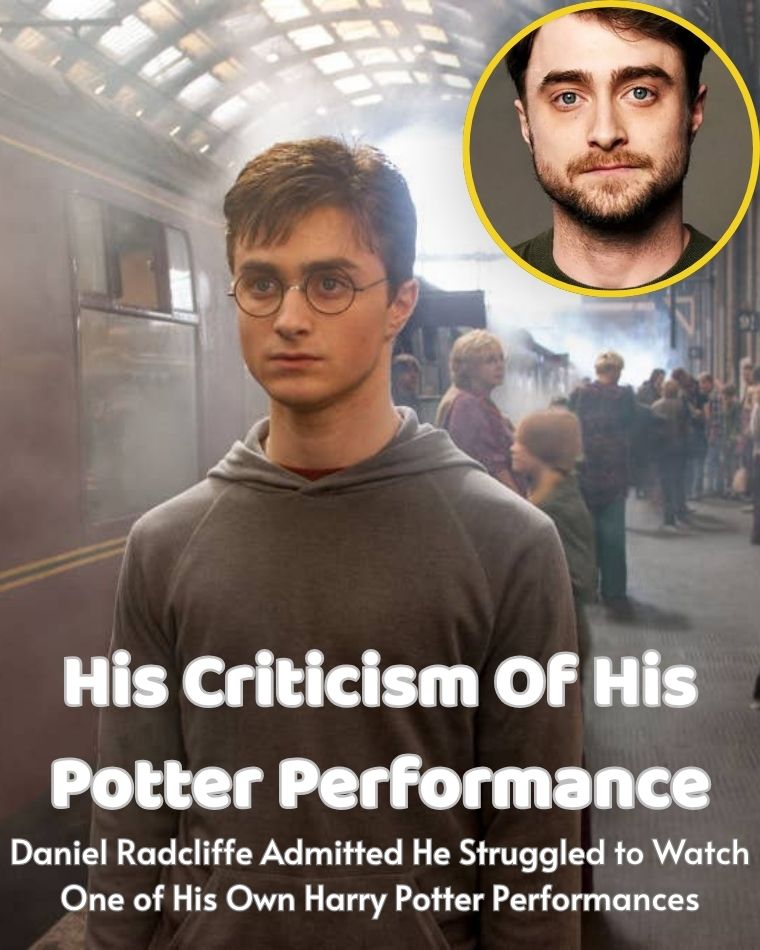
In August 2014, Radcliffe offered an even more candid appraisal during another extensive conversation with The Guardian.
He turned his critical attention specifically toward the 2009 installment, Harry Potter and the Half-Blood Prince.
Radcliffe openly admitted that he found his own performance in the sixth film deeply unsatisfying.
He characterized his acting work in that specific entry as lacking emotional variety.
The actor felt he had fallen into a flat and complacent pattern on screen.
He explained that his delivery in the sixth picture became one-note and devoid of creative energy.
Radcliffe noted that he had attempted to project a sense of inner conflict but ended up looking emotionally deadpan.
In sharp contrast, he expressed genuine pride in his work on the fifth installment, Harry Potter and the Order of the Phoenix.
He felt that director David Yates had pushed him toward genuine creative growth during the fifth movie.
The contrast between the two consecutive films highlighted how rigorous Radcliffe was with his own standards.
He was evaluating his acting choices as a student of dramatic art rather than a celebrity celebrating past triumphs.
The actor refused to flatter himself simply because the release achieved massive box-office returns.
His critique was precise, measured, and targeted entirely at his own craftsmanship.
He did not fault the directing team, the screenwriters, or his fellow ensemble cast members.
The dissatisfaction lay entirely within his own artistic expectations.
Differentiating Craft Critique From Rejection of the Franchise
Sensational entertainment headlines often mischaracterized Radcliffe’s comments as outright disdain for the Wizarding World.
In reality, Radcliffe has never expressed hatred or contempt toward the Harry Potter franchise.
He has consistently expressed immense gratitude for the unique opportunities the role created for his life.
The distinction between rigorous self-criticism and rejection is essential to understanding his viewpoint.
Radcliffe recognizes that the movies brought joy to hundreds of millions of people across multiple generations.
He accepts the cultural weight of the character with genuine modesty and warmth.
At the same time, he refuses to surrender his critical faculties as a working actor.
Every serious performer looks back at their early assignments with an urge to make different choices.
Radcliffe’s willingness to speak openly about his shortcomings demonstrates unusual professional honesty.
He does not view his child-actor years through protective nostalgia.
He treats his early roles as legitimate learning experiences that paved the way for more complex projects.
Audiences often struggle to separate an iconic character from the real human being interpreting the role.
Radcliffe has consistently maintained that healthy boundary throughout his adult career.
His comments show that respecting a classic franchise does not require an actor to pretend every choice was flawless.
The Transition to Post-Potter Cinema and Stage Success
Following the 2011 release of Harry Potter and the Deathly Hallows – Part 2, Radcliffe took deliberate professional risks.
CBS News explored this crucial career turning point in detailed coverage examining his post-Potter path.
The network documented Radcliffe’s conscious shift toward challenging stage plays and unusual cinematic scripts.
He made a bold early splash on the London and Broadway stages in the psychological drama Equus.
He earned widespread critical praise for his musical performance in How to Succeed in Business Without Really Trying.
On the screen, he committed to daring independent titles like Kill Your Darlings and The Woman in Black.
These choices revealed an artist completely committed to refining his skills on a daily basis.
Radcliffe was determined to prove that his early fame was not the final summit of his creative life.
He embraced difficult characters that forced him far outside his previous comfort zones.
His dedication to professional progression explains why he analyzed his performance in the sixth film so thoroughly.
He knew that resting on past commercial glories would limit his longevity in a notoriously difficult industry.
By confronting his technical weaknesses honestly, he accelerated his maturation into an acclaimed character actor.
Colleagues and directors frequently commend his relentless work ethic and humility on set.
He approaches every new script with the eagerness of someone determined to earn his place anew.
An Enduring Legacy Viewed Through an Honest Lens
Daniel Radcliffe’s candid remarks offer an invaluable perspective on the complexities of child stardom.
Few child actors manage to survive immense international visibility without severe personal and artistic crises.
Radcliffe navigated that delicate transition by grounding himself in rigorous personal standards.
His refusal to passively idolize his own early work shows profound maturity and self-awareness.
The Harry Potter series continues to inspire millions of readers and movie lovers across the globe.
Its place in cinematic history remains completely secure and undisputed.
Radcliffe’s self-appraisal does not diminish the emotional resonance those stories hold for audiences.
Instead, his honesty enriches our understanding of what it took to bring those eight films to life.
Behind the dazzling special effects and grand musical scores stood young performers striving to grow under immense scrutiny.
Radcliffe remembers that decade not as a highlight reel, but as a long and demanding apprenticeship.
His insights remind us that true dedication to an artistic craft requires unconditional honesty with oneself.
Looking forward rather than backward remains the guiding compass of his ongoing creative journey.
Để lại một phản hồi