Spike Lee’s signature community gathering returns to Brooklyn to commemorate Michael Jackson’s birthday on August 29 with an outpouring of rhythm, artistry, and neighborhood unity.The beloved event brings together thousands of music enthusiasts to celebrate the King of Pop through classic tracks, competitive dance, and creative costumes. By transforming urban park spaces into hubs of communal joy, the gathering showcases how Jackson’s sonic legacy continues to transcend generations and backgrounds.
Every August 29, the energy across Brooklyn shifts into a vibrant tribute to musical greatness.
Michael Jackson was born on this day in 1958, leaving behind an artistic impact that redefined modern music history.
Acclaimed director Spike Lee has made it his enduring mission to ensure that this date remains a beacon of celebration in New York City.
As reported by TheGrio, Lee’s iconic Michael Jackson Block Party returns once again to celebrate Jackson’s enduring catalog in grand communal style.
What started as an organic memorial tribute has evolved into one of the most anticipated public spectacles of the Brooklyn summer calendar.
The event provides a rare public sanctuary where fans of every generation gather solely to celebrate melody, choreography, and fellowship.
Through the medium of open-air sound systems and park gatherings, the event honors Jackson’s immense contributions to culture.
Lee approaches the annual event not as a solemn remembrance, but as an ecstatic celebration of vitality.
The director believes that Jackson’s groundbreaking creative genius deserves a festival atmosphere filled with spontaneous dance and collective song.
Thousands of participants flock to the borough with fedoras, sequined gloves, vintage jackets, and dancing shoes.
The festival proves that the timeless catalog of the King of Pop still possesses the undeniable power to unify disparate crowds.
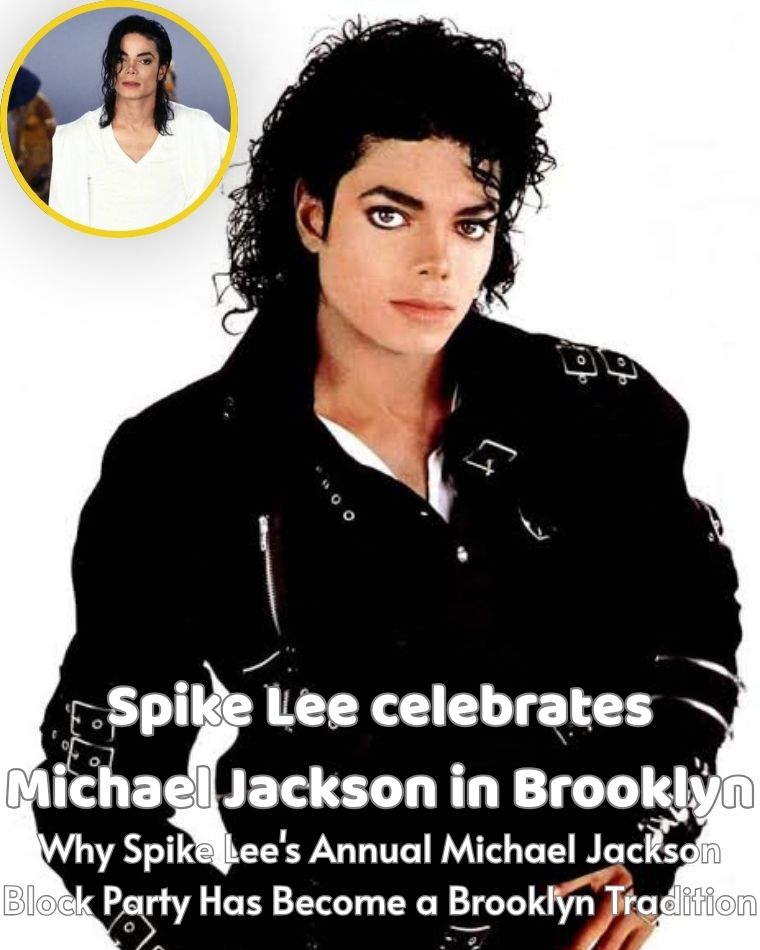
Cre: Wikimedia Commons — David Shankbone / CC BY 3.0
Origins of Spike Lee’s Block Party and His Deep Artistic Bond with Michael Jackson
Spike Lee’s profound admiration for Michael Jackson reaches back decades into their legendary professional collaborations.
Lee famously directed two distinct music videos for Jackson’s socially conscious 1996 anthem “They Don’t Care About Us”.
Their creative partnership produced historic footage in the streets of Salvador and Rio de Janeiro, Brazil.
Jackson sought out Lee precisely because of the filmmaker’s unyielding artistic integrity and dedication to social storytelling.
Lee reciprocated that reverence by studying Jackson’s tireless work ethic and mastery of musical performance.
Following Jackson’s untimely passing in June 2009, Lee felt an immediate responsibility to honor his friend’s legacy publicly.
Instead of confining the tribute to an exclusive private hall, Lee chose the open streets and public parks of Brooklyn.
The very first gathering took place later that summer in 2009 at Prospect Park.
Lee announced the event as a free public gathering for anyone who loved Michael’s extraordinary body of work.
Tens of thousands of people answered the call, filling the meadow with tears, laughter, and collective dancing.
The success of that initial gathering convinced Lee that Jackson’s birthday required an annual public celebration.
Since that memorable afternoon, the filmmaker has continually organized the tribute with passionate dedication.
Lee sees the annual gathering as an extension of his own cinematic tribute to Jackson’s creative output.
His critically acclaimed documentary projects, such as Bad 25, have highlighted the intricate craftsmanship behind Jackson’s albums.
However, Lee considers the live block party to be an even more direct and democratic expression of admiration.
The director frequently addresses the crowd himself, welcoming visitors to what he fondly terms the People’s Republic of Brooklyn.
His presence on the microphone underscores his ongoing role as a cultural guardian of Black artistic excellence.
Lee ensures that the party remains accessible to everyone without admission fees or barrier ropes.
This accessibility allows ordinary working families to participate fully in a high-profile cultural milestone.
The artistic bond between the director and the pop icon remains at the emotional core of every single gathering.
Sights, Sounds, and Soul: What the Annual Event Offers Fans
The sonic backbone of the block party is built around Jackson’s comprehensive multi-decade discography.
Legendary turntablist DJ Spinna regularly commands the decks to guide attendees on an exhaustive auditory journey.
The sound system pumps out everything from early Jackson 5 hits to solo masterworks from Off the Wall, Thriller, Bad, and Dangerous.
Obscure remixes, rare demo tracks, and live concert edits are mixed alongside chart-topping global hits.
The musical curation ensures that lifelong audiophiles and casual listeners alike discover new facets of Jackson’s catalog.
Every time the introductory drumbeat of “Billie Jean” echoes across the lawn, an immediate cheer erupts from the audience.
Impromptu dance circles form naturally within minutes across the park grass and concrete walkways.
Dancers of all skill levels step forward to execute flawless moonwalks, side slides, and synchronized spins.
Breakdancers and tap dancers alike interpret the syncopated rhythms with astonishing agility and athletic skill.
Youth performers frequently face off against veteran dancers in good-natured, friendly dance battles.
The dance tributes celebrate Jackson not just as a vocalist, but as an unparalleled innovator of visual motion.
Visual tributes also manifest through elaborate costume choices worn proudly by attending fans.
Participants arrive dressed in red leather Beat It zipper jackets, military crest tunics, and Smooth Criminal white suits.
Hundreds of attendees carry sparkling white rhinestone gloves held high into the summer sky.
Children wear mini fedoras while mimicking the famous anti-gravity leans made famous in Jackson’s short films.
Local vendors surround the venue offering Brooklyn street food, chilled beverages, and commemorative fan merchandise.
The atmosphere resembles an expansive family reunion where strangers instantly connect over shared song memories.
Smiles and laughter replace ordinary urban reserve as people sing choruses together at the top of their lungs.
The event encapsulates pure soul and community connection in a manner rarely witnessed at standard music festivals.
Every element of the day is orchestrated to foster communal uplift through collective artistic appreciation.
The Evolution of a Brooklyn Summer Tradition
Over the course of more than a decade, the party has established itself as an unshakeable fixture of Brooklyn culture.
While the event launched in the vast green meadows of Prospect Park, it has also energized neighborhood hubs like Fort Greene Park and Bedford-Stuyvesant.
These venues hold immense historical significance for Spike Lee and his storied filmmaking journey.
Fort Greene serves as the longtime home base for Lee’s production company, 40 Acres and a Mule Filmworks.
Hosting the block party in these neighborhoods reinforces the strong communal identity of historic Black Brooklyn.
Over the years, the event has continually grown in both geographic scope and cultural prominence.
City officials, local artists, and international tourists now plan their August schedules around this specific date.
Corporate partners like Jordan Brand have occasionally stepped forward to support the logistical presentation of the free festival.
Despite corporate backing, the grassroots authenticity of the gathering has never been diluted.
Surprise guest appearances regularly thrill the gathered crowds throughout the afternoon.
Notable figures such as Chris Rock, Rosie Perez, and hip-hop pioneers have dropped by to show their love.
These iconic cultural figures stand side-by-side with neighborhood residents on the grass to celebrate.
In select years, Lee expanded the celebration to encompass the musical legacy of other departed icons, including Prince.
Yet the foundational spirit of the gathering remains inextricably anchored to Michael Jackson’s birthday.
The tradition has survived scorching summer heatwaves, unseasonal rain showers, and shifting city park guidelines.
Even after temporary hiatuses, the demand for its return has always remained passionate among borough residents.
Generations of Brooklynites have grown up viewing this annual August ritual as an indispensable summer climax.
It stands as a testament to the community’s dedication to preserving living cultural traditions in public spaces.
The block party embodies the authentic spirit of classic New York neighborhood gatherings that defined previous decades.
By preserving this event, Brooklyn continues to assert its status as an international epicenter of music and cultural vitality.
The Vital Role of Public Celebrations in Preserving Jackson’s Cultural Legacy
Preserving an artist’s legacy requires more than streaming numbers, museum exhibits, or commercial marketing campaigns.
Living artistic legacies depend on ongoing physical participation, shared memory, and communal expression.
Spike Lee’s block party serves as a crucial public institution that keeps Jackson’s art alive in its natural social habitat.
Jackson created his music to be heard in collective spaces, played loud on dance floors, and experienced in crowds.
When people gather together to sing these songs, the music retains its vital original urgency.
Public gatherings ensure that historical achievements are passed directly to younger generations through authentic lived experience.
Instead of merely viewing Jackson as a distant historical icon, children at the block party experience his work as kinetic energy.
They witness their parents, grandparents, and neighbors moving together with joy to the exact same drum loops.
This direct transmission of cultural enthusiasm cannot be replicated through headphones or algorithmic playlists.
Furthermore, the block party honors Jackson’s revolutionary status as a trailblazing Black artist.
Jackson broke down racial barriers across international broadcasting networks and global stadium venues.
He paved the way for generations of Black entertainers to command worldwide creative and financial authority.
By hosting this tribute in historically significant Black neighborhoods, Lee contextualizes Jackson’s monumental historical triumphs.
The event frames Jackson not merely as a commercial pop star, but as a monumental architect of twentieth-century culture.
Scholars, critics, and casual listeners frequently observe how the event reframes the conversation around Jackson’s artistry.
The festival focuses entirely on his unparalleled discipline, songwriting ingenuity, vocal precision, and choreography.
It creates an environment where people celebrate the undeniable beauty Jackson brought into the world.
Cultural memory requires active custodians, and Lee continues to fulfill that responsibility with unwavering energy.
The longevity of the event confirms that public affection for Jackson remains resilient and deeply rooted.
Through public assemblies like this, great art remains what it was always intended to be: a communal treasure owned by the people.
Cross-Generational Unity and the Universal Appeal of Jackson’s Music
Perhaps the most striking characteristic of the Michael Jackson Block Party is the sheer diversity of its attendees.
Looking across the vast sea of participants, one observes people spanning every conceivable age bracket, ethnicity, and background.
Toddlers dancing in strollers share the grounds with elders who remember buying the Jackson 5’s first singles on vinyl.
Teenagers who discovered Jackson through modern viral dance challenges move alongside seasoned dancers who perfected the routines in the 1980s.
Jackson’s music acts as a universal language that instantly dismantles everyday social and demographic barriers.
In an increasingly fragmented cultural landscape, finding experiences that appeal equally to seven-year-olds and seventy-year-olds is extraordinarily rare.
The event demonstrates how Jackson’s music seamlessly bridges wide demographic chasms.
Families frequently attend the festival together as a multi-generational summer ritual.
Parents take immense pride in teaching their children the footwork to “Wanna Be Startin’ Somethin'” on the grass.
Grandparents watch affectionately while recalling where they were when Thriller originally debuted in 1982.
The atmosphere fosters an atmosphere of profound safety, mutual warmth, and collective happiness.
Strangers regularly strike up conversations about their favorite concert tours, album B-sides, and music video premieres.
The pervasive harmony throughout the event mirrors the core ideals of unity and healing that Jackson championed in his music.
Songs like “Man in the Mirror” and “Heal the World” take on tangible meaning when sung in unison by thousands of diverse citizens.
The shared emotional resonance reminds everyone of their common humanity.
Brooklyn’s energetic melting pot provides the ideal backdrop for this demonstration of global fellowship.
Attendees leave the park refreshed, connected, and inspired by the enduring fellowship they witnessed firsthand.
The cross-generational participation confirms that Jackson’s artistry has successfully traversed the generational divide.
His work is not fading into nostalgia, but continuing to inspire fresh creative interpretations among youth.
This dynamic cross-generational bond guarantees that the King of Pop will remain central to popular culture for generations to come.
Embodying the Joyful Spirit of the King of Pop
Ultimately, Spike Lee’s Michael Jackson Block Party serves as an authentic embodiment of Jackson’s artistic philosophy.
Throughout his career, Jackson viewed music and performance as instruments for spreading joy, wonder, and emotional release.
He believed that rhythm could uplift spirits, heal burdens, and temporarily elevate people above daily hardships.
Lee’s annual event translates that artistic philosophy into an undeniable community reality.
For seven full hours, park grounds become a space dedicated entirely to joy, rhythm, and creative expression.
The relentless basslines and horn arrangements evoke pure, uninhibited elation across the gathered masses.
Every dance circle that opens up is an act of spontaneous creative celebration.
Every shared lyric sung across the crowd reinforces a deep, collective bond.
The festival proves that true artistry does not diminish with the passage of time.
Instead, great music grows richer as more people weave it into the fabric of their personal and communal memories.
Spike Lee’s steadfast commitment ensures that Jackson’s birthday remains an occasion of celebration rather than loss.
The block party reminds the world of the transformative joy that Michael Jackson shared with millions around the globe.
As the final tracks play out each August and the sun sets over the Brooklyn skyline, the crowd lingers reluctantly.
Tired dancers brush off their sneakers, pack up their fedoras, and walk home with full hearts.
They carry with them the undeniable feeling that they participated in something profound, beautiful, and unifying.
The King of Pop may no longer walk among us, but his rhythmic heartbeat still pulses through Brooklyn every summer.
Through Spike Lee’s vision, the community keeps the magic alive, proving that music and love are eternal.
Để lại một phản hồi