Science fiction cinema exploring the deep vacuum of the universe has enjoyed a massive creative resurgence in recent years.
Collider recently compiled its definitive ranking celebrating the six best movies set in space released since 2020.
Taking a prominent place near the summit of that list is the high-stakes sci-fi blockbuster Project Hail Mary, powered by a commanding performance from Ryan Gosling.
Directed by the visionary filmmaking duo Phil Lord and Christopher Miller, the production adapts Andy Weir’s acclaimed novel into an emotionally charged cinematic spectacle.
The prestigious ranking demonstrates that global audiences continue to crave genuine emotional resonance, rigorous scientific mystery, and grand visual spectacle beyond Earth’s atmosphere.
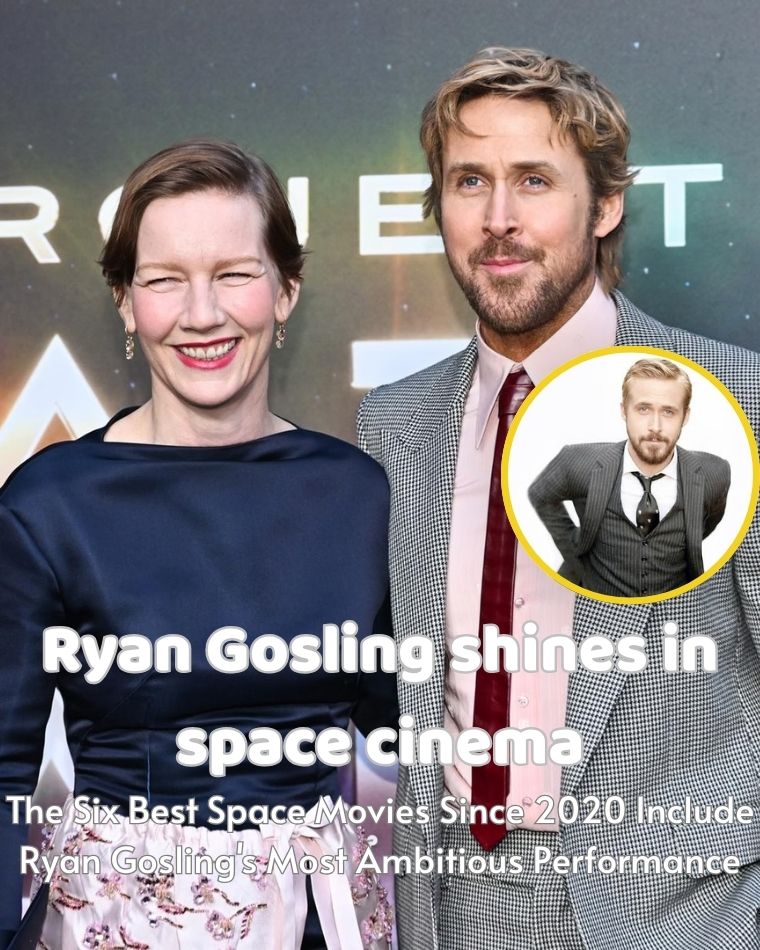
Cre: Wikimedia Commons — Gage Skidmore (CC BY-SA 3.0)
The Six Distinct Visions Defining Space Cinema Since 2020
The modern era of outer space storytelling represents far more than recycled space operas and predictable galactic dogfights.
Collider’s curated selection of the top six space films highlights the wide stylistic range that contemporary directors have brought to the genre.
At number six on the publication’s ranking stands South Korea’s vibrant 2021 release Space Sweepers, which introduced fresh energy to the space western and orbital salvage subgenre.
Holding the fifth position is Last and First Men, the haunting 2020 experimental masterpiece directed by the late Jóhann Jóhannsson that reflects on humanity’s distant cosmic evolution.
Claiming the fourth spot is Fede Álvarez’s 2024 horror spectacle Alien: Romulus, praised for restoring visceral atmospheric dread to derelict orbital research stations.
Taking the third position on the list is Marvel Studios’ emotional 2023 send-off Guardians of the Galaxy Vol. 3, directed by James Gunn.
Holding the coveted second spot is Project Hail Mary, which Collider hailed as a triumphant fusion of star power, technical wizardry, and crowd-pleasing storytelling.
Leading the entire ranking at number one is Denis Villeneuve’s 2024 magnum opus Dune: Part Two, universally recognized as an untouchable standard for modern cinematic world-building.
Together, these six distinct motion pictures prove that interstellar storytelling has expanded across wildly diverse artistic formats over the past six years.
The Formidable Acting Challenge of Ryan Gosling’s Solitary Odyssey
Anchoring an expansive Hollywood blockbuster on the shoulders of a single human actor represents an exceptional professional challenge.
In Project Hail Mary, Gosling portrays Ryland Grace, a former molecular biologist turned middle school science teacher who wakes alone from a coma aboard a spacecraft.
Grace soon discovers that his crewmates did not survive the journey and that his memory has been stripped away by medical complications.
He must piece together his identity while recognizing that the dying Sun threatens total ecological collapse on Earth.
The script, adapted by Drew Goddard, places Gosling in extreme solitude for major stretches of the narrative.
Carrying prolonged scenes without another human screen partner demands absolute vulnerability and remarkable screen charisma.
Gosling must communicate scientific calculations, profound psychological despair, and resilient human optimism directly to the lens.
Every revelation about his forgotten past and the grim reality of his mission hinges completely on the nuances of Gosling’s acting.
Film critics have noted that this performance ranks among the most technically rigorous and taxing achievements of Gosling’s celebrated film career.
The critical consensus acknowledges that without his grounding presence, the vast cinematic scale could have detached audiences from the story’s emotional core.
Bridging Grounded Scientific Inquiry with Unlikely Cosmic Brotherhood
What elevates Project Hail Mary beyond conventional survival cinema is its refusal to abandon hard scientific principles for easy dramatic shortcuts.
Following in the footsteps of Andy Weir’s previous hit The Martian, the narrative celebrates trial-and-error methodology, biochemistry, and physics as tools of salvation.
Grace does not solve interstellar crises through supernatural intervention or Hollywood cliches.
Instead, he relies on measurement, experimentation, laboratory instruments, and logical problem-solving.
However, the film’s mechanical rigor is matched by an unexpected and deeply touching connection with an alien creature named Rocky.
Encountering an extraterrestrial starship whose sole survivor faces an identical planetary catastrophe changes the entire texture of the voyage.
The friendship that develops between human and alien transforms a bleak solitary survival trial into a moving tribute to cross-species cooperation.
Gosling’s chemistry with an intricate, non-human companion requires an astonishing balance of physical comedy, patience, and sincere emotional gravity.
The story proves that the scientific method can serve as a universal language capable of bridging unimaginable evolutionary divides.
That balance of rigorous intellectual curiosity and heartfelt warmth directly earned the film its high-ranking status among modern classics.
Pushing the Technical and Directorial Boundaries of the Genre
Directing a project of this structural complexity required visionary filmmakers willing to embrace both technical innovation and unbridled charm.
Phil Lord and Christopher Miller brought their signature dynamic rhythm to the film, avoiding the clinical coldness that often hampers solitary space dramas.
The production blended tactile practical sets, zero-gravity wire rigs, and groundbreaking visual effects to bring deep space into sharp relief.
Rather than relying purely on green screens, the crew prioritized immersive environments that allowed Gosling to physically inhabit the spacecraft.
The visual representation of alien biology, strange gravitational environments, and microscopic cosmic pathogens set new benchmarks for digital craftsmanship.
Cinematographers and visual effects artists collaborated closely to make the void of space feel expansive, perilous, and genuinely awe-inspiring.
The direction keeps the audience pinned inside the vessel’s confined corridors while continuously reminding viewers of the cosmic stakes outside.
Lord and Miller successfully translated Weir’s dense expository dialogue into thrilling cinematic sequences without sacrificing intellectual integrity.
Their creative gamble validated the studio’s major financial investment in original, adult-oriented speculative storytelling.
By blending technical mastery with narrative levity, the film avoided the heavy, grim tone that often dominates contemporary sci-fi releases.
What Collider’s Ranking Signals About the Revival of Outer Space Cinema
Collider’s recognition of these six distinct titles underscores a broader cultural appetite for compelling space-set stories.
Following an era where cinema screens were saturated with interconnected superhero universes, audiences have demonstrated renewed enthusiasm for contained galactic journeys.
Viewers continue to seek out stories that challenge humanity’s place in the cosmos while testing human resilience against insurmountable odds.
The financial and critical success of films like Dune: Part Two and Project Hail Mary indicates that large-scale sci-fi can achieve artistic greatness and commercial appeal simultaneously.
The range represented on the list highlights how space serves as an elastic backdrop for every imaginable storytelling tradition.
Directors can use orbital settings to explore intimate horror, philosophical time scales, lighthearted comic action, or epic geopolitical conflict.
Moreover, the global representation among the top six—stretching from Hollywood studio epics to visionary South Korean and European cinema—points to an international renaissance.
Filmmakers no longer treat outer space simply as a backdrop for laser battles, but as a rich philosophical landscape to study human morality.
The ranking highlights that technical wizardry must always serve memorable characters and genuine emotional stakes to stand the test of time.
This standard has revitalized an entire genre for a demanding new generation of moviegoers who expect both brains and spectacle from big-budget cinema.
Ryan Gosling’s Evolving Career and the Courage to Take Massive Creative Risks
For Ryan Gosling, stepping into the demanding lead role of Ryland Grace represents another bold chapter in a fearlessly varied career.
Over the past decade, Gosling has systematically moved between independent drama, sweeping musicals, high-concept comedies, and ambitious science fiction.
His past performances in films like Blade Runner 2049 and First Man demonstrated his unique comfort with introspective, technically rigorous sci-fi settings.
In Project Hail Mary, however, Gosling had to synthesize those dramatic muscles with the energetic comedic timing seen in his broader pop-culture roles.
He carries the weight of a multi-million-dollar production without a traditional ensemble cast to share dramatic duties on screen.
An actor with less charisma could easily have let the high-concept premise become exhausting or emotionally distant.
Instead, Gosling grounds the far-flung cosmic adventure in recognizable human awkwardness, stubborn bravery, and infectious joy of discovery.
His portrayal allows ordinary viewers to see themselves in an everyday teacher thrust into the role of planetary savior.
Industry observers note that Gosling’s willingness to take extreme creative risks continues to pay massive artistic dividends.
His acclaimed presence in Collider’s upper tier cements his reputation as one of the most reliable and adventurous leading men in modern Hollywood.
The Lasting Legacy of Modern Science Fiction in Contemporary Culture
As the film industry continues to navigate evolving distribution models and shifting theater habits, the enduring appeal of space cinema remains undeniable.
The six titles highlighted by Collider demonstrate that the theater screen remains the ultimate sanctuary for grand cosmic journeys.
No domestic living room setup can completely replicate the overwhelming scale of traversing an uncharted solar system or confronting an alien starship.
Project Hail Mary stands as living proof that intelligent, scientifically literate storytelling can still captivate millions of viewers worldwide.
The film reminds moviegoers of the fundamental power of hope, ingenuity, and friendship when confronting seemingly insurmountable extinction.
As long as creative storytellers continue to look upward at the stars with curiosity rather than cynicism, cinema set in outer space will thrive.
Collider’s recognition of Ryan Gosling’s powerhouse effort honors both the noble history of the genre and the limitless possibilities of its future.
The journey of Ryland Grace has secured its rightful place in cinematic history alongside the greatest cosmic odysseys ever committed to screen.
Để lại một phản hồi