A towering cinematic milestone led by Brad Pitt has surged back into international prominence, dominating global streaming rankings years after its theatrical run.
The dramatic resurgence illustrates how home entertainment platforms continue to revitalize long-form storytelling, allowing audiences to engage with ambitious narratives without theatrical constraints.
With a high-profile sequel officially heading to Netflix, viewer excitement has transformed the original 161-minute epic into an irresistible streaming fixture.
A Three-Hour Masterpiece Reclaims the Global Spotlight
The entertainment landscape has witnessed a remarkable re-emergence as Quentin Tarantino’s critically acclaimed drama Once Upon a Time… in Hollywood ascends global streaming leaderboards.
Originally hitting cinemas in July 2019, the 161-minute feature represents one of the most audacious auteur-driven projects of modern Hollywood.
The film transports audiences directly into the turbulent, transitional atmosphere of Los Angeles in 1969.
At the heart of the project stands Brad Pitt delivering a career-defining performance as stunt double Cliff Booth.
Acting alongside Leonardo DiCaprio as aging television star Rick Dalton, Pitt anchors an intricate narrative exploring loyalty, fading stardom, and cultural upheaval.
Recent chart data highlights that the film has climbed into the upper echelon of digital viewership platforms, securing the No. 4 spot on Prime Video in the United States while drawing massive worldwide engagement.
On domestic charts, the revisionist period piece has outperformed notable competitors such as Jack Reacher, The Passenger, and Rust.
Industry trackers note that films of such extensive runtimes rarely experience this magnitude of digital renewal without a compelling secondary catalyst.
That catalyst arrived with official confirmation that Netflix and director David Fincher are bringing Cliff Booth back to the screen.
The upcoming follow-up project has rekindled public curiosity, sending casual fans and dedicated cinephiles back to where the saga started.
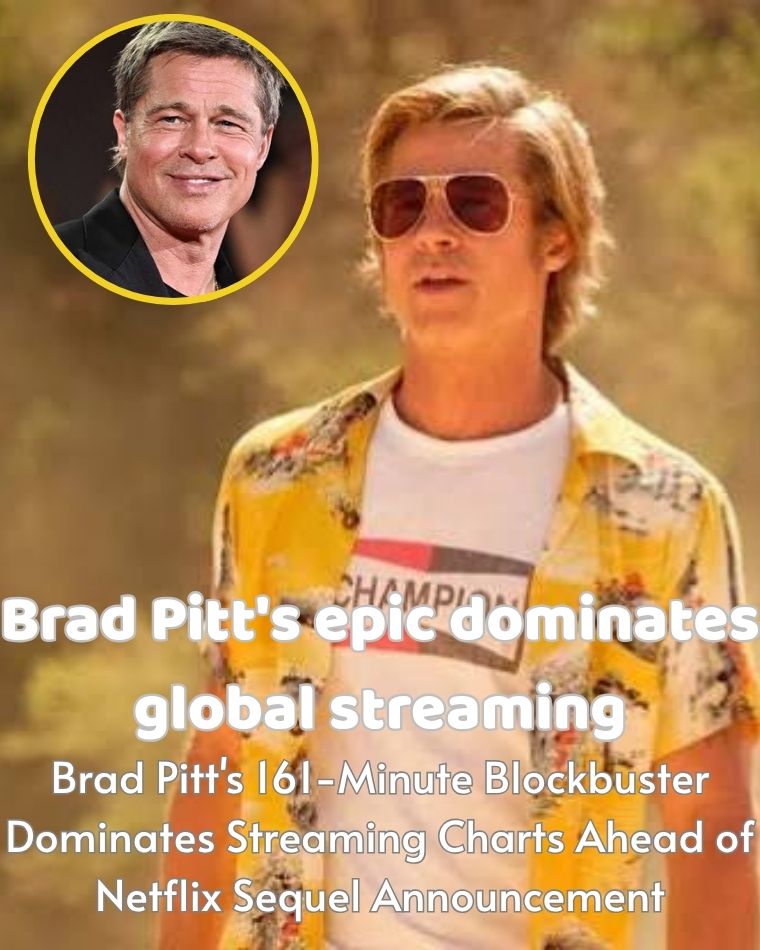
Cre: Wikimedia Commons — Glenn Francis / Pacific Pro Digital (CC BY-SA 4.0)
How Streaming Reshaped the Destiny of Long-Form Cinema
When Once Upon a Time… in Hollywood originally debuted, theatrical commentators voiced cautious skepticism regarding its extended 161-minute duration.
In traditional theater houses, runtimes exceeding two and a half hours limit daily screening slots and demand significant logistical commitments from moviegoers.
Yet modern streaming ecosystems have dismantled the historic stigma attached to extensive running times.
At home, viewers possess complete autonomy over their screening experience, welcoming deliberate pacing, detailed atmospheric construction, and organic world-building.
The 161-minute canvas enabled Quentin Tarantino to craft lingering sequences that capture the golden glow and hidden perils of late-sixties Southern California.
Rather than rushing from plot point to plot point, the movie luxuriates in character conversations, radio broadcasts, period neon marquees, and winding canyon drives.
Audiences who may have felt intimidated by a three-hour theater visit are now happily absorbing the film across living room setups.
Home viewing flexibility transforms what might once have felt like an arduous theatrical sit into an immersive cultural journey.
Viewers can absorb intricate subplots at their leisure, pausing or returning whenever desired.
This dynamic has allowed long-form cinema to flourish in ways conventional box office mechanics could never guarantee.
Industry analysts observe that modern streaming behaviors reward rich, narrative-heavy projects that reward repeat viewings.
Pitt’s effortless charisma provides the essential glue that keeps audiences invested across every single chapter of the narrative.
The film’s digital success proves decisively that duration remains an asset rather than a barrier when filmmaking quality meets audience expectations.
Brad Pitt’s Definitive Portrayal of Cliff Booth
Central to the enduring fascination with the picture is Brad Pitt’s portrayal of the laconic, fiercely capable stunt performer Cliff Booth.
Booth navigates the changing industry as both a trusted companion to Rick Dalton and an enigmatic figure operating along the fringes of celebrity society.
The character effortlessly balances easygoing warmth with underlying martial capability, creating one of the most memorable personas in twenty-first-century film.
Critical response to Pitt’s work was unanimously enthusiastic across the global festival circuit and broader release.
During the prestigious 2019–2020 film awards season, the production garnered immense industry accolades.
Pitt collected the Academy Award for Best Supporting Actor, marking his first competitive acting Oscar victory.
The film also secured an Academy Award for Best Production Design, honoring the painstaking physical recreation of vintage Hollywood boulevards.
At the Golden Globe Awards, the movie claimed Best Motion Picture – Musical or Comedy, while Pitt captured Best Supporting Actor and Tarantino took Best Screenplay.
The widespread recognition cemented Cliff Booth as an iconic cinematic creation whose journey begged further exploration.
Decades into an illustrious career, Pitt demonstrated that his screen magnetism remains capable of captivating international demographics across theatrical and home platforms alike.
Netflix Steps In: The Unprecedented Sequel Announcement
The dramatic catalyst driving the film’s fresh streaming wave is the official unveiling of The Further Mis-Adventures of Cliff Booth.
Sequels to Quentin Tarantino projects are extraordinarily rare, as the acclaimed director has historically avoided conventional follow-up installments.
Netflix orchestrated an unprecedented creative coalition by backing a new chapter penned directly by Quentin Tarantino and helmed by master director David Fincher.
The collaboration reunites Pitt with Fincher, reigniting one of the most celebrated creative partnerships in modern filmmaking history.
Having previously collaborated on foundational works including Seven, Fight Club, and The Curious Case of Benjamin Button, their reunion has galvanized film enthusiasts worldwide.
According to release schedules reported by MovieWeb, the new feature will debut in select cinemas on November 25 before premiering on Netflix on December 23.
Set against a gritty 1977 backdrop, the follow-up explores Booth’s continued wanderings through a changing cultural landscape.
The release of official promotional trailers has sparked widespread discussion across social media channels and entertainment forums.
Faced with the imminent continuation of the narrative, global audiences rushed back to the 2019 original to refresh their memories.
This dynamic created an explosive promotional cycle where upcoming streaming titles directly fuel the digital longevity of preceding studio releases.
Streaming operators understand that franchise momentum offers unmatched subscriber engagement.
By securing both theatrical prestige and holiday streaming placement, Netflix has positioned the upcoming title as an absolute centerpiece of late-year entertainment.
Revisiting 1969: Historical Revisionism and Cultural Impact
Beyond star power and runtime discussions, the structural genius of the original movie rests upon its bold revision of historical tragedy.
The film immerses viewers in 1969 Hollywood, a pivotal crossroads where classic studio systems crumbled beneath the rise of counterculture movements.
Tarantino deftly weaves real-world figures—such as Sharon Tate, Roman Polanski, and Bruce Lee—into the fictional existence of Rick Dalton and Cliff Booth.
The looming shadow of the Manson Family cult creates palpable narrative tension throughout the third act.
Yet rather than reenacting painful real-world history, the script delivers a stunning piece of revisionist wish-fulfillment.
Cliff Booth’s brutal confrontation with the intruders permanently alters the fate of Cielo Drive, offering an emotional catharsis rarely attempted in mainstream cinema.
Critics continue to celebrate this thematic audacity, viewing the film as a loving fairytale dedicated to cinema’s lost innocence.
The revisionist ending transforms a somber historical tragedy into an enduring tribute to companionship and artistic survival.
It is precisely this nuanced emotional resonance that encourages audiences to return to the project years after its festival premiere.
Viewers seeking high-grade narrative craft discover layers of foreshadowing and visual poetry that reveal themselves on subsequent viewings.
Such lasting artistic merit ensures that the film retains high streaming value long after ordinary popcorn features fade from digital memory.
The Global Power of Proven Movie Stars in the Streaming Era
The triumphant return of the 161-minute epic underscores the ongoing relevance of traditional movie stars within an algorithm-driven industry.
Over recent years, industry observers frequently questioned whether single actors could still mobilize vast global audiences.
The performance of Pitt’s catalog demonstrates that authentic star charisma continues to cut across geographical boundaries and linguistic barriers.
Whether appearing in adrenaline-fueled action spectacles or deliberate prestige dramas, Pitt commands immediate audience trust.
Streaming consumers faced with limitless content libraries frequently rely on established performers as indicators of storytelling quality.
When viewers encounter a demanding three-hour commitment, an acclaimed star presence minimizes the perceived risk of wasted time.
The chemistry shared between Pitt and Leonardo DiCaprio further elevates the material into a rare masterclass of character-focused performance.
Their interactions reflect a profound camaraderie that feels authentic, lived-in, and emotionally compelling.
Studio executives recognize that investing in genuine movie stardom provides reliable returns in digital syndication and global licensing.
The ongoing success of Once Upon a Time… in Hollywood across international markets confirms that star-driven cinema remains vibrant and essential.
Rather than fading into library archives, premiere studio achievements continue to dominate conversation across every screen format.
Comparative Streaming Dynamics: Why Epic Lengths Now Win
The streaming renaissance of lengthy cinematic epics reflects a profound shift in consumer psychology and domestic media habits.
For decades, commercial studios mandated strict theatrical runtimes near the two-hour mark to maximize theater turnover rates.
However, the rapid adoption of premium home entertainment setups—featuring high-definition displays and surround audio—has altered expectations.
Viewers increasingly treat long movies as serialized mini-events, savoring the depth and visual ambition typically reserved for premium television series.
Projects with expansive durations offer deeper world exploration, patient character arcs, and rich secondary storylines.
When paired with auteur direction, these features transcend episodic television by preserving singular cinematic visions.
Titles such as Once Upon a Time… in Hollywood function as total immersions into distinct historical epochs.
Every radio jingle, vintage car dashboard, and street billboard contributes to a complete sensory escape.
As streaming libraries become saturated with generic, formulaic productions, discerning subscribers naturally gravitate toward proven artistic masterpieces.
Audiences actively reward productions that honor their intelligence and invite them to linger inside compelling narrative worlds.
The metrics reported across Prime Video demonstrate that runtimes do not deter home viewers when the storytelling holds integrity.
In reality, an extended duration frequently signals value to audiences seeking truly substantial viewing experiences.
Anticipation Mounts for The Further Mis-Adventures of Cliff Booth
With the calendar advancing toward the late November theatrical debut and December Netflix premiere, anticipation continues to escalate.
Industry insiders are closely observing how David Fincher approaches the distinct tone established by Quentin Tarantino.
Fincher’s signature visual precision, combined with Tarantino’s razor-sharp dialogue, presents a fascinating cinematic hybrid.
Set nearly a decade after the original events, the sequel promises to delve into the rough-and-tumble environment of late-1970s cinema.
Audiences are eager to witness how Cliff Booth navigates an industry moving away from Golden Age glamour into grittier, darker creative frontiers.
The promotional synergy between past catalogs and upcoming releases represents the gold standard of contemporary franchise stewardship.
By allowing the 2019 classic to build organic momentum, distributors ensure an enormous built-in audience for the sequel’s streaming debut.
Fans across the globe are treating the streaming re-release as required viewing ahead of Booth’s next adventure.
Discussion threads, retrospectives, and video essays analyzing Booth’s character traits continue to proliferate across digital spaces.
The widespread enthusiasm confirms that memorable storytelling creates lasting cultural footprints capable of crossing corporate studio borders.
Sony Pictures’ original theatrical release now smoothly feeds subscriber anticipation for Netflix’s high-stakes continuation.
This interconnected media lifecycle illustrates how quality filmmaking consistently outlasts ephemeral digital trends.
The Evolving Landscape of Blockbuster Storytelling
The triumphant resurgence of Brad Pitt’s 161-minute triumph serves as a masterclass in modern audience engagement.
It refutes outdated assertions that modern digital consumers suffer from hopelessly shortened attention spans.
When creators deliver genuine narrative substance, viewers will gladly dedicate hours to experiencing fully realized artistic visions.
Streaming networks have transformed from mere digital repositories into active platforms of cinematic rediscovery.
As Once Upon a Time… in Hollywood maintains its formidable position near the summit of digital rankings, the film reaffirms its status as a timeless classic.
Cliff Booth’s return signals an exciting new paradigm where classic cinematic traditions gracefully align with modern streaming innovations.
Both audiences and entertainment creators stand to benefit as expansive, ambitious storytelling continues to find vibrant second lives across global screens.
Để lại một phản hồi