Daniel Radcliffe managed to dismantle the pervasive assumption that he would remain forever trapped in the shadow of the boy wizard. Through a deliberate sequence of unconventional artistic choices, he systematically expanded his dramatic footprint beyond blockbuster cinema. Here is an in-depth examination of the pivotal trilogy of roles that redefined his professional trajectory and set a precedent for child actors seeking artistic longevity.
Few child stars manage to survive the colossal machinery of a global multi-billion-dollar franchise with their creative autonomy intact.
The history of cinema is littered with early talents who found themselves unable to escape the cultural gravitational pull of their signature childhood roles.
When an actor portrays a globally recognized hero across eight successive cinematic installments, audiences naturally conflate the performer with the fictional persona.
Daniel Radcliffe faced precisely this monumental challenge as the world watched him grow from an adolescent into an adult on cinema screens worldwide.
The collective entertainment industry assumed that his post-franchise life would consist of predictable studio choices and attempts to replicate blockbuster commercial success.
Yet the critical establishment almost entirely missed the broader strategic architecture taking shape in real time across the late 2000s and early 2010s.
Instead of seeking the shelter of familiar franchises, Radcliffe pursued roles that actively courted professional vulnerability and creative risk.
Three specific artistic endeavors dismantled the assumption of an inevitable decline into typecast obscurity.
Peter Shaffer’s psychological stage drama Equus, the classic gothic horror feature The Woman in Black, and the biographical period film Kill Your Darlings arrived as a coordinated statement of artistic intent.
Each project tested a fundamentally different dimension of his range, physical commitment, and willingness to confront public failure.
Together, these choices laid the concrete foundation for one of the most uniquely daring post-franchise filmographies in modern cinematic history.
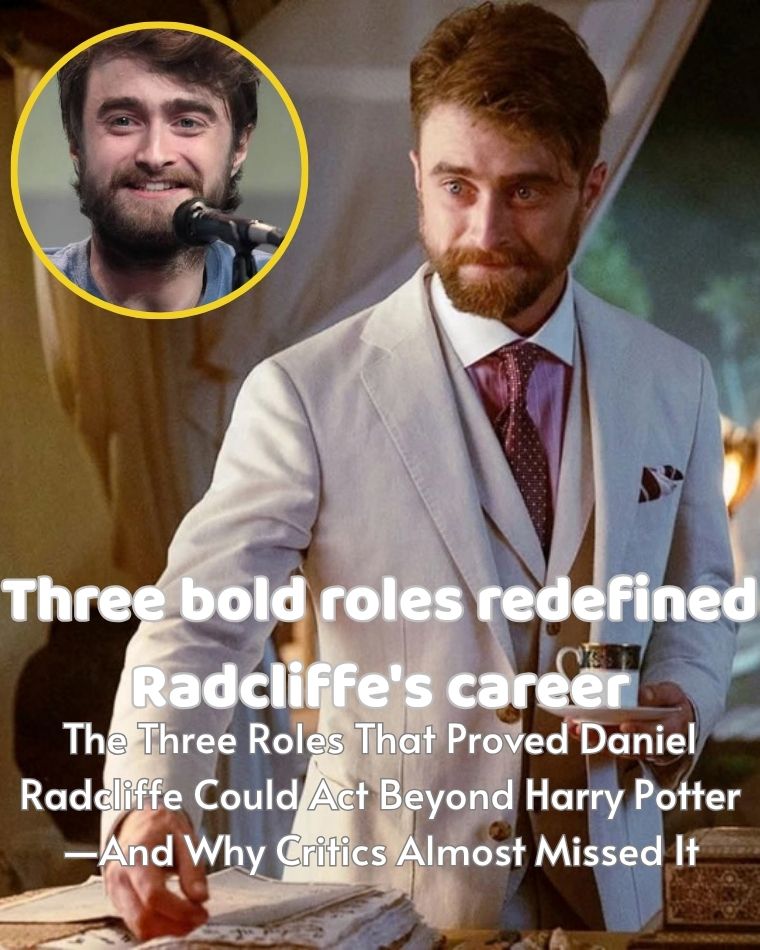
Cre: Wikimedia Commons — Joella Marano / Creative Commons Attribution-Share Alike 2.0 Generic
The first decisive strike against public perception occurred while the Harry Potter franchise was still actively dominating global box offices.
Signing on to headline Peter Shaffer’s 1973 theatrical masterpiece Equus represented a monumental artistic gamble for an eighteen-year-old actor known worldwide as a family-friendly icon.
The play demanded that Radcliffe inhabit the deeply troubled persona of Alan Strang, a seventeen-year-old stable boy consumed by an intense, quasi-religious obsession with horses.
Rather than remaining comfortably insulated by massive digital effects and studio safeguards, the young actor stepped directly onto the legitimate stage before demanding theatrical critics.
Equus required extraordinary psychological stamina, forcing the performer to convey deep spiritual confusion, repressed emotional agony, and profound mental instability.
The production also demanded total physical vulnerability, featuring extended scenes performed completely unclothed under the harsh scrutiny of live stage lights.
The initial public reaction to the casting announcement was dominated by intense tabloid sensationalism regarding the physical nudity required by the script.
Skeptics questioned whether a young actor reared in the controlled environment of studio soundstages possessed the technical vocal projection and emotional stamina for demanding stage work.
Radcliffe’s run in London’s West End in 2007, followed closely by his celebrated Broadway transfer to the Broadhurst Theatre, silenced cynical observers.
He stripped away both physical costuming and franchise armor, exposing an actor willing to bleed emotionally in front of an immediate audience.
Theater critics were forced to acknowledge that Radcliffe was not merely a recognizable celebrity dabbling in stage drama, but a disciplined theater craftsman dedicated to the demands of classic dramatic texts.
By enduring that intense theatrical crucible, he proved that he possessed raw dramatic instincts entirely separate from the special effects that framed his cinematic youth.
The psychological weight of Alan Strang showed that Radcliffe had no fear of difficult, taboo subject matter.
More importantly, it established a precedent: he would never use comfort or public approval as the primary metrics for accepting an artistic assignment.
Once the cinematic saga of Harry Potter finally concluded its theatrical run, the commercial question surrounding Radcliffe transformed.
Hollywood executives wondered whether the young British star possessed the individual box office drawing power to open a major genre film on his own merits.
The answer arrived with the 2012 feature film adaptation of Susan Hill’s celebrated gothic ghost story The Woman in Black.
Directed by James Watkins and produced under the legendary Hammer Film Productions banner, the project presented a stark stylistic departure from modern fantasy spectacles.
The production placed Radcliffe in the role of Arthur Kipps, a widowed Victorian solicitor mourning the devastating loss of his beloved wife while raising a young son.
The character was visibly older, profoundly sorrowful, and emotionally hollowed out by grief.
To embody Kipps authentically, Radcliffe had to project an aura of adult weariness, parental responsibility, and quiet existential dread.
The film did not rely on frantic pacing, flashy supernatural battles, or high-energy teenage banter to engage the audience.
Instead, the narrative rested almost entirely on Radcliffe’s solitary exploration of the eerie, fog-drenched Eel Marsh House.
For lengthy sequences running without spoken dialogue, the camera lingered exclusively on his expressive eyes, measured breathing, and controlled physical tension.
He carried the psychological terror of the narrative through restrained reactions rather than exaggerated theatrical heroics.
The Woman in Black proved to be a resounding worldwide commercial triumph, grossing well over one hundred million dollars internationally.
The box office success demonstrated to industry observers that adult audiences would actively pay ticket admissions to watch Radcliffe lead a dark period drama alone.
It firmly settled the pressing question of his solo commercial viability beyond the multi-lead ensemble architecture of his childhood franchise.
He demonstrated that his cinematic screen presence could sustain suspense and emotional gravity in an adult genre world that the Potter films had never touched.
With his theatrical legitimacy verified and his solo commercial viability secured, Radcliffe turned his attention toward complex independent cinema.
His subsequent defining artistic hurdle lay in proving his dramatic range when interpreting real historical figures carrying intellectual and sexual complexity.
That decisive opportunity materialized in the 2013 biographical feature drama Kill Your Darlings, directed by John Krokidas.
The film documented the formative 1944 collegiate years of the core figures of the revolutionary Beat Generation at Columbia University.
Radcliffe took on the challenging assignment of portraying the young, introspective poet Allen Ginsberg before he became an icon of twentieth-century American counterculture.
The performance required Radcliffe to capture an entirely different vocal cadence, mastering a convincing, nuanced mid-century American accent.
Physically, he transformed himself into the awkward, curly-haired, bespectacled intellectual discovering his nascent poetic voice amidst radical social rebellion.
The narrative delved fearlessly into the complicated dynamics between Ginsberg, Lucien Carr, Jack Kerouac, and William S. Burroughs surrounding a real-life homicide.
Radcliffe portrayed Ginsberg’s early awakening with tender honesty, charting his turbulent romantic attraction to Carr alongside his artistic coming of age.
The role demanded emotional vulnerability as Ginsberg navigated confusing infatuation, intellectual rivalry, and moral dilemmas.
There was no remnant of the heroic savior archetype left anywhere in this textured, conflicted characterization.
Instead, Radcliffe offered an intimate psychological portrait of a real young man wrestling with desire, artistic frustration, and the desire to belong.
By embracing the controversial history of the Beat Generation, Radcliffe signaled that complex human sexuality and historical truth were spaces he entered without hesitation.
Kill Your Darlings effectively demonstrated that he could thrive within festival-driven independent filmmaking, holding the screen alongside exceptional character actors.
Examining these three distinctive milestones in retrospect reveals that they did not arrive by random happenstance or spontaneous luck.
They formed a deliberate, coherent career architecture engineered specifically to decouple Radcliffe’s public persona from childhood nostalgia.
Equus was the daring shock to the cultural system that boldly tore down the squeaky-clean image of the young wizard.
The Woman in Black established a reliable commercial bridge into mainstream adult genre filmmaking and verified his individual marketability.
Kill Your Darlings cemented his credibility as an uncompromising dramatic actor committed to boundary-pushing independent narratives.
Each successive step systematically filled a critical artistic requirement, constructing a bulletproof foundation for sustained long-term longevity.
When viewed as a unified trilogy of career choices, these roles reflect an extraordinary degree of self-awareness and patience.
Rather than running away frantically from his famous origins through superficial, flashy action vehicles, Radcliffe chose demanding dramatic materials that required rigorous artistic discipline.
He understood instinctively that true artistic reinvention requires patience, resilience, and a consistent demonstration of craft over several years.
Validation from the global critical establishment did not materialize overnight, nor was it granted immediately upon the release of these early works.
Many cultural commentators initially treated his stage work and independent selections with polite condescension, suspecting that high-profile directors were merely exploiting his fame.
It required the cumulative weight of all three projects to finally shift the broader critical consensus in his favor.
Audiences had to watch him command the stage in New York, lead a chilling gothic ghost story, and recite raw Beat poetry before they accepted his transformation.
The critical community slowly came to realize that Radcliffe was not playing the typical celebrity game of pursuing brand value and superficial star status.
He was using the financial freedom granted by his early franchise earnings to subsidize a genuinely daring, adventurous artistic life.
His choices demonstrated that commercial security can be utilized as a shield to protect artistic curiosity rather than a reason to stagnate.
The artistic philosophy forged during this pivotal period continues to define Radcliffe’s prolific output across stage, television, and film today.
Having successfully conquered his own historical typecasting, he felt completely liberated to chase the most bizarre, eccentric, and intellectually original concepts available in contemporary cinema.
That daring mentality paved the direct road toward surreal independent gems such as Swiss Army Man, where he portrayed a talking corpse, and the eccentric action-comedy Guns Akimbo.
It also enabled his triumphant return to Broadway musical theater, culminating in widespread critical acclaim and prestigious industry accolades.
Many actors spend decades trapped in bitter battles against the childhood ghosts of their early commercial fame.
Radcliffe took ownership of his career by running directly toward the terrifying, the vulnerable, and the deeply strange.
Equus, The Woman in Black, and Kill Your Darlings were the foundational pillars that supported every adventurous choice that followed in their wake.
They showed the world that an actor can emerge from a massive childhood franchise not as a tragic casualty of sudden fame, but as a fearless, versatile artist of enduring cultural consequence.
Để lại một phản hồi