Anna Kendrick has built one of the most unpredictable and enduring careers in modern cinema by actively defying standard industry formulas. While the entertainment industry often rewards rigid five-year plans and carefully curated career brands, the Academy Award-nominated actress credits her longevity to a completely opposite mindset: stripping away pressure, letting go of outcomes, and honoring the instincts of her teenage self. From her breakout roles in major franchises to her bold directorial debut and high-profile upcoming adaptations, her candid philosophy provides a rare masterclass in creative freedom and professional resilience.
The Unlikely Secret Behind Anna Kendrick’s Hollywood Longevity
Anna Kendrick does not believe in micromanaging fate.
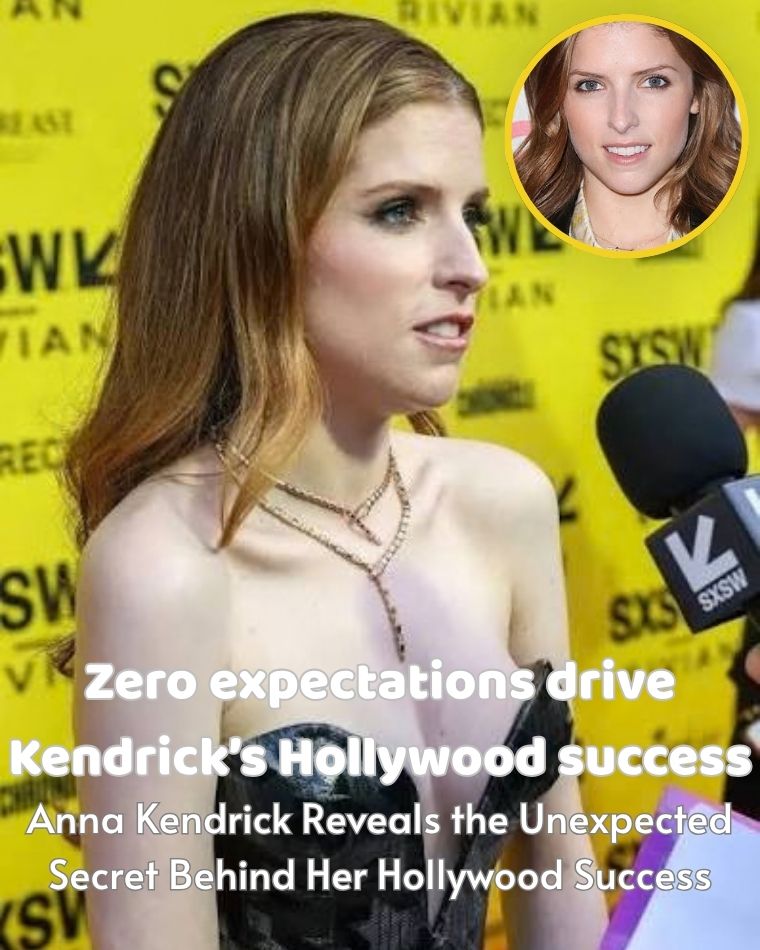
During an insightful career discussion at the Zurich Film Festival, the 41-year-old actress openly demystified what outsiders often assume is a meticulously engineered rise to the top.
Instead of following conventional executive playbooks, Kendrick explained that modesty, psychological freedom, and working without expectations have served as her ultimate secret weapons.
When actors convince themselves that a role is entirely out of reach, something transformative happens to their craft.
As Kendrick pointed out to festival attendees, walking into an audition believing she had no chance of being selected eliminated paralyzing self-consciousness.
“Any time in my career where I just thought, ‘Well there’s not a shot in hell that I’m gonna get this job,’ I do absolutely my best work — because you’re relieved of the stress of it,” Kendrick revealed.
That release of internal tension allowed her to deliver bold, idiosyncratic interpretations rather than safe, generic reads.
Where others brought polished caution into casting rooms, Kendrick brought unfiltered personality.
That instinctual daring gradually formed the bedrock of a multi-decade journey across blockbusters, prestige dramas, and stage productions.
Cre: Wikimedia Commons
How Walking Away From Stress Won Her an Oscar Nomination
The pivotal moment that launched Kendrick into the top tier of Hollywood acting occurred with Jason Reitman’s acclaimed 2009 comedy-drama Up in the Air.
Kendrick starred opposite George Clooney as Natalie Keener, an ambitious, corporate-minded young woman advocating for video-conference termination firing.
Her performance earned her widespread critical praise, alongside an Academy Award nomination for Best Supporting Actress.
Yet Kendrick admitted that had she known filmmakers were seriously considering her for the part, the outcome might have been disastrous.
“If I’d known there was a real interest in me, I would have absolutely bungled the read,” Kendrick frankly explained.
At the time, she assumed the production team was hunting for an entirely different archetype of actress.
“Because I just thought, ‘Obviously, they’re gonna hire someone incredibly classy,'” she recalled.
Convinced she had nothing to lose, she deliberately ignored typical prestige-drama audition etiquette.
“I went in and did an awkward, goofy read, and that’s what got me the job because nobody else did the audition that way,” she shared.
By leaning into authentic awkwardness, she unlocked the core emotional vulnerability of the character.
The gamble redefined her standing in the business and proved that unconventional choices resonate far deeper than manufactured perfection.
Redefining Franchise Roles Through Weird and Funny Choices
Years before Pitch Perfect became a worldwide musical phenomenon, Kendrick faced another seemingly impossible casting call.
In 2008, she auditioned for the first installment of The Twilight Saga, adapting Stephenie Meyer’s massive literary phenomenon.
The character of Jessica Stanley was written on paper as someone virtually unrecognizable from Kendrick’s own profile.
“I play one of the friends at school, but I think in the book and in the script she was described as this tall, blonde, athletic, kind of popular girl,” Kendrick explained.
Seeing the stark contrast between the character breakdown and herself left her genuinely bewildered.
“So again, I was like, why the f*** am I here?” she joked when recalling the casting room atmosphere.
Her reaction was not unique that afternoon.
“I remember I ran into Mae Whitman in the waiting room before the audition, and we were both like, ‘What are we doing here?'” Kendrick remembered.
Instead of trying to force herself into an ill-fitting mold, Kendrick made a split-second artistic choice.
“So again, you go in and you’re like, ‘What if I just did it really weird and funny?'” she explained.
Her comic timing transformed Jessica Stanley into an unexpectedly hilarious scene-stealer throughout the multi-billion-dollar franchise.
Navigating the Trap of Hollywood Typecasting
Sudden success in Hollywood almost invariably triggers aggressive typecasting from studios eager to repeat box-office formulas.
Following breakthrough turns, Kendrick found her inbox inundated with scripts demanding carbon copies of characters she had already performed.
Many rising performers panic when faced with industry pigeonholing, fearing they must permanently surrender their artistic range.
Kendrick, however, gained critical perspective through a story shared by a colleague about Hollywood legend Meryl Streep.
“I remember someone who had worked with Meryl Streep was like, ‘Even now, in Meryl’s career, she will just get a deluge of offers for the exact character that she just played,'” Kendrick reflected.
Realizing that even the most revered actress in modern film history faced constant repetitive offers brought immense comfort.
Kendrick understood that typecasting was simply a mechanical habit of studio development, not an indictment of her creative potential.
Equipped with that realization, she felt empowered to say no to lucrative retreads.
She continued actively alternating between broad commercial vehicles, indie character studies, musical theater adaptations, and dark comedic capers.
Her filmography stayed dynamic precisely because she refused to let external trends dictate her artistic value.
The 15-Year-Old Rule: Kendrick’s Intuitive Script Compass
When industry analysts search for the strategic masterstroke behind Kendrick’s project selection, they are often surprised to discover its simplicity.
Kendrick previously spoke candidly to The New York Times regarding her process for evaluating scripts and directors.
“In case you can’t tell, I don’t really have a career strategy,” she admitted.
Rather than plotting calculated box-office trajectories or curating an awards-focused portfolio, she relies on an intuitive inner barometer.
“My decisions are entirely based on, ‘Well, I’m around, and this is something that the 15-year-old me would be excited to do,'” she explained.
That adolescent yardstick provides remarkable clarity in an industry plagued by overthinking.
It explains why she embraced leading a singing collegiate group in Pitch Perfect, stepping into musical fairy tales like Into the Woods, or anchoring intimate black comedies.
Whenever an opportunity sparks that genuine spark of youthful enthusiasm, she commits completely.
By honoring what initially inspired her love of performance as a teenager, she avoids artistic cynicism and maintains genuine joy in her work.
Working-Class Roots and the Value of Relentless Grit
Kendrick’s lighthearted demeanor on camera often masks an intense, grounded work ethic shaped long before she ever set foot on a movie lot.
Raised in Portland, Maine, she grew up in a middle-class household where financial stability was earned through persistent daily labor.
Her early experiences on Broadway—earning a Tony Award nomination at age 12 for High Society—demanded adult professional discipline during childhood.
Those formative years forged an enduring philosophy regarding job security and gratitude.
“When you grow up middle class, you just always feel like you’ve got to be working or you won’t be able to pay the bills,” Kendrick explained to The New York Times.
That psychological imprint kept her completely immune to Hollywood complacency.
While some performers pause their careers assuming the industry will endlessly hold their place, Kendrick takes nothing for granted.
“I never let myself forget that I can’t just put this down and expect it to be waiting for me when I feel like coming back to it,” she declared.
This acute awareness drives her sustained work ethic across demanding film schedules, press tours, and studio negotiations.
Humility and blue-collar diligence ensure that no matter how elevated her public profile becomes, she approaches every single production with zero entitlement.
Stepping Behind the Camera: The Evolution to Woman of the Hour
That fearless refusal to remain comfortable eventually propelled Kendrick into the director’s chair for her feature directorial debut, Woman of the Hour.
The true-crime thriller dramatizes the chilling story of Cheryl Bradshaw, an aspiring actress who appeared on a 1978 television dating show and unknowingly chose serial killer Rodney Alcala.
Originally attached only to star in the project, Kendrick recognized that the script explored complex questions of feminine survival, intuition, and institutional apathy.
When the production faced director turnover, Kendrick took a decisive leap into leadership.
Stepping behind the camera required letting go of every safety net she possessed as a traditional movie star.
She embraced the immense pressure of directing with the exact same philosophy that guided her earliest audition rooms: total commitment without vanity.
Directing forced her to articulate tone, visual composition, and tension across every department.
Rather than sensationalizing violence, she centered the emotional reality and quiet unease experienced by women navigating everyday peril.
The film premiered to widespread critical acclaim, earning standing ovations on the international festival circuit.
Reviewers singled out Kendrick’s restraint, tight pacing, and nuanced thematic control as the work of a seasoned filmmaker.
By betting on her directorial vision, she demonstrated that stepping into the unknown remains the fastest catalyst for profound creative evolution.
What Her Philosophy Signals for The Seven Husbands of Evelyn Hugo
Kendrick’s ongoing evolution serves as a powerful preview for her future projects, most notably the highly anticipated screen adaptation of The Seven Husbands of Evelyn Hugo.
Taylor Jenkins Reid’s bestselling novel has captivated millions of readers worldwide, creating immense public anticipation around its cinematic translation.
The story centers on aging Hollywood legend Evelyn Hugo recounting the secrets, sacrifices, and scandals of her private life to an ambitious journalist.
Taking on major cultural properties with passionate fan bases carries tremendous industry pressure.
Yet Kendrick’s career-long insulation from external anxiety positions her uniquely to approach high-stakes narrative material with uncompromising clarity.
Rather than attempting to satisfy every conflicting online expectation, her methodology relies on discovering authentic, unexpected emotional truths.
She approaches grand cinematic universes through intimate character dynamics.
By applying her trademark mixture of grounded grit and unpretentious intuition, Kendrick continues building projects that surprise audiences instead of merely pandering to them.
Her ongoing trajectory confirms that enduring stardom does not require cold calculation.
By working tirelessly, staying anchored to working-class humility, and choosing projects that excite her inner youth, Anna Kendrick continues shaping her career entirely on her own terms.
Để lại một phản hồi