The legendary fantasy franchise Highlander is officially mounting an expansive comeback in 2026, headlined by a brand-new four-part release that restores the original creative blueprint of the universe.
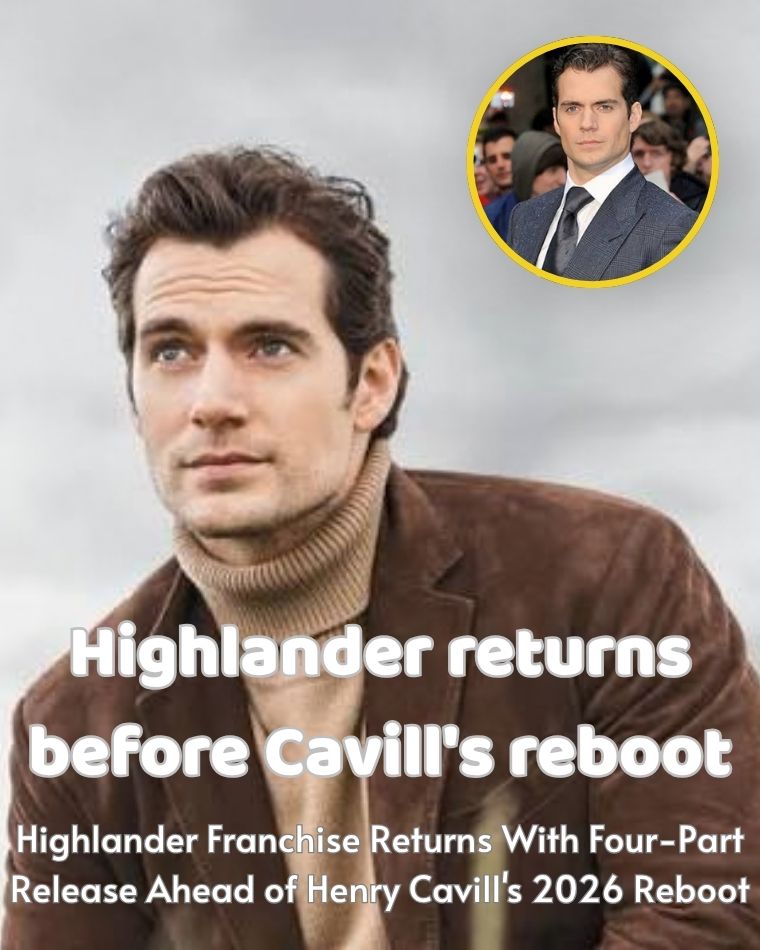
This major development arrives as director Chad Stahelski and Hollywood star Henry Cavill advance their high-profile cinematic reboot toward post-production.
By reintroducing the unvarnished roots of Connor MacLeod right before Cavill wields the katana, the coordinated rollout establishes a vital bridge between forty years of mythology and modern action cinema.
The 2026 Four-Part Launch and the Return of Gregory Widen
The cinematic universe of Highlander is formally expanding in late 2026 with a dedicated four-part project designed to revive the roots of the saga.
According to an exclusive report from Collider, Titan Comics has officially slated Highlander: The Original Screenplay for publication.
This initiative is structured as a four-issue graphic work adapting Gregory Widen’s original unedited script for the 1986 fantasy classic.
The premiere 32-page installment is scheduled to hit shelves on December 2, 2026.
Gregory Widen originally drafted the core narrative while attending the film program at UCLA.
That foundational script underwent subsequent revisions by screenwriters Peter Bellwood and Larry Ferguson prior to theatrical production in 1986.
Now, Widen returns personally to translate his unfiltered vision into the four-part comic format.
Celebrated comic artist Szymon Kudrański is handling all artwork across the miniseries.
Publisher Titan Comics describes the release as presenting the genuine original blueprint of the immortal mythos.
The story chronicles Connor MacLeod through multiple centuries of lethal duels against rival immortals competing for the mysterious Prize.
Cre: Wikimedia Commons — Georges Biard / CC BY-SA 3.0
The December release date positions the classic mythology directly in front of audiences before the new feature film lands.
Instead of letting the classic material fade into background memory, stakeholders are pushing the original vision directly into active circulation.
This publishing event ensures that old and new fans alike can examine the dark tonality of Widen’s original concept.
The return of the narrative architect marks an unusual commitment to creative preservation.
Widen’s initial treatment was notably darker and grittier than the eventual 1986 film.
Experiencing this uncompromised story provides invaluable context for the aesthetic choices expected in contemporary cinema.
Industry analysts emphasize that timing this four-part launch for late 2026 builds natural cultural momentum.
The strategy allows the brand to command print and digital media long before final trailers premiere.
By establishing an authentic baseline, the production team pays homage to the legacy of the storytellers who built it.
Four Decades of Immortals, Katanas, and Pop Culture Legacy
When director Russell Mulcahy brought Highlander to theaters in March 1986, it introduced an enduring premise to world cinema.
The premise centered on secret immortals walking among mortals across centuries, locked in deadly sword combat.
Christopher Lambert starred as Connor MacLeod, a 16th-century Scottish warrior cast out of his clan after surviving fatal wounds.
Sean Connery delivered an iconic performance as Juan Sánchez-Villalobos Ramírez, the flamboyant Egyptian mentor who trained him.
Clancy Brown embodied terror as the Kurgan, a ruthless brute determined to slaughter every surviving immortal.
The movie’s definitive catchphrase, “There can be only one,” quickly permeated global pop culture.
A driving rock soundtrack composed and performed by Queen further cemented the movie’s status as a cult phenomenon.
Despite modest theatrical returns during its initial American run, Highlander exploded through home video rentals and international broadcasts.
The sudden popularity spawned a massive media franchise spanning theatrical sequels, television spin-offs, novels, and animations.
The 1990s live-action television series starring Adrian Paul as Duncan MacLeod ran for six successful seasons.
That television extension proved that the core mythology held limitless narrative versatility across different historical eras.
Subsequent cinematic sequels, however, struggled with inconsistent lore and contradictory studio interference.
The notorious Highlander II: The Quickening attempted to reframe the immortals as extraterrestrial beings from the planet Zeist.
That dramatic departure alienated dedicated viewers and demonstrated the delicate balance required when managing this fictional world.
Through decades of creative fluctuation, the purity of the 1986 original remained untarnished in the eyes of enthusiasts.
Fans continued celebrating the film’s philosophical meditation on loneliness, love, and the psychological burden of immortality.
Watching loved ones age and die while remaining frozen in time gave the franchise an emotional spine rarely matched in high-fantasy action.
Now, exactly forty years after Lambert first unsheathed his dragon-head katana, the property is experiencing a complete renaissance.
The 2026 milestone creates a rare opportunity to realign the entire mythology under a unified creative standard.
Context Versus Competition: The Original Blueprint in Modern Media
Reviving legacy material right before launching a reboot often presents unique commercial risks for major studios.
Traditional Hollywood marketing usually pushes past iterations aside to prevent confusing mainstream audiences.
Studios often fear that celebrating original actors and stories might inadvertently dwarf the remake.
However, the coordinated 2026 campaign adopts the exact opposite philosophical framework.
By backing Highlander: The Original Screenplay, the franchise treats Gregory Widen’s work as a foundational text rather than an outdated relic.
The graphic format serves as an educational bridge that introduces modern fantasy enthusiasts to the core rules of the universe.
Readers learn the precise mechanics of the Quickening, the sacred sanctuary rules of holy ground, and the stakes of the Gathering.
This dynamic creates helpful context rather than competitive friction for Cavill’s incoming feature film.
When casual viewers understand the source material, their appreciation for modern reinterpretations increases significantly.
The comic miniseries establishes an artistic dialogue between the original 1980s imagination and present-day cinematic techniques.
Instead of replacing Christopher Lambert’s version of Connor MacLeod, the studio honors the lineage of the character.
Fans can appreciate the initial draft that launched the universe alongside the cutting-edge spectacle being assembled for modern screens.
This dual-track strategy acknowledges that the dedicated fanbase values authenticity above all else.
Comic readers are notorious for dissecting narrative lore and character motivations with forensic precision.
Giving them direct access to Widen’s UCLA script flatters the intellectual curiosity of the core demographic.
It frames the upcoming film not as a corporate cash grab, but as the next chapter in a historic storytelling lineage.
Furthermore, this multi-platform presence creates sustained buzz across both publishing and film industry circuits.
Pop culture conventions throughout 2026 will have tangible Highlander content to showcase ahead of film festival previews.
The strategy maximizes visibility across multiple generations of entertainment consumers.
Henry Cavill, Chad Stahelski, and an All-Star Ensemble
The upcoming feature reboot backed by Amazon MGM represents one of the most ambitious action productions in recent memory.
Filmmaker Chad Stahelski, widely recognized for revolutionizing contemporary action cinema through the John Wick franchise, is directing the project.
Stahelski brings a background in practical stunt coordination, martial arts choreography, and disciplined visual framing.
Henry Cavill steps into the central role of Connor MacLeod, succeeding Christopher Lambert in the legendary mantle.
Principal photography commenced in Scotland in January 2026 after recovering from early schedule delays.
Those delays occurred when Cavill suffered an unfortunate physical injury during rigorous pre-production training.
Cavill’s commitment to sword discipline and kinetic action has been a defining hallmark throughout his Hollywood career.
His previous work in historical and fantasy productions showcased a rare dedication to practical weapons combat.
For Highlander, the physical demands require mastering intricate historical sword techniques across several distinct eras.
The production has assembled a formidable supporting cast to inhabit the immortal ensemble.
Academy Award winner Russell Crowe joins the cast in a prominent role, bringing immense gravitas to the fantasy world.
Crowe recently confirmed that he wrapped his shooting schedule, expressing vocal admiration for Stahelski’s visionary direction.
In public statements regarding the production, Crowe praised Stahelski as an auteur incapable of making an unexciting film.
Dave Bautista steps into the imposing role of the villainous Kurgan, ensuring physical menace and formidable screen presence.
Karen Gillan, known for Guardians of the Galaxy, adds substantial dramatic range to the Scottish-centered narrative.
Distinguished performers Djimon Hounsou and Jeremy Irons further bolster the ensemble with prestigious acting pedigree.
Screenwriters Ryan J. Condal, Michael Finch, and Kerry Williamson contributed to shaping the expansive script.
The script is engineered to ground the supernatural lore in visceral, tactile world-building.
Filming across rugged Scottish highlands connects the modern production directly to the geographic spirit of the 1986 film.
With Amazon MGM providing massive financial resources, the project represents a premier blockbuster priority.
Navigating Franchise Lineage and Actor Transitions
Stepping into a property with forty years of accumulated expectations presents singular challenges for any leading man.
Henry Cavill has navigated massive genre franchises throughout his career, including Superman in the DC Extended Universe and Geralt of Rivia in The Witcher.
However, both of those properties were supported by massive corporate ecosystems with decades of cross-media publishing and ongoing merchandise.
Highlander exists in a different category of pop culture heritage.
The franchise relies heavily on the distinct artistic tone, music, and performance charisma of its original creators.
Replacing Christopher Lambert’s idiosyncratic portrayal requires finding a balance between reverence and complete reinvention.
Hollywood history offers valuable precedents for handling major actor transitions while keeping original iterations active.
When Daniel Craig assumed the mantle of James Bond in Casino Royale, the franchise did not erase Sean Connery’s definitive history.
Instead, the creative team stripped away campy excess and returned to the grounded intensity of Ian Fleming’s early prose.
Similarly, Matt Reeves’ The Batman embraced a grounded detective mystery while past interpretations remained accessible to viewers.
By releasing Gregory Widen’s unvarnished 1986 screenplay as a comic, the producers allow Cavill to avoid playing it safe.
Cavill does not have to offer an imitation of Lambert’s performance to validate his presence in the role.
The presence of the original script in public circulation liberates the film to forge its own bold creative identity.
Stahelski’s direction promises intense stunt sequences that push sword-fighting choreography far beyond anything possible four decades ago.
At the same time, maintaining the core mythology reassures longtime purists that the foundational values are being respected.
The four-part comic release acts as an intellectual shield for the cinematic remake.
It proves that the studio understands why audiences fell in love with Connor MacLeod in the first place.
When legacy lore is celebrated rather than hidden, fans are far more welcoming of new interpretations.
This dynamic creates an atmosphere where an iconic character can evolve across generations without losing his soul.
Rollout Confidence and the Future of the Highlander Saga
The multi-tiered rollout across publishing and cinema underscores immense studio confidence in the long-term viability of the brand.
Amazon MGM is evidently not treating Highlander as a one-off speculative release.
Instead, the company is deliberately engineering an expansive, unified ecosystem around the intellectual property.
Coordinating print adaptations of original screenplays alongside major film shoots requires substantial executive alignment.
The December 2, 2026 release of the first comic issue builds critical anticipation right as the feature enters post-production polish.
Audiences will be immersed in the lore, the sword battles, and the existential rules of immortality for months ahead of theatrical marketing.
Having Chad Stahelski oversee the cinematic direction ensures that the physical action will set a new industry benchmark.
Stahelski has repeatedly demonstrated his ability to construct rich world-building around specialized warrior codes.
The mythology of the immortals provides the director with an extraordinary canvas of historical eras and martial arts traditions.
From ancient clan warfare to neon-lit contemporary duels, the scope of the narrative offers endless visual possibilities.
The involvement of high-caliber performers like Russell Crowe, Dave Bautista, and Jeremy Irons signals an uncompromising quality bar.
Each actor brings distinctive physical and dramatic energy, creating an ensemble capable of elevating high-concept fantasy.
For audiences who grew up with the phrase “There can be only one,” 2026 marks the return of a beloved universe.
For newcomers, the simultaneous arrival of Widen’s comic and Cavill’s epic offers an ideal entry point.
The strategy demonstrates how heritage Hollywood properties can be revived with intelligence, care, and cultural ambition.
As the sword strikes echo once again across Scotland, Highlander proves that great stories truly never die.
Để lại một phản hồi