The impending arrival of a fresh James Bond marks one of the most critical transitions in modern cinematic history.
Beyond discovering who will slip into the tuxedo following Daniel Craig’s departure, global pop culture is focused intently on another signature element.
Few cinematic conventions carry as much weight, prestige, and commercial power as the official James Bond opening title track.
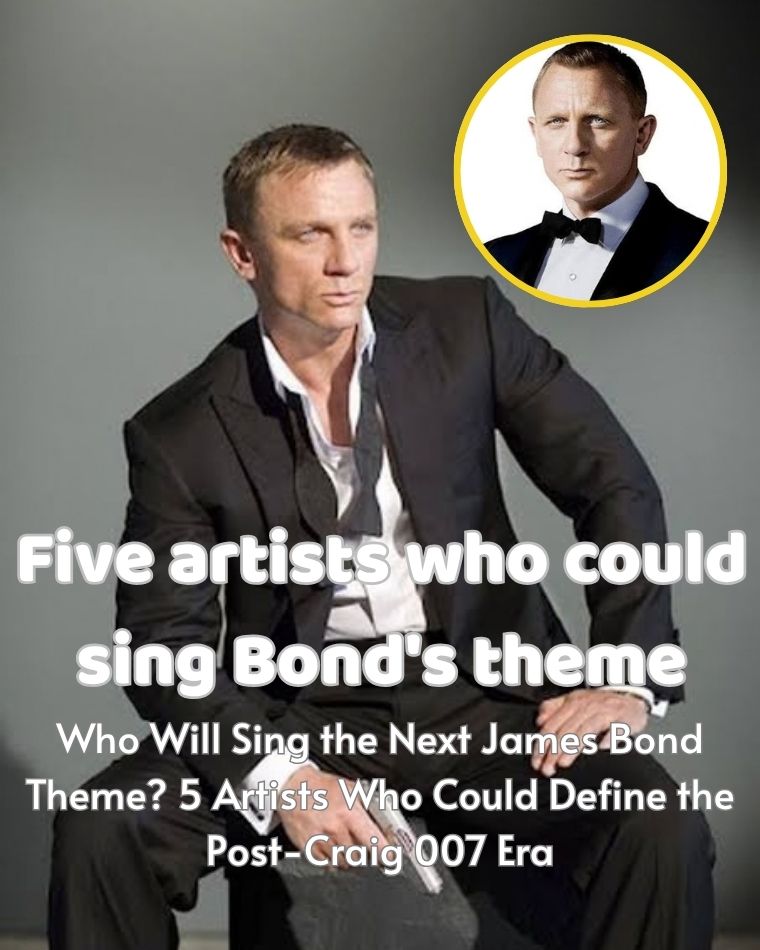
A thoughtful feature by Collider highlights five compelling artists whose musical identity and cultural stature could shape the franchise’s next sonic chapter.
Over six decades, the James Bond theme song has functioned as much more than standard cinematic background music.
The opening track is a definitive cultural timestamp that sets the emotional tone, visual atmosphere, and dramatic philosophy of the entire movie.
As Eon Productions crafts the foundation for a brand-new 007 era, the stakes surrounding this musical appointment have never been higher.
Cre: Wikimedia Commons
The Evolution of 007 Music: From Brass-Heavy Grandeur to Pop Hegemony
The musical language of James Bond was forged through bold brass riffs, lush orchestral arrangements, and unapologetic dramatic swagger.
Composer John Barry and singer Shirley Bassey established the gold standard of 007 sonic identity with 1964’s immortal “Goldfinger.”
Bassey’s searing vocal delivery demonstrated that a Bond theme could rival the film itself on international radio charts.
Her subsequent contributions on “Diamonds Are Forever” and “Moonraker” confirmed the dramatic formula of grand brass swells and mysterious melodies.
Over succeeding decades, the franchise deliberately diversified its sonic palette to stay relevant with evolving generations.
Paul McCartney and Wings delivered dynamic rock energy with “Live and Let Die,” proving that classic rock royalty could seamlessly inhabit Bond’s universe.
During the late 1970s and 1980s, artists like Carly Simon, Duran Duran, and Gladys Knight brought soft rock, new wave synth-pop, and soul to the gun barrel sequence.
Tina Turner brought smoldering theatrical elegance to Pierce Brosnan’s debut in “GoldenEye,” penned by Bono and The Edge.
The modern era transformed the Bond theme into a certified cultural event, blending cinematic heritage with current chart-topping influence.
As musical trends continue shifting, each new Bond iteration must carefully balance symphonic heritage against cutting-edge contemporary production.
Setting the Standard: How the Daniel Craig Era Redefined the Modern Bond Anthem
Daniel Craig’s fifteen-year tenure as James Bond revolutionized not only the espionage genre’s choreography but also its sonic texture.
Craig’s 2006 debut in Casino Royale required a radical departure from polished pop glamour to match a bruised, raw secret agent.
Producers turned to grunge rock icon Chris Cornell, who co-wrote and delivered the ferocious rock anthem “You Know My Name.”
Cornell’s raspy vocals and soaring electric guitars signaled immediately that the rebooted agent was gritty, dangerous, and physically vulnerable.
While Jack White and Alicia Keys experimented with jagged funk-rock on “Another Way to Die,” the franchise soon returned to soaring symphonic heights.
Adele’s 2012 masterpiece “Skyfall” became a milestone for the entire franchise, sweeping global charts and claiming the Academy Award for Best Original Song.
Her rich contralto voice intertwined seamlessly with classic Barry-esque orchestral arrangements, restoring grand classical melodrama to the series.
Sam Smith extended that Oscar-winning momentum with the delicate, falsetto-driven ballad “Writing’s on the Wall” for 2015’s Spectre.
Finally, Billie Eilish and Finneas O’Connell crafted the haunting, melancholic title track for 2021’s No Time to Die.
Eilish made history as the youngest artist to write and record a Bond theme, securing yet another Oscar while capturing the sorrow of Craig’s farewell.
The Daniel Craig era demonstrated that the ideal Bond track must echo the psychological interior of the spy himself.
What the Next Theme Must Signal: Defining the Identity of a Reborn 007
Selecting the right musical voice for Bond 26 is deeply linked with the casting and conceptual framing of the new lead actor.
If the incoming James Bond leans younger, hungrier, and more reckless, the accompanying music cannot afford to feel nostalgic or stagnant.
Conversely, if producers decide to return to classic bespoke elegance and dry humor, an overly aggressive track might clash with the narrative.
The theme song operates as the overture of the entire film, translating narrative themes into emotional resonance before dialogue even begins.
A great Bond track must always feel dangerous, sensual, secretive, and monumental.
It must complement Maurice Binder’s legacy of silhouette-laden opening title sequences, matching dynamic visual design with musical crescendos.
The production team faces the delicate challenge of commissioning a piece that respects minor-key chord traditions while driving global streaming metrics.
Audiences today expect the title song to build narrative tension rather than simply decorate the opening sequence.
Therefore, the prospective artist must possess vocal authority, compositional depth, and genuine storytelling charisma.
Exploring the Contenders: Five Dynamic Artists Highlighted by Collider
In its recent analysis of the franchise’s musical horizon, Collider spotlighted five standout recording artists capable of carrying this historic mantle.
Each featured musician brings distinct sonic textures, ranging from cinematic chamber pop to soulful retro jazz and soaring anthemic power.
Raye: British Soul Brilliance and Big-Band Versatility
British singer-songwriter Raye has emerged as a premier creative force after her historic, record-shattering sweep at the BRIT Awards.
Her artistic foundation seamlessly blends authentic jazz progressions, grand orchestral arrangements, and unapologetic blues vocals.
Raye’s critically acclaimed live orchestral performances prove her innate command over brass-heavy arrangements and intricate horn sections.
Her vocal timbre channels the theatrical power of classic Shirley Bassey while maintaining crisp, contemporary streetwise swagger.
Entrusting Raye with the Bond 26 theme would offer an artist who understands British musical royalty from the ground up.
Her ability to fuse cinematic storytelling with raw emotional resonance makes her an exceptional fit for a sophisticated spy thriller.
Lana Del Rey: The Queen of Noir Melodrama and Vintage Glamour
For more than a decade, music critics and film aficionados have described Lana Del Rey’s discography as inherently cinematic.
Her signature aesthetic leans heavily on mid-century American noir, tragic romance, slow-burning strings, and smoky vocal deliveries.
Del Rey’s catalog frequently evokes the shadowy intrigue and velvet glamour of mid-1960s espionage cinema.
Her melancholic vocal delivery can transition effortlessly between hushed whisper and rich, sweeping operatic declarations.
A Lana Del Rey Bond theme would likely provide an atmospheric, slow-burn masterpiece steeped in psychological tension and romantic danger.
She understands how to evoke vintage glamour without turning the track into an empty museum piece or a direct parody.
For a James Bond story centered on betrayal, emotional isolation, and shadowy secrets, her atmospheric sensibilities would prove unmatched.
Lady Gaga: Unrivaled Theatricality, Vocal Range, and Orchestral Grandeur
Few modern performers possess the sheer theatrical magnitude and technical vocal range of pop icon Lady Gaga.
Gaga has conquered international dance charts, classic Great American Songbook jazz duets, and cinematic power ballads with equal aplomb.
Her Academy Award-winning work on film scores underscores her profound understanding of emotional narrative songwriting.
She has the vocal power required to soar cleanly above a sixty-piece symphony orchestra during a dramatic sonic climax.
Gaga brings unmatched gravitas and drama to every visual and musical project she touches.
Her participation would ensure an explosive, high-impact cultural launch reminiscent of the golden era of big-screen Hollywood musical epics.
A Gaga-led Bond track would undoubtedly deliver maximum vocal fireworks, opulent instrumentation, and unforgettable theatrical swagger.
Hozier: Moody Blues and Mythic Narrative Gravitas
Irish singer-songwriter Hozier represents a compelling and daring stylistic direction for the post-Daniel Craig espionage landscape.
His distinct blend of gritty delta blues, gospel backing vocals, and brooding folk-rock brings a rich literary weight to popular music.
Hozier possesses a rich baritone voice that carries natural resonance, vulnerability, and moral complexity.
His songwriting frequently explores heavy themes of sacrifice, moral ambiguity, guilt, and existential dread.
Following the footsteps of Chris Cornell, a Hozier-penned title track could re-introduce rock guitars and organic drumming into the franchise.
His organic instrumentation could ground the new 007 in visceral, rain-soaked earthiness, steering clear of hyper-glossy studio pop.
A moody, blues-drenched anthem from Hozier would instantly announce a grounded, high-stakes reboot for the world’s most enduring secret agent.
Florence Welch (Florence + The Machine): Symphonic Art-Rock and Epic Catharsis
Florence Welch has spent her career constructing expansive, baroque-pop soundscapes characterized by thundering percussion and soaring melodies.
As the driving creative engine of Florence + The Machine, Welch treats every song as a cathartic emotional journey.
Her distinct vocal delivery moves effortlessly between mystical incantation and operatic, room-shaking crescendo.
Welch’s frequent use of harp flourishes, dramatic choral arrangements, and tribal drums shares clear stylistic DNA with 007 scoring traditions.
Her songwriting possesses an untamed, dramatic ferocity that could inject electric urgency into the film’s opening title sequence.
A Florence Welch theme song would bring boundless energy, gothic grandeur, and unmistakable artistic ambition to Bond’s newest chapter.
Her sound would bridge the gap between alternative rock integrity and grand blockbuster cinematic scale.
The Cultural Currency of a Bond Theme in the Streaming Era
In an increasingly fragmented entertainment landscape, few properties retain the collective cultural focus of a premier James Bond release.
Securing the commission to write and perform a 007 theme remains one of the highest honors in the international music recording industry.
A triumphant Bond track does not merely serve the film; it permanently enters global pop culture across multiple generations.
These songs echo across radio stations, digital streaming playlists, awards ceremonies, weddings, and karaoke lounges for decades.
In the digital streaming age, a cinematic theme song can accumulate billions of streams while simultaneously fueling promotional social campaigns.
The music offers fans their earliest taste of the movie’s tonal world months before theaters open their doors.
The right artist can expand the film’s demographic appeal, drawing distinct listening audiences directly into the cinematic ecosystem.
As demonstrated by the Oscar-winning streaks of Adele, Sam Smith, and Billie Eilish, the music world honors Bond themes at the highest level.
For whichever artist is selected, accepting this iconic assignment offers immortality within one of cinema’s most enduring sonic legacies.
Để lại một phản hồi