Demi Lovato’s debut studio album Don’t Forget arrived in September 2008 as a pivotal statement of artistic identity, landing just two months after Camp Rock transformed her into an international household name. Co-written and produced alongside the Jonas Brothers, the project balanced Disney Channel appeal with genuine rock instrumentation to showcase an unmistakable vocal power. By debuting at number two on the Billboard 200 with 89,000 copies sold in its opening week, the record established Lovato as a serious solo recording artist from day one.
The Whirlwind Rise: From Camp Rock Sensation to Solo Recording Artist
The year 2008 marked an unprecedented turning point in the landscape of modern teen pop culture.
Television audiences across the globe watched as the Disney Channel introduced a new generation of versatile performers.
Among that rising class of young entertainers, Demi Lovato captured public attention with extraordinary immediacy.
In June 2008, the premiere of the Disney Channel Original Movie Camp Rock cemented her status as a genuine star.
Playing the lead role of Mitchie Torres, she demonstrated an impressive emotional range alongside natural musicality.
The film’s broadcast drew massive viewership figures and produced a bestselling soundtrack that dominated youth radio.
Yet behind the scenes of that broadcast breakthrough, plans were already moving swiftly toward a solo musical statement.
Lovato was determined to define herself outside the confines of a scripted television character.
The initial recording sessions for her debut album began earlier in 2008, overlapping directly with the flurry of television commitments.
Hollywood Records recognized that the young artist possessed a vocal belt capable of carrying far heavier material than conventional bubblegum pop.
The team sought to craft a full-length studio project that captured real youthful angst, optimism, and dynamic vocal delivery.
Balancing exhausting promotional tours with long hours inside recording studios became the daily reality of that era.
Despite the punishing schedule, the creative momentum behind the debut project continued to build rapidly.
Executives understood that the window of opportunity following the movie premiere was exceptionally tight.
Every studio session needed to extract the authentic musical instincts of a performer barely into her mid-teens.
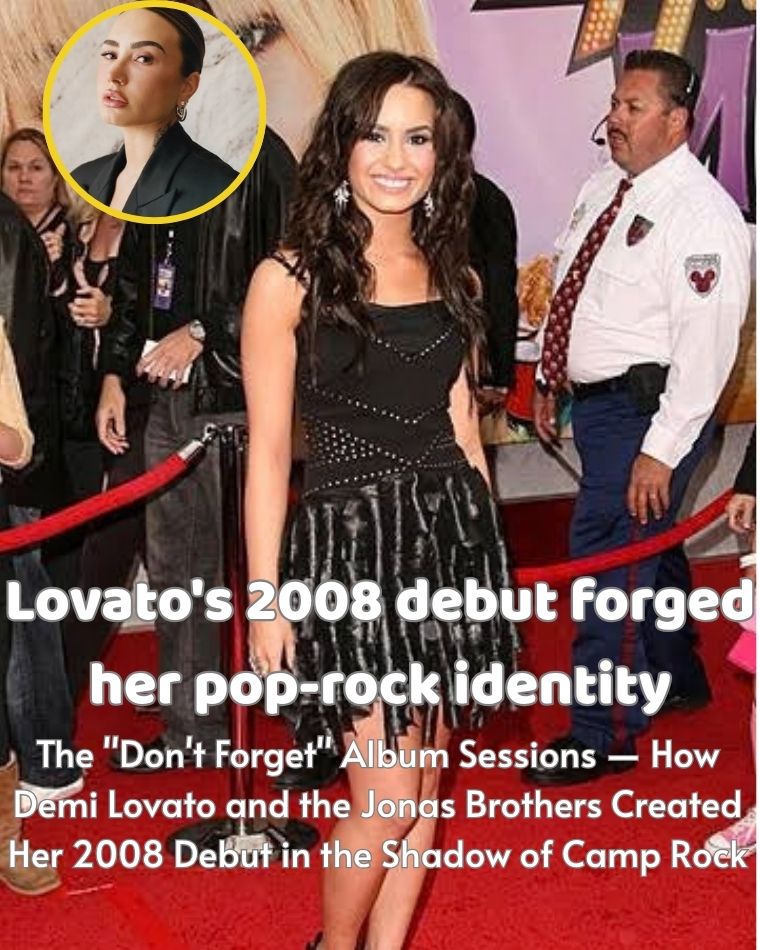
Cre: Wikimedia Commons — Creative Commons / Attribution-ShareAlike
Creative Synergy: Collaborating with the Jonas Brothers
To shape the sonic framework of the record, Lovato turned to collaborators who understood Disney stardom firsthand.
The Jonas Brothers—comprising Kevin, Joe, and Nick Jonas—stepped into central roles as co-writers and producers.
At the time, the Jonas Brothers were navigating their own stratospheric rise within the international pop-rock arena.
Having developed a punchy, guitar-heavy approach on their own albums, the trio shared a common creative wavelength with Lovato.
The songwriting sessions took place during brief breaks between television filming and live concert rehearsals.
Rather than outsourcing the writing to anonymous hitmakers, Lovato insisted on actively drafting her own lyrics.
The brothers brought an energetic rhythm section and power-chord arrangements that immediately complemented her powerhouse vocals.
Nick Jonas contributed instrumental depth, while Joe Jonas harmonized and refined melodic hooks alongside Lovato.
Kevin Jonas provided driving guitar riffs that anchored the album’s distinct sound.
This creative alliance generated a dynamic studio environment characterized by intense energy and mutual respect.
The collaboration gave the debut effort immediate credibility with an existing, fiercely loyal youth fanbase.
More importantly, it allowed Lovato’s rich vocal timbre to cut through live-sounding drums and distortion pedals.
Industry observers noted that the partnership felt organic rather than manufactured by record label executives.
The brothers recognized that Lovato’s technical vocal agility far surpassed traditional expectations for debut teen acts.
They tailored arrangements to push her higher register into sustained, emotionally charged climaxes.
This synergy resulted in an album foundation that felt bold, modern, and distinctly youthful.
“Get Back”: A Defining Statement of Independence
When Hollywood Records prepared to roll out the promotional campaign, selecting the proper lead single was paramount.
The label chose “Get Back” to serve as Lovato’s official introduction to the global music market.
Released in August 2008, the track offered an unambiguous departure from typical teen-pop predictability.
Driven by driving electric guitar chords, “Get Back” hit listeners with immediate pop-punk momentum.
The song’s lyrical core centered on reconciliation, personal determination, and moving forward with renewed confidence.
Instead of gentle melodies, Lovato attacked the microphone with gritty intensity and forceful vocal projection.
The accompanying music video visually emphasized her transition into a genuine band frontwoman.
Performing atop a Manhattan rooftop surrounded by instruments, she discarded glossy television staging for rock authenticity.
Critics recognized that “Get Back” successfully distinguished Lovato from her Camp Rock character Mitchie Torres.
The single established that her solo career would lean directly into live instrumentation rather than electronic loops.
Radio stations quickly added the track to their playlists, where it stood comfortably alongside mainstream pop-rock hits.
The song proved to skeptics that Lovato had the technical control to front energetic, guitar-heavy tracks effortlessly.
Fans embraced the song’s rebellious spirit and anthemic chorus as an anthem of personal empowerment.
The track served as an ideal tonal anchor for the forthcoming full-length studio release.
It signaled to the industry that the upcoming album would offer substantial musical substance.
The Pop-Rock Soundscape of Don’t Forget
When Don’t Forget hit retail shelves on September 23, 2008, the overall sonic palette proved remarkably cohesive.
The album leaned unapologetically into melodic pop-rock, featuring sharp guitars and organic drum tracks throughout.
Tracks like “La La Land” tackled the artificiality of Hollywood culture with witty lyricism and biting irony.
Co-written with the Jonas Brothers, “La La Land” stood as an early critique of celebrity pressures and conformity.
Lovato sang about staying true to her authentic self despite working inside the epicenter of the entertainment industry.
The song’s infectious guitar riffs and dynamic bassline made it an instant fan favorite and future radio single.
Meanwhile, the title track “Don’t Forget” explored deeper emotional terrain through a powerful rock ballad format.
Built around delicate verses that erupted into thunderous, emotional choruses, the song highlighted her vast dynamic range.
The vulnerability captured in Lovato’s voice resonated strongly with listeners navigating their own adolescent heartbreak.
Other album cuts like “Gonna Get Caught” and “Party” maintained the record’s high-tempo, rebellious momentum.
Throughout eleven tracks, the album avoided sterile studio perfection in favor of punchy, live-band energy.
Co-producers John Fields and the Jonas Brothers prioritized bright instrumental separation that allowed the vocals room to soar.
The record managed to remain accessible to younger audiences without sacrificing authentic rock grit.
Every arrangement seemed purposefully designed to highlight Lovato’s chest voice, head voice, and distinctive vocal fry.
The result was a debut offering that sounded remarkably mature for an artist who had just turned sixteen.
Commercial Triumphs and Billboard Impact
The commercial reception for Don’t Forget quickly validated Hollywood Records’ ambitious marketing strategy.
During its first week of release in late September 2008, the album achieved extraordinary sales momentum.
The record debuted at number two on the prestigious Billboard 200 albums chart in the United States.
It moved approximately 89,000 units within its initial seven days on store shelves.
This impressive retail figure placed Lovato in an elite category of debut artists that calendar year.
The album held its own against established industry giants across varied musical genres.
Achieving such commercial heights proved that Lovato possessed genuine commercial viability beyond television ratings.
Retailers reported steady demand for physical compact discs as young fans rushed to own the complete body of work.
Digital downloads through emerging platforms further boosted the album’s long-term sales figures.
The successful debut provided undeniable proof that the audience viewed her as a legitimate recording act.
She was no longer perceived merely as an actress who happened to sing on television soundtracks.
International markets soon began to mirror the domestic commercial success of the album.
Promotional visits across Europe and the Americas expanded her global fan footprint significantly.
The sales milestone earned Lovato a prominent seat at the table of contemporary pop music superstars.
Industry executives took note of how quickly her devoted audience converted into ticket-buying concert attendees.
The commercial foundation laid by Don’t Forget paved the way for extensive headlining tours.
Critical Reception and Industry Assessment
Music critics responded with surprising enthusiasm to the teenage artist’s initial musical offering.
Reviewers frequently highlighted Lovato’s vocal maturity, noting that her range far exceeded typical teen performers.
Publications praised the decision to partner with the Jonas Brothers to create a signature pop-punk sonic framework.
Writers singled out “La La Land” and “Don’t Forget” as examples of sophisticated pop craftsmanship.
While some critics noted familiar pop-rock tropes across several tracks, the general consensus remained overwhelmingly favorable.
Commentators acknowledged that the record avoided over-processed vocal effects in favor of raw vocal delivery.
Lovato’s ability to transition from tender whispers to explosive belts earned comparisons to seasoned rock vocalists.
The album challenged prevailing industry stereotypes that dismissed Disney-affiliated artists as manufactured products.
Instead, Don’t Forget stood as an authentic reflection of an artist finding her voice in real time.
Writers appreciated that the lyrical content balanced teen romance with broader themes of self-assertion.
The critical approval provided Lovato with artistic self-assurance as she looked toward future recording projects.
It showed that an artist could emerge from children’s television while earning the respect of discerning music journalists.
Her performances on live television broadcasts during that promotional cycle further reaffirmed her reputation.
She routinely delivered flawless live vocals without relying on pre-recorded backing tracks.
This dedication to live musicianship helped establish a enduring artistic reputation that lasted for decades.
Setting the Blueprint for an Evolving Career
Looking back across the decades, Don’t Forget represents a vital blueprint for Lovato’s musical journey.
The record firmly established vocal intensity as her primary artistic signature from her very first release.
Rather than remaining confined to the pop-rock genre, Lovato leveraged this foundation to explore varied styles.
Her subsequent studio albums gradually gravitated toward pure pop, electronic dance, and soul-influenced rhythms.
Yet no matter the genre transition, that unmistakable rock-infused passion remained at the heart of her delivery.
Years later, Lovato would revisit these exact guitar-driven roots with re-recorded rock iterations of her classic hits.
The thematic boldness introduced on “La La Land” foreshadowed her lifelong commitment to artistic honesty.
Her initial work alongside the Jonas Brothers proved that genuine artistic collaboration yields timeless work.
The project demonstrated that teen pop could accommodate genuine electric guitars, heavy drums, and vulnerable lyricism.
Many young artists who debuted in subsequent years cited Don’t Forget as an inspiration for their own pop-punk crossover projects.
The album proved that young female vocalists could embrace loud rock instrumentation without losing mainstream appeal.
It remains a cherished milestone for millions of fans who grew up listening to the 2008 Disney wave.
The record established a standard of vocal excellence that few contemporaries could match in live settings.
Lovato transformed what could have been a fleeting moment of teen fame into a resilient, multi-decade career.
Every subsequent arena tour, Grammy nomination, and chart milestone traces back to those early 2008 studio sessions.
The Enduring Legacy of Don’t Forget
More than fifteen years after its initial rollout, Don’t Forget continues to hold a special place in modern pop history.
Fans and retrospectives frequently revisit the album as a defining snapshot of late-2000s youth culture.
The record captured an extraordinary era when Disney Channel programming served as a primary incubator for chart-topping pop stars.
Yet while many teen-oriented albums from that period feel dated, Don’t Forget retains its energetic punch and raw vocal charm.
The live instrumentation has aged gracefully compared to the early synthesizers that dominated rival pop albums of that year.
Lovato’s vocal performances on songs like the title track continue to serve as benchmarks for aspiring vocalists.
The album documented the delicate, exhilarating moment when a gifted young singer stepped into the global spotlight.
It bridged the gap between scripted screen performances and authentic, vulnerable songwriting.
The artistic bond formed with the Jonas Brothers remains one of the most productive creative partnerships in Disney history.
Their collaborative efforts produced an album that was both commercially potent and musically substantive.
Through eleven tracks, Demi Lovato made it clear that she was an artist built to endure far beyond a single television season.
With soaring choruses, searing guitars, and unmistakable emotion, Don’t Forget announced the arrival of an exceptional talent.
The album’s opening week success on the Billboard 200 proved that the public was ready to embrace her as an enduring music star.
Her transition from Mitchie Torres to solo rock-pop sensation remains a textbook example of successful artistic branding.
Ultimately, Don’t Forget accomplished precisely what its title demanded: it ensured that no one would ever overlook Demi Lovato’s voice.
Để lại một phản hồi