When Disney Channel premiered Camp Rock in June 2008, network executives anticipated another profitable musical commodity, yet the project swiftly unlocked a genuine powerhouse vocalist in Demi Lovato. Her performance as Mitchie Torres provided an emotional intensity and vocal resonance that bypassed standard teenage stereotypes, creating an artistic trajectory that still reverberates across modern pop music.
June 2008 marked a turning point for television soundtracks and teen pop culture.
Audiences tuned in anticipating a glossy musical comedy designed around existing network favorites.
Instead, viewers encountered a breakout lead who treated young adult pop with remarkable vocal gravitas.
Lovato was only fifteen years old when she took on the role of Mitchie Torres.
Her portrayal captured a relatable teen navigating insecurity, family background, and creative ambition.
More significantly, her singing demonstrated mature breath control, rich chest resonance, and instinctual phrasing.
Disney Channel Original Movies had produced numerous teen idols, but few arrived with Lovato’s level of pure acoustic horsepower.
The movie was not merely a television broadcast; it served as an audition before millions of prospective fans.
Network producers realized early on that Lovato possessed vocal dynamics far beyond ordinary bubblegum melodies.
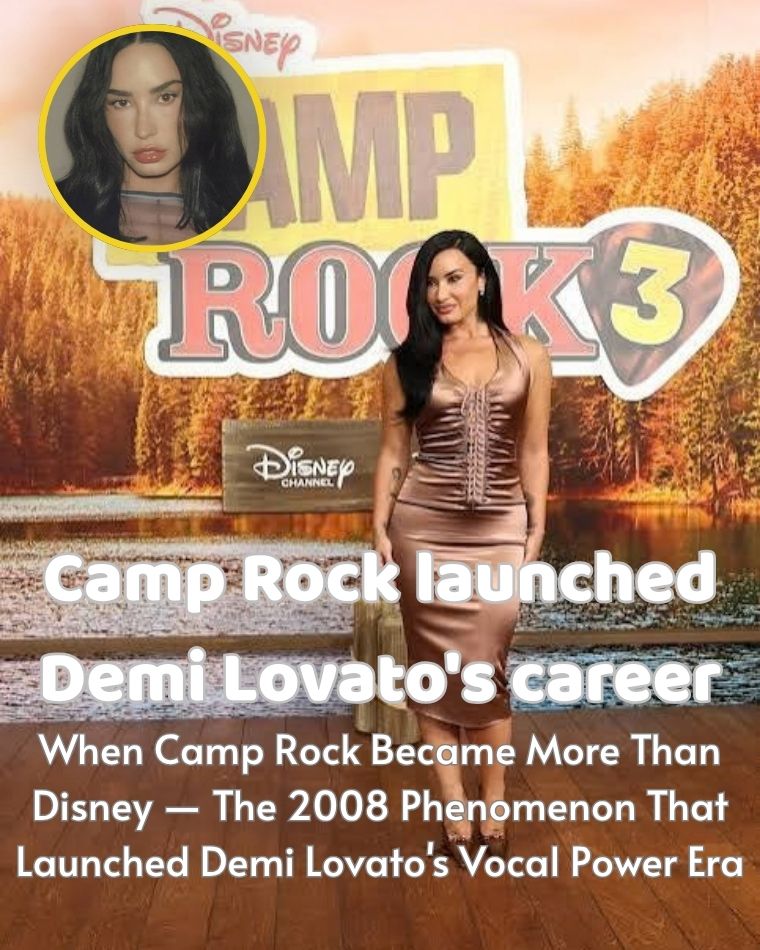
Cre: Wikimedia Commons / Hollywood Records
The dramatic climax of the film rested squarely on the performance of “This Is Me.”
Written as Mitchie’s musical confession, the anthem required an uncompromising blend of vulnerability and vocal power.
Lovato delivered the track with an open-throated belting style rarely heard on preteen cable television.
Her vocal timbre carried an authentic weight that resonated immediately with listeners across demographics.
Rather than relying entirely on studio correction, the vocal performance highlighted genuine grit and expressive nuance.
The track functioned as Lovato’s definitive statement of artistic identity right out of the gate.
When Joe Jonas joined her for the duet portion, Lovato maintained commanding stage presence and dynamic balance.
“This Is Me” proved that Lovato could anchor an anthemic pop-rock chorus with effortless projection.
The song quickly achieved heavy rotation on mainstream airwaves and entered top-tier music charts internationally.
It served as irrefutable proof that her talent extended far outside the boundaries of a scripted television set.
Even today, fans re-listening to the vocal stem tracks marvel at the young performer’s sustained notes and control.
Behind the scenes of the television movie, Lovato was maintaining an extraordinary creative workload.
While long film shoots occupied her daytime hours, studio recording sessions demanded her remaining creative energy.
She was actively writing and recording tracks for her debut studio album, titled Don’t Forget.
Working in parallel, she collaborated closely with musical peers to craft an authentic pop-rock sound.
The debut studio effort arrived in September 2008, just two short months after the movie broadcast.
This dual-release strategy demanded tremendous stamina from the young singer.
She balanced promotional film tours with relentless vocal sessions in competitive recording environments.
Releasing an independent studio album so quickly prevented her from becoming trapped in a fictional persona.
Don’t Forget showcased guitar-driven arrangements and energetic vocal deliveries that mirrored her true musical taste.
The strategy proved to industry insiders that Lovato approached singing as a long-term artistic career.
Audiences who loved Mitchie Torres discovered that Lovato as a standalone artist was equally compelling.
Her work ethic during this grueling schedule cemented her reputation as a reliable and dedicated performer.
The movie and the debut album fed into each other, creating compound commercial momentum across the summer.
Television broadcasts reinforced album purchases while radio plays drove renewed interest in the film.
On the night of its initial premiere, Camp Rock delivered historic television ratings.
The broadcast captured an astounding 8.9 million viewers across American households.
The broadcast became an immediate cultural milestone for a generation of young viewers.
A massive portion of that initial viewership was driven by the established fandom of the Jonas Brothers.
The sibling pop-rock trio was already an international phenomenon headlining major concert venues.
Positioning Lovato alongside the Jonas Brothers exposed her vocal talent to an enormous captive audience.
Instead of being overshadowed by the trio’s immense star power, Lovato shared the spotlight as an artistic equal.
Fans who tuned in solely to see the Jonas Brothers came away talking about Lovato’s unforgettable voice.
The crossover audience embraced Lovato almost overnight, expanding her reach into mainstream pop discourse.
Viewer reactions confirmed that Mitchie’s vocal talent was the true beating heart of the movie’s plot.
The massive ratings led to heavy replay marathons, sold-out soundtrack CDs, and pervasive radio airplay.
Soundtrack sales exploded globally, turning the songs into everyday singalongs for millions of households.
Lovato found herself thrust into international recognition within days of the premiere broadcast.
The cultural impact of that evening laid the foundation for Lovato’s enduring presence on global charts.
The overwhelming success of the first film paved the way for an inevitable follow-up.
In 2010, the franchise expanded with Camp Rock 2: The Final Jam.
The sequel offered more intricate musical numbers and larger choreography, further challenging Lovato’s performance skills.
Throughout both productions, Lovato maintained an uncompromising commitment to full-throated, passionate delivery.
She consistently leveraged Disney’s massive media ecosystem to demonstrate vocal prowess beyond typical brand expectations.
Her performances set a technical benchmark that shaped how teen pop vocalists were evaluated.
Where other performers leaned on whispering tones, Lovato delivered uninhibited power and dramatic projection.
She refused to dial back her vocal intensity to fit comfortable expectations of safe, polite teen pop.
Her vocal technique combined theatrical precision with real rock-and-roll emotional directness.
This foundational approach followed Lovato into her subsequent adult studio albums and sold-out arena tours.
Looking back at the original project reveals that Lovato was never just a conventional teen idol.
Her instinctual ability to convey deep emotion was present from the very first opening measures.
Even when the underlying script was written for elementary and middle schoolers, her singing remained elevated.
She approached every musical cue with earnest dedication, treating the story’s music with genuine respect.
Music critics often point back to “This Is Me” when evaluating the roots of her belting register.
The song displayed the foundation of the emotional resonance that later drove her mature chart-topping ballads.
Her vocal choices demonstrated courage, using dynamics, vocal fry, and soaring highs to express personal identity.
The franchise became an enduring artistic footprint rather than a disposable chapter in her legacy.
In recent developments that thrilled longtime fans, the story is entering a brand-new phase.
Camp Rock 3 has entered active production, officially greenlit by Disney for modern audiences.
Lovato returns to the project that sparked her global rise, taking on an executive producer role and revisiting her roots.
The continuation bridges past nostalgia with modern creative perspectives for new generations of viewers.
Seeing Lovato revisit the franchise highlights how deeply linked her career remains to that original breakthrough.
From a fifteen-year-old on a lake campground to a seasoned music veteran, Lovato’s journey has come full circle.
The legacy of Camp Rock remains inseparable from the astonishing raw voice that made Mitchie Torres believable.
Her early willingness to sing without artistic restraint established a career defined by honest expression.
Nearly two decades later, that historic June premiere continues to stand as an essential moment in modern pop history.
Để lại một phản hồi