His older sister, Adele Astaire, was the undeniable luminary of their act, captivating critics and audiences with an irrepressible comic spark and instinctive charm.
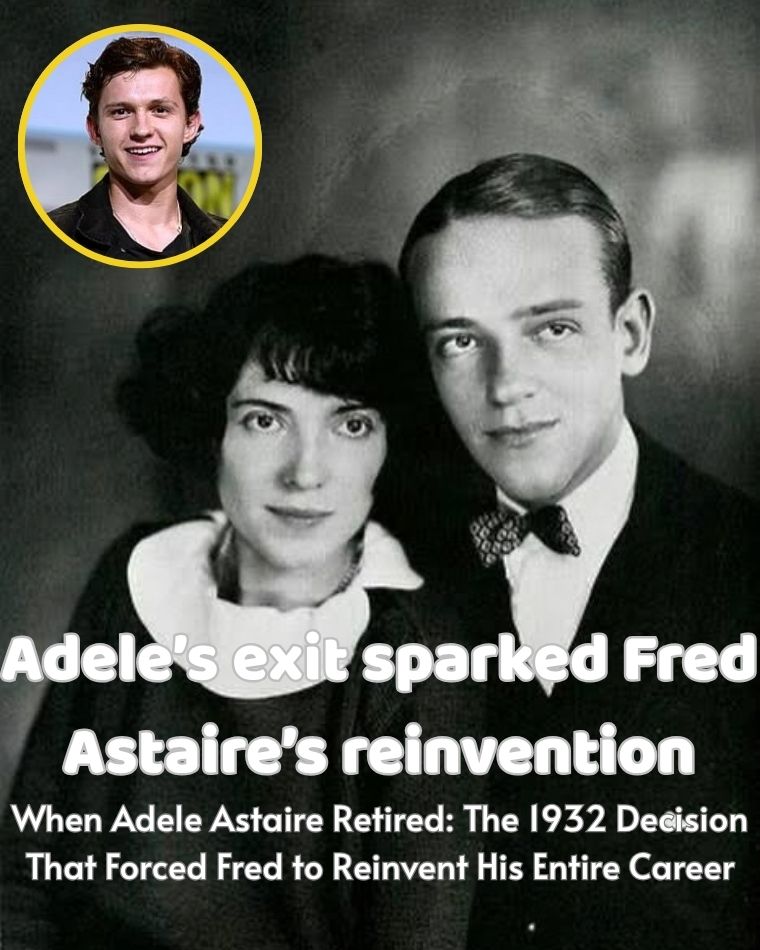
When Adele chose to retire in 1932 to marry Lord Charles Cavendish, Fred faced a staggering professional crisis that ultimately forced him to reinvent himself as a solo artist and visionary choreographer.
The Vaudeville Origins and Broadway Triumphs of the Astaire Duo
The story of Fred Astaire did not begin under the bright spotlights of studio soundstages in Southern California.
It started on the rough-and-tumble American vaudeville circuits when Fred and Adele were merely children.
Their mother recognized Adele’s extraordinary natural flair for performance and rhythm early on.
Fred was promptly enrolled in dance classes alongside her, primarily to serve as a reliable partner for her burgeoning talent.
In those formative years, Adele was universally recognized as the magnetic centerpiece of the stage.
Her comedic instincts, buoyant energy, and effervescent stage presence enchanted theater managers wherever they toured.
Fred, while recognized for his precision and discipline, was often perceived by observers as Adele’s capable and supportive accompanist.
The grueling demands of vaudeville instilled an obsessive work ethic in the young siblings.
They learned how to command an audience from the footlights across two shows a day in cities large and small.
By the early 1920s, their years of tireless touring bore fruit as they graduated from vaudeville houses directly to the Broadway legitimate stage.
Broadway embraced the Astaires with open arms during an era of unprecedented theatrical vitality.
Their synchronized footwork and playful sibling banter became the toast of Manhattan.
The turning point arrived when George and Ira Gershwin recognized their singular synergy and began crafting original musical scores specifically around the duo.
In 1924, Fred and Adele starred in the Gershwin brothers’ landmark musical Lady, Be Good!
Audiences packed the theater to hear them introduce classic numbers such as “Fascinating Rhythm”.
Critics consistently singled out Adele for her radiant magnetism and effortless theatrical flair.
Cre: Wikimedia Commons — Public Domain
Fred was increasingly celebrated for his impeccable footwork, but journalists regularly credited Adele with giving the act its beating heart.
Their meteoric rise continued with another Gershwin hit, Funny Face, cementing their status as international theatrical royalty.
When the productions transferred across the Atlantic to London’s West End, British society fell completely under Adele’s spell.
Aristocrats, intellectuals, and royalty routinely flocked to the stage door to meet the charismatic American star.
Throughout the 1920s, the name “Astaire” was practically synonymous with this tight-knit sibling partnership.
Their chemistry was forged over two decades of shared rehearsals, mutual trust, and countless shared dressing rooms.
Fred handled much of the choreographic planning and technical preparation behind closed doors.
Adele brought the finished routines to life with spontaneous joy and an infectious zest that could not be taught.
They worked together as an indivisible unit, navigating the transition from adolescent novelty act to sophisticated Broadway stars.
Neither theater critics nor theatergoers could readily imagine one Astaire without the other standing side by side.
The 1932 Departure: Marriage to Lord Charles Cavendish and Retirement
The golden era of the Astaire siblings reached an abrupt and decisive climax as the 1930s began.
While performing in England, Adele had been introduced into high-society circles where she met Lord Charles Cavendish.
Lord Charles was the second son of the 9th Duke of Devonshire, hailing from one of the most prominent aristocratic families in Britain.
A whirlwind courtship developed between the American Broadway darling and the British nobleman.
Unlike many stage performers of her day, Adele had never viewed dancing as an eternal life sentence.
She had spent nearly three decades in greasepaint, constantly traveling from stage to stage since childhood.
Adele craved personal stability, peace, and an escape from the unrelenting physical grind of professional show business.
In 1932, Adele officially married Lord Charles Cavendish and announced her permanent retirement from the stage.
She moved to Ireland to take up residence at Lismore Castle, trading the roar of Broadway for the quiet life of an aristocrat.
Their final appearance together occurred in the Broadway revue The Band Wagon, which concluded its run in early 1932.
When the curtain fell on that final performance, an epoch in American musical theater officially ended.
Adele closed the door on her stage career without hesitation or ambivalence.
She embraced her new domestic life, leaving behind the only identity she had known since the age of nine.
For Adele, retirement represented liberation from exhausting tour schedules and physical strain.
For Fred, however, the departure of his lifelong partner fell like an unexpected thunderbolt.
Their shared management and long-term bookings were built entirely on the premise of the famous duo.
Every theatrical producer in New York and London viewed Fred primarily as Adele’s dancing brother.
Her departure left an immense, gaping void that no ordinary replacement could simply step in and fill.
Fred had to publicly confront the stark reality that the Astaire name was suddenly down to one performer.
Fred’s Professional Crisis and the Weight of Uncertainty
In 1932, Fred Astaire turned thirty-three years old—an age considered dangerously advanced for an athletic stage dancer.
He found himself standing at a terrifying career crossroads without a roadmap or a safety net.
Industry insiders openly questioned whether he possessed the stage presence to survive as an independent headliner.
For years, reviews had praised Adele’s irrepressible spark while commending Fred for his precision and discipline.
Now, without her comedic warmth to balance his sharp lines, many skeptics predicted he would fade into obscurity.
Fred felt the acute sting of those professional doubts as he considered his remaining options.
He was plagued by personal uncertainty regarding what kind of entertainer he wanted to become on his own.
Could he carry an entire musical show on his own shoulders without the sibling banter that had anchored his popularity?
He made a tentative attempt to establish his solo credentials by taking the lead role in the 1932 musical Gay Divorce.
The production was a crucial testing ground for Fred, featuring Cole Porter’s haunting song “Night and Day”.
Fred was paired opposite Claire Luce, an accomplished dancer, but the dynamic was profoundly different from his work with Adele.
He was no longer sharing an instinctive language built over twenty years of childhood rehearsals.
Instead, he was forced to step forward as the sole creative leader and anchor of the entire performance.
Gay Divorce proved to be a modest commercial success, confirming that audiences would buy tickets to see Fred Astaire alone.
Yet Fred recognized that Broadway was contracting rapidly under the crushing weight of the Great Depression.
The lavish stage musicals that had made the Astaires wealthy were becoming too expensive for producers to mount.
The epicenter of popular entertainment was shifting rapidly to talking pictures in Southern California.
If he truly wanted to build a lasting independent legacy, Fred knew he had to leave the New York stage behind entirely.
He turned his sights toward Hollywood, despite knowing that film executives harbored deep reservations about his screen appeal.
The transition would demand nothing less than a complete reinvention of his public persona, technique, and artistry.
The Pivot to Hollywood and Solo Reinvention
When Fred arrived in Hollywood for screen tests, the initial studio reactions were famously unenthusiastic.
Studio scouts reportedly remarked that he could not sing, could not act, was balding, but could dance a little.
Hollywood was accustomed to conventionally handsome leading men who conformed to established romantic archetypes.
Fred did not fit that mould, bringing instead a slender frame, expressive features, and an urbane stage elegance.
Nevertheless, RKO Radio Pictures recognized something unique in his rhythm and offered him a modest contract.
Before embarking on his RKO projects, Fred was loaned to Metro-Goldwyn-Mayer for a brief cameo in Dancing Lady alongside Joan Crawford in 1933.
The cameo allowed him to observe how movie studios operated and how dance was translated onto celluloid.
What he saw deeply frustrated his artistic sensibilities and heightened his desire for technical control.
In early Hollywood musicals, directors routinely cut dances into fragmented close-ups of faces, tapping feet, and swirling dresses.
Fred believed this editing practice destroyed the physical rhythm, integrity, and momentum of a real dance routine.
He resolved that if he was going to dance on film, the camera would have to adapt to the dancer, not vice versa.
Fred insisted that full dance sequences should be filmed in single, continuous wide shots whenever possible.
He demanded that the dancer’s full body remain visible in the frame from head to toe throughout the entire routine.
This insistence fundamentally revolutionized how cinema captured human movement and choreography.
Later in 1933, RKO cast Fred in a supporting role in the musical romance Flying Down to Rio.
He was paired for the very first time with a young actress named Ginger Rogers.
Their secondary dance number, “The Carioca,” electrified audiences and stole the film right out from under the main leads.
The chemistry between Fred and Ginger was immediate, effortless, and utterly captivating to watch on screen.
Almost overnight, the studio realized they had accidentally stumbled upon a cultural phenomenon.
Fred was no longer simply Adele’s former partner; he was emerging as the primary architect of American film dance.
How Adele’s Departure Shaped Fred’s Future Partnerships
The psychological shock of Adele’s sudden 1932 retirement permanently influenced how Fred approached his professional relationships.
Having seen a twenty-year partnership dissolve overnight, Fred was determined never to become completely reliant on a single collaborator again.
When RKO proposed making Astaire and Rogers an official permanent team, Fred initially pushed back against the idea.
He feared being trapped inside another indelible duo where his creative agency might once again be compromised.
He insisted on maintaining a distinct identity as an independent soloist and director-choreographer.
Even as he and Ginger Rogers went on to make nine consecutive historic films at RKO, Fred maintained clear artistic boundaries.
Their partnership was strictly professional, defined by rigorous rehearsals and mutual respect rather than familial ties.
Because Fred had spent years coordinating the technical structure behind Adele’s natural charisma, he brought that exact discipline to Ginger.
Rogers had natural charm, beauty, and emotional authenticity, but she had not grown up in formal ballroom disciplines.
Fred spent grueling weeks in the rehearsal studio drilling every step, posture, and turn until they achieved absolute perfection.
Ginger famously absorbed his demanding standards, matching his precision while infusing the routines with genuine dramatic warmth.
The lessons Fred learned from Adele’s innate brilliance directly informed how he choreographed for his female leads.
He knew how to frame a woman on screen so that her movement, elegance, and personality shone at maximum intensity.
He made sure the camera favored his partners, highlighting their strengths just as he had done for Adele on Broadway stages.
Later in his career, Fred danced successfully with a diverse roster of brilliant partners, including Rita Hayworth, Eleanor Powell, Cyd Charisse, and Judy Garland.
None of those legendary screen collaborations would have occurred had Fred remained permanently anchored to his sister’s shadow.
The departure of Adele forced Fred to cultivate an extraordinary adaptability that sustained his career across six decades.
The Enduring Legacy of the Sibling Foundation
In retrospect, the foundation Fred and Adele built together during their early years was the indispensable bedrock of his artistic genius.
Vaudeville had taught Fred how to entertain, how to pace an act, and how to survive unpredictable audiences.
Adele had given him the ultimate model of what pure, uninhibited charisma looked like under theatrical lighting.
Her effortless, sparkling style lived on inside Fred’s own choreography, which always balanced technical perfection with lighthearted joy.
Even when executing the most mathematically intricate tap rhythms, Fred always maintained a relaxed, casual upper body.
That signature nonchalance was a direct philosophical inheritance from his years dancing alongside his spirited sister.
Adele never expressed professional envy or regret as she watched her younger brother conquer Hollywood from across the Atlantic.
She remained his fiercest supporter and closest confidante, celebrating every milestone he achieved on the silver screen.
Whenever Fred visited Europe, his first stop was frequently to visit Adele, reaffirming their unbreakable personal bond.
The public may remember Fred Astaire through his immaculate top hat, tails, and cinematic dances with Ginger Rogers.
Yet film historians and admirers of dance understand that his masterclass in artistry began long before Hollywood discovered him.
It was forged in the rehearsal studios of New York, on the train tracks of vaudeville, and on the stages of the Roaring Twenties.
Adele’s 1932 retirement, though deeply unsettling at the time, was the essential catalyst that liberated Fred’s full potential.
It transformed an ensemble brother into a pioneering auteur who permanently elevated dance from theatrical divertissement to cinematic high art.
Without the initial brilliance of Adele Astaire, the world might never have seen the transcendent heights Fred achieved on his own.
Để lại một phản hồi