When HBO executives decided to scrap and reshoot the flawed pilot of Game of Thrones in 2010, the entire future of modern prestige television hung in the balance.
The monumental fantasy production took a massive gamble by replacing its female lead with a virtually unknown drama graduate named Emilia Clarke, altering the trajectory of pop culture history.
The Risky Recast That Saved the Mother of Dragons
In the high-stakes world of premium cable television, recasting a central character after filming an expensive pilot is considered an enormous financial and creative hazard.
The original unaired pilot of Game of Thrones had initially featured British actress Tamzin Merchant in the iconic role of Daenerys Targaryen.
Following internal screenings of that early footage, series creators David Benioff and D.B. Weiss recognized that several crucial narrative elements required an overhaul.
The original pilot suffered from significant tonal problems, pacing issues, and character dynamics that failed to connect with network executives.
Among the major adjustments ordered by HBO was the complete reshooting of Daenerys Targaryen’s storyline, necessitating an immediate and urgent casting search.
Finding the ideal performer to portray the exiled Targaryen princess represented an extraordinary challenge for the production team.
The role demanded an actress capable of conveying fragile vulnerability alongside fierce inner power and regal authority.
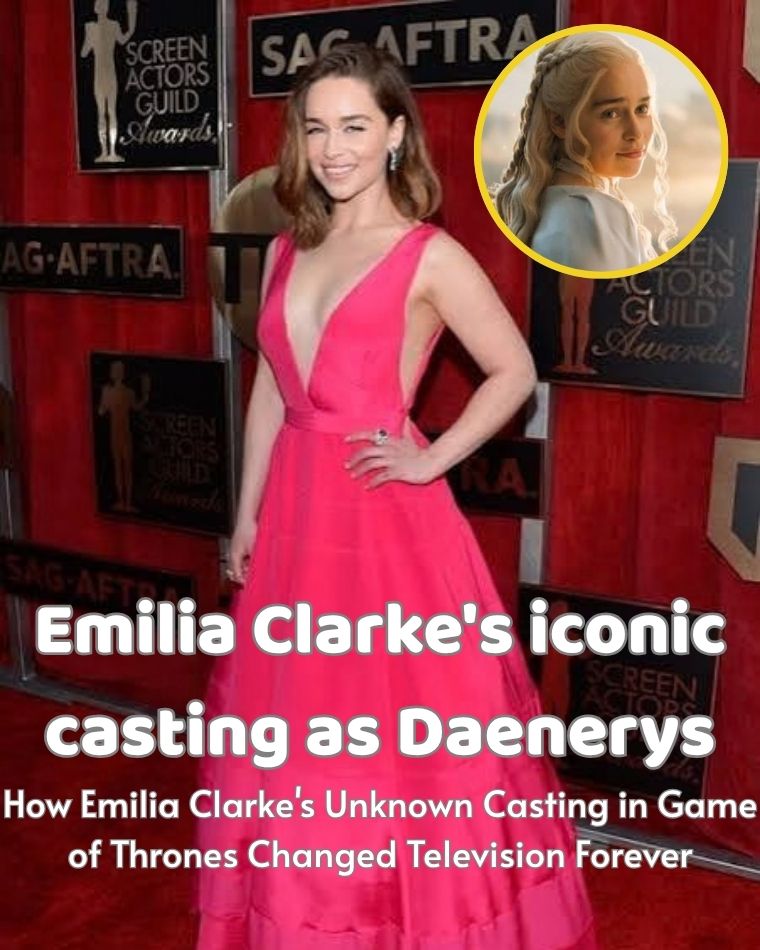
Cre: Wikimedia Commons — Gage Skidmore, CC BY-SA 3.0
Because the original pilot was scrapped, the production could not afford another misfire with the role of Daenerys.
The decision to walk away from previous footage was a terrifying step for everyone involved in bringing George R.R. Martin’s epic novels to the screen.
Recasting Daenerys Targaryen was not merely a cosmetic adjustment for the fantasy series.
It was an existential pivot that would define whether the show’s intricate emotional core could actually function on television.
Emilia Clarke came remarkably close to never being considered for the role that would eventually redefine contemporary fantasy storytelling.
Timing, fortunate circumstances, and an unforgettable screen test combined to alter the course of her entire professional life.
The Unforgettable Audition That Won Over Showrunners
When the call went out across London talent agencies for an emergency replacement, Emilia Clarke was working multiple part-time jobs just to pay her basic living expenses.
She received the audition sides with very little preparation time to analyze the vast fantasy lore created by George R.R. Martin.
Clarke hastily researched the background of Daenerys Targaryen online before stepping into the casting room in London.
She brought an instinctual blend of quiet nobility, raw emotional openness, and fierce resolve to her reading.
Her interpretation immediately stood out to casting director Nina Gold and the showrunners, who were reviewing dozens of hopeful candidates.
During her subsequent screen test for top network executives in Los Angeles, Clarke faced an intimidating panel of studio leaders.
Despite the immense pressure, she projected a rare natural poise that balanced innocence with formidable steel.
David Benioff and D.B. Weiss saw in her an innate magnetism that could believably command armies and tame mythical creatures.
Her ability to transition seamlessly from tender timidity to unyielding defiance sealed the decision.
HBO executives knew that choosing a newcomer was a distinct risk when compared to casting established names.
Yet Clarke possessed the exact luminous quality and expressive depth the character of Daenerys desperately required.
By the end of the session, the producers were thoroughly convinced they had uncovered their rightful Queen of the Andals.
The role was officially awarded to her in 2010, setting off a whirlwind production schedule for the reshot pilot.
A Modest Resume Before Westeros
Prior to winning the life-changing role of Daenerys Targaryen in 2010, Emilia Clarke had accumulated only a modest list of professional credits.
She had graduated from the Drama Centre London in 2009, where she spent years honing classical theater techniques and vocal control.
Her pre-Westeros screen work consisted primarily of a guest spot on the British medical daytime soap opera Doctors.
She had also appeared in a low-budget television creature movie titled Triassic Attack, produced for the Syfy channel.
Her theatrical training had been rigorous, but she possessed almost no practical experience on a major studio soundstage.
She had never navigated the massive machinery of a heavily budgeted transatlantic television production.
Clarke was essentially stepping from modest community drama exercises and fringe stages straight into the most expensive television endeavor in HBO history.
Her relative anonymity was viewed with both intrigue and cautious apprehension by industry observers at the time.
While high-profile co-stars carried established names and decades of international acclaim, Clarke was a blank canvas to audiences.
Her unfamiliarity ultimately worked in her favor, allowing viewers to see only Daenerys Targaryen rather than a celebrity performer.
Her minimal television history ensured that audiences had zero preconceived expectations or associations with her image.
She could embody the silver-haired exile without competing against her own past roles.
That clean slate provided the creative foundation upon which an iconic television persona would soon be built.
Facing the Immense Pressure of an Established Ensemble
Stepping onto the sprawling sets of Game of Thrones presented an intimidating challenge for a 23-year-old newcomer.
The ensemble cast assembled by HBO already boasted formidable titans of the British and international acting world.
Celebrated performers such as Sean Bean, Peter Dinklage, Lena Headey, and Charles Dance anchored the sprawling production with established authority.
Clarke was thrust into an unfamiliar world of grand practical sets in Northern Ireland, Morocco, and Malta.
She had to command complex historical dialogue and deliver intense emotional speeches across from established industry veterans.
Early filming days required her to master elaborate costuming, striking platinum wigs, and riding horses across rocky foreign landscapes.
The technical scale of the fantasy shoot was unlike anything she had experienced during her classical drama school days.
The pressure of replacing an actress who had already filmed those scenes added another layer of psychological stress.
Every crew member and production executive remembered the scrapped pilot and the financial investment at stake.
Clarke understood that any hesitation or lack of conviction on camera could jeopardize the entire overseas unit.
Instead of shrinking under the weight of expectations, she channeled her nervous energy into the narrative alienation of Daenerys.
The isolation felt by the actress mirrored the lonely exile of the fictional Targaryen daughter navigating unfamiliar shores.
Fellow cast members quickly observed Clarke’s relentless work ethic, professional humility, and eager desire to learn.
She absorbed on-set advice, adapted swiftly to continuous filming revisions, and demonstrated remarkable resilience during arduous shoot days.
Her focus and grace under pressure rapidly earned the deep respect of the entire cast and crew.
Setting the Emotional Tone in Season One
When Game of Thrones officially premiered on HBO in the spring of 2011, viewers were introduced to a sprawling world of political intrigue and brutality.
Yet the emotional spine of the first season belonged unmistakably to the transformative journey of Daenerys Targaryen.
Clarke took audiences on a mesmerizing narrative progression from a terrified, mistreated pawn into a self-possessed Khaleesi.
In early episodes, she conveyed profound heartbreak and fear with subtle glances and restrained physical mannerisms.
As her character found strength through hardship and love, Clarke’s physical posture and vocal delivery shifted noticeably.
She projected an evolving internal authority that felt earned, tragic, and exhilarating to watch episode after episode.
Her ability to make fantastical storylines feel grounded in authentic human emotion anchored the entire Essos storyline.
The dramatic payoff arrived in the unforgettable season one finale, where Daenerys walks into a burning funeral pyre.
Emerging unburnt from the ashes the following morning with three newly hatched baby dragons, Clarke created one of the most famous visual reveals in television history.
The stillness, vulnerability, and royal determination in her eyes during that final frame captivated viewers around the globe.
It solidified the young actress as the undisputed heart of the show’s ambitious mythological arc.
Critics singled out her performance as one of the standout revelations of the groundbreaking debut season.
Her nuanced work established the thematic balance between moral righteousness and devastating force that defined the character.
Without Clarke’s total commitment to that initial transformation, the broader television series could not have soared to such cultural heights.
The emotional connection established in that rookie season sustained viewer empathy through years of complex political warfare.
The Global Phenomenon and an Enduring Television Legacy
Game of Thrones ran from 2011 to 2019, growing into the defining television phenomenon of the twenty-first century.
Across eight expansive seasons, Emilia Clarke remained the central visual and narrative symbol of the entire multi-billion-dollar franchise.
Her portrayal earned her four Primetime Emmy Award nominations for Outstanding Supporting Actress and Outstanding Lead Actress in a Drama Series.
She developed the fictional Dothraki and High Valyrian languages into convincing verbal instruments of dramatic power.
The evolution of Daenerys from an abused runaway to a liberator, conqueror, and ultimately tragic tyrant resonated with hundreds of millions worldwide.
Clarke handled the character’s controversial and emotionally punishing final trajectory with unwavering artistic dignity.
Her work opposite the ensemble over nine years helped elevate fantasy storytelling into serious, mainstream prestige drama.
Beyond Westeros, the casting decision radically transformed Clarke’s professional trajectory from an out-of-work graduate to an international superstar.
She went on to headline major Hollywood studio features, theatrical West End productions, and critically acclaimed independent films.
Her ascent proved that taking an artistic chance on relatively raw, untested talent can yield generational cinematic magic.
The gamble made by HBO in 2010 remains an enduring masterclass in casting intuition and character understanding.
Decades from now, when television historians analyze the golden age of serialized drama, the discovery of Emilia Clarke will stand out as a foundational milestone.
A simple casting replacement saved a troubled pilot and unleashed an iconic performance that forever shaped the pop culture landscape.
Her legacy as the Mother of Dragons remains indelible, a testament to what happens when raw talent meets extraordinary opportunity.
Để lại một phản hồi