The box score showed an emphatic Kansas City Chiefs victory, but the game film revealed a completely different story. Behind the surface statistics, sharp eyes inside the coaching booth and across NFL analysis desks caught subtle disconnects that would soon reshape Kansas City’s offensive approach.
When respected NFL Films analyst Greg Cosell evaluated the Kansas City Chiefs’ 31-10 blowout victory against the Denver Broncos on September 14, 2026, he delivered a verdict that cut through the prevailing postgame celebration. Appearing on the Ross Tucker Podcast, Cosell remarked: “Mahomes really did not have a very good game, and he wasn’t really a factor in the game.”
That assessment, widely disseminated across major outlets including Yahoo Sports, immediately established the central narrative for the Chiefs’ early 2026 campaign. What casual viewers saw as a dominant divisional victory, the game film exposed as an offense relying almost entirely on ground domination and offensive line execution rather than Patrick Mahomes’ signature brilliance.
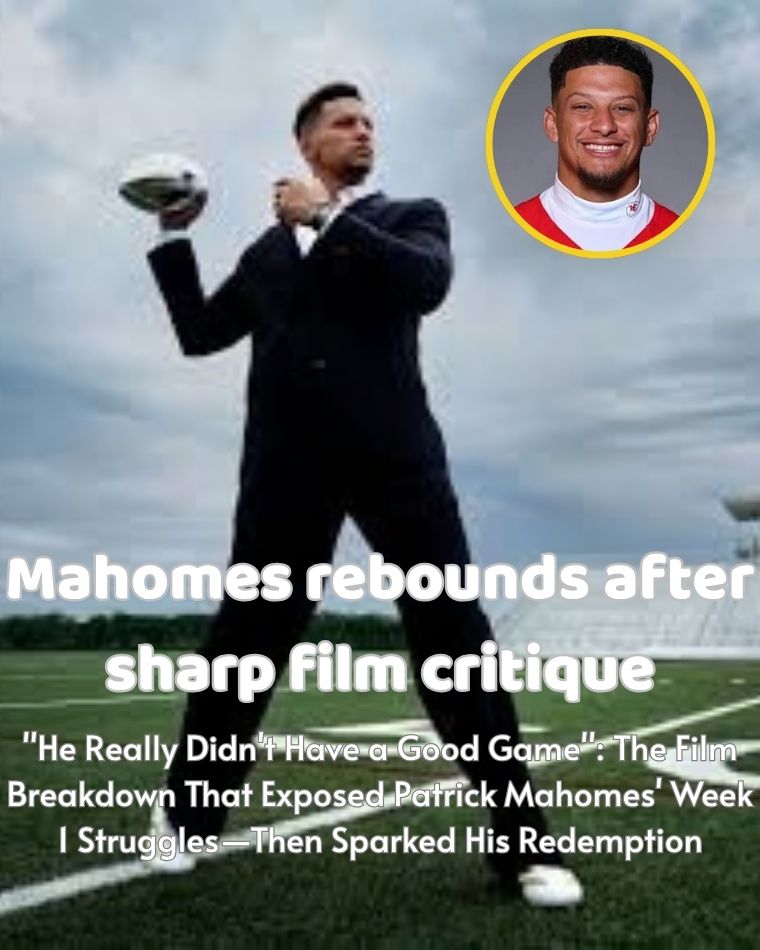
Cre: All-Pro Reels / Wikimedia Commons — Creative Commons Attribution-Share Alike 2.0 Generic
The blunt critique offered by the veteran analyst came as a shock to fans who watched Kansas City roll past a division opponent by 21 points.
Yet, those who study all-22 game footage for a living understood immediately why the evaluation was so unsparing.
Cosell has spent over four decades serving as a senior producer at NFL Films, building a reputation as one of the most respected authorities in professional football analysis.
When someone with Cosell’s track record questions a superstar quarterback’s underlying impact, the entire league takes notice.
The initial public narrative surrounding the Chiefs’ season opener had focused almost exclusively on the victory itself.
Kansas City put up 31 points against a respected Denver defensive unit, seemingly proving that the reigning dynasty remained unstoppable.
Mahomes opened the scoring on the Chiefs’ first possession with an electric 15-yard rushing touchdown.
By the end of the evening, Mahomes had added two passing scores to his touchdown tally, alongside 184 passing yards on 15 of 27 completions.
To the casual observer scanning fantasy box scores, that stat line appeared perfectly functional and efficient.
However, football tape consistently strips away narrative fluff to reveal the mechanical truth on every single snap.
The film exposed clear timing irregularities, missed progressions across intermediate zones, and extended hesitation inside clean pockets.
Kansas City controlled the line of scrimmage, yet the downfield passing game failed to generate explosive rhythm.
The offense operated heavily around heavy run sets and short checkdowns rather than vertical strikes.
On multiple dropbacks, receivers broke open on intermediate dig and corner routes without seeing target delivery.
The rhythm between Mahomes and his wide receiver corps appeared disjointed throughout all four quarters.
Defensive backs from Denver were frequently able to recover coverage leverage because balls were delivered a fraction of a beat late.
In the modern NFL, a quarter-second delay in release often transforms an explosive play into an incomplete pass.
Cosell specifically pointed out that Kansas City’s overwhelming victory did not depend on their All-Pro quarterback driving the machine.
“When would we have said in recent years that the Chiefs would blow out a really good team without Patrick Mahomes really being a factor in the game?” Cosell observed on tape review.
The answer to that question underscored a profound tactical shift within Andy Reid’s offensive system.
The primary engine behind Kansas City’s offensive success against Denver was not their passing game, but the rushing attack.
Running back Kenneth Walker III delivered a defining, devastating performance against the Broncos’ defensive front.
Walker racked up 173 rushing yards and two total touchdowns, generating 191 total scrimmage yards across 23 heavy touches.
The signature moment came in the third quarter when Walker exploded for a 60-yard touchdown sprint on fourth-and-1.
That single explosive run flipped the momentum entirely, extending Kansas City’s lead to 21-7 and crushing Denver’s comeback hopes.
Meanwhile, the Chiefs’ offensive line dominated Denver’s defensive front in pass protection and gap-blocking schemes.
Rookie left tackle Kahlil Benson made his first professional start against pass-rusher Nik Bonitto.
Benson delivered an astonishing performance, allowing only one quarterback pressure on 32 dropbacks.
That microscopic 3.2% pressure rate led all rookie offensive tackles across the entire NFL in Week 1.
With an offensive line providing elite pocket protection, the lingering passing inefficiency became even more glaring on film.
Mahomes rarely faced unblocked defenders or collapsing pocket walls during his passing attempts.
Instead, the film showed unnecessary scrambles out of clean spaces and rushed checkdowns into flat zones.
The deep sideline shots that defined Kansas City’s championship identity were notably absent from the progression tree.
Denver consistently dared Kansas City to attack deep two-high safety shells, but the Chiefs rarely challenged those coverages downfield.
The disconnect between public perception and film evaluation created a sharp contrast following Week 1.
Head coach Andy Reid publicly defended his quarterback during the postgame media session.
Reid expressed satisfaction with how Mahomes commanded the offensive unit during competitive action.
“It was great to get Patrick back in the mix there, knock a little rust off,” Reid told reporters after the win.
“I was proud of him and how he handled it, and he ran the ball a couple of times, and your hat goes off to the guy. Phenomenal.”
Reid understood that winning games early in September allows a championship coaching staff room to correct fundamental details.
Yet, inside the Kansas City facility, Mahomes showed complete alignment with the film analysts who critiqued his play.
Rather than dismissing outside opinions, Mahomes stepped up to the press conference microphone with total personal accountability.
“Tonight was fantastic offensively, but what’s next as far as getting the wide receivers involved… I got to be better,” Mahomes stated frankly.
“At the end of the day, I have to be better.”
That self-awareness represents the hallmark of an elite quarterback possessing a genuine growth mindset.
Lesser quarterbacks often hide behind a 21-point team victory, pointing to the final scoreboard as proof of success.
Mahomes, however, judges his performance against a standard of execution far higher than ordinary box score totals.
He recognized that winning while relying entirely on running backs and defense is not a sustainable championship formula over a 17-game season.
The Chiefs’ coaching staff spent the days following Week 1 dissecting every single passing sequence in the meeting rooms.
Offensive coordinator meetings focused on why wideouts were failing to establish early rhythm on quick-timing routes.
Film study revealed that route depths on multiple third-down plays lacked the precision demanded by Reid’s West Coast scheme.
Furthermore, Mahomes held the football for an average of over 2.9 seconds on passing downs against Denver.
Holding the ball that long forced wide receivers into secondary scramble drills rather than structured catch-and-run opportunities.
The Chiefs immediately designed specific practice scripts during Week 2 preparations to recalibrate pocket timing.
Drills emphasized rhythmic three-step and five-step drops with decisive deliveries on the back foot.
Mahomes focused on releasing the football into anticipation windows before receivers made their final break cuts.
The collaborative process between coaching staff and quarterback demonstrated why Kansas City consistently evolves throughout the autumn.
Critique from film analysts like Cosell often serves as an objective mirror that confirms what internal coaching software reveals.
NFL coaches value independent tape review because it evaluates process rather than simply celebrating the outcome of a play.
A poorly thrown pass that results in a lucky defensive pass interference penalty is still a flawed execution on film.
Conversely, a perfectly read progression that results in a dropped pass is still the correct quarterback decision.
By separating results from execution, film analysts provide an unvarnished audit of a team’s actual strategic baseline.
When Kansas City prepared for their Week 2 matchup against the Indianapolis Colts, the tactical adjustments were already evident.
The game plan expanded the passing tree to intentionally integrate wide receivers on quick-hitting slants, out routes, and intermediate crossers.
Mahomes attacked soft coverage cushions early, taking away defensive leverage before pressure packages could develop.
Instead of hunting for late-developing scramble plays, he operated with decisive rhythm from the pocket.
The ball came out of his hand noticeably faster, cutting down his average time to throw.
Wide receivers who were virtually invisible against Denver found themselves targeted early and often in the progression order.
The offense maintained balance with Kenneth Walker, but the passing game reclaimed its role as the primary driver of downfield scoring.
Against Indianapolis, Kansas City demonstrated the offensive flexibility that makes them an enduring Super Bowl contender.
The Chiefs won another tight contest, 33-30, proving that Mahomes could elevate his passing volume when called upon.
The tape against the Colts validated the urgent corrections made after the Denver film session.
Rather than remaining satisfied with an uneven Week 1 showing, Mahomes utilized the constructive critique as a roadmap for rapid improvement.
That willingness to confront flaws on tape separates perennial contenders from teams that plateau after initial success.
In modern football analytics, tape breakdown serves as the ultimate diagnostic tool for player development.
Quarterbacks who react defensively to film critique often repeat the same mechanical errors when pressure mounts in December.
Mahomes has consistently taken the opposite path throughout his decorated NFL career.
Every time film analysts identify a vulnerability in his game—whether against Cover 2 shells or disguised zone blitzes—he methodically dismantles the weakness.
His ability to self-scout and absorb hard truths remains one of his most underrated athletic traits.
Coaches throughout the league study Kansas City’s tape not just to design defenses, but to teach quarterback development.
Reid’s system works because the franchise quarterback demands perfection on the fundamental details of every passing concept.
The early weeks of the 2026 NFL season demonstrated that championship teams are forged in the quiet hours of film study.
When the Chiefs defeated the Miami Dolphins 24-10 in Week 3, the passing offense operated with crisp, surgical efficiency.
Mahomes delivered the ball on time, exploited single-coverage matchups, and distributed targets evenly across his receiving corps.
The offensive line continued to provide consistent pocket protection, allowing the playbook to unlock intermediate passing lanes.
By the time Kansas City secured an exciting 30-27 victory over the Las Vegas Raiders to start 4-0, the Week 1 tape felt like ancient history.
Yet, that opening night review against the Broncos remained the catalyst that sparked the offensive evolution.
Without Greg Cosell’s sharp film evaluation pointing out that Mahomes was not a decisive factor, the urgency to adjust might have taken weeks to manifest.
Great players do not run away from harsh truths; they use them to refine their craft and sharpen their instincts.
Cosell’s observation on the Ross Tucker Podcast ultimately served as a timely reminder of what true excellence requires in the National Football League.
A 21-point blowout win might satisfy headlines and casual supporters, but game tape never compromises on detail.
For Patrick Mahomes and the Kansas City Chiefs, the honest assessment of Week 1 became the foundation for yet another dominant stretch of offensive football.
As the 2026 season marches forward into deeper autumn battles, the tape will continue to serve as the ultimate arbiter of success.
And as long as Mahomes maintains his relentless pursuit of mastery, the film room will remain his greatest competitive weapon.
Để lại một phản hồi