The Burning Question: Is Heart of the Beast Based on a True Story?
Whenever a survival film grips cinema audiences with raw realism and unbearable tension, moviegoers immediately wonder if real human beings endured those exact harrowing trials.
Brad Pitt’s latest wilderness survival film, Heart of the Beast, has stirred intense curiosity across movie circles and social media platforms.
The intense drama depicts a retired Special Forces operator battling freezing wilderness and vicious elements alongside his devoted combat dog.
Because the physical trauma and primal wilderness interactions feel remarkably tactile, fans immediately wanted to know whether real-world events sparked the premise.
Entertainment outlet Just Jared and industry reports have shed light on the origins of the screenplay, offering direct insights from writer Cameron Alexander.
The straightforward reality is that Heart of the Beast is not a direct beat-for-beat retelling of a specific historical catastrophe.
Instead, the script emerged as a carefully crafted original screenplay that first gained Hollywood renown on the prestigious 2017 Black List.
The screenplay draws upon broader emotional truths, military realities, and genuine human-canine bonds rather than adapting an existing biography or a single documented disaster.
Understanding this clear distinction changes how viewers process the cinematic journey unfolding on the big screen.
Knowing what sparked the screenwriter’s imagination gives viewers a richer appreciation of whether they are witnessing a dramatized historical account or a fictional creation inspired by composite themes.
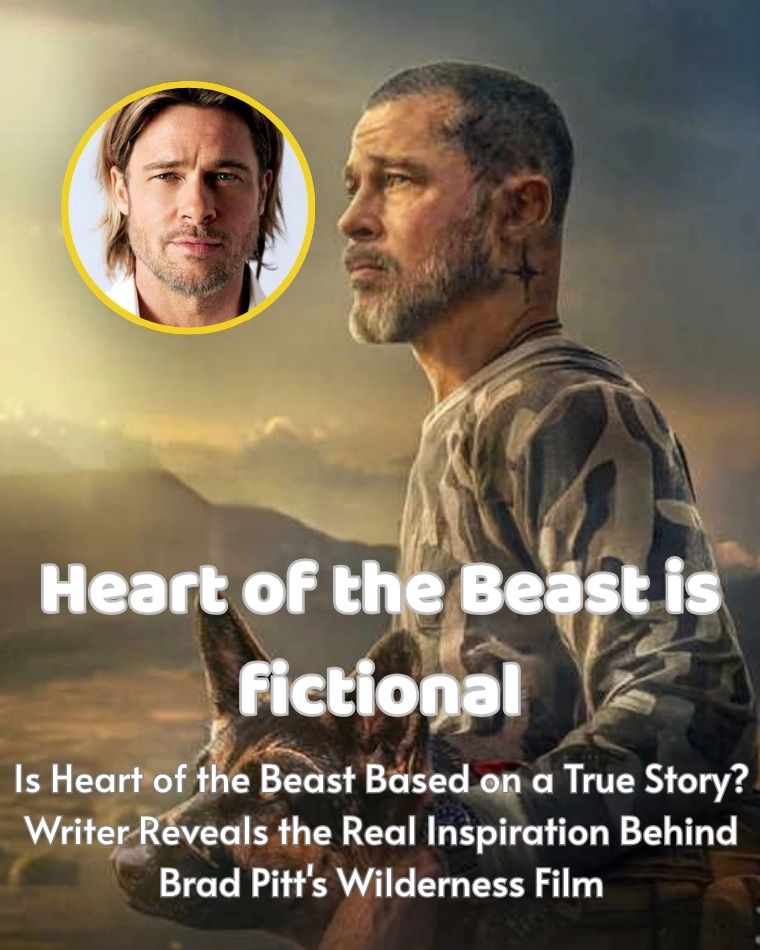
Cre: Crave Films / Cedar Park Entertainment
Screenwriter Cameron Alexander Reveals the Story’s Core Inspiration
Screenwriter Cameron Alexander revealed that his creative vision grew out of an interest in post-traumatic stress, unspoken companionship, and extreme isolation.
Rather than lifting a specific headline from news archives, Alexander focused on what happens when two broken survivors must rely entirely on each other.
The protagonist, former Special Forces soldier James Belmont, carries profound psychological scars alongside his combat canine companion, Odin.
Alexander’s writing taps into the documented reality of military working dogs and their handlers returning home from modern conflict zones.
These real-world service dogs and veterans frequently share mutual trauma and hyper-vigilance that civilians often struggle to comprehend fully.
By isolating these characters in the unforgiving Alaskan wilderness, Alexander tested that psychological bond under maximum physical pressure.
The writer noted that wilderness survival literature often pits mankind strictly against cold environments.
Yet Alexander wanted the true driving force to be sacrificial devotion between a soldier and his canine partner.
The hostile natural environment functions not merely as an obstacle, but as a crucible that exposes the deepest recesses of the human heart.
The resulting script captured immense industry attention when it was named among the most liked unproduced screenplays on the 2017 Black List.
Director David Ayer later championed the material because its military authenticity aligned seamlessly with his own creative pedigree.
Ayer recognized that the script treated the soldier and dog as co-equal partners navigating shared psychological and physical combat.
“Based On” vs. “Inspired By”: Understanding the Critical Hollywood Distinction
Hollywood marketing frequently blurs the boundary between cinematic projects described as “based on a true story” and those “inspired by real events.”
Understanding the legal and narrative divide between these designations prevents viewer disillusionment when scrutinizing dramatic films.
When a production claims to be “based on a true story,” filmmakers generally follow documented historical accounts, court transcripts, published memoirs, or living witnesses.
In such adaptations, the names of the real people, specific chronologies, geographical waypoints, and overarching outcomes must tether closely to factual records.
Films that carry the “inspired by” or composite label, by contrast, use real phenomena as an imaginative springboard for completely invented characters.
Heart of the Beast falls decisively into this second artistic category.
While real bush pilots do experience sudden mechanical emergencies over vast northern wilderness corridors, Belmont’s specific cross-country trek is fictional.
The narrative compresses genuine wilderness survival tactics, real canine protective behavior, and authentic trauma symptoms into a tightly scripted adventure thriller.
This composite structure frees the screenwriters and actors to pursue emotional clarity rather than being constrained by literal documentary fidelity.
Audiences who recognize this distinction can evaluate the movie on its dramatic merits rather than hunting for real newspaper archives of Belmont’s flight.
The power of the film stems from authentic emotional resonance rather than journalistic documentation.
Liberated from historical constraints, the creators could push physical encounters to their absolute narrative and thematic limits.
How Wilderness Survival Classics Harness Composite Realities
Wilderness survival cinema has long captivated moviegoers because nature represents the ultimate neutral antagonist.
Nature possesses neither malice nor mercy; it simply exists under its own unyielding physical laws.
Classic survival cinema frequently combines numerous real-life bush survival accounts to create an ultimate test of endurance.
In crafting Belmont’s harrowing journey across fifty-eight miles of rugged terrain, the narrative integrates documented survival scenarios encountered by real arctic explorers.
Real plane crashes in remote territories require instant triage of salvageable gear, immediate cold-water hypothermia management, and careful route calculation.
Similarly, unexpected encounters with apex predators like territorial grizzly bears and gray wolf packs reflect legitimate dangers documented across remote northern territories.
The film meticulously tracks Belmont’s physical degradation, illustrating how broken bones and infection rapidly compound in freezing climates.
By borrowing granular details from real survival manuals and military field medicine, the storytelling convinces viewers of its absolute authenticity.
The realism does not depend on whether Belmont existed as an individual on a military roster.
Instead, the realism depends on whether Belmont’s reactions and Odin’s tactical canine instincts mirror what real experts would witness in the wild.
This grounding in authentic field realities makes every decision feel urgent, consequential, and painfully plausible.
When viewers believe the survival mechanics are grounded in real survival science, the emotional stakes skyrocket.
The Human-Canine Dynamic: Why Animal Companionship Anchors Survival Stories
The unbreakable bond between human beings and domestic dogs remains one of the most reliable emotional catalysts in storytelling history.
In Heart of the Beast, the canine protagonist Odin is not merely a pet, but a decorated partner who understands tactical cues and life-and-death stakes.
Multiple canine actors brought Odin to life on set, ensuring that authentic physical instincts and raw protective reactions anchored every shot.
When a human character suffers alone in the wild, an audience feels empathy for their physical pain.
When an animal companion shares that exact same suffering, audience engagement multiplies exponentially.
Viewers instinctively recognize that animals harbor no ego, no political agenda, and no deceit.
An animal’s loyalty during an extreme crisis represents purity of intent in its most elemental and uncompromised form.
Screenwriter Cameron Alexander grasped that viewers would endure grueling scenes of physical hardship if they knew Belmont fought primarily to ensure Odin survived.
This inversion of classic survival tropes reframes the story from selfish self-preservation to selfless sacrifice.
The emotional climax of the story does not hinge on the man saving himself, but on whether the faithful hound reaches civilization safely.
Real military handlers consistently describe this profound willingness to lay down one’s life for a working canine partner.
By capturing that specific military ethos, the movie communicates a truth far deeper than factual news reporting could capture.
The bond between handler and working dog represents a timeless pact forged in fire, adversity, and mutual reliance.
Why Audience Fixation on “True Stories” Shapes Cinematic Culture
Why do modern audiences crave the reassurance that an intense thriller happened in the real world?
Cultural analysts argue that contemporary audiences feel inundated by digital visual effects, synthetic storytelling, and fabricated spectacles.
When a film suggests a connection to real human experiences, it immediately breaks through that wall of modern sensory cynicism.
Viewers yearn to know that human courage, grit, and sacrifice actually occurred under real skies.
If a protagonist overcomes freezing rivers and dangerous predators, audiences seek proof that the human spirit can truly achieve such heroic feats.
Learning that a film is “inspired by broader themes” rather than a single event does not diminish its cultural value.
Instead, composite storytelling often honors a wider community of unsung real-world heroes whose individual tales never reached Hollywood producers.
Alexander’s script honors thousands of veterans and working dogs who quietly battle personal demons long after returning from foreign combat deployments.
The film reminds viewers that wilderness can exist both in the physical geography of the planet and within the wounded human psyche.
When Brad Pitt portrays Belmont limping toward a distant road with his final breath, he channels real human dignity that transcends fictional scripting.
Heart of the Beast demonstrates that emotional truth frequently matters far more than literal biographical transcription.
The movie leaves audiences with a lasting tribute to enduring companionship, sacrificial devotion, and the unyielding will to protect those we love.
Để lại một phản hồi