In a modern entertainment landscape obsessed with relentless self-reinvention and prestige validation, Adam Sandler discovered that the surest path to enduring relevance was simply having fun on his own terms. By walking away from traditional studio pressure cookers and anchoring his work in personal happiness, the veteran comedian engineered one of the most resilient, lucrative, and culturally influential phases of his legendary career.
The conventional playbook for a legacy movie star in Hollywood has always been rigid, demanding, and notoriously fragile.
Under traditional studio rules, actors are expected to alternate between massive four-quadrant studio tentpoles and grueling awards-season prestige bids to maintain cultural currency.
For decades, failure at the theatrical box office signaled career stagnation, while harsh critical reception could freeze an entertainer out of major studio slates entirely.
Yet Adam Sandler managed to rewrite this dynamic completely, creating a modern paradox that has fascinated industry observers and delighted millions of devoted fans worldwide.
He achieved the highest commercial plateau and the sharpest artistic acclaim of his life only after he stopped trying to please everyone.
Instead of bending his comedic voice to appease traditional critics, Sandler deliberately pivoted toward projects that maximized his personal well-being, creative freedom, and authentic creative pleasure.
This transition reshaped not only his individual trajectory, but also demonstrated an entirely new framework for how veteran performers can command industry autonomy on a global scale.
The Breaking Point of Box-Office Validation
The late 1990s and early 2000s cemented Adam Sandler as an indisputable titan of the theatrical comedy marketplace.
His early string of smash hits established a distinct comedic sensibility that defined an entire generation of moviegoers.
Audiences flocked to theaters by the millions to experience his singular blend of goofy physical humor, sudden vocal outbursts, and underlying heart.
However, relying entirely on theatrical distributor expectations came with intense commercial vulnerability and mounting media scrutiny.
By the early 2010s, that traditional theatrical formula encountered severe turbulence.
High-profile releases such as Jack and Jill and That’s My Boy triggered unprecedented critical backlash across mainstream entertainment media.
Reviewers tore into the scripts, treating the slapstick comedy as evidence of artistic fatigue rather than genuine creative expression.
The hostile press cycle placed immense pressure on Sandler to conform, apologize, or completely overhaul his comedic identity to satisfy external standards.
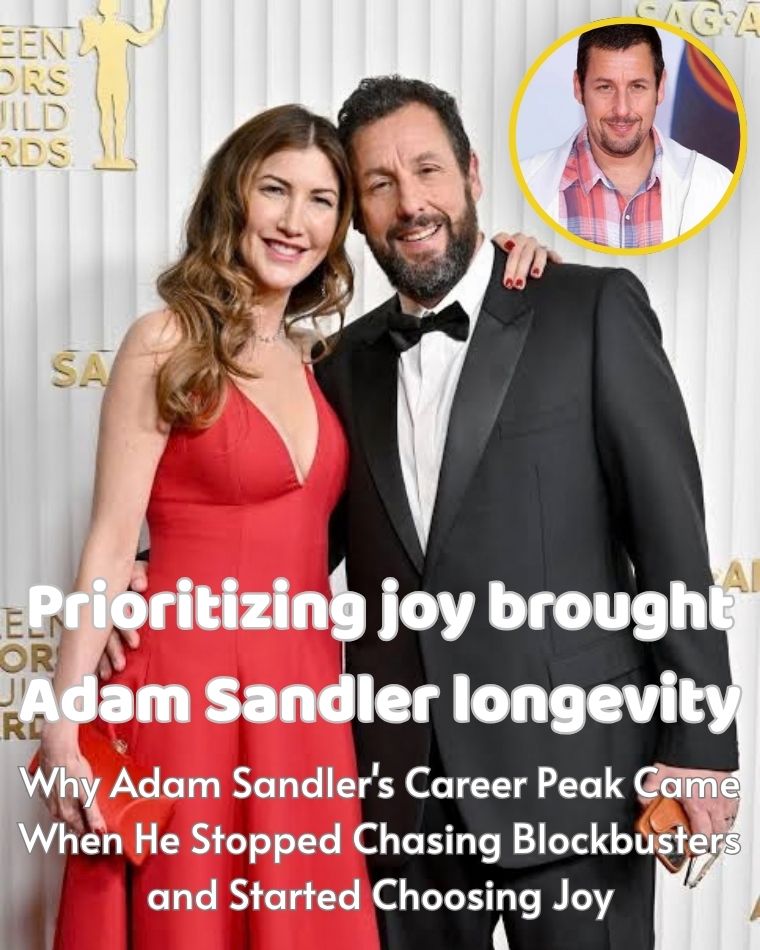
Cre: Wikimedia Commons — Mario Antonio Pena Zapatería, giấy phép Creative Commons Attribution-ShareAlike 2.0 Generic
Industry commentators during that era began writing premature post-mortems regarding Sandler’s bankability and long-term viability in Hollywood.
The traditional studio machinery demanded safer concepts, harsher budget compromises, and endless rounds of corporate notes.
Every Friday opening weekend carried make-or-break stakes that threatened to dictate what stories he could tell next.
Sandler recognized that continuing to chase approval within that narrow system would inevitably drain the joy from his craft.
Rather than surrendering to critical demands or attempting a panicked pivot into formulaic prestige roles, Sandler chose an entirely different exit ramp.
He realized that creative longevity could never be achieved by running on a treadmill powered by other people’s expectations.
The Historic 2014 Netflix Deal and Unprecedented Autonomy
In October 2014, Adam Sandler made an unprecedented industry wager that would fundamentally alter the future of modern screen distribution.
He bypassed traditional Hollywood studios to sign a landmark multi-picture production agreement directly with Netflix.
At the time, major theatrical exhibitors and industry skeptics questioned the decision, viewing direct-to-streaming projects as a step down in cultural prestige.
Streaming platforms had not yet established their dominance, and Hollywood veterans viewed theatrical screens as the sole measure of true stardom.
Sandler and his production company, Happy Madison Productions, saw an entirely different horizon.
The deal offered something far more precious than traditional theatrical vanity: absolute creative sovereignty and direct access to an international audience.
Netflix eliminated the suffocating anxiety of opening weekend box-office tracking numbers.
There were no studio executives demanding rewrites to chase demographic focus groups or forcing changes to fit arbitrary executive mandates.
Instead, the partnership provided Sandler with fully guaranteed budgets, total editorial autonomy, and global distribution touching dozens of countries simultaneously.
Netflix understood that Sandler possessed a fiercely loyal, evergreen global audience that did not care about Rotten Tomatoes scores.
They gave him the freedom to develop, shoot, and deliver movies exactly the way he wanted them made.
This freedom unlocked an extraordinary surge of creative energy unburdened by corporate micromanagement.
Sandler was no longer forced to justify his comedic timing to rooms full of risk-averse studio executives.
He had established a sanctuary where comedic instinct reigned supreme and audience connection remained direct and unmediated.
The contract marked the beginning of an era where creative independence took precedence over Hollywood’s obsolete approval mechanisms.
Turning Friends, Family, and Dream Locations into an Industry Model
With complete creative autonomy secured, Sandler transformed his entire filmmaking process into an extension of his everyday life.
He began selecting filming locations that he and his loved ones genuinely wanted to explore, turning working sets into shared adventures.
Cast lists were populated almost exclusively by his lifelong inner circle, frequent comedy collaborators, and his own immediate family members.
Familiar faces who had shared the stage with him for decades became permanent fixtures of his cinematic universe.
Initially, cynical industry columnists mocked this arrangement as an expensive excuse to take paid vacations with personal friends.
Pundits dismissed the approach as lazy, claiming it lacked the discipline expected of major Hollywood productions.
Yet Sandler never hid his motivations, openly embracing the fact that he preferred making movies in places where he could relax between takes.
Working alongside trusted confidants allowed everyone on set to operate with relaxed confidence and intuitive comedic chemistry.
What detractors failed to recognize was that Sandler was architecting a revolutionary, highly efficient production ecosystem.
On a typical Hollywood set, tension, corporate paranoia, and interpersonal politics frequently choke organic humor and waste costly production hours.
On a Happy Madison set, decades of mutual trust created an environment of effortless collaboration and rapid problem-solving.
Sandler eliminated the psychological friction that usually wears down veteran artists over long decades in the spotlight.
Filming on sun-drenched coastlines and scenic European towns meant cast and crew operated at peak morale throughout demanding shooting schedules.
His family was not left behind in California during months of distant location shoots; they were directly involved on and off camera.
Sandler dissolved the artificial barrier separating demanding professional obligations from a rich, grounded personal existence.
His so-called vacation movies became a masterclass in building a healthy work-life balance within an industry infamous for destroying it.
The Global Phenomenon of Murder Mystery
The ultimate vindication of Sandler’s joy-first production philosophy arrived with the monumental reception of the hit comedy Murder Mystery.
Teaming up once again with his close friend and longtime comedic partner Jennifer Aniston, Sandler filmed across stunning, picturesque locations throughout Europe.
The film blended classic Agatha Christie whodunit tropes with the breezy, effortless banter that defined the duo’s magnetic onscreen dynamic.
Critics were once again skeptical of the film’s relaxed, accessible tone, but the global public responded with historic enthusiasm.
Upon its release, Murder Mystery shattered viewership records across the streaming ecosystem.
Tens of millions of households tuned in during its opening days, establishing it as one of the most-watched original films in streaming history.
The massive numbers proved conclusively that casual, joyful entertainment retained an enormous, underserved global appetite.
Viewers did not log on seeking highbrow pretension; they wanted comforting, unpretentious fun led by charismatic performers they loved and trusted.
Sandler demonstrated that a film created with ease and warmth translated directly into genuine audience delight.
The success was so overwhelming that it cemented a succession of high-value contract renewals between Sandler and the streaming giant.
The performance of Murder Mystery permanently dismantled the outdated argument that theatrical box-office receipts were the sole benchmark of cinematic relevance.
Sandler had created a global holiday tradition in living rooms from Tokyo to Toronto without having to pitch a single theatrical marketing campaign.
His commercial model proved to be immune to bad reviews because it was sustained by unshakeable audience trust.
Joy had not merely preserved his career; it had elevated him into one of the most bankable entertainment entities on Earth.
Masterful Dramatic Turns Pursued Purely Out of Passion
Having achieved unassailable commercial stability, Sandler possessed the rare luxury of choosing dramatic roles purely for the love of the material.
He did not take on serious acting assignments to salvage his career or appease snobbish industry gatekeepers.
Instead, he stepped into challenging cinematic territory only when a script, a character, or a directorial vision genuinely fascinated him.
This absolute freedom paved the way for his transcendent performance as the frenetic diamond dealer Howard Ratner in the Safdie brothers’ 2019 masterpiece, Uncut Gems.
Sandler immersed himself in the claustrophobic, high-stakes energy of New York’s Diamond District with electrifying intensity.
His performance was raw, relentless, and emotionally complex, capturing a compulsive gambler hurtling toward inevitable catastrophe.
Audiences and critics were stunned by the sheer velocity and tragic depth of his performance.
He swept major film festival awards circuits and captured the prestigious Independent Spirit Award for Best Male Lead, delivering one of the most celebrated acceptance speeches of the season.
Sandler followed this triumphant artistic run with his acclaimed lead performance in the basketball sports drama Hustle.
Playing a weary, passionate international basketball scout chasing one last shot at glory, Sandler channeled his real-world, lifelong obsession with the sport into an authentic, deeply moving portrayal.
Critics praised his nuanced, understated humanity, reinforcing that his dramatic talent was not a fluke but an extraordinary reservoir of genuine dramatic capability.
Because he never needed dramatic roles for financial survival, Sandler approached each dramatic project with uncompromised dedication and zero vanity.
He was not acting to prove his critics wrong; he was acting because the storytelling challenged him in new and satisfying ways.
This distinction gave his dramatic work an unforced gravity that few traditional prestige-chasing actors could ever replicate.
Sandler had mastered both ends of the cinematic spectrum entirely on his own terms.
The Sustainable Architecture of Joy Over Validation
The career evolution of Adam Sandler offers one of the most instructive case studies in the modern history of popular culture.
In an industry defined by anxiety, cutthroat competition, and the ephemeral whims of award voters, Sandler constructed an impenetrable fortress of personal happiness.
He recognized that external validation is an unreliable foundation for an artistic life, prone to shifting unpredictably with passing cultural trends.
By prioritizing joy over validation, he protected his passion for making movies from the cynicism that so often consumes veteran stars.
Sandler’s friends-and-family production model, once unfairly ridiculed by traditionalists, now looks like brilliant, prescient career architecture.
He demonstrated that success does not require personal sacrifice, creative isolation, or emotional exhaustion.
Work and life do not need to exist in perpetual conflict when you build a business model that honors your real-world priorities.
He turned his productions into communal gatherings where laughter on set was treated as an essential metric of productivity.
Today, Adam Sandler stands as a beloved cultural icon whose enduring influence spans multiple generations of devoted movie fans.
He can transition seamlessly from delivering a multi-million-viewer family comedy to anchoring an electrifying independent cinematic masterwork.
His artistic and commercial vitality remains undiminished because it is powered by an inexhaustible, renewable resource: authentic enthusiasm for the craft.
Ultimately, Adam Sandler conquered Hollywood not by playing their games, but by refusing to abandon his own happiness along the way.
Để lại một phản hồi