Bruce Willis surprised the music industry in late 1986 by releasing an energetic rhythm-and-blues cover of “Respect Yourself.”
The single quickly climbed international charts while Willis stood at the peak of his television fame.
By reviving this celebrated 1971 classic, the television star bridged two distinct cultural eras and brought a timeless civil rights message back to global audiences.
The 1986 Release and the Revival of an American Anthem
Long before establishing himself as a marquee action movie star, Bruce Willis explored a genuine passion for classic soul and rhythm and blues.
In December 1986, Willis officially entered the music world by releasing his debut single, a punchy modern rendition of “Respect Yourself”.
The track served as the primary single promoting his upcoming debut studio album, The Return of Bruno.
Released under the iconic Motown label, the project marked an audacious step for a primetime television actor.
Producer Robert Kraft shaped the track with slick late-eighties pop-funk production while preserving its core blues fundamentals.
Willis delivered energetic lead vocals alongside sharp harmonica riffs throughout the track.
Crucially, the recording featured backing harmonies from the legendary pop-soul group The Pointer Sisters.
June Pointer joined Willis on co-lead vocals, delivering dynamic call-and-response verses that grounded the recording in authentic soul tradition.
The single rapidly gained momentum across mainstream American radio stations during the winter of 1986 and early 1987.
It also received heavy rotation on MTV, which amplified its visual charm to millions of younger viewers who had never encountered the song before.
The revival proved that great songwriting remains durable across different decades and genres.
Listeners who knew Willis solely as a witty television investigator suddenly heard him singing a message grounded in dignity and self-worth.
The record also reminded listeners of the songwriting brilliance of Mack Rice and Luther Ingram.
Decades after its first appearance, the anthem once again demanded the public’s undivided attention.
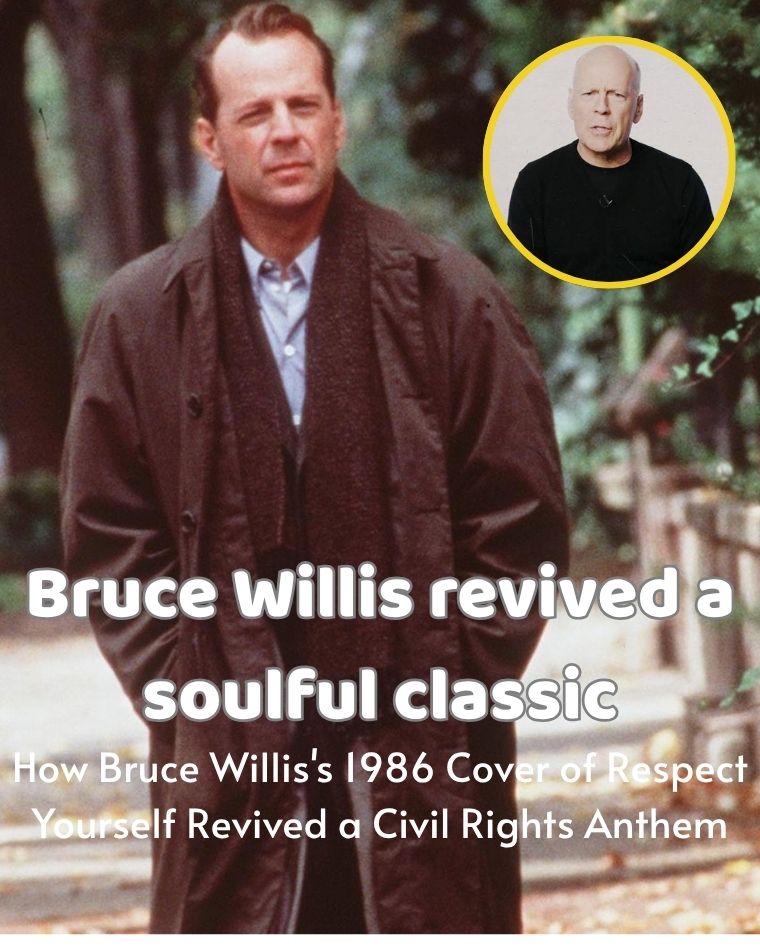
Cre: Wikimedia Commons — Alan Light / CC BY 2.0
The Staple Singers and the Civil Rights Roots of the 1971 Original
To fully grasp the cultural importance of Willis’s cover, one must examine the origins of the 1971 original.
“Respect Yourself” was originally recorded by the legendary family ensemble The Staple Singers.
Composed by Stax Records staff writers Luther Ingram and Sir Mack Rice, the song emerged directly from the ongoing struggle for African American equality.
During a conversation about society, Ingram remarked to Rice that people desperately needed to respect themselves before demanding respect from others.
Rice immediately recognized the power of the concept and crafted a rolling, funky rhythm around it.
When family patriarch Roebuck “Pops” Staples and his daughter Mavis Staples heard the demo, they embraced it as a vital message song.
Recorded in late 1971 at Muscle Shoals Sound Studio in Alabama, the track captured pure southern soul energy.
Producer Al Bell brought in the Muscle Shoals Rhythm Section and the Memphis Horns to provide a steady, uncompromising groove.
Pops Staples delivered his signature spoken-singing verses with smooth, comforting authority.
Mavis Staples followed with scorching, passionate vocal lines that infused every lyric with urgency.
The lyrics tackled social hypocrisy, personal integrity, and community uplift during the post-civil rights era.
Lines warning listeners about talking out of both sides of their mouths became enduring cultural touchstones.
Upon release, the song crossed over from gospel radio into the upper reaches of secular music charts.
It peaked at number twelve on the Billboard Hot 100 and reached number two on the Soul singles chart in early 1972.
Young African Americans began printing the slogan “Respect Yourself” on clothes and badges across the United States.
The Staple Singers transformed a studio soul record into a national rallying cry for human dignity.
Musical Ambitions at the Height of Primetime Stardom
By late 1986, Bruce Willis was one of the most recognizable faces on American television.
His starring role as detective David Addison on the hit comedy-drama Moonlighting made him an overnight cultural sensation.
The show showcased his fast-talking charisma, quick wit, and natural blue-collar swagger.
Yet Willis harbored artistic ambitions that extended far beyond standard Hollywood acting.
Before securing his breakthrough television role, Willis spent years working behind bars in New York City while playing blues harmonica in local clubs.
He developed an affinity for Stax, Motown, and classic Chicago blues.
Motown executives recognized Willis’s magnetic popularity and signed him to an ambitious recording deal.
Rather than releasing a straightforward pop record, Willis opted to craft a stylized rhythm-and-blues concept.
He adopted the comical musical alter ego Bruno Radolini, an obscure soul pioneer whose fictional legacy formed the backbone of the project.
This alter ego allowed Willis to express genuine love for the genre while maintaining a playful sense of showmanship.
Selecting “Respect Yourself” as the project’s flagship single was a deliberate statement.
Willis wanted to demonstrate that his musical project honored genuine rhythm-and-blues history.
He surrounded himself with elite session players to ensure the music stood on solid ground.
Keyboard legend Booker T. Jones contributed to the recording sessions alongside seasoned studio musicians.
The choice of June Pointer and her sisters provided the track with undeniable credibility and exceptional vocal execution.
Willis approached the microphone not as an untouchable celebrity, but as an enthusiastic performer paying tribute to his heroes.
Chart Dominance and Divided Critical Reactions
When “Respect Yourself” entered the charts in early 1987, it outperformed all commercial expectations.
The single surged into the top tier of music charts across several countries.
On the United States Billboard Hot 100, the song peaked at an impressive number five.
Across the Atlantic, British listeners embraced the track just as warmly, carrying it to number seven on the UK Singles Chart.
The parent album, The Return of Bruno, achieved platinum certification and climbed to number fourteen on the Billboard 200.
MTV embraced the track wholeheartedly, broadcasting its music video in heavy rotation.
The video depicted Willis in his element, singing playfully in a bar setting while bantering with June Pointer.
Despite the overwhelming commercial success, music critics greeted the release with mixed reactions.
Some purists viewed the release with skepticism, questioning whether an actor should cover a revered civil rights staple.
Critics noted that Willis’s voice lacked the transcendent emotional depth of Mavis Staples or Pops Staples.
However, many reviewers acknowledged the song’s infectious charm and smart production.
They praised June Pointer for elevating the entire performance with her soaring vocals.
Audiences responded enthusiastically because the track never took itself too seriously while remaining musically tight.
Willis’s harmonica solos added authentic flair that surprised listeners unfamiliar with his musical past.
By refusing to alter the core lyrical meaning, the cover retained the moral backbone that made the 1971 original unforgettable.
Bridging Primetime Charisma and 1980s Pop-Soul
The unexpected triumph of “Respect Yourself” reflected the broader landscape of American pop culture in the mid-1980s.
The era was marked by high-profile television personalities testing their talents across diverse media formats.
Willis’s public persona fit the cultural appetite of the decade seamlessly.
His television character radiated irreverence, optimism, and unpolished charm.
Those exact qualities informed his vocal delivery on “Respect Yourself”.
Instead of attempting an operatic performance, Willis leaned into his raspy, working-class timbre.
This accessible vocal style resonated with listeners who enjoyed straightforward rock and rhythm and blues.
Working under the Motown banner also connected Willis to a storied tradition of classic American soul.
Motown utilized its promotional expertise to position the record alongside contemporary dance-pop hits.
The collaboration between Willis and The Pointer Sisters represented an interesting bridge between disparate entertainment worlds.
The Pointer Sisters were pop royalty in the mid-1980s, coming off massive chart hits like “Jump (For My Love)” and “Automatic”.
Their inclusion ensured that the track retained credibility on urban and pop radio formats alike.
June Pointer matched Willis’s playfulness while maintaining superior vocal command.
Their dynamic duet turned the social anthem into an upbeat dialogue about personal integrity.
The track became a staple of eighties parties, car radios, and barroom jukeboxes.
It proved that an actor could transition into music successfully when guided by genuine respect for original material.
The Enduring Legacy of an Unlikely Rhythm-and-Blues Chapter
Bruce Willis’s musical adventure remains one of pop culture’s most fascinating historical footnotes.
Following “Respect Yourself,” Willis released a cover of “Under the Boardwalk” featuring The Temptations, which became an international hit.
He released a second studio album, If It Don’t Kill You, It Just Makes You Stronger, in 1989.
Soon after, cinema history intervened when Willis took the lead role in the 1988 blockbuster film Die Hard.
His meteoric rise as an action superstar quickly overshadowed his music ventures.
Yet his 1986 cover of “Respect Yourself” holds a permanent place in the chronology of eighties pop music.
More significantly, the cover provided a second life for the timeless work of Mack Rice and Luther Ingram.
It introduced millions of younger listeners worldwide to the musical catalog of The Staple Singers.
The core message of the 1971 original remained fully intact: personal pride must precede public recognition.
Whether performed by civil rights pioneers or an energetic television star, the song’s fundamental truth remains unshakeable.
Willis’s version demonstrated how great American songs can adapt to changing media landscapes without surrendering their soul.
Even decades later, this 1986 recording stands as proof that respect and great music never go out of style.
Để lại một phản hồi