The tantalizing parallel between Ryan Gosling’s arrival in Star Wars: Starfighter and Robert Downey Jr.’s universe-defining role as Tony Stark highlights both the immense opportunity and the staggering challenge facing Lucasfilm.
Former Marvel Studios president David Maisel recently sparked widespread discussion across the fandom by comparing Gosling’s casting to Downey’s monumental Marvel debut.
Whether a prestige dramatic powerhouse can anchor, redefine, and elevate an entire cinematic franchise remains one of Hollywood’s most compelling creative questions.
The Robert Downey Jr. Parallel and What It Means for Modern Cinema
When David Maisel helped bring Robert Downey Jr. to Marvel Studios nearly two decades ago, Hollywood observed the move with genuine curiosity and considerable skepticism.
Downey was widely recognized as a brilliant dramatic performer, yet nobody could have anticipated that his casting would redefine the modern blockbuster landscape.
Speaking recently, Maisel reflected on the power of transformative casting decisions while discussing Gosling’s role in the galaxy far, far away.
Maisel noted that authentic casting remains the fundamental prerequisite for any creative endeavor of this magnitude.
“As long as it’s an authentic casting like Robert Downey Jr. was for Tony Stark, I think this feels like that’s what it is, people respond to that,” Maisel explained regarding Gosling’s new venture.
He added that bringing an actor of Gosling’s caliber into the space saga genuinely feels like the right creative move for the entire franchise.
Maisel also spoke passionately about his deep admiration for the franchise during the opening events of the Lucas Museum of Narrative Art.
He shared how George Lucas’s initial myth-making directly inspired the architecture of Marvel’s cinematic narrative empire.
“Being at George Lucas’ museum, it was Star Wars that I fell in love with, which caused me wanting to do a universe, and which became the Marvel Cinematic Universe,” Maisel acknowledged.
He made it clear that without the structural trail blazed by Lucasfilm, modern cinematic universes might never have existed at all.
Comparing any incoming star to Robert Downey Jr. represents the highest possible praise within contemporary entertainment journalism.
Yet such a comparison simultaneously represents an extraordinarily demanding creative standard.
Downey did not simply perform well in a standalone comic book adaptation; he fundamentally breathed an irrepressible soul into an entire cinematic mythology.
Cre: Wikimedia Commons
Why Ryan Gosling’s Role in Star Wars: Starfighter Invites the Comparison
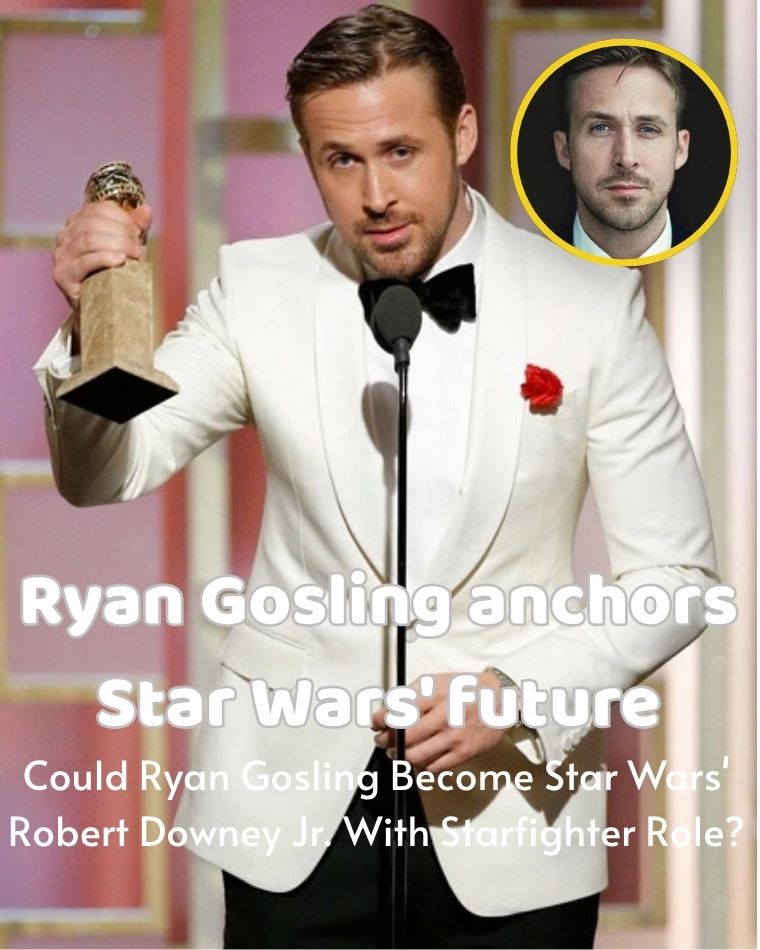
The announcement of Ryan Gosling leading Shawn Levy’s upcoming feature, Star Wars: Starfighter, immediately ignited conversations about the future trajectory of the galaxy.
Gosling portrays Kade Auberon, stepping into an original cinematic storyline alongside a fresh ensemble cast that includes Flynn Gray.
Unlike many earlier franchise projects, Starfighter is designed to break away from the direct orbit of the Skywalker family lineage.
Director Shawn Levy has explicitly emphasized that this narrative explores marginalized outsiders navigating the neglected margins of galactic civilization.
Levy explained that these characters are not born into royal dynasties or privileged galactic halls; rather, they come from the wrong side of the galaxy.
This thematic setup mirrors the refreshing vulnerability that grounded Tony Stark in the original 2008 Marvel masterpiece.
Gosling enters this space opera at the absolute height of his cultural visibility and artistic acclaim.
Over decades of dedicated screen acting, Gosling has deliberately avoided becoming trapped inside lengthy studio franchise machinery.
He has repeatedly described joining this specific space fantasy as a singular, once-in-a-lifetime artistic journey.
When an actor who has spent his career avoiding conventional franchise formulas finally commits to one, audiences immediately take notice.
The movie industry recognizes that Gosling does not sign onto blockbuster productions casually or out of contractual obligation.
His commitment signals to moviegoers that the creative blueprint possesses real emotional substance and distinctive narrative ambitions.
This genuine creative intent directly mirrors how Downey approached Iron Man during Marvel’s formative independent era.
Both actors brought an established reputation for artistic excellence to a genre that frequently risks prioritizing visual effects over genuine dramatic depth.
The Rare Qualities That Made Robert Downey Jr. Transformative for Marvel
To grasp the magnitude of the comparison, one must examine what made Downey’s relationship with Marvel so completely singular.
Before 2008, comic book movies frequently treated their heroic protagonists as relatively rigid archetypes bound by statutory moral codes.
Downey shattered that conventional mold by delivering a character rich with human frailty, relentless verbal energy, and genuine emotional baggage.
He brought rapid-fire improvisation and dramatic improvisation to the soundstage, forcing everyone around him to elevate their narrative game.
Stark’s technical brilliance was constantly paired with palpable self-doubt, narcissism, and deep-seated existential fear.
Audiences did not merely admire the armor; they fell passionately in love with the complex man operating inside the mechanical suit.
Downey served as a gravitational anchor across an entire decade of multi-character storytelling.
His magnetic presence created an emotional sanctuary where bizarre cosmic concepts and talking raccoons could feel emotionally plausible to mainstream audiences.
Every thematic conflict across Marvel’s multi-film infinity saga ultimately resonated back to Tony Stark’s personal choices and moral dilemmas.
He was the stylistic benchmark against which every subsequent superhero debut was compared and measured.
Replicating that type of structural impact demands far more than just charismatic screen presence or charismatic dialogue delivery.
It requires an actor capable of influencing the creative DNA of an ongoing fictional universe from the inside out.
Downey possessed a deep intuitive understanding of populist entertainment while preserving unyielding dramatic authenticity.
That unique synthesis turned a risky independent comic book venture into the highest-grossing film franchise in human history.
How Gosling’s Dramatic Range Could Serve the Galaxy Far, Far Away
Examining Ryan Gosling’s eclectic filmography reveals precisely why industry veterans like Maisel view him as an ideal anchor for Lucasfilm.
Gosling has built one of the most respected acting careers of his generation through remarkable thematic unpredictability.
He effortlessly transitions between intense dramatic silence and magnetic mainstream comedy without sacrificing an ounce of honesty.
His brooding, emotionally guarded work in films like Drive and Blade Runner 2049 demonstrated a profound command of silence and existential isolation.
Those specific dramatic textures match the solemn, wandering warrior traditions that run through George Lucas’s original samurai-influenced space mythology.
Simultaneously, his dynamic comedy work in The Nice Guys and Barbie demonstrated masterclass timing, self-awareness, and joyful energy.
Star Wars has always thrived on the delicate collision of high galactic adventure, quirky humor, and heavy mythological operatics.
When the saga neglects its character-driven wit, the films frequently become excessively self-serious and dramatically inert.
Conversely, when the franchise leans into shallow slapstick without emotional weight, the sacred stakes evaporate entirely.
Gosling possesses the exact dramatic spectrum required to balance those volatile tonal plates on his shoulders.
He can convey the weight of personal trauma with a single glance while maintaining an infectious charm that invites viewers into his journey.
In Starfighter, playing an outsider tasked with safeguarding vulnerable lives gives Gosling the canvas to portray genuine galactic grit.
Audiences are eager to witness a space hero whose strength comes from personal resilience rather than ancestral bloodline superiority.
Gosling’s presence guarantees that Kade Auberon will feel like a living, breathing person long before he is perceived as a branded action figure.
What True Success in This Role Would Mean for the Star Wars Franchise
The implications of Star Wars: Starfighter succeeding on the level of an Iron Man are astronomical for Lucasfilm.
The franchise has spent considerable narrative capital in recent years navigating the complicated nostalgic waters of its past.
Revisiting beloved legacy characters provides immediate emotional resonance, but it inevitably confines the universe to familiar territory.
For the saga to flourish across future generations, it must prove that audiences will show up in droves for completely original heroes.
A triumphant debut for Gosling would establish a brand-new narrative pillar capable of standing entirely on its own creative feet.
It would liberate theatrical storytelling from the endless gravitational pull of the Death Star and the Skywalker lineage.
Furthermore, it would demonstrate that high-profile dramatic auteurs can find rewarding artistic homes within galactic sci-fi without losing their distinct identities.
If Gosling makes Kade Auberon an instantly iconic pop-culture figure, he creates a beacon for other elite creative talents to join the franchise.
Downey’s success at Marvel made the MCU a welcoming sandbox for the finest actors and independent directors in global cinema.
Star Wars could reclaim that exact creative prestige if Starfighter proves that visionary character development remains paramount.
A breakthrough standalone hit would also reshape how Lucasfilm designs its long-term theatrical roadmap going forward.
Instead of relying solely on multi-film sagas conceived decades ago, the studio could foster varied, character-led cinematic experiences.
That creative flexibility is essential for sustaining cultural relevance in an increasingly saturated modern entertainment landscape.
Audiences are hungry for singular movie events that reward them with complete emotional arcs inside the theater.
The Vital Difference Between Exceptional Casting and a Universe-Defining Anchor
Despite the justifiable optimism surrounding this casting, industry observers must maintain a crucial distinction between great acting and franchise transformation.
Robert Downey Jr.’s trajectory was not merely the result of undeniable talent; it was an extraordinary alignment of timing, character, and studio necessity.
Marvel Studios was operating as a scrappy, independent production entity betting its absolute survival on a single motion picture.
That daring creative pressure created an atmosphere where improvisational risk-taking and unorthodox storytelling choices were actively celebrated.
Star Wars today is a multi-billion-dollar global cultural institution with complex corporate expectations and intense fan scrutiny.
An actor of Gosling’s caliber can deliver a transcendent, career-defining performance that garners universal praise from critics and fans alike.
Yet whether that individual brilliance expands into a franchise-defining legacy depends heavily on the larger cinematic ecosystem around him.
The writing must deliver genuine dramatic depth rather than relying on familiar mythological tropes and predictable galactic conflicts.
The directing must allow the characters room to breathe, fail, and evolve organically across their narrative journey.
Moreover, the studio must exhibit the discipline to let the character remain special rather than diluting his impact across endless media appearances.
Downey’s Marvel legacy remains legendary precisely because every chapter of Tony Stark felt deliberate, consequential, and emotionally earned.
Ryan Gosling indisputably possesses the requisite charisma, artistic integrity, and global screen authority to redefine modern space adventures.
Fantha Tracks and David Maisel have correctly identified the breathtaking potential of this landmark Hollywood pairing.
Whether Kade Auberon ultimately becomes the galaxy’s definitive modern hero will be decided when Starfighter finally launches across world theater screens.
Until then, the tantalizing comparison serves as an exhilarating reminder of what can happen when genuine cinematic artistry takes flight among the stars.
Để lại một phản hồi