Tom Hiddleston’s performance as Loki transformed an Asgardian trickster into one of the most compelling figures in modern cinema history. Over a thirteen-year journey spanning six blockbuster films and a two-season streaming series, the character moved from a bitter sibling rival into a protector bearing cosmic responsibility. Grounded in classical stage training, Hiddleston brought Shakespearean weight, genuine vulnerability, and indelible charm to the Marvel Cinematic Universe.
When audiences first met Loki in 2011’s Thor, few could have predicted the immense longevity of the character.
At the time, comic book adaptations frequently treated secondary antagonists as disposable narrative obstacles.
Yet, British actor Tom Hiddleston approached the Norse god of mischief with uncommon artistic seriousness.
Rather than offering a straightforward caricature of comic book malice, he built a performance rooted in familial rejection and wounded pride.
Loki was introduced not simply as a monster seeking destruction, but as a younger brother living in the shadow of a celebrated heir.
That initial performance laid the foundation for an unprecedented thirteen-year arc within the Marvel Cinematic Universe.
Over the course of his tenure, Hiddleston would portray Loki across six major feature films.
He would later headline his own critically acclaimed television series on Disney Plus, which spanned two full seasons from 2021 to 2023.
Through every appearance, the character shifted across the moral spectrum, defying simple categorization as a villain or a hero.
The character’s sustained resonance came from Hiddleston’s ability to infuse genuine pain and volatile wit into every scene.
Audiences recognized that Loki’s villainy was driven by profound insecurity and an agonizing search for belonging.
This nuanced characterization allowed the trickster god to transcend the conventional limits of blockbuster cinema.
As the Marvel Cinematic Universe expanded into a global cultural phenomenon, Loki emerged as its undisputed emotional anchor.
His journey demonstrated how long-form cinematic storytelling can nurture deep, operatic character growth.
To understand how this transformation occurred, one must trace the deliberate creative choices that defined his progression from 2011 onward.
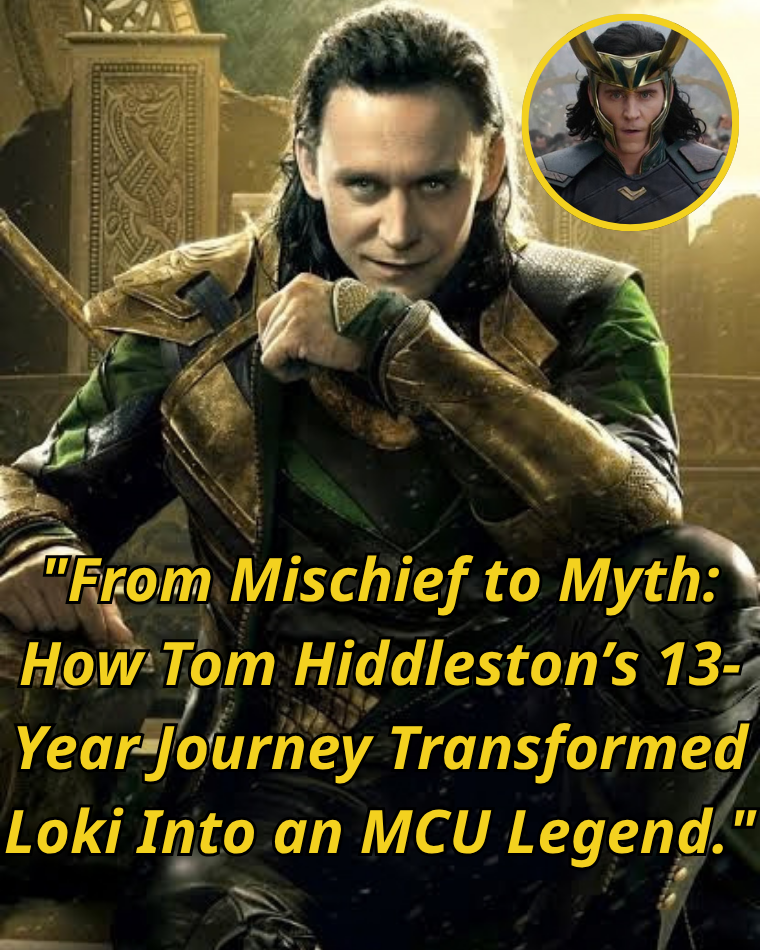
The Foundations of Malice: Shakespearean Tragedy in Early Asgard
Director Kenneth Branagh was instrumental in shaping Loki’s initial cinematic debut in 2011’s Thor.
Branagh, renowned worldwide for his definitive adaptations of William Shakespeare, sought an actor capable of projecting regal authority and hidden torment.
Hiddleston had honed his craft at the prestigious Royal Academy of Dramatic Art (RADA) in London.
His classical theater background made him uniquely suited to navigate the heightened dialogue and grand domestic drama of the realm of Asgard.
From the outset, Hiddleston drew inspiration from classical dramatic archetypes, including Edmund from King Lear and Iago from Othello.
In Thor, Loki discovers the devastating truth regarding his real heritage as an adopted frost giant infant.
That revelation shatters his entire identity and fractures his relationship with his adoptive father, Odin.
Hiddleston played the scene not with explosive anger, but with a trembling, tearful voice that revealed bottomless betrayal.
Loki’s scheme to sabotage his brother’s coronation was therefore framed as a desperate bid for paternal validation.
He did not merely want a throne; he wanted the love and respect that had always been denied to him.
This foundational vulnerability set Loki apart from traditional cinematic villains.
Viewers could disagree with his destructive methods while still empathizing with the emotional wound that prompted them.
Hiddleston ensured that beneath every sharp smile and calculated lie lay a deep sense of sorrow.
The dynamic between Hiddleston and Chris Hemsworth established an electric screen chemistry that powered the franchise for years.
Their fraternal friction felt authentic, alternating between deep familial affection and bitter physical hostility.
Even when plotting against his realm, Loki remained fundamentally tethered to the family that raised him.
This psychological complexity elevated Thor beyond standard fantasy tropes and secured Loki’s future across subsequent installments.
Marvel Studios recognized that in Hiddleston, they possessed an actor who could command the screen with exceptional dramatic heft.
The decision was swiftly made to place Loki at the center of the studio’s next major ensemble event.
Leading the Alien Invasion: The Grand Theatrics of The Avengers
In 2012, director Joss Whedon assembled Earth’s mightiest heroes in the landmark crossover film The Avengers.
Loki was selected as the sole central antagonist tasked with facing the combined might of Iron Man, Captain America, Thor, and the Hulk.
The narrative demanded a threat formidable enough to force disparate, powerful personalities into a unified defense force.
Hiddleston met this challenge by amplifying the theatrical arrogance and malevolence of the character.
Armed with an alien scepter and backed by an invading extraterrestrial armada, Loki descended upon New York City with terrifying intent.
Yet, Hiddleston resisted the temptation to play the role as a generic warlord.
He portrayed Loki as an ideological zealot who viewed human freedom as a chaotic burden that needed extinguishing.
The actor utilized precise enunciation, imposing physical posture, and cold stillness to convey intellectual superiority.
In scenes opposite Samuel L. Jackson’s Nick Fury and Robert Downey Jr.’s Tony Stark, Hiddleston delivered sharp verbal spars with relish.
He carried himself with the dramatic flourish of a classical stage performer playing to the back row of an opera house.
His famous proclamation demanding that humanity kneel reflected a mind unhinged by cosmic ambition and lingering trauma.
Behind the arrogant grin, Hiddleston subtly communicated that Loki was still reacting to his psychological rupture on Asgard.
The trickster was running away from his own perceived unworthiness by demanding unconditional worship from mortals.
When the Hulk famously smashed Loki into the marble floor of Stark Tower, the defeat was visually spectacular and humorously humiliating.
Even in total humiliation, Hiddleston’s silent expressions of dazed shock made the character oddly unforgettable.
The Avengers cemented Loki as the defining villain of Hollywood’s contemporary comic book era.
Fans and critics celebrated the performance for balancing genuine menace with moments of dark comedic levity.
The overwhelming popular acclaim guaranteed that Loki’s story would not end inside a subterranean prison cell.
Fraternal Bonds and Shifting Loyalties: The Thor Sequels
Following his defeat on Earth, Loki returned to Asgardian custody in 2013’s Thor: The Dark World, directed by Alan Taylor.
Confined to a transparent cell, the character was stripped of his regal finery and grand imperial ambitions.
The sequel offered Hiddleston an opportunity to expose the raw grief residing beneath the villain’s polished exterior.
When tragedy strikes Asgard and claims the life of Queen Frigga, Loki is entirely shattered.
Hiddleston delivered an unforgettable moment when Thor dispels an illusory glamour to reveal Loki’s true state in the dungeon.
Instead of an immaculate prince, the audience sees a devastated young man sitting barefoot amidst broken furniture, surrounded by absolute despair.
The performance showcased how deeply Loki loved his adoptive mother, the only figure who had truly understood his delicate spirit.
This profound bereavement forced Thor and Loki into an uneasy, temporary alliance against a common cosmic enemy.
Throughout the journey, Hiddleston kept audiences guessing regarding Loki’s true intentions and loyalties.
The character switched effortlessly between sarcastic banter, tactical brilliance, and sudden acts of self-sacrifice.
While his apparent death at the film’s climax seemed genuine, a mischievous final reveal demonstrated that Loki had quietly seized the throne disguised as Odin.
Four years later, filmmaker Taika Waititi revolutionized the sub-franchise with 2017’s vibrant and satirical Thor: Ragnarok.
Waititi’s irreverent tonal approach challenged Hiddleston to integrate deadpan physical comedy into his existing dramatic repertoire.
In this installment, Loki found himself out of his depth on the junk planet of Sakaar, navigating eccentric gladiatorial society.
Rather than plotting universal conquest, Loki was simply trying to survive alongside the peculiar inhabitants of an alien wasteland.
Hiddleston displayed impeccable comedic timing, reacting with quiet horror and subtle facial gestures to the absurdities around him.
More importantly, the film brought the central sibling dynamic toward genuine emotional maturation.
In a poignant elevator conversation, Thor remarks that their paths had finally diverged, accepting Loki for what he truly was.
Hearing his brother express calm indifference rather than fervent anger shook Loki to his very core.
When the ultimate battle for Asgard commenced, Loki chose to stand alongside Thor, arriving with a rescue vessel for his displaced people.
By fighting to protect his homeland, Loki completed a crucial step in his transition from spiteful saboteur to reluctant protector.
The film ended with the brothers standing shoulder to shoulder on the bridge of a starship, looking toward an uncertain cosmic future.
Mortality and the Illusion of Finality in Infinity War
The brief period of fraternal harmony came to an abrupt, violent conclusion in the opening sequence of 2018’s Avengers: Infinity War.
Directed by Anthony and Joe Russo, the film wasted no time in establishing the devastating threat posed by the titan Thanos.
With the Asgardian refugee ship captured and its defenders incapacitated, Loki faced an impossible life-or-death dilemma.
Hiddleston portrayed the god of mischief with a quiet, resolute solemnity that stood in stark contrast to his past theatricality.
Recognizing that raw magical power could not overcome the titan, Loki attempted to use his signature weapon: deception.
He pledged false fealty to Thanos while positioning a concealed dagger to deliver a fatal strike to the throat.
Before making his move, Loki boldly proclaimed his royal heritage, explicitly acknowledging himself as Odinson and a rightful prince of Asgard.
That singular line represented the culmination of years of internal turmoil and identity crisis.
Loki no longer ran away from his family; he embraced his Asgardian identity even in the face of inevitable annihilation.
Thanos intercepted the strike with ease, lifting Loki by the throat and ending the trickster’s life before Thor’s eyes.
The death was brutal, unceremonious, and completely devoid of magical escape hatches or illusory tricks.
Thanos’s chilling remark that there would be “no resurrections this time” appeared to seal the definitive end of Hiddleston’s cinematic run.
For audiences across the globe, witnessing the demise of such a beloved character was an emotionally staggering event.
Hiddleston had spent seven years portraying the character across five major films, crafting one of the medium’s most intricate antiheroes.
The scene served as a powerful testament to Loki’s growth, proving that when backed into a corner, he would choose sacrifice over cowardice.
Yet, the intricate narrative mechanisms of comic book storytelling would soon present an unexpected path forward.
In 2019’s Avengers: Endgame, a temporal heist sequence allowed a past version of Loki from 2012 to seize the Tesseract and vanish into the timestream.
That fleeting moment opened the door for a radical reinvention of the character in a brand-new medium.
The Disney Plus Era: Expanding Timelines and Deconstructing Identity
In 2021, Marvel Studios launched the dedicated television series Loki on the Disney Plus streaming platform.
Created by Michael Waldron and directed in its first season by Kate Herron, the project placed Hiddleston at the center of a complex narrative web.
The premise picked up with the alternate 2012 variant of Loki, who was immediately arrested by the bureaucratic Time Variance Authority (TVA).
This organization operated outside of standard space and time, dedicated to preserving a single sacred timeline.
By removing Loki from his royal milieu and stripping him of his magical dominance, the series forced a radical deconstruction of his ego.
In the premiere episode, the character is confronted with a film reel documenting his entire future existence.
He is forced to watch his indirect role in his mother’s death, his reconciliation with Thor, and his ultimate demise at the hands of Thanos.
Hiddleston delivered some of the finest dramatic work of his career in this quiet, solitary viewing room.
Without speaking a word for prolonged stretches, his eyes conveyed crushing disbelief, profound horror, and total psychological breakdown.
The realization that his grand glorious purpose was nothing more than an orchestrated cycle of villainy broke his spirit completely.
The television format gave Hiddleston the narrative room to explore existential themes that feature films rarely had time to examine.
Across two seasons running through November 2023, the series pitted Loki against various alternate versions of himself.
Among these temporal variants was Sylvie, portrayed by Sophia Di Martino, a female incarnation who had dedicated her life to dismantling the TVA.
Interacting with Sylvie allowed Loki to confront his own narcissism, emotional detachment, and fear of intimacy.
For the first time, Loki was challenged to love someone else with the same intensity he had previously reserved only for himself.
Additionally, his burgeoning friendship with TVA agent Mobius M. Mobius, played by Owen Wilson, brought genuine warmth and camaraderie to his life.
Wilson’s grounded, pragmatic energy provided the perfect conversational foil to Hiddleston’s heightened theatrical intensity.
Through these relationships, Loki discovered that his identity was not permanently etched in stone by ancient prophecies or royal expectations.
He possessed the agency to define his own values and determine what kind of god he truly wished to be.
The series boldly transformed a narrative about time travel into a philosophical investigation of redemption and personal choice.
A Mythic Ascendance: The Climax of Glorious Purpose
The second season of Loki, overseen by directors Justin Benson and Aaron Moorhead, pushed the character toward an extraordinary climax.
Faced with the catastrophic collapse of the temporal loom and the destruction of countless branching realities, Loki spent centuries learning theoretical physics.
He endured countless loops of temporal failure, refusing to abandon the friends he had grown to cherish within the TVA.
Hiddleston portrayed the crushing weight of this eternal endeavor with visible physical and mental exhaustion.
The sharp suits and immaculate hair were replaced by a weary, determined figure haunted by the responsibility of saving trillions of lives.
In the series finale, broadcast in late 2023, Loki finally understood what his glorious purpose actually required.
He recognized that preventing universal annihilation meant sacrificing his own freedom and companionship.
In a breathtaking sequence of visual and mythic splendor, Loki stepped out onto the crumbling walkway of the temporal loom without protective armor.
As the temporal radiation tore at him, he transformed his garments into regal green robes and summoned a crowned horned helm.
Hiddleston walked forward with quiet dignity, gathering the dying, fraying timelines into his bare hands and breathing life back into them with his magic.
He dragged the infinite branches of existence up the steps to the throne at the center of the temporal void.
There, Loki seated himself upon the lonely throne, weaving the infinite timelines into the cosmic shape of Yggdrasil, the Norse World Tree.
By physically anchoring reality itself, he became the God of Stories, doomed to sit in total isolation for eternity so that others might live.
The sequence served as an operatic, deeply poetic conclusion to an arc that had begun twelve years earlier.
The selfish prince who once demanded that crowds kneel before him had willingly chosen an eternity of solitary imprisonment.
Hiddleston’s final expression—a delicate balance of quiet grief, immense burden, and serene peace—resonated deeply with audiences worldwide.
It was a mythic resolution worthy of the classical literature that had inspired the character’s inception.
The Technique of Craft: Classical Training in Modern Blockbusters
The unprecedented success of Loki’s thirteen-year character journey cannot be understood through narrative writing alone.
It was fundamentally powered by the rigorous classical training that Tom Hiddleston brought to every single frame.
Before stepping onto a soundstage in Hollywood, Hiddleston immersed himself in the classical traditions of the British theater.
Graduating from the Royal Academy of Dramatic Art in 2005, he spent his early professional career performing works by Shakespeare, Chekhov, and contemporary playwrights.
This background instilled in him an acute understanding of how voice, posture, and breath control communicate internal psychology.
When delivering dialogue in a superhero production, Hiddleston treated fantasy screenplays with the respect of high dramatic verse.
He paid close attention to the cadence, rhythm, and emotional weight of every single syllable.
Whether speaking in the elevated, archaic vernacular of Asgard or engaging in modern banter, his vocal clarity never faltered.
Furthermore, Hiddleston understood how to utilize his physical frame to signal shifts in Loki’s mental equilibrium.
In the early films, his movements were sharp, defensive, and wound tight with adolescent resentment.
In The Avengers, he adopted an imperious, sweeping gait designed to project undeniable authority over mortal surroundings.
By the time he headlined the Disney Plus series, his physical posture had relaxed into a weary, grounded naturalism.
The actor understood that effective character evolution must be visible in how a person inhabits space.
Hiddleston also embraced the power of dramatic stillness in a genre that often relies too heavily on constant kinetic motion.
Many of Loki’s most arresting moments feature the actor simply standing motionless, allowing complex emotions to flicker across his eyes.
He recognized that silence often carries far more dramatic impact than loud, bellowing declarations of power.
This dedication to craft bridged the traditional divide between prestige stage drama and high-budget visual entertainment.
Hiddleston demonstrated that commercial franchise filmmaking provides a viable canvas for genuine artistic depth.
His technical discipline inspired fellow performers across the Marvel Cinematic Universe to elevate their own approaches to character work.
Through steadfast commitment to classical technique, Hiddleston elevated an ancient mythological figure into a timeless modern icon.
His decade-plus portrayal established a gold standard for how multifaceted, enduring character arcs should be executed in serialized cinema.
The Lasting Legacy of the God of Mischief
Reflecting upon the entirety of Tom Hiddleston’s work as Loki, the overarching achievement remains staggering in scope.
Very few dramatic performers have maintained such continuous creative ownership over a single role across thirteen consecutive years.
Fewer still have managed to evolve a secondary comic antagonist into the thematic heart of an entire interconnected cinematic universe.
Loki’s transformation challenged standard pop-culture conventions regarding redemption and heroism.
He was never scrubbed clean of his flaws or transformed into an immaculate, spotless defender of justice.
Instead, he remained mercurial, cunning, and fiercely intelligent until his very last moments on screen.
His heroism emerged not from abandoning his inherent nature, but from directing his unique gifts toward selfless protection.
He proved that a broken individual burdened by terrible mistakes can still choose to shoulder the ultimate sacrifice for others.
This emotional authenticity created an unbreakable connection between Hiddleston and generations of global film enthusiasts.
Fans saw in Loki a reflection of their own struggles with identity, familial expectations, and self-forgiveness.
Hiddleston embraced this cultural responsibility with remarkable grace, consistently celebrating the collaborative nature of the medium.
His legacy within Marvel Studios is permanently secured alongside the most celebrated cinematic adaptations of all time.
The final image of Loki seated upon his solitary throne at the center of time stands as a profound monument to long-form storytelling.
It honors the ancient Norse myths of old while providing a completely original, transcendent finale for contemporary moviegoers.
Through sheer dramatic talent, intellectual rigor, and unwavering passion, Tom Hiddleston turned a comic book villain into a masterwork of modern acting.
Để lại một phản hồi