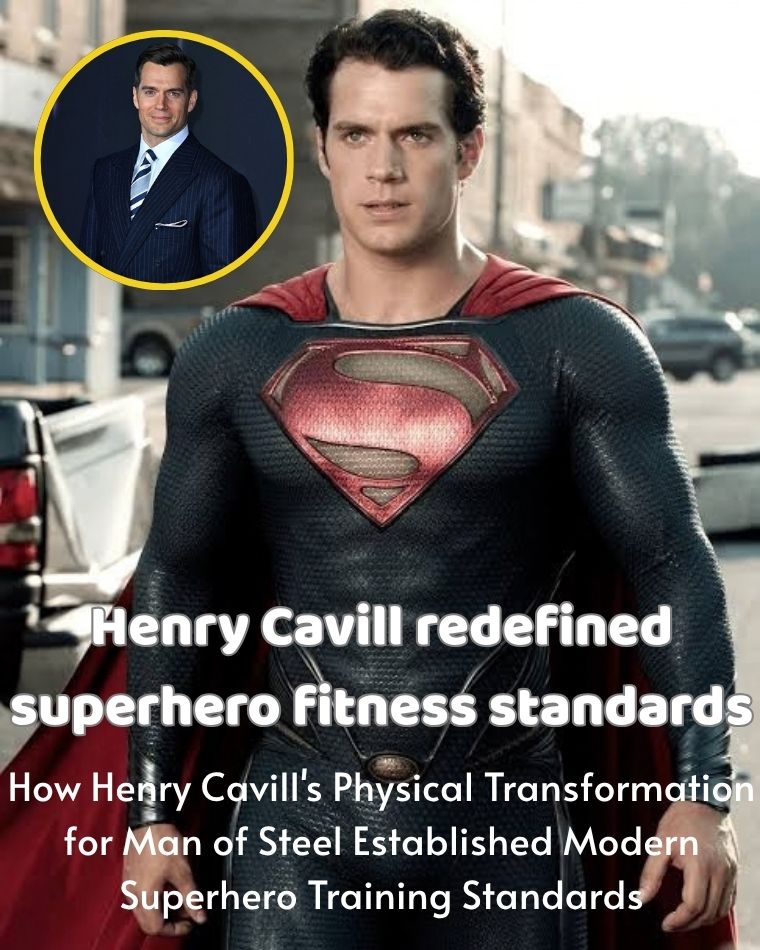
Henry Cavill’s physical preparation for the 2013 blockbuster Man of Steel fundamentally altered how Hollywood approaches comic book adaptations.
By teaming up with renowned strength coach Mark Twight, Cavill established a baseline of functional athletic performance and aesthetic realism that remains an industry benchmark thirteen years later.
This rigorous transformation replaced Hollywood’s traditional bodybuilding vanity with athletic conditioning designed to withstand grueling cinematic production.
The Paradigm Shift in Superhero Casting
Before the 2013 release of Man of Steel, superhero casting frequently prioritized traditional screen presence over elite athletic conditioning.
Leading men typically engaged in standard aesthetic bodybuilding routines intended purely for brief, shirtless vanity shots.
The arrival of Henry Cavill in the red cape permanently disrupted that conventional dynamic.
His collaboration with trainer Mark Twight proved that portraying Superman demanded genuine, performance-based athletic ability rather than superficial muscularity.
The resulting physique set an intimidating new standard across cinematic universe productions.
Audiences no longer accepted thin frames filled out with foam rubber muscle suits.
Instead, Cavill presented an imposing, comic-accurate silhouette built entirely through relentless physical discipline.
The standard established during that 2013 training cycle transformed how studios audition, prepare, and train franchise leads.
Today, leading actors are treated as hybrid actor-athletes who must withstand punishing physical demands.
Cavill’s commitment demonstrated that physical transformation is fundamental to the dramatic craft itself.
By treating physical conditioning as core narrative work, he redefined heroic presence for a generation of cinema.
Cre: Gage Skidmore via Wikimedia Commons — CC BY-SA 3.0
The Mark Twight Collaboration: Philosophy and Methodology
To achieve an authentic transformation, director Zack Snyder partnered Cavill with Gym Jones founder Mark Twight.
Twight had previously revolutionized production fitness on Snyder’s epic historical action film 300.
However, preparing an actor for Superman required an entirely distinct philosophical and physiological blueprint.
Twight rejected conventional hypertrophy training that isolated muscle groups purely for aesthetic size.
Instead, the program emphasized functional movement patterns, cardiovascular endurance, and severe mental resilience.
The training methodology relied on periodized cycles tailored around Cavill’s baseline physical condition.
Early training phases prioritized foundational strength, structural mobility, and metabolic conditioning.
As the physical foundation solidified, Twight shifted the intensity toward circuit-based athletic conditioning.
Workouts frequently integrated Olympic lifts, kettlebell work, gymnastic ring training, and heavy sled pushes.
Every exercise demanded total recruitment from the central nervous system.
Twight intentionally created training environments designed to test psychological resolve.
The training pushed Cavill past preconceived limits to establish the unmistakable posture of supreme confidence.
Workouts were meticulously logged, monitored, and adjusted based on daily physiological markers.
Nothing in the program was left to improvisation or casual exertion.
The grueling regimen forged an unbreakable mutual trust between trainer and athlete.
Cavill fully embraced the grueling process, eliminating any reliance on shortcuts or superficial cosmetic techniques.
Balancing Comic-Book Proportions with Dynamic Mobility
Translating the visual majesty of comic book panels to live-action cinema creates extraordinary physiological hurdles.
Comic illustrators routinely sketch Superman with impossible, broad-shouldered proportions and paper-thin waists.
Yet on a practical film set, an actor carrying excessive bulk risks losing essential athletic mobility.
Cavill needed enough muscle mass to convincingly look like an indestructible extraterrestrial savior.
At the exact same time, he needed agile physical mechanics to execute complex stunt choreography.
Twight addressed this challenge by structuring Cavill’s physique around posterior chain strength and shoulder girdle density.
Significant focus was placed on developing the trapezius, latissimus dorsi, and upper pectoral muscles.
This specific developmental strategy generated the classic V-taper silhouette without restricting joint mobility.
Furthermore, Cavill had to endure hundreds of hours suspended in complex wire rigs for flying sequences.
Wire harnesses demand tremendous isometric core strength, glute activation, and lower back stability.
Without exceptional trunk stabilization, an actor hanging from steel cables appears visibly strained and unnatural.
Cavill’s rigorous core preparation allowed him to maintain perfectly horizontal flight trajectories with serene composure.
His physical mechanics remained fluid whether executing high-speed combat combinations or landing gracefully from crane suspensions.
The physical frame achieved on screen moved with natural grace and genuine physical authority.
Audiences witnessed an individual whose physical capabilities fully matched his cinematic role.
Rigorous Nutritional Discipline and Energy Timing
Building and maintaining a heroic physical frame requires uncompromising discipline in the kitchen.
For Man of Steel, nutritional timing was managed with clinical, scientific precision.
During the initial muscle-building phase, Cavill consumed a calculated caloric surplus packed with clean, nutrient-dense whole foods.
The dietary regimen prioritized lean proteins, complex carbohydrates, and essential fatty acids.
Eggs, lean meats, fibrous vegetables, and clean grain sources formed the core foundation of his daily meals.
To sustain relentless two-a-day training sessions, macronutrient timing had to align precisely with metabolic demand.
Carbohydrates were systematically timed around brutal training windows to facilitate glycogen replenishment and tissue repair.
Hydration protocols were strictly enforced to optimize cellular volume and maintain peak athletic performance.
As the production filming date approached, the dietary strategy shifted seamlessly into an intensive caloric deficit.
The objective was shedding stubborn body fat while defending every ounce of hard-earned lean muscle mass.
This cutting phase demanded extraordinary mental stamina amidst a packed pre-production rehearsal schedule.
Cavill endured persistent hunger while continuing to lift heavy weights and master fight combinations.
During filming, maintaining peak condition across several months proved even more challenging than the initial bulk.
Film schedules are notoriously unpredictable, featuring twelve-hour shoot days that disrupt ordinary meal routines.
Cavill relied on portable, pre-measured meals brought directly to soundstages to hit strict macronutrient targets.
He avoided the common Hollywood pitfall of severe, dehydrating crashes that ruin long-term health.
The sustainable nutritional blueprint allowed him to maintain camera-ready conditioning throughout grueling winter and summer shoots.
Enduring the Realities of Action Filmmaking
Media coverage of Hollywood fitness often reduces transformations to glamorous, highlight-reel training sequences.
The unvarnished reality on a major motion picture set is exhausting, repetitive, and physically punishing.
On Man of Steel, Cavill was required to perform extended fight choreography alongside experienced stunt performers.
Filming complex combat sequences requires executing explosive combinations take after take for days on end.
A single missed step or mistimed punch can halt multi-million-dollar production units or cause severe physical injury.
Cavill’s cardiovascular conditioning ensured he did not experience debilitating exhaustion between takes.
His aerobic base allowed him to reset quickly, maintaining explosive power and expressive facial acting through late-night shoots.
Furthermore, wearing the tight, custom-fabricated Superman costume presented its own severe physiological obstacles.
The suit offered minimal thermal regulation, locking in body heat during studio sessions and freezing on exterior locations.
The dense material placed constant pressure across the shoulders and ribcage, making deep breathing surprisingly difficult.
Cavill’s prior endurance conditioning enabled him to tolerate this discomfort without breaking performance immersion.
His physical preparation served as armor against the mental fatigue of principal photography.
Rather than collapsing between takes, he maintained the posture and gravitas demanded of the character.
This profound physical resilience earned universal respect from the stunt teams and crew members working beside him.
The Industry Blueprint and Lasting Superhero Influence
The enduring impact of Cavill’s 2013 transformation reverberated instantly throughout the entertainment industry.
In the years following Man of Steel, studios systematically revised their physical expectations for franchise leads.
Talent agencies and production houses began contracting elite performance coaches months before casting announcements were finalized.
Actors auditioning for comic book characters recognized that casual gym routines were no longer adequate to secure leading roles.
The methodology pioneered by Mark Twight and Henry Cavill became a primary reference point for studio productions worldwide.
Trainers working on rival cinematic franchises directly studied the balance of functional strength and aesthetic symmetry Cavill achieved.
The era of relying entirely on padded suits or visual effects retouching had permanently ended.
Cavill proved that practical, in-person physical conditioning translates directly into convincing on-screen performance.
When an actor possesses legitimate physical strength, their posture, stride, and physical presence naturally convey authority.
This authenticity resonates deeply with audiences who demand visual realism in high-concept speculative fiction.
Subsequent generations of actors openly cite Cavill’s 2013 physique as the definitive standard for superhero cinema.
His preparation demonstrated that transforming one’s body for a franchise role is a demanding artistic discipline.
The standard he set raised the athletic bar for every cinematic hero who followed in his footsteps.
Thirteen years after its debut, his training regimen remains the definitive case study in elite cinematic preparation.
Deconstructing the Superhero Illusion: Hard Truths of the Process
The cultural obsession with superhero transformations often obscures the profound sacrifices required behind the scenes.
Cavill’s journey revealed the unvarnished truth regarding what elite physical conditioning actually entails.
There are no mystical shortcuts, proprietary machines, or effortless Hollywood secrets behind building a heroic frame.
The process demands relentless consistency, rigorous self-denial, and an appetite for physical discomfort.
For Cavill, the journey meant waking up before dawn for grueling training sessions before heading to a twelve-hour filming call.
It meant declining social gatherings, resisting indulgent foods, and treating recovery with monastic devotion.
The transformation also highlighted the crucial distinction between camera-ready conditioning and everyday lifestyle fitness.
The ultra-lean aesthetic captured during iconic shirtless scenes represents a temporary physical peak, not a year-round state.
Maintaining sub-eight-percent body fat alongside dense muscle mass places immense stress on the human nervous system.
Cavill and Twight managed these peaks responsibly, timing maximum definition to align precisely with specific filming dates.
By candidly discussing the extreme focus needed for these visual peaks, Cavill demystified the process for global audiences.
He helped shift public conversation toward appreciating the immense work ethic required to sustain such conditioning.
His journey demonstrated that a superhero physique is not merely bought; it must be earned through uncompromising labor.
This honest perspective elevated public appreciation for the physical labor performed by action cinema stars.
The Actor-Athlete Hybrid: A New Era for Franchise Cinema
The legacy of the 2013 Man of Steel transformation extends far beyond box office numbers or aesthetic gym photos.
It solidified the rise of the modern actor-athlete hybrid as the standard for action film production.
Leading performers today are expected to sprint, leap, roll, and fight with the technical precision of seasoned athletes.
Physical preparation is no longer viewed as a vanity side project peripheral to dramatic performance.
Instead, it is rightfully recognized as a core foundational pillar of modern action storytelling.
Cavill’s physical presence informed every nuance of his performance as Clark Kent and Kal-El.
The quiet, coiled power in his posture made his gentle interactions with human characters feel profoundly earned.
The audience instinctively understood that this character was exercising constant, voluntary restraint over immense physical strength.
That dramatic contrast worked precisely because Cavill carried genuine, hard-won physical capability in every frame.
His physical discipline mirrored the moral discipline of the legendary comic character he portrayed.
As cinematic universes continue to evolve, the lessons learned from the 2013 training cycle remain critically relevant.
Filmmakers understand that authentic physical preparation elevates the believability of visual effects and stunt work.
Cavill’s dedication set a lasting cultural precedent that continues to inspire aspiring athletes and screen actors worldwide.
He proved that embodying an icon requires matching legendary mythology with uncompromising, real-world dedication.
The Lasting Cultural Footprint of the 2013 Physical Standard
More than a decade after Man of Steel debuted in theaters, the cultural resonance of Cavill’s transformation remains undiminished.
Fitness enthusiasts and digital communities continue to analyze the training philosophies that shaped his frame.
The Gym Jones collaboration demonstrated that mental fortitude is the ultimate prerequisite for extraordinary physical transformation.
Cavill did not simply build an impressive chest or sculpted arms for the camera lens.
He constructed an enduring physical archetype that redefined the aesthetics of twenty-first-century heroism.
The principles of functional movement, structural integrity, and disciplined nutrition remain as relevant today as in 2013.
Hollywood’s superhero landscape has undergone massive creative shifts, yet Cavill’s benchmark continues to stand unchallenged.
His work ethic established an enduring model for how actors can honor iconic characters through rigorous personal discipline.
The standard established in that 2013 gym continues to influence casting calls, training camps, and cinematic productions today.
Henry Cavill’s Superman was built on sweat, science, and relentless dedication, forever altering the cinematic superhero landscape.
Để lại một phản hồi