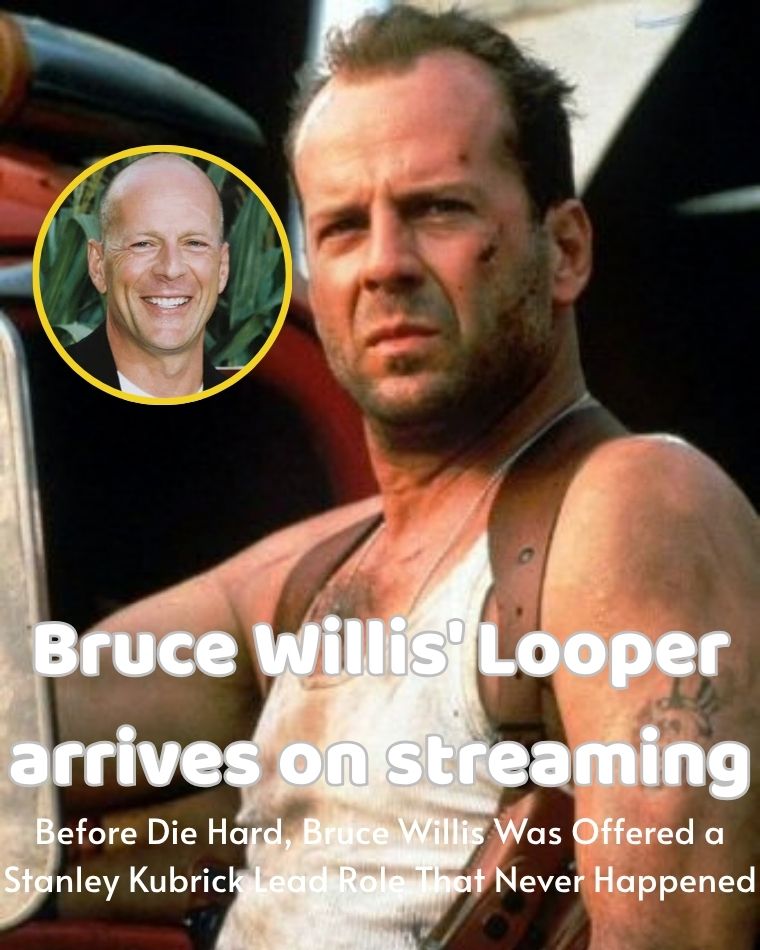
Entertainment outlet Collider has officially spotlighted Bruce Willis’ acclaimed 2012 time-travel thriller Looper, celebrating the cinematic triumph as a “bravely original” sci-fi masterpiece. Directed by visionary filmmaker Rian Johnson, the high-concept picture daringly rewrote traditional genre conventions while showcasing one of the most poignant, layered performances of Willis’ legendary Hollywood career. Genre enthusiasts and new viewers alike can now experience this modern classic as it joins the streaming library on Starz.
A Defining Assessment: Why Collider Celebrates Looper as “Bravely Original”
Collider recently reexamined the modern science-fiction landscape and highlighted the lasting brilliance of Rian Johnson’s 2012 masterpiece Looper.
In its appraisal, the publication underscored how rarely mainstream Hollywood produces an ambitious sci-fi action thriller that refuses to rely on established intellectual property.
The critical consensus on Rotten Tomatoes aptly crystallized this sentiment, celebrating Looper as an “uncommonly smart, bravely original blend of futuristic sci-fi and good old-fashioned action.”
At a time when high-budget cinema frequently leans into familiar formulas and recycled tropes, Johnson’s audacious premise dared to treat audiences with intelligence and emotional honesty.
The publication emphasized that the designation “bravely original” reflects the project’s uncompromising commitment to genuine creative risks.
Rather than delivering a disposable popcorn flick, the creative team crafted a deeply human tragedy wrapped in the machinery of a speculative crime thriller.
The story unfolds in a world where time travel has been invented in the future, only to be instantly outlawed and co-opted by ruthless criminal syndicates.
These syndicates use temporal technology for untraceable assassinations by zapping targets thirty years into the past, where waiting executioners known as “loopers” eliminate them instantly.
This intricate dynamic serves as the emotional engine for an unforgettable clash between two versions of the very same individual.
The film forces viewers to confront profound questions of free will, predestination, and the cyclic nature of human violence.
For audiences discovering the title today, Collider’s retrospective praise confirms that Looper remains as striking and thought-provoking now as it was during its initial theatrical bow.
Cre: Gage Skidmore / Wikimedia Commons
Creative Risks: Visual World-Building and Narrative Complexity
When director Rian Johnson embarked on making Looper, he deliberately resisted the temptation of sleek, antiseptic futurism.
Instead of shiny chrome utopias or sterile virtual landscapes, the filmmaker grounded his mid-twenty-first-century setting in harsh economic decay and tactile grit.
The American Midwest depicted in Looper feels uncomfortably plausible, populated by broken infrastructure, desperate vagrants, and solar-paneled retrofitted automobiles.
This visual austerity creates a grounded atmosphere that allows the fantastical mechanics of time travel to feel tangible and dangerous.
Johnson took a massive narrative gamble by introducing a temporal paradox rulebook that avoids getting bogged down in academic techno-babble.
The film famously addresses this philosophical quagmire during an iconic diner confrontation where Willis’ character explicitly refuses to diagram timelines with straws.
By briskly dismissing unnecessary scientific exposition, the script keeps the audience laser-focused on the visceral stakes of survival and parental instinct.
Another monumental risk was the film’s structural shift midway through the narrative runtime.
What begins as an adrenaline-fueled neo-noir manhunt across an urban sprawl gradually transforms into an intimate, pastoral suspense drama set on an isolated sugarcane farm.
This tonal pivot allows the narrative to explore deeper emotional territory without losing any of its propulsive momentum.
The storytelling also dared to present telekinesis not as a glamorous superpower, but as a minor genetic anomaly that occasionally yields terrifying, uncontrollable mutations.
By subverting traditional science-fiction conventions at every juncture, Johnson ensured the film never felt predictable or derivative.
The filmmakers proved that an original screenplay, executed with courage and precision, could outshine massive franchise sequels in both artistic merit and tension.
Bruce Willis’ Performance: Subverting the Invincible Action Archetype
Bruce Willis built one of cinema’s most celebrated legacies by embodying resilient, wise-cracking heroes who survive insurmountable odds.
From John McClane in Die Hard to Korben Dallas in The Fifth Element, his magnetic screen presence defined action cinema for decades.
However, Looper required Willis to completely strip away that signature armor of cocky invulnerability.
In portraying “Old Joe,” Willis stepped into the shoes of an aging hitman driven by profound grief, guilt, and single-minded desperation.
Old Joe travels back through time not to save the world, but to preserve the memory of the woman who rescued him from self-destruction.
Willis played this motivation with a harrowing emotional weight that surprised critics and genre fans alike.
His performance is notably devoid of vanity, capturing a weary man who recognizes his own monstrous moral compromises yet refuses to stop.
The psychological complexity intensifies because Willis is not fighting an external supervillain, but rather his younger self.
This setup required Willis to anchor the dramatic tension with an agonizing blend of paternal frustration and ruthless self-preservation.
Even when Old Joe embarks on an unforgivable mission to eliminate an innocent child, Willis ensures the audience understands the tragic brokenness behind the terror.
The actor conveyed deep sorrow through silent stares, weary sighs, and an unflinching physical presence.
It stands as a testament to his versatility that he embraced a role where his character slowly becomes the functional antagonist of the narrative.
This complex portrait remains a high-water mark in Willis’ filmography, illustrating his rare capacity to subvert his own cinematic iconology.
The Dynamic Counterpart: Joseph Gordon-Levitt and the Dual Joe Dilemma
A performance as potent as Willis’ demanded an equally committed foil on screen, which arrived in the form of Joseph Gordon-Levitt.
Gordon-Levitt took on the daunting physical and dramatic challenge of playing Young Joe, an ambitious hitman content with his hollow, drug-fueled lifestyle.
To convincingly portray a younger incarnation of Bruce Willis, Gordon-Levitt underwent hours of prosthetic makeup application designed by Kazuhiro Tsuji.
More importantly, the actor meticulously studied Willis’ physical mannerisms, vocal cadence, and subtle facial micro-expressions.
The resulting performance transcended mere impersonation, delivering a seamless psychological bridge between the two iterations of the same man.
Young Joe represents the arrogance of youth that fails to comprehend the long-term human consequences of selfish choices.
When Young Joe is tasked with “closing his own loop” by executing Old Joe, his sudden failure to pull the trigger ignites a catastrophic chain reaction.
The ensuing cat-and-mouse game between Gordon-Levitt and Willis carries a surreal, introspective ferocity.
Their pivotal face-to-face dialogue in the roadside diner crackles with extraordinary dramatic electricity.
In that scene, Gordon-Levitt captures the rebellious disdain of a young man disgusted by the sentimental weakness of his future elder.
Simultaneously, Willis looks across the table with the bitter regret of an old man witnessing his past ignorance firsthand.
Their dynamic forms the spine of Looper, grounding a complex temporal premise in an unforgettable human standoff.
Emotional Resonance: Emily Blunt and the Crucial Heart of the Third Act
While the duel between Willis and Gordon-Levitt drives the kinetic momentum, the film discovers its emotional soul through Emily Blunt’s performance as Sara.
Sara is a fiercely independent single mother guarding her remote farm and her extraordinarily gifted young son, Cid.
Blunt brings an intense, vulnerable tenacity to the role, portraying a parent battling demons from her own troubled past.
When Young Joe takes refuge at Sara’s home, the story transforms into an examination of nurture, redemption, and moral accountability.
Child actor Pierce Gagnon delivered a tour-de-force performance as Cid, balancing pure childhood innocence with terrifying psychic volatility.
Sara’s unconditional love for her volatile child emerges as the moral fulcrum of the entire screenplay.
Her maternal determination offers the only viable alternative to the escalating cycle of retribution championed by Old Joe.
Blunt’s chemistry with Gordon-Levitt anchors the final hour with profound psychological depth, elevating the stakes far beyond standard survival.
Through Sara, Young Joe comes to understand empathy, realizing that human futures are forged by compassion rather than preemptive violence.
This emotional bedrock ensures that the film’s climax hits with devastating dramatic power rather than superficial sensory overload.
Johnson masterfully utilizes Blunt’s grounded performance to steer the entire narrative toward its heartbreaking, selfless resolution.
Without the emotional anchor provided by Sara’s homestead, the movie’s cerebral time-travel mechanics would lack their enduring human resonance.
A Formidable Supporting Ensemble: Jeff Daniels and the Looming Crime Syndicate
The rich narrative ecosystem of Looper is further bolstered by an exceptional supporting cast led by acclaimed actor Jeff Daniels.
Daniels portrays Abe, a shadowy figure sent from the future to oversee the network of loopers in the past.
Rather than playing Abe as a mustache-twirling crime boss, Daniels infuses the character with world-weary paternal charm and chilling pragmatic authority.
Abe maintains order through casual manipulation, balancing comfortable banter with the cold reality of violent retribution.
His exchanges with Gordon-Levitt’s Young Joe reveal the tragic complacency that traps these hired killers in self-destructive cycles.
The ensemble is rounded out by compelling appearances from Paul Dano, who plays Seth, a fellow looper whose terror exposes the horrific consequences of failing to close a loop.
Seth’s horrific fate provides the film with one of the most chilling sequences in modern science-fiction cinema.
The harrowing body-horror mechanism used to demonstrate the immutable laws of cause and effect remains etched in viewers’ memories.
Noah Segan also delivers a memorable turn as Kid Blue, an insecure syndicate enforcer eager to prove his worth in a cutthroat hierarchy.
Every secondary figure within Johnson’s narrative serves to enrich the thematic density of this morally compromised society.
The criminal ecosystem feels complete, functioning under ruthless logic that makes Joe’s desperate rebellion feel both perilous and essential.
Daniels’ nuanced performance ensures that the antagonistic forces operate with chilling realism rather than cartoonish malevolence.
Critical Acclaim, Box Office Triumph, and Sci-Fi Legacy
Upon its theatrical release on September 28, 2012, Looper was immediately embraced by critics as a benchmark achievement in modern American cinema.
Review aggregator Rotten Tomatoes awarded the film an extraordinary 93% “Certified Fresh” critical score based on hundreds of reviews.
Audience members concurred with professional reviewers, giving the movie an impressive 82% approval rating on the platform.
Renowned film critic Roger Ebert bestowed a glowing four-star review upon the feature, praising its ingenuity and psychological depth.
The movie also emerged as a significant commercial triumph for TriStar Pictures and Sony Pictures Releasing.
Produced on a modest estimated production budget of approximately $30 million, the film grossed a staggering $176 million worldwide.
This immense box-office haul proved that challenging, R-rated science fiction could attract mainstream audiences when powered by exceptional craftsmanship.
In cinema history, Looper frequently stands alongside timeless temporal landmarks such as The Terminator, Twelve Monkeys, and Back to the Future.
However, Johnson’s creation carved out its own unique territory by treating the time-travel genre primarily as an emotional morality tale.
The film’s exploration of fate versus choice continues to inspire passionate debate in film schools and online discussion forums alike.
The narrative does not treat time as an intellectual toy, but rather as an unyielding mirror reflecting humanity’s deepest regrets.
Its concluding moments deliver one of the most intellectually satisfying and emotionally resonant endings in twenty-first-century filmmaking.
Where to Stream Looper Today and Why It Demands a Rewatch
For viewers seeking to revisit this modern classic or experience its brilliance for the first time, Looper is officially available on Starz.
Subscribers to the premium streaming platform can stream the full 118-minute feature in high definition on demand.
The film’s addition to Starz provides an opportune moment to appreciate the extraordinary creative legacy of Bruce Willis.
Revisiting the movie today reveals subtle layers of foreshadowing and visual symmetry that become even more impressive upon repeated viewings.
Johnson’s meticulous script features intricate narrative parallels that reward close analytical attention.
From the visual recurring motif of falling watches to the haunting auditory cues of distant clocks, every detail is engineered with intention.
Furthermore, Willis’ nuanced, melancholic portrayal of Old Joe carries even greater poignant weight in the context of his legendary career.
The motion picture serves as a vital reminder of an era when Hollywood took daring chances on original high-concept cinematic visions.
Whether you are drawn by the propulsive action, the mind-bending temporal logic, or the heartfelt performances, Looper delivers an unforgettable cinematic journey.
Collider’s recognition of the film as a “bravely original” masterpiece stands as an earned tribute to a modern classic that continues to stand the test of time.
Để lại một phản hồi