Kansas City Chiefs tight end Travis Kelce found himself at the center of viral social media scrutiny in October 2026 after his Instagram account liked a video clip of comedian Shane Gillis’s Saturday Night Live opening monologue.
The comedy segment, which aired during the long-running sketch show’s October 10 broadcast, quickly ignited sharp debate across digital platforms due to provocative remarks regarding modern workout attire.
As fans and cultural critics questioned whether the digital gesture represented an endorsement of the comedic content, a person close to the athlete moved to clarify that the action was rooted solely in friendship and longstanding fandom rather than an approval of every joke.
The incident highlights how modern celebrity visibility transforms brief digital gestures into major focal points of cultural discourse.
Every like, comment, and bookmark from high-profile figures now faces intense public breakdown across platforms like Threads, TikTok, and Reddit.
Public figures navigate an unforgiving digital environment where personal connections collide with public messaging.
The discussion surrounding the NFL superstar demonstrates the fine line between digital solidarity with friends and public endorsement of controversial statements.
During the Saturday Night Live broadcast on October 10, comedian Shane Gillis took the Studio 8H stage to deliver his opening set.
The performance immediately ignited a split reaction among television viewers and online commentators.
The comedian directed part of his monologue toward personal experiences at public fitness centers.
Gillis made pointed jokes comparing contemporary women’s activewear to provocative clothing.
He referenced popular high-waisted and contoured workout shorts that have become staple gym fashion.
The comedian delivered lines joking about the tension between form-fitting attire and public etiquette in shared gym spaces.
His jokes also made reference to gym goers recording video content for social platforms like TikTok.
While segments of the studio audience laughed during the routine, the broadcast quickly met backlash across social media.
Multiple viewers and media commentators described the routine as inappropriate and dismissive of women’s comfort in public spaces.
The reaction highlighted an ongoing cultural discussion regarding comedy boundaries and public fitness culture.
Prominent figures inside and outside entertainment weighed in on the monologue’s tone and timing.
Activism voices and cultural commentators noted that standard athletic clothing should not be subjected to public disparagement.
Others defended the routine as standard stand-up hyperbole aimed at modern gym trends.
The tension around the monologue set the stage for an even wider conversation when high-profile viewers began interacting with video excerpts online.
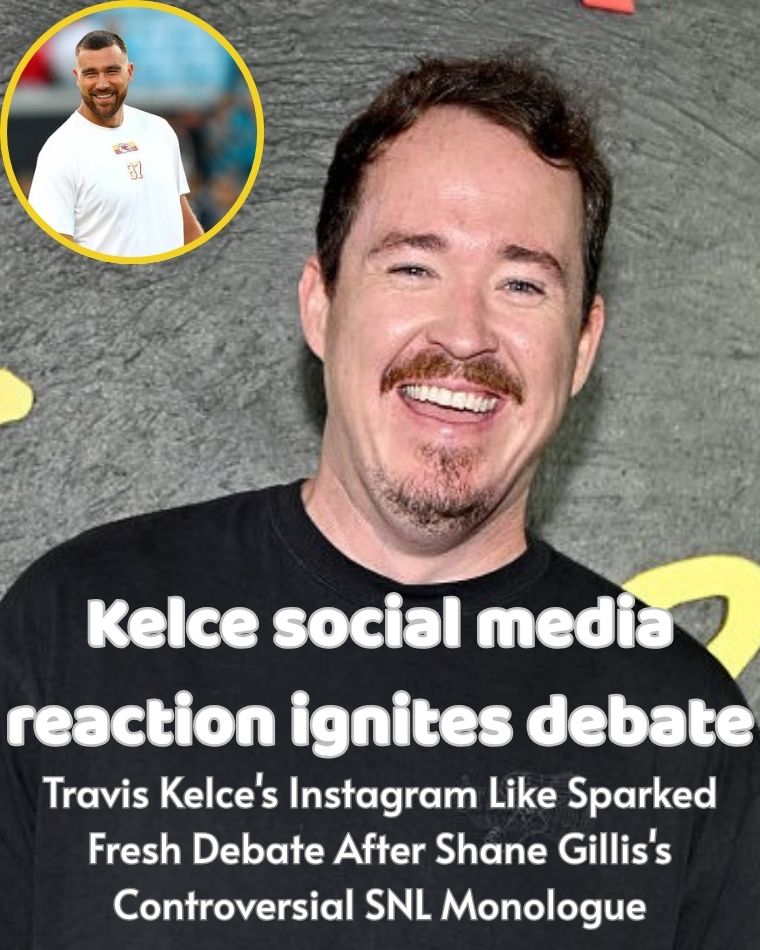
Cre: Wikimedia Commons
Shortly after the broadcast, official and fan-curated accounts shared excerpts of the monologue across Instagram.
Social media users monitoring celebrity engagement quickly spotted Travis Kelce’s verified profile among the accounts that liked one prominent video clip.
The interaction did not go unnoticed in an era where fan communities track the digital footprints of superstar athletes.
Screenshots of the like circulated across Reddit forums, Threads discussions, and TikTok video essays.
The reaction among fans and social media observers was swift and divided.
Some fans expressed disappointment, arguing that engaging favorably with the clip conflicted with Kelce’s broad mainstream appeal.
Over recent seasons, Kelce and his brother Jason have cultivated a massive, diverse fan following through sports achievements and their popular podcast.
Several commentators suggested that endorsing comedy perceived as dismissive of women alienated segments of that supportive audience.
Other online observers urged caution and urged people not to overinterpret a single click.
Supporters pointed out that social media users frequently double-tap posts casually while scrolling feeds.
Casual engagement rarely equates to a detailed policy endorsement of spoken dialogue.
Critics countered that prominent public figures with millions of followers operate under different rules of public perception.
For an elite athlete whose personal life draws global headlines, every public action carries symbolic weight.
The debate quickly moved past the comedy club stage and into mainstream lifestyle and sports reporting.
Page Six published a report detailing Kelce’s interaction with the controversial Instagram post.
The publication offered crucial background regarding the athlete’s motivations from people familiar with the situation.
A source close to the Kansas City Chiefs tight end clarified that Kelce’s digital interaction was not an ideological endorsement.
The insider told Page Six that Kelce has always been a massive fan of Saturday Night Live.
Furthermore, the source noted that Kelce was merely showing support for a fellow entertainer and friend.
The explanation highlighted that the athlete’s like was an informal nod to a peer’s high-profile hosting gig.
Kelce previously hosted Saturday Night Live in March 2023, earning praise from television critics and viewers alike.
That successful hosting appearance established a personal connection between the athlete and the comedy institution.
His ongoing appreciation for the program and its performers formed the context for his social media browsing.
The source’s explanation emphasized that Kelce did not intend to validate specific controversial lines delivered during the monologue.
No public statement was issued directly by Kelce, leaving the source’s account as the primary context for the event.
The episode underscores the complex dynamics of modern digital life, where personal relationships unfold on public stages.
Shane Gillis has navigated a unique career trajectory through the comedy landscape over the past decade.
His career experienced intense scrutiny in 2019 after past podcast comments led to his dismissal from Saturday Night Live before ever appearing as a cast member.
In the years following, Gillis built a large independent comedy audience through stand-up specials and podcasts.
His eventual return to host Saturday Night Live represented a notable chapter in television redemption narratives.
Because of Gillis’s polarizing profile, public interactions with his work often attract heightened attention from commentators.
When an athlete with Kelce’s global platform interacts with such material, the action undergoes intense analysis.
Culture writers frequently explore how social media platforms compress nuanced personal relationships into binary metrics like upvotes and likes.
A tap of a heart icon can signal congratulations to a friend who booked a major television appearance.
Simultaneously, audiences often read that same icon as an endorsement of every phrase spoken in the video clip.
This friction between user intent and audience interpretation forms the crux of modern viral controversies.
Digital media scholars point out that algorithms incentivize controversy and outrage over context.
A brief screen recording of an athlete’s like can generate millions of impressions and thousands of speculative comments.
The dynamic creates an environment where celebrities must weigh private friendship gestures against public brand impact.
The phenomenon is particularly acute for athletes crossing over into entertainment and pop culture prominence.
Kelce’s public profile expanded exponentially following his multi-championship run with the Chiefs and high-profile personal relationships.
With expanded visibility comes an unprecedented level of real-time monitoring from varied fan bases.
Sports fans, pop culture enthusiasts, and media analysts bring different expectations to an athlete’s behavior.
While traditional sports fans might disregard social media likes entirely, pop culture followers often interpret them through the lens of community values.
The contrasting expectations create fertile ground for online friction whenever content crosses between subcultures.
The discussion surrounding the Instagram post also reflects wider shifts in how audiences consume stand-up comedy.
For decades, stand-up comedy existed primarily in comedy clubs and live broadcasts with agreed-upon boundaries of satire and exaggeration.
In the streaming era, short clips are routinely cut from longer sets and distributed without original pacing or context.
Viewers encounter 30-second clips stripped of preceding banter, audience rapport, or intentional irony.
Under these conditions, a routine targeting gym culture or clothing styles can easily spark immediate offense.
Social media users evaluate the spoken lines as standalone personal statements rather than theatrical performance.
When public figures like Kelce engage with these clips, they become unwilling participants in the debate over comedy standards.
Commentators on platforms like Reddit debated whether public figures should actively monitor their algorithmic feeds to prevent misinterpretation.
Some argued that public figures should maintain dedicated private accounts for interacting with peers and friends.
Others suggested that expecting celebrities to parse every second of a video before clicking like creates an unreasonable standard.
The incident reflects how digital platforms collapse the boundary between personal connection and public statement.
Celebrities frequently use social media just as ordinary users do, scrolling during downtime and acknowledging colleagues.
Yet because their follower counts reach into the millions, everyday actions are viewed through the framework of corporate endorsements.
Public relations strategists continuously warn high-profile clients about the risks of passive social media consumption.
Algorithms frequently surface provocative content specifically designed to maximize user engagement through polarized reactions.
Engaging with that content, even casually, risks drawing high-profile individuals directly into the controversy.
The clarification provided to Page Six served to diffuse some of the escalating speculation regarding Kelce’s viewpoint.
By contextualizing the like as an expression of personal support for a fellow host rather than an endorsement of specific remarks, the source helped delineate the athlete’s stance.
The clarification highlighted the critical difference between supporting an individual performer and adopting every statement made during a routine.
In modern celebrity culture, distinguishing between personal affinity and political or moral endorsement is increasingly challenging.
Audiences frequently assume that interacting with a creator signifies total alignment with their entire body of work.
The incident serves as a case study for how public figures manage digital reputations amid shifting online expectations.
Media analysts noted that Kelce’s decision not to escalate the controversy with lengthy public statements was consistent with standard public relations strategy.
Allowing a credible source to provide straightforward context often prevents minor social media flare-ups from expanding into prolonged news cycles.
As news cycles accelerate, brief controversies around social media activity often fade quickly when replaced by newer headlines.
Nevertheless, the conversation surrounding Kelce, Gillis, and Saturday Night Live leaves lasting lessons about modern digital literacy.
Users and observers are reminded that social media actions rarely tell a complete story on their own.
Without direct context, interpreting the intent behind a digital interaction remains largely speculative.
The episode also highlights the growing responsibility felt by prominent cultural influencers in managing public perception.
As athletes and entertainers expand their ventures into podcasting, fashion, and mainstream media, their cultural footprint grows larger.
Navigating this expanded footprint requires an acute awareness of how small actions resonate across diverse audiences.
Ultimately, the brief controversy in October 2026 illustrates the continuous tension between private intent and public interpretation in modern media.
Travis Kelce’s passive Instagram like became an unintended window into the contentious intersection of sports, comedy, and social media accountability.
While some critics remained dissatisfied with the explanation, the broader public discourse quickly pivoted to the broader mechanics of online scrutiny.
As entertainment platforms continue to evolve, the boundaries between casual support and formal endorsement will remain a defining challenge for global celebrities.
Maintaining personal relationships while sustaining a mainstream commercial brand requires balancing private loyalty and public awareness.
For Travis Kelce and other high-profile figures, the incident stands as an enduring reminder that on today’s internet, nothing goes unnoticed.
Để lại một phản hồi