In the acclaimed screen adaptation of Jason Robert Brown’s beloved stage production, Anna Kendrick and Jeremy Jordan explore the rise and fall of a modern marriage through dual opposing temporal arcs. Written and directed by Richard LaGravenese, the musical drama offers an intimate character study that challenges conventional cinematic storytelling. The film showcases demanding musical performances while carefully unpacking the emotional distance that develops between two creative partners.
Adapting a Modern Stage Classic for the Big Screen
The screen adaptation of The Last Five Years stands out as a unique cinematic exploration of romance and heartbreak.
Originally conceived and written for the stage by celebrated composer Jason Robert Brown, the musical had already cultivated a passionate following among theater enthusiasts before transitioning to film.
When filmmaker Richard LaGravenese took on the responsibilities of both screenwriter and director, he faced the complex task of translating a deeply theatrical concept into a compelling visual language.
Unlike massive Broadway spectacles that depend on extensive ensemble choruses and grand choreography, this production relies almost entirely on an intimate two-character dynamic.
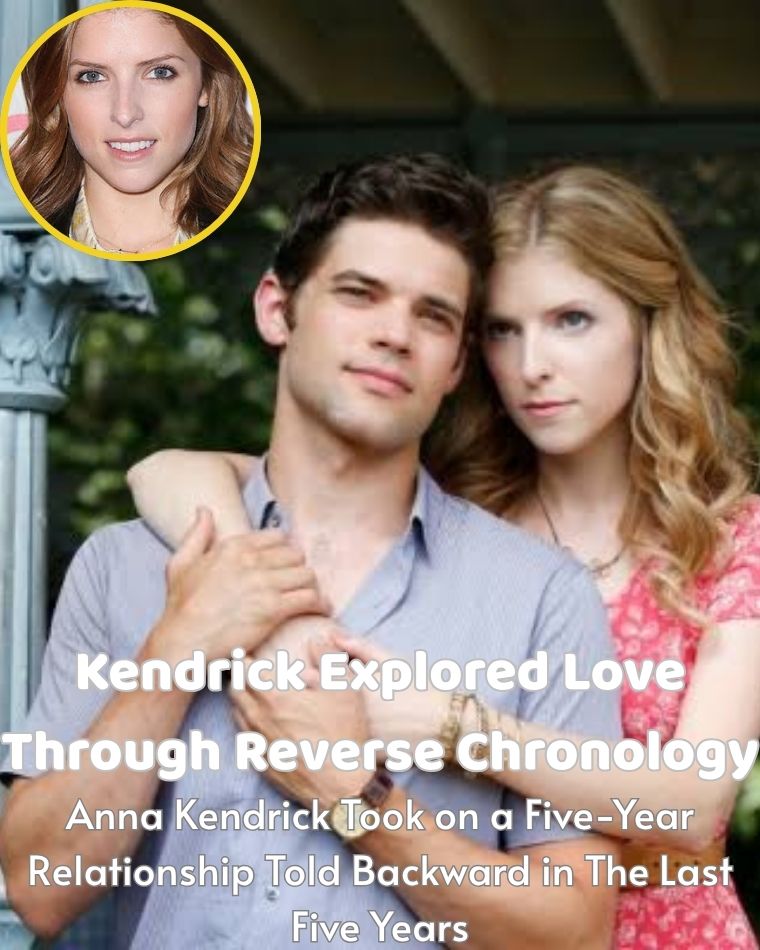
The entire emotional weight of the narrative rests upon the shoulders of its two lead performers, Anna Kendrick and Jeremy Jordan.
Kendrick stars as Cathy Hiatt, a determined yet struggling musical theater actress striving to find her artistic breakthrough in New York City.
Opposite her, Jordan portrays Jamie Wellerstein, a charismatic and rapidly rising novelist whose career takes off with unexpected speed.
Together, their intertwined journeys form a delicate portrait of youthful ambition, shared affection, and eventual creative estrangement.
LaGravenese preserved the structural integrity of Brown’s original composition while finding cinematic environments across New York to ground their performances.
The resulting motion picture invites audiences to witness a poignant relationship through a distinctive formal experiment.
Cre: Wikimedia Commons — CC BY-SA 2.0
The Art of Opposing Timelines and Reversed Chronology
The defining hallmark of The Last Five Years is its innovative narrative framework.
Instead of presenting the romance chronologically from courtship to dissolution, the story unfolds through two contrasting temporal directions simultaneously.
Cathy Hiatt experiences her journey in reverse chronology, beginning at the very end of the marriage.
Her opening musical numbers capture the raw sting of abandonment and the lingering sadness of a relationship that has run its course.
From that painful conclusion, Cathy’s narrative gradually journeys backward toward the initial excitement and optimism of their earliest dates.
In stark contrast, Jamie Wellerstein’s storyline advances chronologically from the start of the romance.
Jamie begins in a state of unbridled exuberance, celebrating the thrilling discovery of love and the promise of a shared future.
As his timeline moves forward, the audience watches his growing professional fame collide with escalating domestic tension.
This dual-directional structure creates an intriguing dramatic tension for viewers as they assemble the complete mosaic of the relationship.
Every revelation in Cathy’s backward-looking trajectory informs how the audience interprets Jamie’s forward-moving choices.
The two characters visually and emotionally converge at only one singular point in the exact middle of the story.
This pivotal intersection occurs during their wedding ceremony, where their respective timelines briefly align in mutual joy and commitment.
Immediately following the vows, their perspectives diverge once more, pulling them toward opposite emotional poles.
Audiences are therefore invited to reconstruct the narrative puzzle piece by piece rather than passively observing a standard three-act drama.
Anna Kendrick and the Demands of Playing Cathy Hiatt
Portraying Cathy Hiatt required Anna Kendrick to navigate rigorous musical and dramatic demands.
Because Cathy’s storyline starts in grief and moves toward innocent affection, Kendrick had to deconstruct her character’s emotional journey in reverse.
Her opening performance requires an immediate display of vulnerability, setting the stakes of the story before the audience has seen the couple fall in love.
Throughout the film, Kendrick uses her established vocal skills to convey subtle shifts in Cathy’s self-esteem and professional frustrations.
Cathy continually auditions for theater roles while facing repeated rejections, contrasting sharply with Jamie’s meteoric literary ascendancy.
Kendrick captures the quiet insecurity of an artist watching her partner achieve the exact professional validation she desperately seeks.
It is important for viewers to distinguish between the fictional struggles of Cathy Hiatt and Kendrick’s own professional life.
While Cathy endures stagnant audition cycles and community theater frustrations, Kendrick had already achieved critical and commercial acclaim across Broadway and Hollywood.
Kendrick brought deep empathy to Cathy’s internal conflicts, ensuring the character never came across merely as a passive victim of circumstances.
Her musical solos demonstrate both comedic timing in chaotic audition rooms and poignant introspection during solitary reflections.
The intimate focus of the film placed every vocal inflection and facial expression under close camera observation.
Kendrick’s performance anchors Cathy’s backward voyage, allowing the audience to feel the tragic weight of knowing where her bright beginnings ultimately lead.
Jeremy Jordan and the Trajectory of Jamie Wellerstein
Jeremy Jordan brings a dynamic presence and formidable vocal prowess to the role of Jamie Wellerstein.
Beginning his arc at the very inception of the romance, Jordan captures the electric enthusiasm of young love in New York.
Jamie’s opening pieces reflect a sense of artistic ambition matching the rapid pace of his burgeoning writing career.
Jordan successfully portrays the dizzying impact of sudden fame on a young creative mind unprepared for literary stardom.
As Jamie’s books receive widespread acclaim, his world expands rapidly with publishing parties, public readings, and media attention.
Jordan carefully traces how this external validation gradually strains Jamie’s attentiveness toward Cathy’s personal and creative needs.
The character’s forward trajectory illustrates how unchecked ego and shifting priorities can quietly erode a marital foundation.
Jordan avoids presenting Jamie as a one-dimensional antagonist, preserving the genuine affection he initially holds for Cathy.
His musical deliveries reflect the mounting frustration of feeling misunderstood within his own home.
The dramatic contrast between Jordan’s radiant optimism in early scenes and his defensive withdrawal in later segments highlights the tragedy of their disconnect.
Singing largely directly to the audience or into isolated spaces, Jordan maintains emotional clarity across Jamie’s progressive disillusionment.
His performance complements Kendrick’s, creating a balanced dialogue between two deeply flawed human beings.
Intimate Two-Character Dynamics on Screen
Unlike traditional Hollywood musicals filled with sweeping dance numbers and sprawling background casts, this production remains resolutely personal.
The film focuses almost entirely on the private spaces inhabited by Cathy and Jamie throughout their five-year partnership.
Apartments, rehearsal rooms, park benches, and quiet streets serve as the recurring backdrops for their musical monologues.
Richard LaGravenese made the deliberate choice to frame the songs with cinematic immediacy rather than theatrical abstraction.
This approach intensifies the feeling that the audience is listening to private diary entries set to music.
Because the characters rarely share identical temporal spaces, they spend substantial portions of the movie singing in isolation.
Even when both actors appear within the same visual frame, one character often functions as an emotional memory recalled by the other.
This visual arrangement emphasizes the fundamental theme of the story: two people failing to truly communicate despite loving one another.
The production stripped away external narrative distractions to highlight Jason Robert Brown’s nuanced lyrics and intricate melodies.
Every song functions as a self-contained dramatic scene advancing character development and contextualizing previous events.
By preserving this minimalist structure, the film honors the psychological intimacy of the original stage work.
Viewers are drawn directly into the raw thoughts, hopes, and resentments of the two protagonists without intermediary subplots.
Premieres, Reception, and Release History
The screen version of The Last Five Years followed a structured distribution path to reach audiences worldwide.
The film celebrated its official world premiere at the prestigious Toronto International Film Festival in September 2014.
Screening in the Special Presentations section at Toronto, the movie attracted significant attention from critics and musical theater admirers alike.
Festival attendees praised the fidelity of the adaptation and the impressive vocal commitments demonstrated by both leads.
Following its festival debut, the production prepared for a wider commercial rollout across North America.
In February 2015, the film received a concurrent theatrical and video-on-demand release in the United States.
This hybrid distribution strategy allowed both traditional moviegoers and dedicated theater fans at home to access the project promptly.
Critics particularly highlighted the seamless transition of Jason Robert Brown’s complex score from stage to screen.
Kendrick’s performance received widespread commendation for balancing vocal precision with nuanced screen acting.
Similarly, Jordan earned praise for his technical mastery of a demanding vocal repertoire while maintaining emotional resonance.
Although the unconventional timeline presented challenges for viewers accustomed to linear narratives, the film found a receptive audience.
Its release solidified the piece as a noteworthy example of contemporary chamber musicals adapted for modern cinema.
The Nuance of Character Perspective over Linear Plot
By prioritizing perspective over chronological sequence, The Last Five Years delivers a unique commentary on memory and truth.
In standard romantic films, chronological progression often leads viewers to assign clear fault when relationships collapse.
Here, however, the dual chronology prevents the audience from adopting a simple, one-sided verdict on who failed the marriage.
Meeting Cathy at her most heartbroken state creates immediate empathy for her grief and sense of betrayal.
Simultaneously, observing Jamie’s initial devotion and youthful passion makes it impossible to dismiss his feelings as disingenuous.
The narrative reveals that neither partner is entirely blameless or entirely at fault for the eventual separation.
Instead, their breakdown arises from mismatched maturity levels, competing career velocities, and gradual failures of empathy.
Cathy’s struggles with professional self-worth lead her to withdraw into insecurity, feeling overshadowed by Jamie’s triumphs.
Jamie’s rapid success blinds him to the subtle ways his behavior alienates the woman he promised to support.
The story demonstrates how subjective memory can reshape the significance of individual conversations and shared moments.
What appears as a supportive gesture from Jamie’s forward perspective can feel patronizing through Cathy’s retrospective gaze.
This philosophical richness gives the musical its enduring power across both theatrical and cinematic mediums.
Musical Mastery and Vocal Execution
The score composed by Jason Robert Brown is widely regarded by musicians as one of the most technically challenging modern works.
Blending contemporary musical theater with pop, jazz, classical chamber arrangements, and folk idioms, the songs demand extraordinary range.
Rather than relying on spoken dialogue to bridge musical passages, the film employs songs as the primary vehicle for all narrative progression.
Performers must deliver intricate rhythmic patterns while simultaneously executing high-stakes dramatic acting.
Anna Kendrick demonstrates remarkable breath control and dynamic shading in songs that shift abruptly from self-deprecating humor to despair.
Her audition sequences showcase rapid comedic delivery embedded within complex syncopations.
Jeremy Jordan exhibits exceptional vocal agility, moving effortlessly between intimate conversational tones and powerful tenor climaxes.
His delivery during moments of professional triumph communicates a breathless cadence mirroring his literary ascent.
The musical arrangements rely heavily on piano, acoustic guitar, and strings, preserving an organic chamber soundscape.
This acoustic warmth mirrors the domestic reality of the characters’ shared apartment spaces.
By keeping the vocal tracks closely integrated with on-screen performance, the film avoids an artificial, over-produced aesthetic.
The result is a musical experience that feels immediate, spontaneous, and grounded in authentic human behavior.
The Balance Between Professional Ambition and Romance
A central narrative thread throughout the production is the delicate balance between creative ambition and marital harmony.
Both Cathy and Jamie identify primarily as artists attempting to make their mark on New York’s competitive landscape.
Their initial bond is partly forged through mutual respect for each other’s creative dreams and expressive talents.
However, the reality of asymmetric career progress introduces subtle strains that neither partner knows how to resolve.
Jamie’s breakthrough novel brings sudden economic comfort, publishing accolades, and an elevated social standing.
For Cathy, who continues to navigate grueling open calls and regional summer stock auditions, this creates profound isolation.
She frequently finds herself relegated to the role of a supportive spouse attending literary celebrations that exclude her identity.
Meanwhile, Jamie struggles to share his legitimate joy without feeling that his success inadvertently wounds his partner.
The film avoids simplifying this dilemma into a generic tale of jealousy or professional rivalry.
Instead, it portrays the genuine difficulty of maintaining equality within a domestic partnership when external circumstances are deeply unequal.
Their conflicting careers act as a catalyst that exposes preexisting fractures in their emotional communication.
Through this grounded conflict, the story speaks directly to the modern realities faced by dual-career couples.
Enduring Legacy of an Unconventional Romance
More than a decade after its cinematic debut, The Last Five Years remains a significant entry in modern musical adaptations.
It demonstrates that cinematic musicals need not always pursue spectacle or large-scale ensemble choreography to captivate audiences.
By trusting the power of two focused performances, Richard LaGravenese created an intimate tribute to theatrical chamber storytelling.
Anna Kendrick’s portrayal of Cathy Hiatt solidified her reputation as an actress capable of bridging Hollywood film and complex theater music.
Jeremy Jordan’s work as Jamie Wellerstein introduced his exceptional theatrical talent to a wider cinematic audience across the globe.
The film preserved Jason Robert Brown’s brilliant structural concept, allowing future generations to study its innovative reverse-chronology design.
Through its careful balance of joy, humor, frustration, and grief, the work provides a truthful anatomy of a modern relationship.
It reminds viewers that love is rarely a linear story with simple conclusions and unambiguous villains.
Instead, relationships are built and disassembled through hundreds of small, subjective moments experienced across fleeting years.
The meeting of Jamie and Cathy in the middle of their timelines remains an unforgettable cinematic milestone of shared tenderness.
Their story continues to resonate with anyone who has navigated the exhilarating highs and heartbreaking complexities of deep commitment.
Ultimately, the production stands as a compelling testament to the expressive possibilities of musical cinema when guided by thoughtful structural ambition.
Để lại một phản hồi