Anna Kendrick turned an unassuming tabletop routine into one of the most unexpected musical breakthroughs of the 2010s.
Her performance of “Cups (When I’m Gone)” originated as an audition scene in the 2012 musical comedy Pitch Perfect before transitioning into a major radio single in 2013.
Reaching the top ten of the Billboard Hot 100 and earning triple-platinum recognition, the track demonstrated the enduring cultural appeal of folk rhythms combined with modern cinema.
The Folk Lineage and Early Evolution of “When I’m Gone”
Long before the track resonated across global multiplexes, “Cups (When I’m Gone)” began its life in traditional American folk traditions.
The lyrical foundation of the song traces back to early twentieth-century American roots music, specifically known under the title “When I’m Gone.”
Over several decades, the song was performed and adapted by traditional musicians who preserved its classic structure and timeless themes of departure.
The distinctive percussive routine using a plastic cup, however, did not originate within early folk circles.
Instead, the cup percussion technique emerged much later as an interactive clapping game shared across school playgrounds, summer camps, and creative communities.
Generations of children and young performers passed down variations of the rhythm through casual oral and visual tradition.
The decisive modernization arrived when the musical duo Lulu and the Lampshades paired the rhythmic cup routine with the vintage melody of “When I’m Gone.”
By integrating modern rhythmic timing with folk harmonization, Lulu and the Lampshades revitalized the composition for contemporary listeners.
Their performance showed how an everyday household item could replace conventional percussion instruments to generate infectious syncopated rhythm.
This hybrid arrangement found a dedicated audience online, demonstrating how digital sharing platforms can revive dormant musical compositions.
Amateur performers around the globe began uploading their own interpretations of the routine, creating a viral cycle that caught mainstream entertainment attention.
The combination of clapping, tapping, and sliding a hollow cup against a hard surface proved accessible to virtually anyone.
Because it required no formal musical instruments or expensive equipment, the routine possessed universal appeal.
It transformed listener participation from passive listening into physical performance.
This grassroots momentum eventually caught the eye of Hollywood producers looking to bring authentic musical charm to the silver screen.
Cre: Wikimedia Commons
Beca Mitchell and the Iconic Pitch Perfect Audition
In 2012, Universal Pictures released the musical comedy Pitch Perfect, directed by Jason Moore.
The film followed the competitive, high-stakes world of collegiate a cappella singing.
Central to the story was Beca Mitchell, a fiercely independent college freshman portrayed by Anna Kendrick.
Beca Mitchell is introduced as an aspiring music producer who is initially reluctant to participate in traditional collegiate social circles.
Her character prefers mixing tracks on her laptop to joining organized student activities.
Under pressure to immerse herself in campus life, Beca decides to audition for the Barden Bellas, the university’s struggling all-female a cappella ensemble.
While other auditioning students sing traditional vocal standards and Broadway showtunes, Beca brings a radically different aesthetic to the stage.
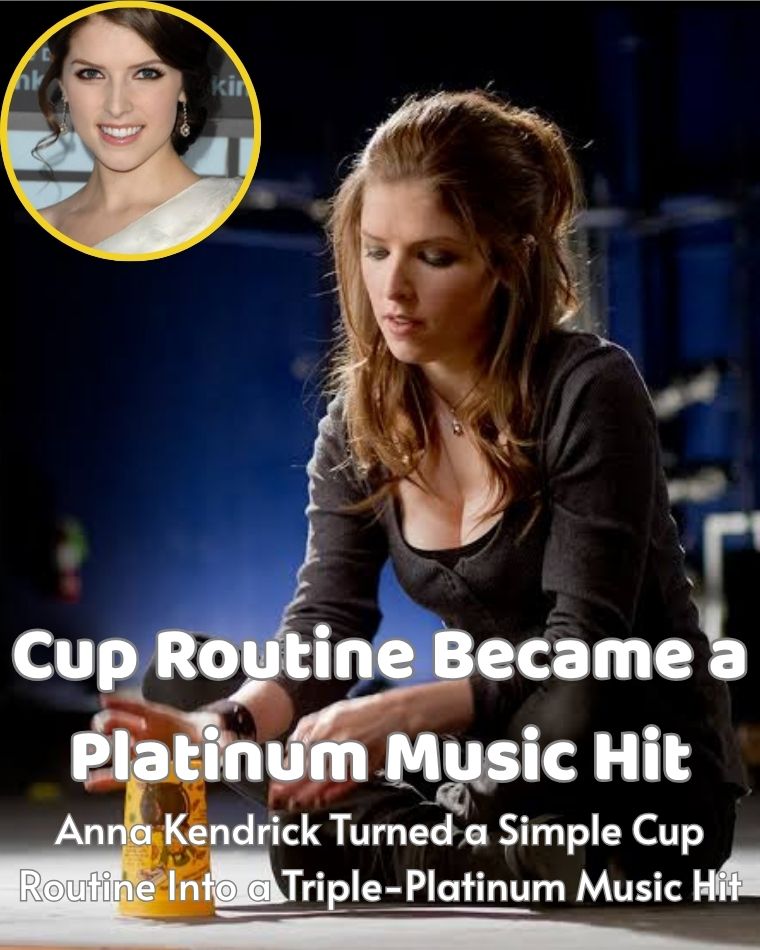
Sitting cross-legged on the auditorium floor, she produces a plain plastic cup and places it in front of her.
With crisp, precise hand movements, she begins tapping the cup, clapping her hands, and rotating the cup against the floor to generate a rapid, percussive tempo.
She begins singing the verses of “Cups (When I’m Gone)” over this self-contained acoustic rhythm.
Her delivery is confident, understated, and completely distinct from conventional vocal tryouts.
The stark visual and auditory contrast between the echoey auditorium and the rhythmic clatter of the plastic cup immediately established the character’s ingenuity.
The audition scene instantly stood out as the emotional and stylistic centerpiece of the first act.
Audiences recognized that Kendrick was performing the physical cup routine live, lending an authentic, tactile intimacy to the cinematic moment.
The sequence resonated because it felt effortless, playful, and genuine.
Rather than relying on elaborate instrumentation, the performance drew power from its minimalism.
Within weeks of the film’s theatrical debut, the cup audition sequence became the defining image of Pitch Perfect.
Young moviegoers left theaters eager to replicate Beca Mitchell’s rhythmic demonstration at home.
The Transition From Movie Scene to Commercial Radio Single
Following the release of Pitch Perfect, the film gained significant commercial traction and developed a passionate fan base.
As home viewing and repeat theatrical viewings multiplied, the short audition clip became one of the most rewatched scenes of the movie.
Fan enthusiasm for Kendrick’s brief acoustic rendition created substantial public demand for a complete, extended recording.
The movie’s soundtrack album, released through Universal Music Enterprises, originally featured the brief film version of the song.
Seeing the unprecedented public interest, record executives recognized that the track possessed commercial potential beyond a brief movie novelty.
Producers returned to the studio to construct a fully arranged, radio-friendly version of the track.
The newly produced single retained Kendrick’s lead vocals and the central acoustic cup rhythm.
However, the production team expanded the soundscape by layering subtle acoustic instrumentation, handclaps, and a full band arrangement behind her voice.
This full-length recording, titled “Cups (Pitch Perfect’s “When I’m Gone”),” was formally issued as a commercial radio single in early 2013.
An official music video was commissioned to accompany the single’s national campaign.
Directed by Pitch Perfect director Jason Moore, the video featured Kendrick working as a diner waitress who sparks an intricate, synchronized cup routine among the diner staff and patrons.
The video honored the communal spirit of the cup rhythm, showcasing how shared physical music can unite people in everyday environments.
The visual treatment helped bridge the gap between Beca Mitchell’s film character and Anna Kendrick’s presence as an individual music artist.
Radio programmers nationwide began placing the song into regular rotation, embracing its hybrid of acoustic folk, pop sensibilities, and syncopated percussion.
The single crossed boundaries between mainstream contemporary pop, adult contemporary, and alternative music formats.
Listeners who had never seen the original feature film discovered the track on terrestrial radio and streaming platforms.
The song had successfully escaped the cinematic confines of the movie to live as an autonomous pop hit.
Commercial Triumph on the Billboard Hot 100
The single’s commercial momentum materialized into extraordinary chart success over the course of 2013.
In an era largely defined by electronic dance music and heavily synthesized pop production, an acoustic-driven novelty track appeared to be an improbable contender for mainstream dominance.
Yet “Cups (When I’m Gone)” climbed steadily across multiple Billboard charts week after week.
The single steadily rose through the ranks of the Billboard Hot 100, the definitive measure of music popularity in the United States.
Supported by heavy radio airplay and robust digital sales, the song climbed into the upper tier of the American charts.
The single achieved its official peak at number six on the prestigious Billboard Hot 100 chart.
Securing a top-ten placement placed Kendrick alongside the industry’s most established pop stars of the year.
The track spent months on the Hot 100, demonstrating sustained staying power rather than a fleeting viral spike.
According to Simon & Schuster’s official author biography for Anna Kendrick, the recording solidified its massive sales standing by attaining official triple-platinum status.
Achieving triple-platinum recognition certified millions of units moved across the United States.
The release also performed strongly on international music charts, achieving gold and platinum certifications across multiple territories.
It earned prominent placements on Billboard’s Adult Contemporary, Adult Pop Songs, and Mainstream Top 40 charts.
The song’s achievements made Kendrick one of the few contemporary Oscar-nominated actors to simultaneously secure a top-ten Billboard pop hit.
Critics praised the organic, refreshing nature of the track’s success in a crowded musical marketplace.
The commercial metrics proved that listeners valued rhythmic ingenuity and relatable storytelling.
The single’s performance also bolstered the overall sales of the Pitch Perfect soundtrack, turning it into one of the bestselling film soundtracks of the modern era.
It set a standard for how musical comedies can drive real-world record sales and chart dominance.
The Broader Cultural Legacy of the Cup Routine
The success of “Cups (When I’m Gone)” sparked a global cultural movement that extended far beyond traditional media broadcasts.
The routine became an internet phenomenon, prompting millions of people to learn and share the exact sequence of claps, taps, and flips.
Classrooms, music academies, summer camps, and recreational groups worldwide integrated the cup song into their daily activities.
Educators recognized the routine as an effective educational tool for teaching basic rhythm, hand-eye coordination, and ensemble synchronization.
Elementary and middle school music teachers frequently organized full-class cup performances, showing young students how simple household items could serve as percussion.
Massive flash mobs formed in public squares and shopping malls, where hundreds of people brought plastic cups to perform the routine in unison.
Video-sharing platforms saw thousands of international cover versions uploaded by amateur musicians, choirs, and sports teams.
Each video offered creative variations, ranging from orchestral accompaniment to lightning-fast speed demonstrations.
The ubiquitous nature of the routine made it an inescapable cultural reference point throughout 2013 and 2014.
It revived public appreciation for the folk tradition of participatory music-making, where audiences create sound rather than solely consuming it.
The song proved that modern viral phenomena do not require elaborate technology to capture public imagination.
A simple twelve-ounce plastic cup, placed upside down on an ordinary table, served as the primary instrument for an international hit.
The phenomenon emphasized how music can emerge from ordinary daily surroundings.
For Anna Kendrick, the success of the track added another dimension to an already versatile entertainment career.
Kendrick had already established herself as a formidable talent across theater, independent cinema, and major studio productions.
Having received a Tony Award nomination at age twelve for the Broadway musical High Society, her vocal capabilities were well-established within the performing arts community.
Her nuanced performance in the 2009 drama Up in the Air had previously earned her Academy Award, Golden Globe, and Screen Actors Guild nominations for Best Supporting Actress.
The immense crossover appeal of “Cups” introduced her vocal talents to millions of mainstream pop music fans.
It expanded her public profile, highlighting her comedic timing, physical coordination, and musical charm.
Kendrick remained humble regarding the track’s success, repeatedly acknowledging the long lineage of the song and the performers who carried the routine forward before her.
Today, the performance remains an indelible chapter in contemporary pop culture history.
It links traditional folk heritage, modern cinema, viral digital culture, and mainstream radio into a singular musical narrative.
Even years after its initial chart peak, the opening rhythmic clap of a plastic cup immediately evokes the enduring legacy of “When I’m Gone.”
Để lại một phản hồi