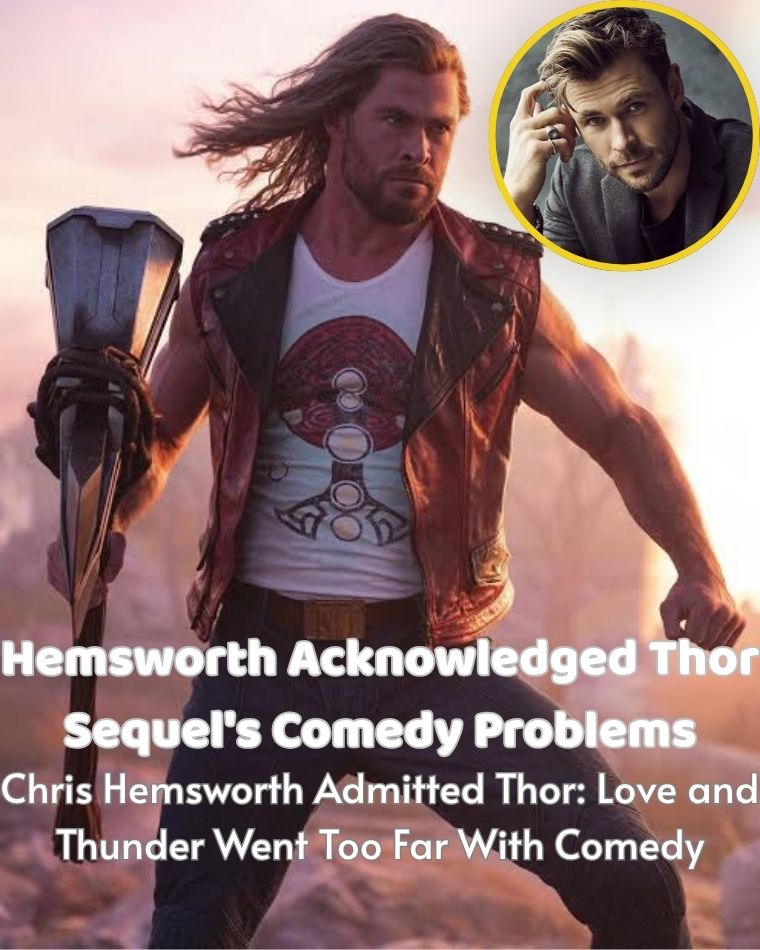
Marvel star Chris Hemsworth has publicly reflected on the critical and audience reactions surrounding the 2022 superhero release Thor: Love and Thunder. Addressing the creative direction of the fourth installment in a detailed profile with British GQ, the Australian actor acknowledged that the film may have leaned too heavily into over-the-top comedy at the expense of grounded tension. His candid observations highlight the delicate balance required when steering major cinematic franchises through evolving tonal shifts.
A Substantial Box Office Run Met With Polarized Fan Reactions
Thor: Love and Thunder arrived in global cinemas in July 2022 amid immense audience anticipation.
The film served as the fourth standalone entry dedicated to the Marvel Cinematic Universe’s God of Thunder.
Financially, the production achieved substantial worldwide box-office success.
It quickly generated hundreds of millions of dollars internationally, demonstrating the enduring global appeal of Hemsworth’s signature superhero.
Despite these strong commercial returns, the feature faced immediate pushback across critical reviews and audience communities.
Discussions among moviegoers quickly centered on the movie’s sharp stylistic choices and uneven creative execution.
Many viewers expressed exhaustion over the high volume of rapid-fire jokes embedded into critical dramatic beats.
Others pointed toward noticeable inconsistencies across several high-profile visual effects sequences.
The film stands as one of the most polarizing modern chapters within Marvel Studios’ expansive shared narrative universe.
It represented a significant tonal departure from earlier phases of the hero’s prolonged cinematic journey.
Hemsworth himself had previously revitalized the character through dynamic collaborations with director Taika Waititi.
Their previous partnership on 2017’s Thor: Ragnarok successfully reinvented the titular warrior by embracing vibrant energy and self-aware comedy.
However, the 2022 follow-up pushed those comedic impulses into far more exaggerated territory.
The resulting tonal contrast triggered extensive discourse across entertainment publications and online fandoms.
Cre: Gage Skidmore / Wikimedia Commons
The Creative Pivot Toward Unfiltered Slapstick and Comedy
When Taika Waititi first took the creative reins for Thor: Ragnarok, the franchise received widespread acclaim for subverting expectations.
The character transitioned from a formal, Shakespearean prince into a charismatic, improvisational cosmic adventurer.
Audiences celebrated that earlier stylistic pivot as an innovative breath of fresh air for comic book cinema.
When production commenced on Thor: Love and Thunder, expectations were extraordinarily high for an even bolder follow-up.
The creative team leaned fully into bright aesthetic choices, musical needle drops, and whimsical gags.
Scenes involving screaming goats and sentient weapons took center stage throughout the story.
While certain segments of the fanbase found these stylistic additions delightful, others felt the jokes undercut genuine narrative stakes.
The serious presence of Christian Bale’s villainous Gorr the God Butcher often stood in jarring contrast to the movie’s sillier moments.
Key dramatic dilemmas faced abrupt comedic deflections rather than emotional resonance.
For dedicated moviegoers, this dynamic created a disjointed viewing experience that detracted from Thor’s overarching heroic arc.
Critical reviews routinely mentioned that the balance between emotional substance and spontaneous levity had tilted too far.
Hemsworth would later note how easy it is for an ensemble to become swept up in an atmosphere of fun while on set.
When performers and filmmakers are enjoying the creative process, self-critique can unintentionally take a back seat.
The atmosphere on set had felt vibrant, collaborative, and endlessly humorous during production.
Yet translating that internal enthusiasm into a cohesive final cut across a massive franchise remains an elusive challenge.
Feedback From Younger Audiences Hits Home
In June 2023, Chris Hemsworth sat down with British GQ for an expansive career profile.
During the wide-ranging conversation, the actor spoke openly about the public reception to his fourth solo Marvel picture.
One of the most revealing aspects of his reflection involved feedback from an unexpected demographic: his children’s friends.
Hemsworth recounted how young eight-year-olds did not hesitate to voice their genuine critiques directly to him.
The kids bluntly told the Hollywood star that they found the film far too silly to take seriously.
They explicitly pointed out specific shortcomings they noticed in the movie’s digital effects.
Young viewers noted that the computer-generated imagery lacked the polish seen in other modern franchise entries.
Hearing such unvarnished feedback from primary school students offered Hemsworth an immediate dose of reality.
The actor took the candid critique in stride, finding humor in the unfiltered honesty of children.
He remarked to the publication that kids possess an extraordinary ability to critique creative work without sugarcoating.
Their immediate reaction mirrored much of the sentiment echoing across wider social media threads and enthusiast forums.
Children, often seen as the core target audience for superhero adventures, wanted a storyline they could invest in with genuine excitement.
Instead, many younger fans walked away feeling that the hero had been turned into a parody of himself.
Hemsworth recognized that when even young children notice tonal over-indulgence, the creative critique holds genuine merit.
The experience reinforced how perceptive modern audiences have become toward both screenwriting discipline and visual execution.
The Debate Surrounding Visual Effects and Technical Execution
Beyond the film’s polarizing humor, the digital post-production elements in Thor: Love and Thunder drew intense public scrutiny.
Throughout the summer of 2022, social media platforms featured numerous clips examining the movie’s visual rendering.
Fans focused specifically on scenes involving floating character projections and complex green-screen backdrops.
The broader entertainment industry had already been facing industry-wide conversations regarding heavy visual effects workloads.
Post-production houses were managing historic volumes of digital assets across dozens of concurrent streaming and theatrical projects.
These logistical bottlenecks frequently forced teams to complete intricate visual shots under severe calendar constraints.
Consequently, certain scenes inside Thor: Love and Thunder felt detached from physical reality in ways audiences could easily spot.
Moviegoers accustomed to seamless cinematic immersion voiced visible disappointment across online discussion boards.
Hemsworth acknowledged that these visual elements did not always land with the seamless polish fans expected from Marvel Studios.
He conceded that the critiques regarding visual effects were understandable given the final product presented on theater screens.
The visual dissonance proved especially noticeable during quiet conversational scenes set against artificial environments.
When audiences become distracted by background compositing, their emotional connection to the dialogue inevitably weakens.
The public reaction marked a pivotal moment where digital craftsmanship became a primary talking point for a major summer tentpole.
Rather than dismissing these observations as nitpicking, Hemsworth viewed them as legitimate components of audience reaction.
Recognizing technical flaws publicly demonstrated a rare level of transparency from a marquee franchise lead.
Inside the British GQ Reflection: Owning Creative Shortcomings
Hemsworth’s 2023 interview with British GQ stood out for its mature, balanced self-awareness.
Hollywood performers rarely speak candidly about the flaws of multimillion-dollar blockbusters so soon after their theatrical release.
Often, stars rely on polished promotional statements to avoid offending corporate studios or production partners.
Hemsworth, however, chose a thoughtful path of constructive appraisal and professional self-reflection.
He openly conceded: “I think we just had too much fun. It just became too silly.”
The actor elaborated on how easy it is to lose outside perspective when everyone involved is having a blast on set.
“It’s always hard being in the centre of it and having any real perspective,” he explained in the profile.
He admitted that when artists immerse themselves in comedic improvisation, self-indulgence can easily creep into the narrative.
Hemsworth shared that while he appreciated the creative freedom, the final product stretched the comedy past the point of balance.
He noted that cringing at one’s own past artistic output is an inevitable reality for any dedicated craftsman.
“I cringe and laugh equally at it,” Hemsworth observed when asked how he views the completed picture today.
His comments offered an inside look into how creative instincts can drift away from audience sensibilities during production.
The actor never deflected responsibility entirely onto studio executives or visual effects teams.
Instead, he framed the miscalculations as a collective creative outcome from a group attempting to push creative boundaries.
That measured attitude allowed his commentary to resonate as authentic introspection rather than defensive rationalization.
Separating Honest Critique From Invented Behind-the-Scenes Feuds
In the modern media landscape, candid remarks from actors are frequently blown out of proportion by sensationalist headlines.
Immediately following the release of the British GQ article, speculation emerged regarding Hemsworth’s relationship with Taika Waititi.
Sensational commentaries attempted to paint the actor’s comments as an explosive attack against his collaborative director.
However, a careful review of Hemsworth’s actual words paints an entirely different and harmonious reality.
Hemsworth went out of his way to express enduring affection, gratitude, and creative respect for Waititi throughout the interview.
The two creators share a deep, long-standing personal friendship that predates their work on the fourth installment.
Waititi had been instrumental in rescuing the Thor character from narrative stagnation several years prior.
Hemsworth made it abundantly clear that their collaborative spirit remained fully intact despite the movie’s mixed reception.
Critiquing a creative direction does not equate to personal animosity or bitter behind-the-scenes conflict.
The distinction between healthy artistic evaluation and a manufactured personal feud is vital for understanding Hollywood collaborations.
Hemsworth never apologized for making the movie, nor did he disown the hard work poured into the production by hundreds of crew members.
He simply recognized that an experimental tonal leap did not hit the bullseye for every segment of the audience.
Waititi himself has frequently described filmmaking as an evolving experiment involving trial, error, and collaborative adjustment.
Both artists understand that creative experimentation carries inherent risks of missing the intended mark.
Their ability to openly discuss these dynamics demonstrates a mature professional partnership built on mutual trust.
The Long-Term Evolution of the God of Thunder
Chris Hemsworth has portrayed Thor Odinson across more than a decade of cinematic storytelling.
His journey began under the formal, mythic direction of Kenneth Branagh in 2011’s foundational origin story Thor.
That debut chapter portrayed the Norse deity as an arrogant, booming warrior learning humility on Earth.
In 2013, Thor: The Dark World attempted a grittier, darker fantasy approach that left both audiences and Hemsworth feeling somewhat creatively constrained.
The actor previously spoke about growing weary of his own portrayal during that intermediate phase of the franchise.
It was precisely that creative fatigue that paved the way for the radical transformation witnessed in Thor: Ragnarok.
Waititi stripped Thor of his hammer, shorn his long blonde locks, and exposed the character’s charming comedic vulnerabilities.
Audiences rallied behind that evolution, making the character an MVP throughout Avengers: Infinity War and Avengers: Endgame.
In those team-up films, directors Anthony and Joe Russo balanced Thor’s comedic grief with heart-wrenching dramatic weight.
The character’s emotional complexity deepened as he struggled with trauma, failure, and self-worth.
When Thor: Love and Thunder arrived, it leaned away from that delicate balance, accelerating the comedy without equal dramatic ballast.
Hemsworth’s recent comments reflect a conscious awareness that the hero must continuously evolve to remain relevant.
Repeating the exact same formula without refining its elements risks alienating even the most loyal long-time supporters.
For an actor who has embodied a pop-culture icon for over twelve years, constant reinvention is essential for creative longevity.
Hemsworth remains protective of the character’s legacy while staying open to where the narrative compass might point next.
The Delicate Tightrope of Superhero Satire in Mainstream Cinema
The reception to Thor: Love and Thunder illustrates a broader structural challenge facing modern comic book cinema.
As cinematic universes age, filmmakers constantly search for novel narrative tones to avoid formulaic fatigue.
Turning a blockbuster franchise into a self-referential comedy can initially breathe vital energy into aging character archetypes.
However, when satire completely overtakes sincerity, audience investment in high-stakes conflicts begins to erode.
Viewers must genuinely believe that fictional worlds face catastrophic peril for climax battles to carry meaning.
If the protagonists treat apocalyptic events as lighthearted background gags, the audience naturally disengages from the tension.
Love and Thunder walked directly into that narrative hazard by trivializing moments of life-and-death consequences.
Gorr the God Butcher was introduced as a terrifying, tragic antagonist seeking the systematic slaughter of deities.
Yet the film frequently interrupted his menacing crusade with extended slapstick routines and broad situational comedy.
Critics highlighted this exact tonal dissonance as the fundamental stumbling block of the screenplay.
Hemsworth’s ability to recognize this issue aligns with the broader critical consensus formed by thoughtful film analysts.
Comic book adaptations require a sturdy foundation of earnest emotion beneath any layer of whimsical parody.
When that foundational earnestness vanishes, the narrative structure struggles to support its own conceptual weight.
Hemsworth’s public remarks acknowledge that the cinematic tightrope requires constant recalibration and narrative discipline.
Navigating blockbuster storytelling demands listening to public reactions without abandoning creative audacity altogether.
Where Does Chris Hemsworth and Thor Go From Here?
Hemsworth’s candor in British GQ naturally sparked questions regarding his prospective future within the Marvel Cinematic Universe.
While the conclusion of Thor: Love and Thunder promised that the hero would return, specific future appearances remain unconfirmed.
Hemsworth has consistently stated that any potential return would depend entirely on finding a radically fresh creative direction.
The actor has emphasized that he has no interest in simply repeating what has already been done on screen.
He expressed a desire for any future iteration to reinvent the tone entirely, perhaps returning to a more grounded, mythic atmosphere.
Exploring a world-weary, introspective Thor facing the twilight of his prolonged life could offer compelling dramatic opportunities.
Hemsworth has proven his versatility across an array of demanding non-superhero roles throughout recent years.
His physical performances in high-octane action thrillers have established his reputation as a formidable leading action star outside comic lore.
That artistic independence provides him with the luxury of being selective about when and how he suits up again.
He is no longer bound by early career contractual pressures to take on any script handed across the table.
Instead, Hemsworth approaches the character of Thor as an appreciative custodian of a globally cherished modern legend.
His willingness to confront creative missteps head-on indicates that future appearances will be guided by thoughtful artistic standards.
If Thor returns to theater screens, audiences can expect a deliberate recalibration toward narrative gravity and thematic depth.
Until then, Hemsworth’s thoughtful appraisal stands as a refreshing benchmark for artistic accountability in contemporary Hollywood.
A Refreshing Standard of Star Accountability
In an era dominated by hyper-managed corporate public relations, authentic commentary from leading movie stars has become vanishingly rare.
Actors frequently deflect unfavorable reviews onto external factors such as online toxicity or shifting media trends.
Rarely does a world-renowned headliner sit down with an international publication and admit that their movie simply missed the mark.
Chris Hemsworth’s comments to British GQ provided a masterclass in gracious, self-effacing star accountability.
He demonstrated that acknowledging creative over-indulgence does not diminish the immense effort poured into an ambitious production.
He proved that an artist can listen attentively to youthful, blunt feedback without losing their professional confidence.
Crucially, he showed that acknowledging narrative flaws does not require throwing valued directors or fellow collaborators under the bus.
His commentary respected the intelligence of global audiences who had invested their time and money at the box office.
By validating the public’s honest reactions, Hemsworth actually strengthened the trust and goodwill between himself and his audience.
Movie fans appreciate sincerity far more than scripted studio defenses that ignore obvious creative shortcomings.
As Hollywood continues to navigate shifting theatrical dynamics, Hemsworth’s reflective posture provides a valuable model for the industry.
Blockbuster filmmaking is an intricate, collaborative journey where even experienced master storytellers occasionally overcorrect their course.
The true mark of lasting creative excellence lies in the capacity to examine mistakes, learn from audience feedback, and press forward with renewed perspective.
Through humor, honesty, and professional grace, Chris Hemsworth proved that genuine heroes can confront uncomfortable truths without missing a beat.
Để lại một phản hồi