Finding the ideal performer to embody Formula One icon James Hunt proved to be one of the most demanding creative hurdles during the development of Rush (2013).
Director Ron Howard spent months evaluating potential options while attempting to complete his leading ensemble alongside Daniel Brühl.
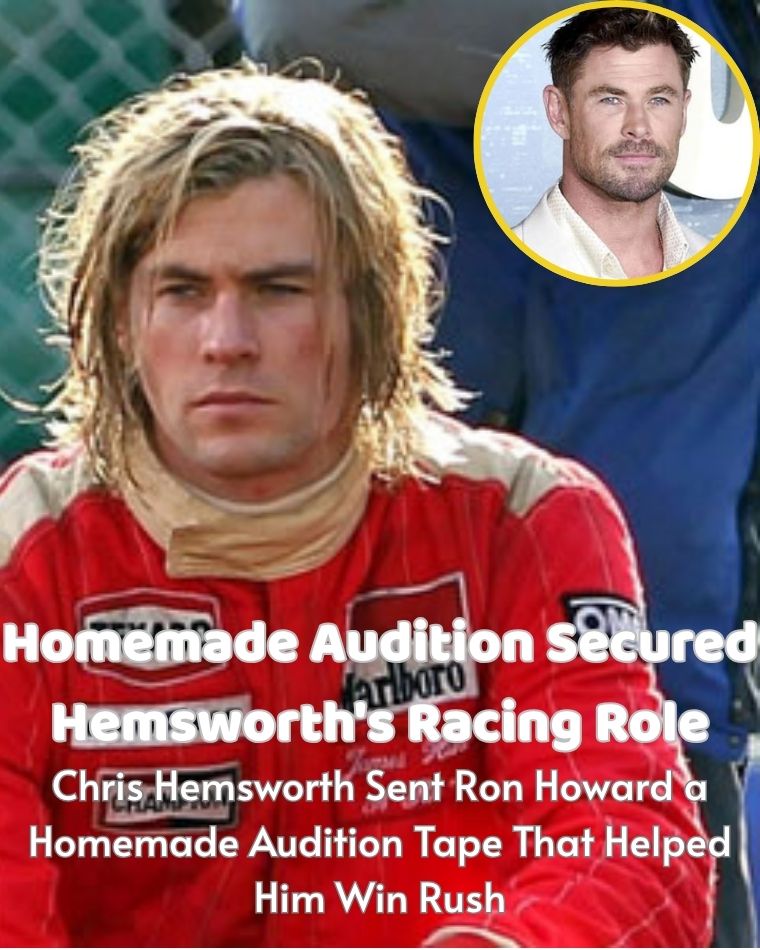
The solution ultimately emerged not through standard agency meetings, but via an unexpected homemade audition tape recorded in an Albuquerque hotel room.
The Impasse in Casting Formula One Icon James Hunt
Director Ron Howard had set his sights on bringing the legendary 1976 Formula One championship duel to the big screen.
The drama depended entirely on the stark philosophical and emotional contrast between two extraordinary sporting legends.
On one side stood Niki Lauda, the disciplined, highly methodical Austrian driver who approached motor racing with calculating precision.
On the opposite side was James Hunt, a charismatic, impulsive, and notoriously hedonistic British driver whose raw speed captivated global audiences.
Acclaimed actor Daniel Brühl had already signed on to portray Lauda, securing half of the film’s essential dramatic equation.
Brühl’s remarkable talent and keen linguistic skill made him an immediate fit for the complex Austrian champion.
However, locking down the ideal actor to step into the racing boots of Hunt proved far more difficult.
Howard later noted that locating the right performer to capture Hunt’s magnetism had grown into a serious stumbling block for the entire production.
The character demanded an uncommon combination of magnetic charm, unapologetic swagger, aristocratic presence, and profound athletic vulnerability.
If the audience failed to believe in Hunt’s electric appeal, the entire central conflict would collapse under its own weight.
Many auditions were considered, yet none seemed to deliver the exact spirit Howard envisioned for the British champion.
The search dragged on, threatening the timing of pre-production as the filmmaking team struggled to bridge the gap.
Cre: Wikimedia Commons
Chris Hemsworth and the Thor Perceptual Hurdle
During this prolonged casting search, Chris Hemsworth encountered the script crafted by celebrated screenwriter Peter Morgan.
The Australian actor was instantly captivated by the depth, complexity, and fierce pace of the narrative.
At the time, Hemsworth was primarily recognized worldwide as the hammer-wielding superhero Thor in the Marvel Cinematic Universe.
That high-profile superhero role had launched him onto Hollywood’s elite A-list almost overnight.
Yet blockbuster prominence frequently carries unintended professional limitations for ambitious actors.
In the eyes of many studio executives and drama directors, action stars are often typecast as physical archetypes rather than nuanced dramatic performers.
Ron Howard was initially hesitant about whether the towering Australian could disappear into a 1970s British racing hero.
Hunt was not simply an athlete with a strong jawline; he was a singular cultural figure defined by British wit, effortless charm, and internal restlessness.
Howard worried that an actor known for wielding fantasy weapons might struggle to embody such a specific historic individual.
Hemsworth knew these preconceptions existed throughout the industry.
He recognized that standard representation channels might not convince the Oscar-winning director to offer him a private read.
Waiting passively for an audition slot or an invitation risked letting the coveted role slip away to someone else.
Hemsworth decided that if he wanted the chance to portray Hunt, he would need to create that opportunity on his own terms.
The Albuquerque Audition Tape and Elsa Pataky’s Crucial Input
The pivotal moment occurred far away from Hollywood casting suites, inside a hotel room in Albuquerque, New Mexico.
Hemsworth was stationed in the Southwestern desert at the time, enduring grueling production schedules while filming The Avengers.
Even with demanding superhero battle sequences filling his daylight hours, Hemsworth spent his evenings immersed in Peter Morgan’s script.
Rather than requesting special treatment, Hemsworth set up a digital camera in his room to tape his own audition.
Working alongside him was his wife, the Spanish actress Elsa Pataky.
Pataky did not merely read off-camera dialogue; she served as an indispensable artistic collaborator during the recording session.
When Hemsworth began performing the scene, his initial passes leaned on broad external cues, such as vocal pitch and physical swagger.
Pataky immediately challenged those preliminary choices.
She pointed out that mimicry alone would never capture the true gravity and allure of James Hunt.
She pushed her husband to dig beneath the superficial bravado and understand why Hunt pursued adrenaline with such reckless abandon.
Under her direct coaching, Hemsworth abandoned theatrical caricatures to tap into Hunt’s raw psychological motivations.
He explored the underlying fear, vanity, discipline, and irresistible human warmth that coexisted within the British champion.
They worked through successive takes until the scene resonated with authentic emotional intensity.
Hemsworth later credited Pataky’s incisive feedback with completely elevating the audition tape.
Once the recording met their exacting standards, Hemsworth packaged the video and sent it directly to Howard without hesitation.
The Tape That Solved the Production Dilemma
Back in London, Ron Howard opened the video submission with curiosity mixed with cautious skepticism.
Within moments of pressing play, whatever reservations the veteran filmmaker held were completely dispelled.
On screen, Hemsworth had shed every trace of his comic book persona.
His posture, vocal cadence, and effortless charismatic intensity channeled the exact spirit of James Hunt.
Howard saw an actor who was not merely wearing a costume, but living inside the volatile psychology of an elite sportsman.
Hemsworth captured the specific charm that allowed Hunt to conquer both high-speed tracks and elite social circles with equal ease.
Crucially, the tape revealed the dramatic range, subtle humor, and emotional depth required to carry a major studio biopic.
Howard recognized that the protracted search for James Hunt had reached its conclusion.
The self-taped audition had effectively cleared the casting logjam that was stalling the production schedule.
Howard immediately moved forward to offer Hemsworth the coveted co-starring role alongside Brühl.
The proactive tape had accomplished what conventional Hollywood meetings often fail to achieve.
It demonstrated undeniable artistic commitment and showed that Hemsworth was willing to earn the part through pure craft.
Bringing the 1976 Formula One Rivalry to Life
With the dual leads locked in, production on Rush commenced under Howard’s precise direction.
The narrative focused squarely on the unforgettable 1976 Formula One World Championship.
That legendary racing season remains one of the most astonishing chapters in international sporting history.
It pitted McLaren’s flamboyant Englishman against Ferrari’s clinical Austrian champion in an escalating battle of skill and resolve.
The season was defined by extreme danger, tactical brilliance, political maneuvering, and Lauda’s miraculous recovery from a horrifying crash.
On set, the dynamic between Hemsworth and Daniel Brühl crackled with genuine artistic energy.
Brühl brought razor-sharp precision and quiet ferocity to Lauda, creating an unforgettable counterweight on screen.
Hemsworth matched that brilliance by infusing Hunt with infectious life, nervous energy, and tragic vulnerability.
Their contrasting styles mirrored the very dynamic that had fascinated racing spectators nearly four decades earlier.
Neither performer attempted to outshine the other; instead, they worked in sync to elevate the human stakes of the competition.
The racing sequences captured the sheer physical terror of driving fragile open-cockpit machines through blinding rain and deadly turns.
Yet the core of the film remained firmly grounded in the mutual respect forged between two fundamentally different rivals.
A Defining Career Turning Point for Chris Hemsworth
When Rush premiered worldwide in the autumn of 2013, it was met with widespread critical acclaim.
Reviewers praised Ron Howard’s immersive direction and Hans Zimmer’s driving musical score.
However, the loudest praise was reserved for the extraordinary chemistry and performances of the two lead stars.
Daniel Brühl received major award nominations for his remarkably authentic depiction of Niki Lauda.
Simultaneously, critics and industry observers were astonished by the dramatic depth Hemsworth delivered as Hunt.
He proved that his capabilities extended far beyond physical action spectacles and mythological gods.
Hemsworth demonstrated that he could command nuanced dramatic material, master intricate accents, and capture real historical personalities.
For Hemsworth, the self-produced audition tape in Albuquerque marked a watershed moment in his acting trajectory.
It proved that taking creative initiative can completely dismantle industry preconceptions.
By stepping outside his comfort zone and trusting his artistic instincts, Hemsworth secured a role that permanently validated his versatility as a leading man.
Để lại một phản hồi