Daniel Radcliffe stepped onto the famed Studio 8H stage on January 14, 2012, to make his official hosting debut on NBC’s long-running sketch comedy series, Saturday Night Live. Arriving just months after the cinematic conclusion of the global Harry Potter franchise, the broadcast marked a decisive cultural turning point for the young British actor. The high-profile episode featured breakout singer-songwriter Lana Del Rey as musical guest, pairing two rising entertainment powerhouses at transformative moments in their respective careers.
Stepping Into Studio 8H
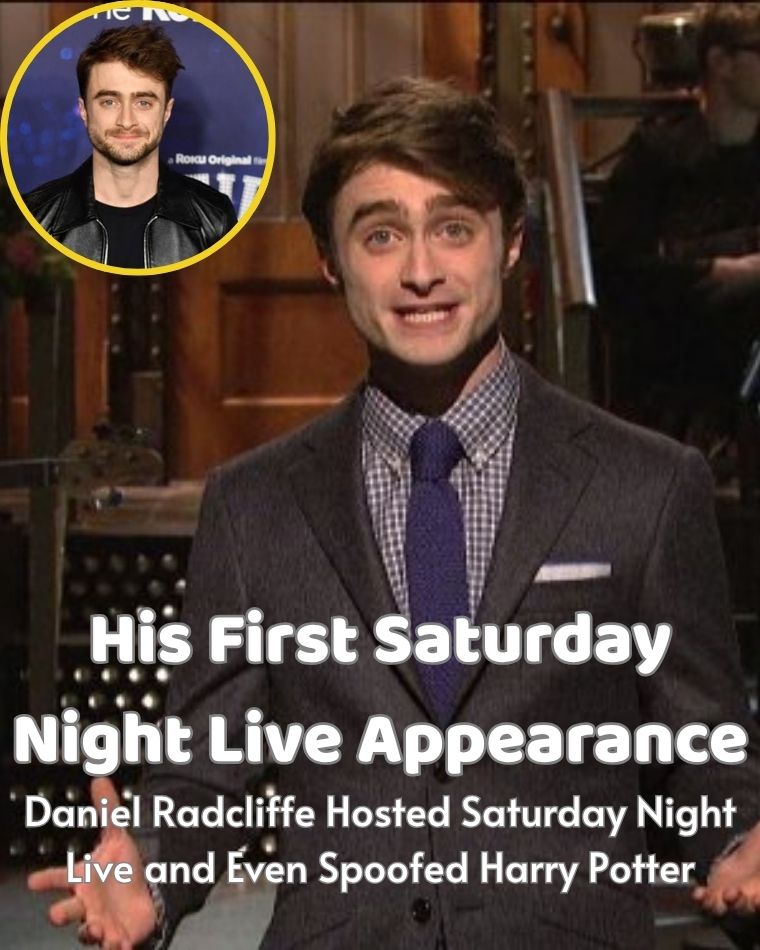
On the evening of January 14, 2012, Daniel Radcliffe walked onto the stage of Studio 8H at Rockefeller Center to headline Saturday Night Live for the very first time.
The appearance officially marked his hosting debut on the venerable late-night NBC sketch comedy institution.
For Radcliffe, the high-stakes television assignment represented far more than a routine promotional tour stop.
It arrived as a bold declaration of artistic independence and comedic versatility before an audience of millions.
Live television comedy remains one of the most demanding formats in modern American entertainment.
The grueling weekly production schedule tests the reflexes, comedic timing, and stamina of every guest host who steps through the doors.
Yet Radcliffe greeted the challenge with infectious enthusiasm, disarming self-deprecation, and an unmistakable eagerness to explore new creative terrain.
The broadcast allowed viewers across the world to see the performer outside the cinematic mythology that had defined his youth.
Rather than distancing himself rigidly from his signature work, Radcliffe chose to embrace his cinematic legacy while demonstrating a willingness to poke fun at his own pop-culture image.
The result was an episode that remains a defining snapshot of early 2012 entertainment culture.
Cre: Wikimedia Commons — Joella Marano (CC BY-SA 2.0)
The Timing: Life After the Boy Wizard
The timing of Radcliffe’s Saturday Night Live debut could hardly have been more significant.
Only six months earlier, in July 2011, Warner Bros. had released Harry Potter and the Deathly Hallows – Part 2 to theaters worldwide.
That monumental film had brought a definitive conclusion to a record-breaking eight-film cinematic journey spanning an entire decade.
For ten consecutive years, Radcliffe had lived in the global public eye as the literal face of J.K. Rowling’s legendary boy wizard.
Audiences across the globe had watched him grow from an eleven-year-old schoolboy into a young adult on theater screens.
When the film series ended, the entertainment industry wondered whether its core star could successfully establish a viable post-franchise career.
Child actors who spend formative years headlining massive blockbuster franchises frequently struggle to escape the shadow of their characters.
Radcliffe, however, had already begun charting a deliberate path toward theatrical reinvention long before the cameras stopped rolling on the final film.
Hosting Saturday Night Live in early 2012 served as a public coronation of this new artistic chapter.
It provided a mainstream platform where he could show that his range extended well beyond wands, robes, and dramatic confrontations with dark wizards.
Stepping into live satire offered the ultimate environment to prove his adaptability.
The production demanded immediate character transitions, high-energy physical delivery, and total commitment to absurd comedic premises.
Radcliffe embraced the unpredictable rhythm of live television with visible delight.
The Broadway Foundation: ‘How to Succeed’
Radcliffe did not arrive at Saturday Night Live without substantial live performance credentials under his belt.
Immediately preceding his television hosting debut, Radcliffe had completed a celebrated run on Broadway.
He had starred as the ambitious striver J. Pierrepont Finch in the 50th-anniversary revival of the classic musical comedy How to Succeed in Business Without Really Trying.
Staged at the Al Hirschfeld Theatre in New York City, the demanding production required Radcliffe to sing, act, and execute intricate choreography eight times a week.
His run in the production earned widespread critical praise and solidified his reputation as a dedicated stage performer.
The intense discipline required by Broadway musical theater proved to be the ideal training ground for the chaos of Saturday Night Live.
Live theater demands absolute precision, vocal projection, quick recovery from minor mistakes, and seamless audience connection.
Radcliffe brought all of those refined performance instincts straight into Studio 8H.
During his opening monologue on January 14, 2012, he comfortably engaged the studio audience with the warmth of a seasoned stage actor.
His Broadway experience gave him the confidence to hold the stage without hesitation or nervous restraint.
Cast members and writers could immediately sense that their host possessed both legitimate physical stamina and genuine stage timing.
That professional discipline allowed the writers to place him in demanding sketches requiring rapid dialogue and fast physical transitions.
His work on the Broadway stage had dismantled any suspicion that he was merely a creature of movie-set editing and CGI effects.
Instead, Radcliffe stood on the NBC stage as a fully formed stage artist ready to tackle live comedy without a safety net.
The Iconic Harry Potter Epilogue Parody
Among the most talked-about sketches of the January 14, 2012 broadcast was an affectionate parody centered on the Harry Potter universe.
Rather than avoiding the franchise that made him a household name, Radcliffe leaned directly into the premise with absolute comedic abandon.
The sketch reimagined the famous epilogue sequence of the final film, envisioning what life looked like years after the defeat of Lord Voldemort.
In the parody, the central wizarding characters had grown up and entered adulthood, yet Harry Potter himself simply refused to move on with his life.
Radcliffe played an adult Harry who lingered awkwardly around the halls of Hogwarts long after his school days had ended.
While his former classmates had moved on to normal professional careers and family lives, Harry remained firmly stuck in his adolescent glory days.
He wandered the wizarding school reminiscing obsessively about his historic triumph over the Dark Lord.
The sketch poked brilliant fun at the trope of the former high school athlete who cannot stop talking about past championship victories.
Radcliffe delivered lines with pitch-perfect comedic desperation, clinging to his youthful heroics while everyone around him rolled their eyes.
Cast members played adult versions of his famous school friends, reacting with weary amusement to his lingering presence.
The sketch allowed viewers to laugh with Radcliffe rather than laughing at him.
By actively dismantling the solemnity of his most famous character, Radcliffe showed an impressive level of maturity and self-awareness.
The segment resonated widely with fans who had grown up alongside the franchise over the previous decade.
It acknowledged the audience’s deep emotional connection to the films while simultaneously providing a cathartic, humorous sense of closure.
Television critics singled out the epilogue parody as one of the standout comedic moments of the entire season.
The sketch confirmed that Radcliffe possessed a sharp understanding of satire and could subvert expectations with grace and wit.
The Breakthrough Musical Guest: Lana Del Rey
A major reason the January 14, 2012 episode of Saturday Night Live remains etched in modern pop culture lore was its musical guest.
Sharing the bill with Radcliffe was singer-songwriter Lana Del Rey, who had rapidly emerged as one of the internet’s most mesmerizing musical phenomena.
Del Rey had captivated global listeners with viral, dreamy tracks like “Video Games” and “Blue Jeans.”
Her booking on Saturday Night Live came even before the official release of her major-label debut studio album, Born to Die.
Booking an artist with only an independent track record and viral buzz was an unconventional move for the storied late-night program.
The contrast between the host and the musical guest created a uniquely electric atmosphere throughout the entire broadcast.
Radcliffe represented an established, universally recognized superstar transitioning into a new professional phase.
Del Rey represented the cutting edge of a brand-new digital era of music stardom, entering mainstream television for the first time.
During the broadcast, Del Rey delivered atmospheric, slow-tempo performances of “Video Games” and “Blue Jeans.”
Her distinctive retro aesthetic, glamorous vintage presentation, and low-register vocal delivery sparked instant, passionate conversation across social media platforms.
Online commentary regarding her performance was intense and immediate, reflecting the polarized nature of internet discourse at that transitional cultural moment.
The discourse surrounding Del Rey’s appearance turned the episode into one of the most widely analyzed cultural broadcasts of 2012.
For Radcliffe, sharing the stage with Del Rey placed him at the absolute epicenter of the cultural conversation that weekend.
The dynamic pairing guaranteed that critics, industry insiders, and millions of viewers paid close attention to every segment of the program.
Versatility Across the Episode’s Sketches
Throughout the ninety-minute broadcast, Radcliffe threw himself into an eclectic variety of sketch concepts.
He avoided playing safe, one-dimensional characters and instead tackled distinct accents, oddball personas, and physically demanding bits.
His natural British diction paired effortlessly with the fast-paced delivery of the SNL ensemble.
In one segment, he demonstrated an impressive command of rapid-fire dialogue, never missing a cue despite the frantic pace of live production.
In other sketches, he leaned into broad physical comedy, utilizing his compact frame and expressive facial features to heighten the humor.
Radcliffe’s willingness to make himself the butt of the joke endeared him immediately to both the cast and the live audience.
He showed an instinctive understanding of how to share the screen with ensemble veterans without attempting to overpower them.
His collaborative spirit reflected his years of experience working on large-scale film sets and ensemble theatrical productions.
Rather than approaching the gig as a guest star visiting an unfamiliar environment, he operated as a dedicated member of a temporary troupe.
The cast responded in kind, feeding off his high energy and unwavering focus throughout the broadcast.
Every sketch benefited from his genuine investment in the material, even when premises ventured into surreal or bizarre territory.
His performance affirmed that his talent was not bound by genre, format, or tone.
A Defining Turning Point in Radcliffe’s Career
Looking back across Daniel Radcliffe’s extensive career, the January 14, 2012 episode of Saturday Night Live stands as a major turning point.
It proved decisively that Radcliffe was prepared to take artistic risks and embrace bold, unconventional creative challenges.
In the years that followed, Radcliffe deliberately pursued idiosyncratic roles in independent cinema, dark comedies, and avant-garde theater productions.
He would go on to star in diverse film projects such as Swiss Army Man, Kill Your Darlings, Guns Akimbo, and Weird: The Al Yankovic Story.
His readiness to embrace strange, hilarious, and intellectually challenging material became the defining hallmark of his entire adult career.
The seeds of that fearless creative philosophy were clearly planted during his work on the Broadway stage and at Studio 8H.
By conquering Saturday Night Live, Radcliffe signaled to directors and audiences that he was completely unburdened by his childhood stardom.
He proved that he was driven by genuine artistic curiosity rather than a desire to protect an untouchable commercial brand.
The episode established a blueprint for how young franchise actors can gracefully transition into long-lasting, respected character performers.
He demonstrated humor, resilience, intelligence, and an enduring respect for the craft of performance in all its forms.
Over a decade later, fans still revisit the January 14, 2012 broadcast as a benchmark of early 2010s late-night television.
It captures an extraordinary artist stepping into the spotlight on his own terms and earning the world’s laughter through pure dedication.
Để lại một phản hồi