Moviegoers spent a full decade watching Daniel Radcliffe cast fictional spells and wield magic wands on screen.
His arrival in the 2016 heist thriller Now You See Me 2 brought a delightful sense of cinematic irony.
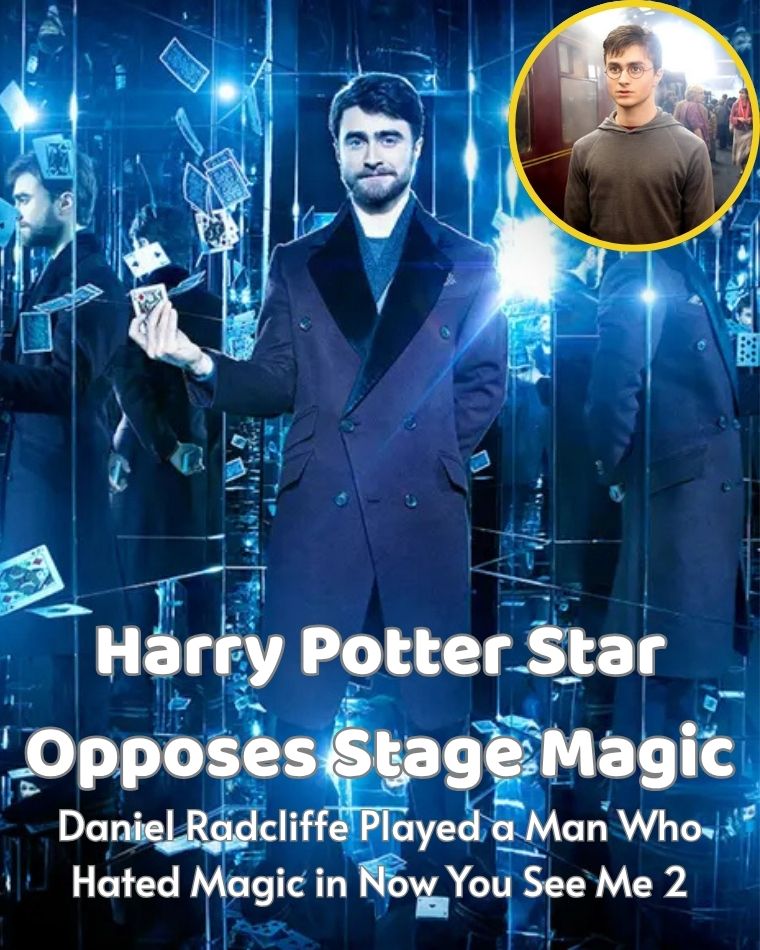
Instead of an earnest young wizard, Radcliffe took on the role of Walter Mabry, a scheming tech prodigy determined to bend real-world illusions to his will.
From Schoolboy Sorcery to Silicon-Driven Deception
For millions of film fans across the globe, Daniel Radcliffe remains forever linked to the world of Hogwarts.
That widespread association made his casting in the 2016 blockbuster sequel particularly entertaining for audiences.
The first film had surprised box offices by turning stage magic, sleight of hand, and theatrical illusion into a high-octane heist spectacle.
When director Jon M. Chu signed on to expand the franchise, the creative team needed a formidable new adversary.
They chose the very actor whose childhood had unfolded inside the most celebrated fictional magic franchise in cinema history.
Yet rather than leaning into nostalgic spellcasting, Radcliffe took a sharply different path.
He embodied Walter Mabry, a reclusive billionaire who scoffs at theatrical wonder and trusts only cold calculations.
The resulting performance allowed the British star to subvert expectations with wicked humor and theatrical arrogance.
Cre: Wikimedia Commons — Joella Marano / CC BY-SA 2.0
Walter Mabry: The Eccentric Prodigy Controlling the Board
In Now You See Me 2, Walter Mabry is far from an ordinary antagonist.
He is introduced as an eccentric technological mastermind who has faked his own death to operate in total secrecy.
Hiding away in an opulent compound in Macao, Mabry watches global finance and digital surveillance unfold at his fingertips.
While stage performers rely on theatrical misdirection, Mabry believes true power resides in digital code, microchips, and data architecture.
His central scheme involves forcing the fugitive illusionist troupe known as the Four Horsemen into conducting an impossible heist.
He demands that they steal a revolutionary microchip capable of bypassing any computer security system in the world.
The dynamic creates an immediate clash between classic stagecraft and modern technological control.
Mabry views himself as the ultimate puppet master who can manipulate the Horsemen like chess pieces.
Radcliffe plays the tech tycoon with frantic, nervous energy, balancing privilege with dangerous unpredictability.
His character is petulant, wealthy, and deeply obsessed with showing that science and capital can defeat mere card tricks.
Deconstructing the Illusion: Science Versus Stagecraft
Thematic contrast forms the backbone of Daniel Radcliffe’s presence in Now You See Me 2.
Throughout the Harry Potter films, magic served as a wondrous, organic, and moral force existing parallel to reality.
In the world of the Four Horsemen, however, illusion is purely mechanical, physical, and psychological.
Walter Mabry does not believe in mystery or spiritual wonder.
To him, every illusion is merely an unsolved engineering puzzle waiting to be reverse-engineered and exploited.
He constantly seeks to pull back the curtain and expose the human machinery operating behind every grand trick.
This philosophical clash fuels the film’s highest-stakes scenes across crowded casinos and secret laboratories.
Radcliffe leaned into this exact contrast, deliberately highlighting how money and ego seek to extinguish genuine artistry.
The actor clearly relished delivering sharp monologues explaining the physics and electronics behind grand spectacles.
For audiences who grew up with him, seeing Radcliffe dismiss magic as cheap manipulation was an absolute delight.
Sharing the Screen With an Ensemble of Heavyweights
Joining the cast of Now You See Me 2 placed Radcliffe alongside an exceptional ensemble of Hollywood stars.
Jesse Eisenberg returned as the meticulous and fast-talking illusionist J. Daniel Atlas.
Woody Harrelson brought sharp comedic timing as the mentalist Merritt McKinney.
Dave Franco contributed energetic physical card manipulations as Jack Wilder.
Lizzy Caplan stepped into the lineup as the irreverent escape artist and illusionist Lula May.
Meanwhile, screen veterans Morgan Freeman and Mark Ruffalo deepened the mystery surrounding the secret society known as The Eye.
Standing opposite such an established ensemble required an antagonist who could match their theatrical speed and charisma.
Radcliffe held his ground effortlessly by refusing to play Mabry as an intimidating physical menace.
Instead, he made the villain an entitled young mogul who compensates for insecurity with boundless cash and high-tech toys.
Every confrontation between Mabry and the Horsemen crackles with competitive verbal sparring and sharp narrative twists.
The Michael Caine Connection: Emulating a Cinema Icon
One of the most celebrated elements of Radcliffe’s participation in Now You See Me 2 was his on-screen family connection.
The film pairs him directly with Sir Michael Caine, who portrays Arthur Tressler.
In a pivotal plot revelation, Walter Mabry is revealed to be the illegitimate son of Tressler, uniting their mutual vendetta.
For Radcliffe, sharing scenes with Caine represented the culmination of a lifelong professional admiration.
Long before they worked together on Jon M. Chu’s set, Radcliffe considered Caine a foundational role model for his own career.
During his early days filming the Harry Potter franchise, crew members who had worked with Caine shared stories about the veteran’s legendary professionalism.
Radcliffe learned that Caine made a personal point of memorizing the names of every crew member on set by the end of his first day.
Hearing about that grounded, ego-free attitude inspired young Radcliffe to adopt the exact same work ethic across his own film sets.
When the two British actors finally met in person in director Jon M. Chu’s production office, Radcliffe admitted to feeling completely in awe.
Reflections on Fame, Craft, and Growing Up on Camera
During promotional appearances for the 2016 film, Radcliffe spoke openly about his respect for Michael Caine’s sustained longevity in cinema.
On The Tonight Show, Radcliffe famously quipped that he simply wanted to be Michael Caine when he grew up.
The remark drew laughs, but it reflected a serious commitment to longevity, discipline, and humility in an unforgiving industry.
Both performers navigated the immense pressures of stardom while maintaining a reputation for kindness toward film crews.
Their chemistry as father and son in Now You See Me 2 grounded the sequel’s extravagant twists in authentic generational resentment.
While Caine’s Arthur Tressler operates with icy corporate patience, Radcliffe’s Mabry bristles with restless impatience and vanity.
Watching two generations of British screen talent spar on screen gave the high-concept caper genuine dramatic weight.
The project allowed Radcliffe to prove once again that his post-franchise career would be defined by daring and unexpected creative choices.
A Defining Chapter in a Daring Career Evolution
Looking back at Now You See Me 2, Daniel Radcliffe’s performance stands as a masterclass in playful reinvention.
Many child stars struggle to escape the enormous shadow of the characters that launched their global fame.
Radcliffe, by contrast, ran directly toward complex, quirky, and openly villainous roles that challenged audience preconceptions.
Playing Walter Mabry gave him the platform to lampoon the very concept of magic while showcasing his razor-sharp comedic timing.
The film demonstrated that true movie magic does not come from supernatural wands or computer-generated illusions.
Instead, lasting cinematic appeal comes from bold casting, generous collaboration, and fearless storytelling.
In Now You See Me 2, the boy who lived to cast spells showed audiences the thrilling fun of tearing the illusions down.
Để lại một phản hồi