Brad Pitt has declared that the modern independent cinema landscape feels just as strong and vibrant as the iconic cinematic boom of the 1990s. Speaking candidly during promotional appearances for his survival drama Heart of the Beast, the veteran actor argued that narrative risk-taking and fresh filmmaking voices are thriving in unexpected ways. His assessment provides an authoritative perspective from an industry stalwart whose breakout career was forged during American independent film’s golden era.
Speaking to Deadline and The Hollywood Reporter on September 23, 2026, Pitt explained that independent film today carries an electrifying energy reminiscent of the decade that launched him.
The actor noted that the indie film environment “feels as strong as in the ’90s” because distinct storytelling and creative opportunities continue to find determined paths forward.
For an artist whose early Hollywood path bypassed easy commercial formulas in favor of bold directorial visions, that comparison carries tremendous historical weight.
The statement instantly re-ignited industry discussions regarding theatrical viability, streaming distribution, and the enduring resilience of indie storytellers.
Many industry observers have spent recent years lamenting the potential demise of non-franchise mid-budget cinema.
Yet Pitt offers an intentionally optimistic counterpoint based on firsthand experience across four distinct decades in front of the camera.
When Pitt reflects on the independent film renaissance, he speaks not as a detached spectator, but as an original participant who lived through its seminal moments.
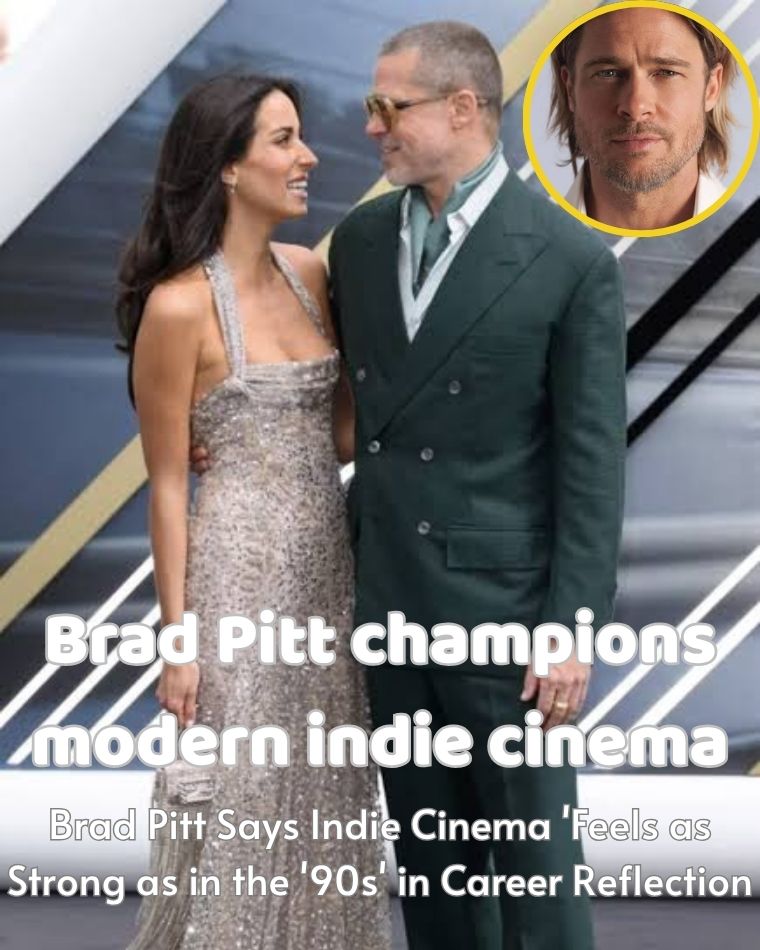
Cre: Wikimedia Commons
Brad Pitt’s Perspective: Why the Modern Indie Scene Parallels the 1990s
During his media conversations in late September 2026, Pitt emphasized that the sheer hunger for authentic, human-scale storytelling has not diminished.
He pointed out that streaming platforms and changing distribution models have created unexpected avenues for niche and character-driven works to secure devoted global eyes.
While acknowledging that traditional theatrical windows have evolved drastically, Pitt maintains that access to innovative cinema has expanded rather than contracted.
The actor noted that passionate storytellers are still finding clever ways to produce uncompromising artistic work on limited budgets.
Director David Ayer echoed Pitt’s sentiment during joint festival discussions, underscoring how non-traditional pipelines are empowering fresh cinematic voices across the globe.
Pitt highlighted that when creative people refuse to conform to corporate formulas, the resulting movies carry the unmistakable spark of classic independent cinema.
His remarks cut straight through prevailing Hollywood cynicism by reminding audiences that cinematic vitality is defined by creative spirit rather than studio balance sheets.
The 1990s were marked by rebellious ingenuity, and Pitt firmly believes that same rebellious instinct drives modern independent filmmakers today.
By comparing 2026 to that celebrated decade, Pitt validates the efforts of younger creators fighting to tell complex, unconventional stories.
His endorsement reassures cinephiles that mid-budget drama and indie grit remain fundamentally alive within the modern media ecosystem.
The 1990s Crucible: The Indie Breakthroughs That Built Brad Pitt’s Stature
To fully grasp why Pitt’s assessment matters, one must examine the specific 1990s projects that established his critical credibility.
Following his memorable turn in Thelma & Louise, Pitt consciously resisted the easy path of playing generic romantic leads in conventional Hollywood romances.
Instead, he actively sought out dark, atmospheric, and risky independent productions that challenged audience expectations.
In 1993, he starred alongside Juliette Lewis in Dominic Sena’s gritty neo-noir road thriller Kalifornia.
Playing the unhinged serial killer Early Grayce in Kalifornia was a stark, daring creative gambit for an ascending Hollywood heartthrob.
That same year, Pitt delivered an iconic, scene-stealing performance as the eccentric couch-bound Floyd in Tony Scott’s True Romance, scripted by Quentin Tarantino.
These early indie credits demonstrated that Pitt was deeply invested in raw character work over polished studio vanity.
Later in the decade, Pitt took an immense psychological risk by boarding Terry Gilliam’s dystopian science-fiction masterpiece 12 Monkeys in 1995.
His frantic, manic portrayal of Jeffrey Goines in 12 Monkeys earned Pitt his first Academy Award nomination for Best Supporting Actor.
Working with idiosyncratic directors like Terry Gilliam, David Fincher, and Dominic Sena taught Pitt that creative friction often produces enduring cinematic art.
That formative decade concluded with 1999’s subversive cult landmark Fight Club, solidifying Pitt’s reputation as a marquee star unafraid of provocative cultural critiques.
Having navigated the trenches of 1990s cinema, Pitt possesses an intimate understanding of what truly makes independent storytelling click.
His reflections in 2026 draw directly on that hard-earned knowledge of how unconventional projects break through cultural noise.
How Heart of the Beast Exemplifies the Return to Intimate Filmmaking
Pitt’s optimistic evaluation of the independent film ecosystem arrives alongside the premiere of his survival drama Heart of the Beast.
Directed by David Ayer, Heart of the Beast strips away high-tech blockbuster spectacle in favor of elemental physical and emotional struggle.
The film follows a former Army Special Forces operative stranded deep in the brutal Alaskan wilderness alongside his retired military combat dog.
Together, the wounded soldier and his loyal canine companion must battle ruthless environmental conditions and lethal natural predators to reach safety.
Co-starring J.K. Simmons and Anna Lambe, the film relies almost entirely on raw experiential tension rather than sprawling CGI battlefields.
Critics have noted that the narrative tension rests squarely on the nuanced chemistry between Pitt’s weathered protagonist and his canine partner, Odin.
Rather than chasing bloated superhero mythologies, Pitt commits fully to an austere, grueling character study filmed against unforgiving outdoor landscapes.
The project reunites Pitt with David Ayer over a decade after their intense collaboration on the 2014 World War II tank drama Fury.
By choosing an intense survival drama focused on psychological trauma and loyalty, Pitt exemplifies the very philosophy he championed in his interviews.
The production emphasizes tactile realism, practical survival elements, and deeply personal emotional stakes.
Heart of the Beast serves as tangible proof that seasoned Hollywood A-listers can use their cultural capital to elevate focused, grounded cinema.
For Pitt, supporting such work is not merely theoretical posturing—it is a sustained artistic commitment demonstrated across his current filmography.
1990s vs. 2026: What Has Transformed and What Endures in Independent Cinema
Comparing cinema across a thirty-year gap reveals striking operational differences alongside remarkable spiritual continuities.
In the 1990s, the indie explosion was propelled by traditional arthouse theaters, VHS tape sales, and passionate film festival bidding wars at Sundance and Cannes.
Filmmakers operated with analog 35mm film stock, meaning that budget constraints dictated every precious minute of shooting time.
Distribution was largely controlled by boutique theatrical outfits like Miramax, October Films, and early Fine Line Features.
By contrast, the 2026 landscape operates in an era dominated by high-end digital workflows, global streaming platforms, and hybrid release strategies.
The modern indie filmmaker no longer relies exclusively on securing five hundred physical movie screens across major metropolitan centers to build a following.
Digital platforms and international streaming catalogs allow low-budget features to reach niche global audiences in days rather than months.
Yet, despite these technological and logistical revolutions, the core engine driving independent cinema remains fundamentally unchanged.
Independent cinema in 1993 was defined by visionary authors who refused to dilute their personal artistic vision for corporate focus groups.
Independent cinema in 2026 remains defined by that exact same refusal to surrender creative integrity to standard studio algorithms.
Economic pressures remain intense, financing remains difficult to secure, and independent producers still fight fiercely for every production dollar.
However, the creative resilience that defined Pitt’s breakout era persists unabated among today’s rising writers and directors.
As Pitt highlighted to Deadline, the sheer determination to push narrative boundaries continues to transcend shifting exhibition formats.
Audiences today still crave visceral, unexpected cinematic stories that make them feel genuinely moved and surprised.
Pitt’s Calculated Trajectory: Prioritizing Character-Driven Cinema Over Franchises
Pitt’s praise for indie culture mirrors his deliberate professional decisions as both an actor and an Academy Award-winning producer.
Over the past decade, Pitt has largely bypassed the multi-picture comic book franchises that dominate modern studio boardrooms.
Instead, he has balanced high-profile commercial spectacles like Bullet Train and Joseph Kosinski’s racing drama F1 with ambitious auteur cinema.
Through his production banner Plan B Entertainment, Pitt has spent two decades championing award-winning independent visions, including Moonlight and 12 Years a Slave.
As an actor, his Academy Award-winning performance as Cliff Booth in Once Upon a Time in Hollywood celebrated old-school, character-rich cinematic craft.
His recent choices reflect an artist who derives immense fulfillment from focused, atmospheric storytelling where actors have room to breathe.
Returning to an intimate two-hander like Heart of the Beast confirms that Pitt views physical drama as the ultimate test of screen presence.
He deliberately embraces roles where raw human vulnerability takes precedence over digital pyrotechnics.
Rather than resting comfortably on his legendary status, Pitt continues to embrace difficult, physically demanding character work.
His creative trajectory demonstrates that true career longevity requires persistent artistic curiosity and a willingness to take creative risks.
A Champion for the Next Generation: What Pitt’s Stance Signals for Cinema’s Future
At this seasoned stage of his legendary career, Pitt’s words carry unmistakable institutional influence throughout Hollywood.
When an A-list movie star publicly champions the health of independent cinema, distributors and financiers take immediate note.
Pitt is deliberately reminding the film industry that Hollywood cannot survive solely on safe, corporate intellectual property and brand extensions.
The entire entertainment ecosystem relies on the unpredictable breakthroughs that only independent cinema can nurture.
Without the scrappy indie crucible of the 1990s, contemporary cinema would have never discovered directors like Quentin Tarantino, Paul Thomas Anderson, or David Fincher.
Similarly, the future legends of cinema are currently cutting their teeth on mid-budget festival entries and bold streaming dramas in 2026.
By drawing a direct lineage between his formative decade and today’s landscape, Pitt encourages audiences to seek out bold, original films.
He validates the unconventional storytellers who are taking narrative chances outside the safety of studio franchises.
His message is straightforward: the creative pulse of cinema has not vanished; it has simply diversified across new distribution frontiers.
As long as daring filmmakers keep picking up cameras, independent cinema will continue to produce extraordinary work.
Brad Pitt’s energetic championing of the current indie scene serves as both a proud retrospective of his roots and an inspiring forecast for the medium’s future.
Independent film has survived shifting technologies, economic upheavals, and theatrical changes for generations without losing its soul.
In 2026, guided by the enduring enthusiasm of veterans like Pitt, the independent spirit remains as formidable and necessary as ever.
Để lại một phản hồi