British actress Sophie Turner is charting a deliberate post-Game of Thrones career path defined by personal agency rather than commercial predictability. In extensive coverage and reflective conversations with Young Hollywood, the star articulates her philosophy of selecting challenging roles while rejecting narrow industry stereotypes. Her evolving filmography and public presence demonstrate how a former child actor can secure long-term creative independence in contemporary entertainment.
Transitioning from a globally recognized adolescent role to mature dramatic autonomy represents one of the most perilous pathways in modern film and television.
Few performers have navigated this threshold under as bright a public spotlight as English actress Sophie Turner.
Having entered the international entertainment industry at just thirteen years old, Turner grew up directly before millions of viewers worldwide.
Today, as she approaches her thirties with nearly a decade and a half of professional screen experience behind her, she occupies an entirely different vantage point.
Rather than drifting along the conventional Hollywood conveyor belt of commercial blockbusters, Turner has adopted a structured strategy centered on creative authority.
The specialized entertainment platform Young Hollywood has documented this creative transformation through a series of dedicated interviews, profile retrospectives, and studio conversations.
The platform specializes in in-depth coverage of emerging creators and established talent, offering performers a venue to articulate their authentic decision-making processes.
Throughout these retrospective features, Turner’s discussions reveal a working philosophy grounded in boundary-setting, narrative control, and artistic substance.
Her determination to operate on her own terms challenges the historic pressures routinely placed on young actresses who achieve early franchise fame.
Escaping the Shadow of Westeros and Franchise Expectations
When HBO launched its fantasy adaptation Game of Thrones in 2011, Sophie Turner debuted as Sansa Stark, a noble daughter navigating brutal political power dynamics.
Cre: Suzi Pratt / Wikimedia Commons
Over eight sprawling seasons, Turner portrayed Sansa’s complex evolution from an innocent pawn into a resilient, calculating northern monarch.
The show became an unprecedented global cultural phenomenon that brought Turner massive international recognition while consuming the formative years of her youth.
For many young actors who emerge from long-running television epics, such early typecasting becomes an inescapable professional trap.
Studios frequently attempt to duplicate a performer’s most famous persona across similar genre vehicles, effectively limiting their dramatic exploration.
Turner recognized this commercial momentum early and resisted being confined to safe, predictable archetypes.
Her post-Westeros choices reflect a conscious effort to dismantle public perceptions of who she is on screen.
Instead of pursuing roles that mirrored Sansa’s regal restraint, Turner sought characters carrying conflicting moral compasses and raw emotional volatility.
She understood that longevity in the entertainment business requires actively confounding audience expectations.
In Young Hollywood’s extensive archive of over two hundred articles and video segments featuring the star, this deliberate artistic evolution stands out vividly.
Even when discussing her iconic early role, Turner often defended Sansa’s vulnerability while simultaneously signaling her readiness to tackle entirely different dramatic territory.
Balancing Superhero Spectacle with Nuanced Prestige Drama
Following her long tenure in epic television fantasy, Turner made a calculated foray into high-stakes studio cinema by joining the Marvel universe as Jean Grey in the X-Men franchise.
Stepping into massive ensemble projects like X-Men: Apocalypse and anchoring Dark Phoenix tested her capacity to command large-scale cinematic sets.
These blockbuster productions exposed her to the logistical demands of heavy visual effects, demanding physical stunt routines, and intense fandom scrutiny.
Yet commercial blockbusters never represented Turner’s ultimate artistic destination.
She treated her participation in studio tentpoles as an opportunity to master cinematic scale rather than an obligation to remain trapped in superhero franchises.
Recognizing that studio filmmaking can often dilute personal agency, Turner shifted her primary focus toward projects that prioritized character study over spectacle.
This strategic pivot became unmistakable when she took on the titular lead in the ITVX British crime drama series Joan.
Portraying the notorious real-life jewel thief Joan Hannington allowed Turner to delve into a gritty, complex portrait of a working-class mother driven to criminality.
The role required radical emotional shifts, period transformations, and an unflinching portrayal of survival instincts.
Headlining Joan represented a decisive break from the polished confines of major Hollywood studio releases.
By embracing demanding British television productions, Turner demonstrated an undeniable preference for narrative substance over easy commercial momentum.
The Young Hollywood Platform as a Window into Her Professional Philosophy
The digital outlet Young Hollywood has provided a unique historical canvas tracking Turner’s maturation as both a performer and a public personality.
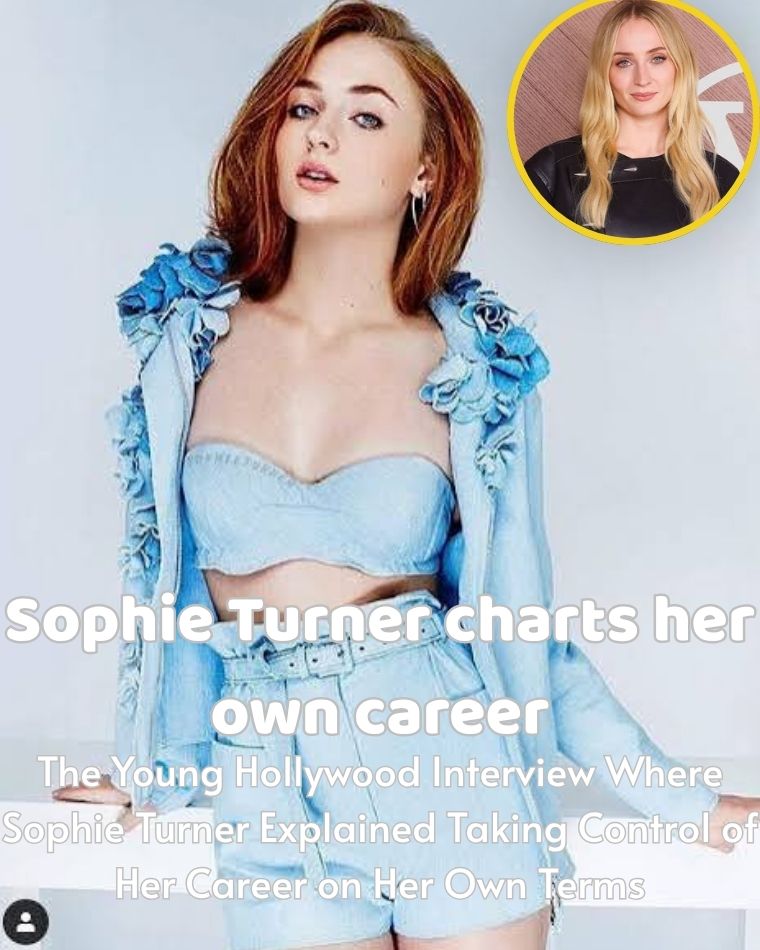
In features published across the platform, including its in-depth profile titled Sophie Turner Takes the Lead on Her Own Terms, the outlet highlights her refusal to surrender control.
Young Hollywood’s coverage unpacks how Turner uses humor, self-assurance, and acute industry awareness to deflect traditional studio pressures.
In candid sit-downs and interactive studio segments, she displays a self-deprecating wit that contrasts sharply with the somber roles she often plays on camera.
Her ability to command a room and speak transparently about the business reveals an actor who understands her market value and protective boundaries.
Turner does not shy away from admitting that prolonged exposure to high-level storytelling made her discerning about screenplays.
She has playfully acknowledged that working on elite material early in life turned her into an “acting snob” when evaluating subsequent scripts.
That elevated standard has served as an artistic filter throughout her adult career.
Instead of accepting scripts solely to maintain public ubiquity, she routinely passes on projects that fail to stimulate her intellectual or emotional curiosity.
Young Hollywood’s coverage illustrates how Turner views every career selection as an affirmative vote for her personal creative autonomy.
She treats public interviews not as standard promotional obligations, but as candid platforms to communicate her artistic boundaries directly to viewers and industry peers.
Redefining Red Carpets, Modern Style, and the Contemporary Fashion Space
Turner’s assertion of agency extends well beyond the boundaries of cinematic and television sets.
Over the past decade, she has emerged as one of the fashion landscape’s most closely watched figures and a genuine style barometer for Gen Z audiences.
Whether sitting in the front rows of European fashion weeks or gracing premier international red carpets, Turner brings an unmistakable British edge to high fashion.
She views her relationship with fashion and public presentation as an extension of storytelling rather than passive commercial modeling.
Through long-term associations with luxury fashion houses like Louis Vuitton, she curates a public image marked by sophistication, bold architectural silhouettes, and sharp individuality.
In many corporate entertainment environments, publicists and image consultants tightly govern how young female stars dress and present themselves to the world.
Turner has consistently bucked that sanitized standard by infusing her public wardrobe with daring, unconventional choices.
Her presence on red carpets reflects the same autonomy that guides her script choices: confident, unapologetic, and resistant to conservative styling conventions.
This dual mastery of prestige drama and high fashion allows her to maintain a massive cultural footprint without having to churn out generic studio films every season.
By dominating red carpet culture on her own terms, Turner preserves the creative leverage necessary to remain selective with screenplays.
She demonstrates that maintaining a compelling visual identity can actively enhance an actor’s market viability while keeping their screen work uncompromised.
Navigating the Industry Gauntlet for Former Child Performers
The transition from child star to respected adult dramatic artist is historically fraught with structural obstacles in the entertainment capital.
Young performers who enter the studio system as adolescents frequently encounter sudden loss of relevance once childhood innocence fades.
Alternatively, many performers are pressured into hyper-sexualized rebrands designed to signal maturity artificially to media outlets.
Turner systematically avoided both hazardous paths.
Her strategy has relied upon steady patience, vocal self-advocacy, and an refusal to let commercial hype dictate her schedule.
By maintaining close personal connections and grounding herself outside the relentless Hollywood social ecosystem, Turner protected her mental equilibrium.
She has used her public platform to defend fellow young performers facing invasive public scrutiny, demonstrating an acute awareness of the industry’s psychological toll.
Her defense of younger peers underscores a broader solidarity among actors who grew up in the digital and social media era.
Unlike previous generations of Hollywood stars whose off-screen lives were managed entirely by studio publicists, Turner belongs to a cohort that operates in direct conversation with global audiences.
She understands that retaining ownership of one’s personal story is essential to preserving artistic integrity in an era of non-stop social commentary.
This awareness informs the precise boundaries she establishes between her personal life and her public professional endeavors.
In an industry eager to exploit private vulnerabilities for fleeting press cycles, Turner’s disciplined boundaries serve as a protective shield for her craft.
Practical Agency and the Move Toward Producing Future Projects
What does taking control of a career “on one’s own terms” actually mean in practical, day-to-day execution?
For Turner, it translates into stepping behind the camera and developing original material through production credits.
Rather than waiting passively for scripts to arrive on her desk from agency representatives, she has begun taking an active role in packaging projects.
Her involvement as both producer and star on upcoming literary adaptations, such as Girl Who Fell From The Sky, signals this proactive shift into developmental leadership.
Producing grants a performer decisive control over the creative team, script revisions, and thematic focus of a film.
It transforms an actor from a hired interpreter into an executive stakeholder who shapes the entire narrative architecture.
By moving into executive producing, Turner follows the proven blueprints of influential Hollywood figures like Reese Witherspoon and Margot Robbie.
These women demonstrated that true career longevity for female actors stems from owning intellectual property and controlling production pipelines.
Turner’s emerging producing slate highlights her dedication to complex female narratives that might otherwise be marginalized within mainstream studio boards.
She seeks stories that present women not as decorative accessories or simplistic archetypes, but as layered, flawed, and resilient protagonists.
This pivot marks the culmination of the independence she has spent fifteen years cultivating on soundstages around the globe.
A Deliberate Blueprint for Modern Screen Autonomy
Sophie Turner’s journey from a thirteen-year-old theater student in Warwickshire to a globally renowned actor-producer provides a powerful case study in artistic self-determination.
Through every milestone documented by outlets like Young Hollywood, she has demonstrated that sustainable stardom does not require conforming to industry orthodoxy.
By embracing rigorous drama projects like Joan, she proves that artistic ambition outlasts fleeting commercial trends.
Her ability to transition seamlessly between high-fashion galas, gritty British television sets, and independent development rooms illustrates a remarkably modern paradigm of fame.
As Turner approaches her third decade, she possesses the rare luxury of experience paired with decades of artistic runway ahead.
She has successfully survived the intense crucible of adolescent franchise fame without sacrificing her creative curiosity or personal voice.
Her ongoing career evolution sends an unmistakable signal to the broader entertainment industry: she will continue to build her creative legacy strictly on her own terms.
Để lại một phản hồi