When asked what modern music would soundtrack the high-seas adventures of Monkey D. Luffy, Netflix’s One Piece lead Iñaki Godoy delivered an answer that immediately caught pop culture enthusiasts by surprise.
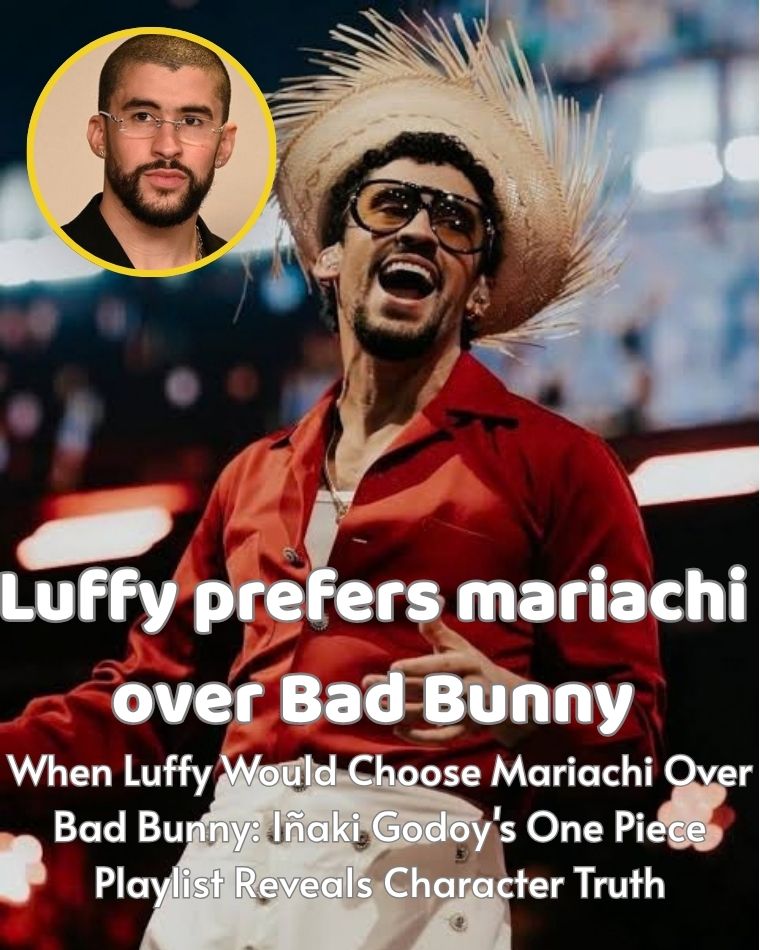
Instead of choosing global chart-toppers like Bad Bunny, Godoy revealed that his rubber-bodied pirate captain would gravitate toward traditional mariachi and energetic cumbia.
This candid character choice highlights how deep cultural roots and musical textures can define fictional personalities beyond modern commercial trends.
Cre: Wikimedia Commons — CC BY-SA 3.0 / Gage Skidmore
The Unfiltered Playlist: Why Luffy Prefers Mariachi Over Reggaetón
During a promotional discussion for the series, the conversation turned toward the Latine sounds that would populate the Straw Hat crew’s personal headphones.
Co-star Taz Skylar, who portrays the chivalrous chef Sanji, playfully interjected that Luffy would likely be jamming out to Bad Bunny.
Godoy stopped that suggestion in its tracks with an immediate and thoughtful counterpoint.
“Bad Bunny? Uhhh, you think that?” Godoy reacted, expressing genuine doubt that urban trap would fit his character’s eccentric headspace.
The Mexican actor explained that Luffy would naturally lean into festive, brass-heavy Mexican party anthems rather than melancholic tracks or sultry club beats.
He pointed specifically to iconic celebration staples such as “El Mariachi Loco” and “Ya Llegó Sergio el Bailador”.
“I think he’s more into ‘El mariachi loco quiere bailar,’ or like ‘Ya llego Sergio el Bailador,’ like wedding music—I think that’s what Luffy likes,” Godoy detailed.
He stressed that whatever makes families dance at large communal gatherings like weddings represents the exact energy driving Luffy forward.
Godoy also explicitly ruled out romantic balladeers like legendary Mexican singer José José.
The actor reasoned that Luffy has no patience or appetite for tearful, slow, or emotionally weighted melodrama.
Luffy is an explorer governed by spontaneous joy, enormous feasts, and unbridled movement.
For Godoy, brass horns, accordion flourishes, and rapid percussion capture the pirate captain’s essence far more accurately than sleek digital basslines.
What This Musical Choice Unveils About Luffy’s Personality
Monkey D. Luffy has stood for over two decades as one of anime and manga’s most unapologetically straightforward protagonists.
Eiichiro Oda designed Luffy as a character entirely unburdened by vanity, sexual attraction, or complicated social posturing.
Luffy desires only three core things: loyal friends, massive portions of meat, and complete freedom on the open ocean.
Urban trap and modern reggaetón, while undeniably rhythmic, are frequently built around themes of nightlife prestige, romantic conquest, and sensual indulgence.
Those lyrical themes simply bounce off a character who possesses zero romantic inclination or interest in modern material status.
By contrast, mariachi and cumbia thrive on collective euphoria, communal dancing, and festive noise.
“El Mariachi Loco” is a song universally recognized for getting every generation out of their chairs to dance without self-consciousness.
That description aligns seamlessly with Luffy’s signature post-battle banquet celebrations in the source material.
Whenever the Straw Hat Pirates liberate an island, Luffy immediately demands an open-air banquet where enemies and allies feast together around a fire.
Traditional Mexican celebration tunes function as real-world sonic equivalents to those celebratory pirate bonfires.
Skylar’s culinary character Sanji, meanwhile, was paired with Cuban salsa—a rhythmic, suave sound fitting a romantic martial-artist chef.
This sharp contrast proves that both actors understand their characters’ underlying emotional temperatures.
Tradition vs. Contemporary Trap: A Cultural Distinction
Bad Bunny has spent years dominating global Spotify rankings as one of the defining cultural forces of 21st-century Latin pop.
His genre-blending catalog made Puerto Rican reggaetón and Latin trap the prevailing soundscape for young audiences worldwide.
Because of this massive popularity, modern media often treats Bad Bunny as the default musical representative for all Latin identity.
Godoy’s conscious detour away from that default highlights the vast diversity and historical depth within Latin American music.
Mariachi carries over a century of regional Mexican heritage, combining violins, vihuelas, guitarróns, and soaring vocal shouts known as gritos.
Cumbia, originating along Colombia’s Caribbean coast, migrated across Latin America to become the heartbeat of popular working-class fiestas.
Choosing these historic forms over chart-topping streaming hits grounds Luffy in visceral grassroots community culture.
It acknowledges that high-energy traditional folklore remains vital and instantly infectious for youth.
Godoy’s Mexican heritage directly informs this intuition, allowing him to bypass superficial pop-culture tropes.
He recognizes that Luffy’s spirit does not live in an exclusive VIP lounge sipping high-end cocktails.
Luffy belongs in the town square, eating street tacos with both hands while a lively horn section blares in the background.
How Actors Utilize Music to Unlock Character Authenticity
In contemporary acting methodology, building private playlists is one of the most widely used tools for finding a character’s internal rhythm.
Dialogue scripts deliver spoken text, but music provides the physiological tempo of how a character walks, breathes, and reacts to stimuli.
When actors rely solely on whatever music is currently trending, their performances risk feeling detached from the character’s internal reality.
Godoy’s playlist exercise illustrates an actor looking past surface-level branding to find tactile emotional truth.
A pirate captain who stretches his limbs across battlefields requires music propelled by genuine acoustic momentum.
The percussive drive of cumbia encourages instinctive, unpolished footwork that matches Luffy’s elastic combat style.
Listening to “Ya Llegó Sergio el Bailador” naturally summons an uninhibited, goofy grin to an actor’s face.
That spontaneous, broad grin is precisely the visual anchor that made Godoy’s performance so resonant with global manga fans.
Method choices like these bridge the divide between an actor’s personal heritage and an iconic fictional property.
It demonstrates that Godoy is not merely reciting translated dialogue; he is inhabiting Luffy’s worldview through sensory associations.
Generational Latin Music and Shifting Value Systems
The ongoing creative tension between traditional Latin rhythms and modern trap mirrors wider generational conversations across the diaspora.
Older generations often champion salsa, mariachi, son jarocho, and cumbia as pure acoustic traditions rooted in storytelling and live musicianship.
Younger demographics have rallied behind reggaetón and Latin trap as revolutionary forms of modern youth expression and global empowerment.
Yet rather than creating an irreconcilable divide, these genres constantly engage in a rich musical dialogue with one another.
Interestingly, Bad Bunny himself has regularly demonstrated profound reverence for classic Latin roots throughout his career.
His landmark studio album Un Verano Sin Ti wove vintage Dominican mambo, bossa nova, and indie acoustic melodies directly into reggaetón structures.
Bad Bunny has openly acknowledged classic Latin icons, reminding younger listeners that modern hits stand on the shoulders of acoustic pioneers.
Godoy’s choice of mariachi and cumbia does not represent a rejection of modern art, but rather an affirmation of timeless communal joy.
For an untamed wanderer like Luffy, trends are fleeting distractions that disappear with the passing seasons.
A timeless horn riff that sparks immediate dancing across all generations, however, will always remain eternal.
Để lại một phản hồi