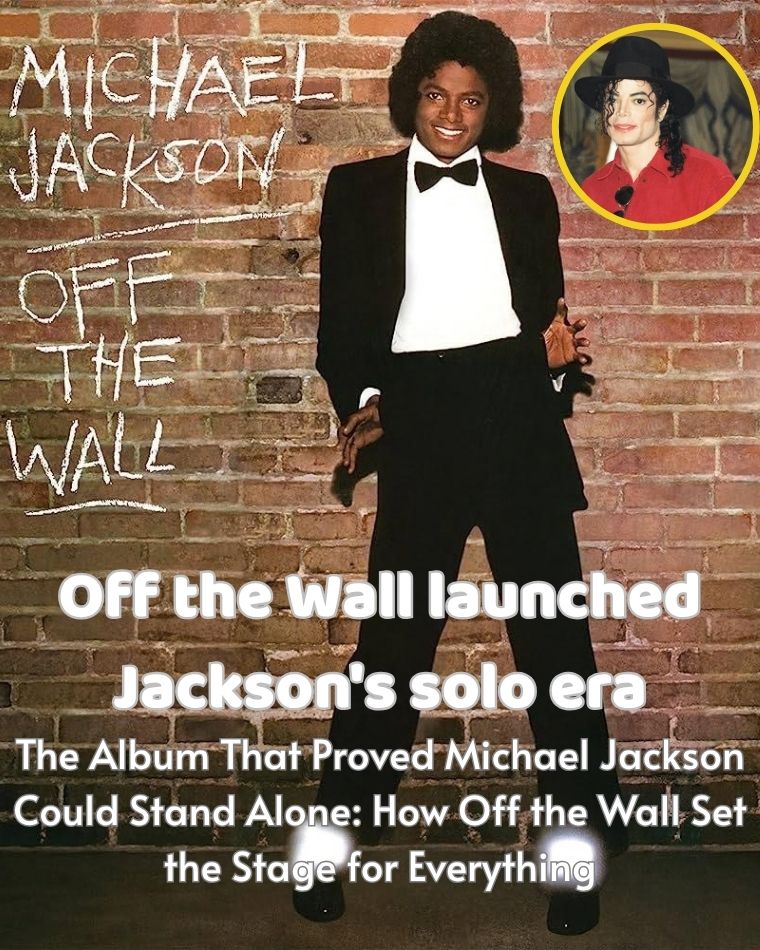
Michael Jackson’s 1979 album Off the Wall transformed the former child prodigy into an adult solo powerhouse. Produced alongside Quincy Jones, the landmark release shattered stylistic boundaries and established the creative foundation for his historic career.
Before global blockbusters like Thriller and Bad altered the landscape of popular music, Michael Jackson had to prove that he could exist as an autonomous adult artist.
That pivotal artistic statement arrived in August 1979 under the title Off the Wall.
For most of the previous decade, the world had known Jackson primarily as the sensational lead vocalist of the Jackson 5.
While his prodigal childhood talent was undeniable, transitioning into a self-directed solo entity posed a significant industry challenge.
Off the Wall permanently settled the question of whether Jackson possessed the creative depth to command the musical world on his own terms.
The record served as his first true adult solo project, divorcing his public identity from past teen-pop conventions.
By collaborating with maestro Quincy Jones, Jackson tapped into an unprecedented standard of production excellence and musicianship.
Together, the duo constructed an immaculate soundscape that effortlessly integrated disco, funk, soul, and contemporary pop.
Rather than relying purely on nostalgia or past vocal formulas, Jackson showcased an entirely evolved technical range.
The project quickly established itself as a commercial triumph, going on to achieve worldwide sales exceeding 20 million copies.
More importantly, it proved that dance-centric music could retain profound emotional resonance, structural rigor, and timeless sophistication.
Moving Beyond the Shadow of the Jackson 5
Throughout the 1970s, Michael Jackson stood as the recognizable centerpiece of one of the most successful family acts in recording history.
Audiences had watched him grow up on international stages, associating his voice with exuberant Motown anthems and youthful exuberance.
However, entering young adulthood required a decisive break from the stylistic constraints of bubblegum soul and group arrangements.
Jackson sought full creative autonomy, determined to dictate his own artistic identity, thematic material, and sonic aesthetic.
The release of Off the Wall in 1979 signaled that internal revolution to both the public and the global music industry.
He was no longer just the young frontman following group instructions or external songwriting mandates.
He emerged instead as an ambitious, meticulous creator capable of steering complex studio sessions.
This evolution demanded courage during an era when former child stars routinely struggled to maintain cultural relevance in adulthood.
Jackson met that challenge by redefining himself from the rhythm section upward.
He recognized that his musical instincts needed room to breathe beyond the traditional vocal boundaries of family harmony.
Every track on the project was carefully chosen to project adult romance, joyful escapism, and rhythmic mastery.
The public response was immediate and profound, affirming Jackson’s viability as an unmatched solo force.
Cre: Wikimedia Commons — Public domain
The visual style of the era reflected this sonic metamorphosis, abandoning teen uniforms for sophisticated formal wear.
From the tuxedo presentation to the album artwork, every creative detail conveyed polish, elegance, and maturity.
Listeners were invited into a sonic universe where high-energy dancing and refined songwriting lived side by side.
The transition from young ensemble singer to visionary soloist was complete, opening the door for an unprecedented career trajectory.
The Quincy Jones Collaboration That Redefined Production
The defining factor in the artistic triumph of Off the Wall was Jackson’s decision to partner with veteran producer Quincy Jones.
The creative chemistry between Jackson and Jones became one of the most consequential alliances in twentieth-century music.
Jones brought decades of deep expertise spanning jazz orchestration, film scoring, and big-band arrangement.
Jackson contributed instinctual rhythm, infectious vocal energy, and an unyielding commitment to studio perfection.
Their collaborative process merged rigorous acoustic instrumentation with the relentless groove of urban dance floors.
Rather than chasing fleeting studio trends, Jones prioritized pristine sonic separation, dynamic range, and authentic session playing.
The production elevated rhythm tracks through tight brass arrangements, sweeping strings, and immaculate percussion layers.
Jones gave Jackson the freedom to experiment with unique vocal textures, percussive hiccups, and falsetto dynamics.
This approach transformed the studio into a laboratory for genre-crossing innovation.
Disco was rapidly evolving, and many contemporary releases relied on mechanical, predictable four-on-the-floor rhythms.
In contrast, Jones and Jackson infused their arrangements with organic funk basslines, sophisticated chord progressions, and lush harmonies.
The result was an album that transcended the standard limitations of club tracks to become sophisticated art.
The dynamic between producer and singer fostered an environment of mutual trust and relentless quality control.
Jones recognized Jackson’s extraordinary ear for arrangement, allowing the young singer to actively shape the musical fabric.
This professional synergy did not merely produce a singular hit record; it established a benchmark that would define the rest of Jackson’s peak years.
The standard established on Off the Wall set the technical baseline for every major pop production that followed.
Unstoppable Rhythms: The Impact of the Signature Hits
Central to the enduring legacy of the 1979 release were its groundbreaking lead singles, which took over global radio airwaves.
“Don’t Stop ‘Til You Get Enough” served as the explosive lead track, introducing listeners to Jackson’s newfound creative authority.
Written by Jackson himself, the song opened with a spoken intro before erupting into an infectious, brass-heavy groove.
His electrifying falsetto carried the track across six minutes of uninterrupted rhythmic brilliance.
The song demonstrated Jackson’s ability to craft intricate, multi-layered hooks that felt both spontaneous and meticulously planned.
It became an instant global phenomenon, dominating charts and commanding dance floors throughout 1979 and into 1980.
Beyond its infectious energy, “Don’t Stop ‘Til You Get Enough” revealed Jackson’s formidable skills as an independent songwriter.
Shortly thereafter, “Rock With You” followed as another defining cultural cornerstone of the album.
Written by Rod Temperton, the song showcased a smoother, mid-tempo groove driven by elegance and understated groove.
Jackson’s delivery on “Rock With You” was effortless, warm, and rhythmically precise, bridging the gap between soft disco and classic R&B.
The track highlighted his capacity for romantic nuance without sacrificing danceability.
Together, these two singles demonstrated remarkable stylistic versatility within a cohesive musical framework.
Radio programmers embraced both selections across multiple formats, from pop and urban contemporary to international markets.
The singles bridged demographic lines, bringing varied audiences together through shared musical appreciation.
Both releases established Jackson as an artist capable of producing sustained, multi-format hits without group assistance.
They provided the essential commercial momentum that propelled the LP to historic sales figures around the world.
Blending Disco, Funk, Soul, and Pop
One of the greatest artistic achievements of Off the Wall lies in its seamless amalgamation of distinct musical traditions.
The late 1970s was an era defined by genre segregation across mainstream American radio stations.
Rock, soul, disco, and pop frequently operated in separate silos with dedicated listening audiences.
Jackson and Jones refused to conform to these rigid boundaries when engineering the tracklist.
They treated funk basslines, pop melodies, and soul phrasing as natural companions within the same song structure.
Tracks like the title song, “Off the Wall,” blended upbeat party energy with reflective, philosophical advice about releasing everyday stress.
The composition delivered a timeless message of liberation through music, wrapped in an intricate rhythmic package.
Ballads on the record revealed Jackson’s growing emotional maturity, allowing his vocal vulnerability to take center stage.
His phrasing displayed an exquisite grasp of dynamic control, shifting from hushed intimacy to full-throated passion.
Every instrumental element was designed to serve the emotional center of the song rather than showmanship alone.
The brass charts exploded with tight, rhythmic punch while the string arrangements added cinematic grandeur.
This complex musical architecture allowed the record to appeal simultaneously to purist jazz critics and casual club dancers.
By dismantling genre barriers, Jackson opened up a pathway toward true cross-format pop music.
He demonstrated that black musical traditions—specifically funk, R&B, and soul—could form the backbone of universal mainstream anthems.
The sonic template developed here became the primary blueprint for 1980s urban pop music.
Artists throughout the industry studied the album’s structural arrangements, striving to capture its vibrant, analog balance.
Commercial Phenomenon and Critical Validation
The global commercial reception of Off the Wall exceeded even the highest industry expectations of 1979.
The album achieved sustained momentum, logging remarkable chart longevity across international territories.
Over time, global sales figures crossed the staggering milestone of 20 million copies.
For a young solo artist stepping out from an established family act, such commercial numbers represented a massive industry triumph.
The LP produced a string of chart-topping and top-ten singles, proving that its appeal went far deeper than a single novelty track.
Music journalists and critics universally celebrated the album for its pristine craftsmanship, innovative arrangements, and joyful energy.
Reviewers noted that Jackson had successfully shed his former bubblegum persona without losing his infectious charm.
The project earned Michael Jackson his very first Grammy Award as a solo artist.
That initial Grammy recognition provided vital institutional validation, signaling that his peer community took his solo artistry seriously.
It confirmed that Jackson was recognized not just as a commercial pop sensation, but as a top-tier vocalist and recording talent.
The industry acknowledged that the fusion of his singing and Jones’s production had set a new bar for modern popular music.
The critical praise served to strengthen Jackson’s confidence in his own creative instincts and songwriting abilities.
Despite the critical and commercial success, Jackson famously felt the album deserved even broader industry recognition across major categories.
That constructive dissatisfaction fueled an extraordinary work ethic that pushed him to aim even higher in subsequent years.
The triumph of the 1979 release provided both the resources and the creative freedom required for his next monumental project.
It proved that his instincts were commercially sound and artistically ahead of contemporary competitors.
The Essential Blueprint for Modern Pop Stardom
It is impossible to understand Michael Jackson’s unprecedented 1980s peak without analyzing the foundation laid by Off the Wall.
The 1979 record represented the crucial proof of concept before the explosive phenomenon that would follow.
It proved that a black solo artist could command global pop audiences through exceptional craftsmanship, dance music, and visual style.
Every artistic hallmark that later defined modern pop stardom was tested and perfected during this era.
The razor-sharp choreography, the sharp tailored fashion, and the iconic vocal mannerisms all matured here.
Jackson demonstrated how meticulous vocal technique, dynamic improvisation, and rhythmic breathing could become signature instrumental textures.
His percussive vocalizations transformed pop singing into a hybrid of melody and rhythmic punctuation.
The collaborative bond with Quincy Jones established here ensured a stable creative partnership for the pivotal recording sessions ahead.
Without the technical breakthroughs, production discipline, and songwriting confidence developed on Off the Wall, later heights would have been unattainable.
The album demonstrated that dance music could convey authentic artistic depth rather than disposable commercial trends.
Generations of contemporary artists—from R&B crooners to mainstream pop icons—still cite the record as an indispensable reference point.
Its basslines continue to be sampled, its vocal lines analyzed, and its production values studied in conservatories worldwide.
The album’s enduring vitality proves that real musicianship, live rhythm sections, and genuine vocal mastery withstand the test of time.
Decades after its 1979 release, Off the Wall stands tall as a singular masterwork of joy, soul, and creative liberation.
It marks the exact moment an extraordinary child star stepped forward to become an enduring musical innovator.
A Legacy That Never Stopped
The lasting resonance of Off the Wall resides in its timeless warmth, accessibility, and sheer musical craftsmanship.
Unlike many contemporary disco releases from the late 1970s that relied on synthesized presets, the album retained organic warmth.
The human element of world-class session players, dynamic drum grooves, and lively horn sections gave the record staying power.
Whenever “Don’t Stop ‘Til You Get Enough” plays today, modern audiences still respond to its intoxicating opening bassline and exuberant vocals.
The smooth elegance of “Rock With You” remains an essential staple on international radio formats and curated playlists.
The album remains beloved by critics and casual listeners precisely because it reflects Jackson at his most joyful, liberated, and musically pure.
He was unburdened by the crushing global pressures of superstardom that would arrive in the mid-1980s.
On Off the Wall, listeners hear a twenty-one-year-old virtuoso completely in love with rhythm, studio creation, and musical performance.
That spirit of uninhibited creative joy resonates through every measure and vocal phrase across the ten tracks.
The album stands as a shining beacon of what pop music can accomplish when passion meets peerless technical mastery.
Để lại một phản hồi