The Marvel heavyweight has unexpectedly closed the doors on his four-year-old independent production company, Wild State, following months of internal turbulence and operational friction. While the Australian actor continues to command nine-figure box office receipts and headline global franchises, this quiet retreat from behind-the-camera executive operations shines an unflinching light on the brutal realities of running an independent studio in contemporary Hollywood.
The sudden shuttering represents a calculated pivot away from administrative development overhead and corporate logistics, allowing the global superstar to consolidate his undivided creative energy on blockbuster acting commitments, including Extraction 3 and upcoming chapters in the Avengers cinematic franchise.
Chris Hemsworth is widely celebrated as one of the most bankable and physically commanding leading men in the entertainment industry.
Yet even the most influential screen talent cannot entirely insulate an independent film production shingle from tectonic shifts in global media financing.
The Australian actor has officially ceased all corporate operations at Wild State, the private development banner he founded in 2022 alongside his producing partner Ben Grayson.
According to initial reports confirmed by The Daily Telegraph, the closure followed a distinctly “fraught few months” characterized by mounting organizational strains and stalled development pipelines.
Multiple industry observers, including Tuko News, have verified that the entity is winding down its active administrative structure.
Staff members and collaborators were formally notified that the venture would cease developing future scripted and unscripted slates.
The decision arrives at a fascinating paradox in the movie business.
On screen, Hemsworth’s international drawing power has never appeared more secure or culturally dominant.
Behind closed doors, the arduous labor of packaging, financing, and shepherding independent projects through greenlight committees proved unexpectedly taxing.
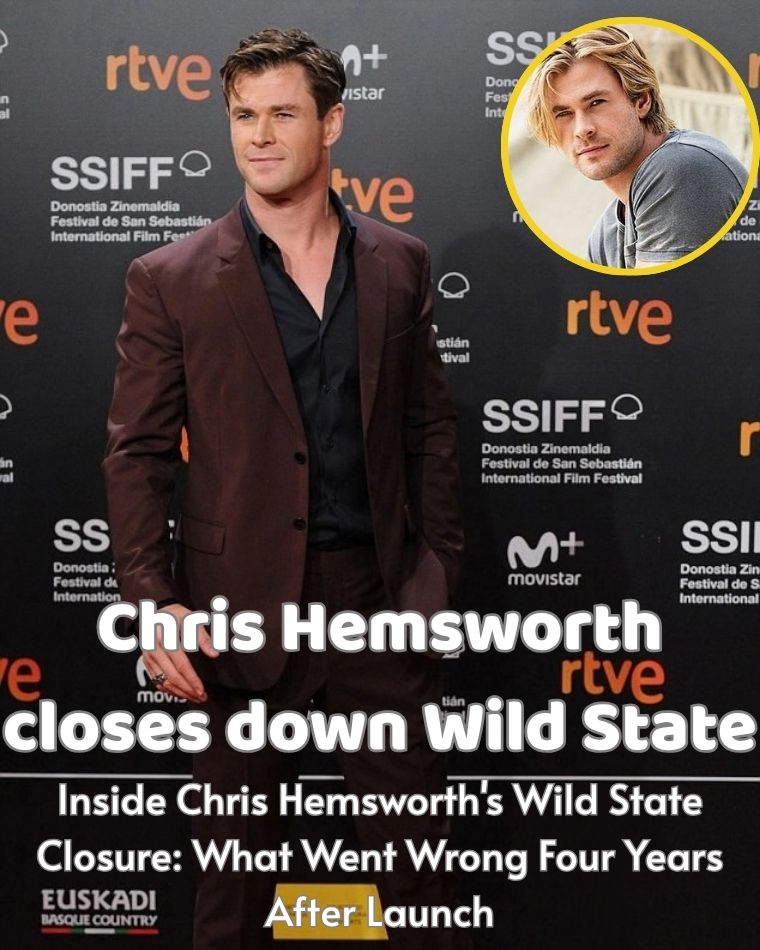
Cre: Wikimedia Commons
The Rise and Sudden Sunset of Wild State
Wild State was initially conceived in September 2022 as an ambitious, multiplatform creative hub.
At the time of its inception, Chris Hemsworth joined forces with veteran producer Ben Grayson to build a boutique powerhouse.
Their founding charter pledged to develop immersive narratives that could entertain mainstream global audiences while highlighting pressing issues.
The venture sought to give Hemsworth absolute control over his cinematic narrative rather than merely functioning as talent for hire.
Securing initial development ties and exploring collaborations with major players such as National Geographic and Artists Equity, the banner aimed to operate across both prestige unscripted television and hard-hitting narrative features.
Over the course of its brief tenure, Wild State attached its name to notable titles including contributions surrounding the high-octane thriller Extraction 2 and the National Geographic docuseries Limitless.
The production arm also aligned with major distribution outfits for upcoming projects, including the crime thriller Crime 101 in association with Amazon MGM Studios.
Yet maintaining an active slate requires continuous deal flow, substantial executive payroll, and relentless legal negotiations.
Industry insiders noted that despite high-profile pacts and prominent ambitions, several pipeline concepts languished in development purgatory.
The period leading into late 2026 became increasingly untenable for the small boutique outfit.
A source close to the matter pointed out that managing a full-scale production banner while performing grueling filming schedules around the globe placed enormous pressure on the team.
The months preceding the shutdown were described by industry reporting as deeply fraught, marked by shifting industry economics and contractual hurdles.
Recognizing that the operational overhead was outweighing the creative return, Hemsworth and his management chose an orderly wind-down rather than an agonizing restructuring.
The company ensured that remaining administrative obligations were resolved and departing employees were supported through the transition.
With those final legal filings completed, Wild State quietly joined a long list of celebrity-backed vanity shingles that proved harder to sustain than anticipated.
Behind the Velvet Rope: The Reality of Celebrity Shingles
For decades, establishing a self-owned production banner has been the ultimate rite of passage for elite Hollywood talent.
A-list performers routinely view producing companies as the definitive pathway to artistic autonomy, intellectual property ownership, and backend profit participation.
When an actor achieves international superstardom, studios are eager to offer first-look production deals with generous overhead allowances.
These arrangements historically provided stars with plush office suites on studio lots, development funds, and dedicated creative executives.
However, the streaming consolidation of the mid-2020s fundamentally altered studio accounting practices.
Media conglomerates have drastically curtailed non-essential overhead deals and reduced speculative script acquisitions.
Distributors no longer pay exorbitant sums simply to warehouse intellectual property that may never reach principal photography.
Independent shingles are now expected to operate as lean, financially self-sufficient enterprises rather than prestige figureheads.
For an actor like Hemsworth, whose daily calendar is consumed by 14-hour shooting days, global press tours, and rigorous physical training regimens, the administrative burden of running a studio is colossal.
Reading hundreds of draft revisions, haggling with talent agencies over second-tier cast options, and resolving distribution friction requires full-time executive immersion.
Delegating those tasks to trusted producing partners is the standard playbook, yet accountability and final risk inevitably rest on the celebrity name on the door.
When development deals fail to translate rapidly into greenlit productions, the financial math for maintaining dedicated corporate overhead becomes increasingly difficult to justify.
The closure of Wild State highlights this friction in vivid detail.
What appears on paper as a logical brand extension often reveals itself in practice to be an exhausting managerial distraction.
Weighing Creative Control Against Performance Demands
The core dilemma confronting any superstar producer is the allocation of finite creative bandwidth.
Chris Hemsworth’s unique commercial appeal is rooted in his singular charisma, comic timing, and world-class physical presence on screen.
Audiences do not purchase cinema tickets or streaming subscriptions because of who organized the line-item production logistics.
They tune in to watch an action icon leap from moving trains or wield mythological weaponry with effortless bravado.
Throughout his career, Hemsworth has navigated an extraordinary balancing act between high-octane blockbusters and personal passion projects.
From portraying the thunder god Thor in the Marvel Cinematic Universe to pushing human physical endurance in Limitless, his performance slate is among the most demanding in modern cinema.
Taking on the legal, financial, and bureaucratic responsibilities of an independent company pulled him into corporate boardroom disputes that offered limited artistic reward.
Industry insiders emphasize that walking away from Wild State does not mean relinquishing creative control over his chosen films.
Elite stars of Hemsworth’s caliber regularly negotiate executive producer or producer credits directly onto individual project contracts without needing a standalone corporate shingle.
By operating on a project-by-project basis, an actor can exert script approval, director consultation, and casting influence without funding a permanent development infrastructure.
This model frees the artist from managing payroll, keeping development executives on retainer, or maintaining leases in high-rent production hubs.
In closing Wild State, Hemsworth is essentially unburdening himself from an extraneous corporate machine.
The move allows him to command top-tier compensation purely for his on-screen contributions while avoiding the administrative headaches that plagued the past year.
Far from being an admission of defeat, analysts interpret the decision as a mature realignment of strategic priorities.
Strategic Realignment: Prioritizing the Screen Slate
The immediate future for Chris Hemsworth remains extraordinarily packed with high-stakes franchise tentpoles.
The actor is preparing to reprise his role as Tyler Rake in the third installment of the blockbuster Extraction franchise.
The Netflix-backed action series has established itself as one of the platform’s most profitable original properties, demanding intense stunt preparation and months of grueling physical location shoots.
Concurrently, rumors and schedule alignments point toward major commitments surrounding the forthcoming ensemble Avengers films within Marvel Studios’ expanding multiverse.
Stepping back onto the Marvel soundstages requires intense focus, strict physical conditioning, and extensive global travel.
Adding executive oversight of stalled independent scripts to that schedule was simply an unsustainable proposition.
By shedding Wild State, Hemsworth has cleared his operational desk entirely.
He can now channel his full concentration into executing premier cinematic action choreography and delivering nuanced performances for top-tier directors.
The production experience gained over the past four years will undoubtedly inform how he negotiates future star vehicles.
Working in the development trenches provides an actor with an intimate understanding of studio packaging, screenplay doctoring, and distributor demands.
Hemsworth now returns to the market as both an unmatched physical performer and a seasoned industry veteran who understands precisely how the gears turn behind the curtain.
He no longer needs a corporate business card to validate his authority in Hollywood conference rooms.
His proven track record as an international box office draw affords him all the leverage required to shape the creative direction of his films.
This restructuring mirrors moves made by other Hollywood titans who eventually realized that pure acting offers greater creative satisfaction and less administrative fatigue.
What the Wild State Story Teaches the Industry
The quiet shuttering of Wild State serves as a revealing case study for the wider entertainment ecosystem.
It proves that even maximum fame and global recognizability cannot automatically guarantee the viability of an independent production enterprise.
In an era defined by tighter production budgets, risk-averse financiers, and streaming belt-tightening, the margin for error has shrunk across all sectors of filmmaking.
Celebrity names may secure initial introductory pitch meetings, but they do not eliminate the grueling realities of packaging commercially viable cinema.
For Chris Hemsworth, closing the company represents an act of practical self-awareness rather than professional retreat.
He recognized that his primary competitive advantage lies in front of the lens rather than inside development spreadsheets.
By shedding the burden of Wild State, he positions himself for an unencumbered creative chapter marked by franchise leadership and blockbuster dominance.
The lesson for Hollywood is unmistakable: star power remains irreplaceable on screen, but running a studio remains one of the toughest businesses on earth.
Để lại một phản hồi