In 1999, superstar Bruce Willis surprised Hollywood by taking the lead in Breakfast of Champions, a daring cinematic adaptation of Kurt Vonnegut’s classic novel. The actor would later reflect on the eccentric production by calling it the most bizarre experience of his career and describing its divisive aura as radioactive. Here is an in-depth retrospective on the making, thematic ambition, and harsh critical reception of one of the most unconventional comedy projects of the late nineties.
A Bold Detour from Blockbuster Heroics
Bruce Willis was already established as one of the biggest action heroes on the planet before the turn of the millennium.
Audiences across the globe knew him best as the indomitable John McClane and the reliable anchor of crowd-pleasing cinematic thrillers.
Yet Willis continually showed an appetite for defying commercial expectations and taking genuine creative chances.
During the late nineteen-nineties, the celebrated star decided to throw his industry weight behind an unconventional dark comedy.
That project was Breakfast of Champions, an ambitious feature film based on the celebrated nineteen-seventy-three satirical novel by Kurt Vonnegut.
Reflecting on the final product years later, Willis openly described the project as the most bizarre film of his entire career.
He went even further by characterizing the movie and its polarizing afterlife as radioactive in terms of its tone and industry perception.
Those stark descriptions captured the sheer bewilderment that greeted the film upon its initial theatrical debut in nineteen-ninety-nine.
Few mainstream stars at the height of their commercial viability would dare step into such a volatile narrative landscape.
Willis proved that he was entirely willing to gamble his polished movie-star image on high-wire artistic risks.
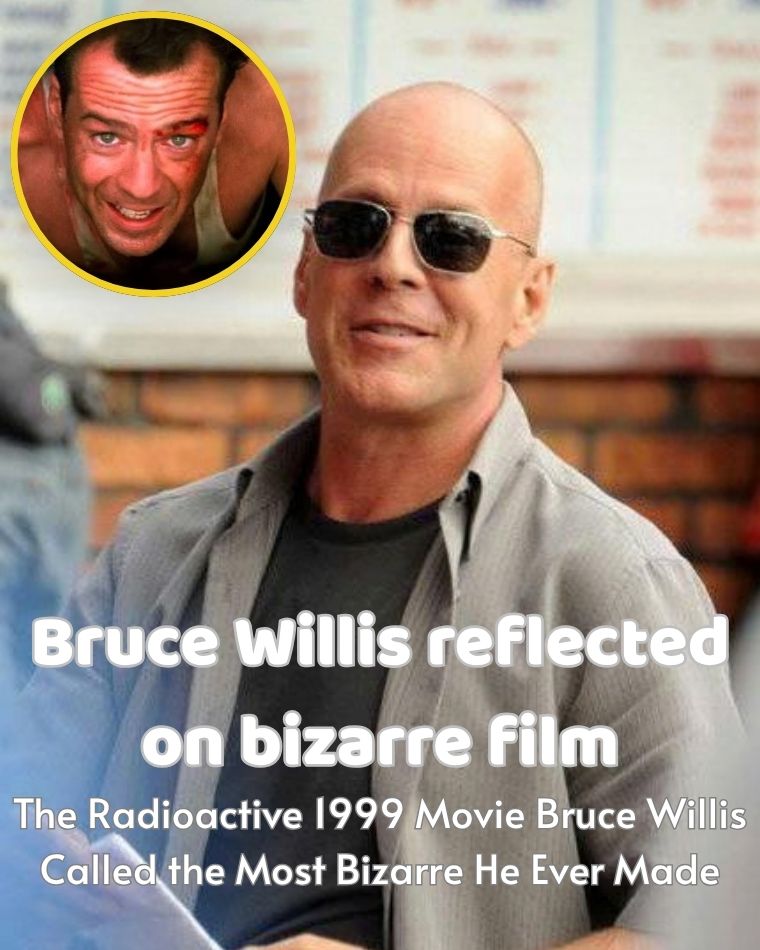
Cre: Wikimedia Commons
Adapting Kurt Vonnegut’s Unfilmable Masterpiece
Bringing Kurt Vonnegut’s distinctive literary voice to the big screen has long been regarded as one of Hollywood’s steepest challenges.
Vonnegut published Breakfast of Champions, or Goodbye Blue Monday, to dissect post-war American consumerism and mental decay.
The novel was famous for its fractured structure, playful meta-commentary, and crude felt-tip pen illustrations drawn by the author himself.
Many literary critics and filmmakers had considered the book fundamentally unfilmable due to its non-linear and self-reflexive form.
Director Alan Rudolph, known for his idiosyncratic indie sensibilities and association with mentor Robert Altman, decided to take on that daunting challenge.
Rudolph crafted a screenplay that sought to translate Vonnegut’s unique rhythm into visual storytelling without sanding down its sharp edges.
Willis had previously collaborated with Rudolph on the nineteen-ninety-one psychological thriller Mortal Thoughts.
When Willis optioned the novel and read Rudolph’s script, he reached out directly to the filmmaker to get the project off the ground.
The actor promised the filmmaker creative freedom while securing the necessary industry backing to realize the vision.
Vonnegut himself even gave his blessing to the creative endeavor and made a brief cameo appearance in the film.
Dwayne Hoover and the Anatomy of Madness
At the center of the narrative is Dwayne Hoover, played by Bruce Willis with manic intensity.
Dwayne is an immensely wealthy and respected car dealership owner living in the fictional town of Midland City, Indiana.
To the outside world, Dwayne represents the quintessential embodiment of the prosperous American dream.
He owns thriving businesses, possesses substantial local influence, and appears on regional television commercials with a friendly smile.
Beneath the affluent facade, however, Dwayne’s psyche is rapidly fracturing into total emotional chaos.
He suffers from profound internal existential alienation and suicidal impulses that he cannot communicate to anyone around him.
The local community remains oblivious to his unraveling mind because they measure personal health strictly by material wealth.
Dwayne’s fragile grip on reality completely shatters when he crosses paths with an eccentric, obscure science fiction writer named Kilgore Trout.
Trout arrives in Midland City to participate in a local arts festival, unaware of the chaos his writings will soon unleash.
When Dwayne picks up Trout’s novel, he misinterprets the sci-fi story as literal, divine truth sent directly to him.
The book convinces Dwayne that every single person on Earth is a mindless biological automaton and that he is the only human blessed with free will.
Operating under this tragic delusion, Dwayne launches into a violent and absurd rampage across Midland City.
Willis attacked the unhinged role without vanity, peeling back layers of polished bravado to reveal pathetic desperation and frantic mania.
An Exceptional Ensemble and Experimental Visual Style
Beyond Willis’s commanding presence, the film assembled an exceptional ensemble cast populated by veteran acting powerhouses.
Legendary British actor Albert Finney stepped into the eccentric shoes of the unkempt and cynical writer Kilgore Trout.
Nick Nolte delivered a memorable and layered supporting performance as Harry Le Sabre, Dwayne’s deeply anxious dealership sales manager.
The production also featured standout appearances from Barbara Hershey, Glenne Headly, Lukas Haas, and a youthful Owen Wilson.
Director Alan Rudolph approached the visual design of the movie with unapologetic aesthetic boldness.
Rather than muting the book’s satire for mainstream viewers, Rudolph saturated the frame with visual cacophony and garish late-nineties pop commercialism.
The movie incorporated kinetic graphic overlays, vibrant billboard signage, and frantic television advertisements designed specifically for the production.
These surreal stylistic choices mirrored the consumerist brain rot that Vonnegut warned was poisoning the collective American mind.
The film moved at a breathless, hyperactive pace that deliberately denied the audience traditional narrative comfort.
Every sequence was crafted to emphasize the underlying absurdity and emotional hollowed-out nature of modern society.
The Polarizing Reception of Nineteen-Ninety-Nine
When Breakfast of Champions arrived in movie theaters in September nineteen-ninety-nine, the public response was swift and uncompromising.
The cinematic landscape of nineteen-ninety-nine was remarkably rich, filled with innovative classics like Fight Club, The Matrix, and Willis’s own The Sixth Sense.
Yet Rudolph’s caustic satire proved far too abrasive for both general ticket buyers and mainstream film reviewers.
Leading film critics unleashed scathing reviews, attacking the production for its relentless tone and chaotic narrative construction.
Many commentators felt that the movie could not capture the delicate literary melancholy that grounded Vonnegut’s satirical prose.
The movie faced a disastrous commercial run, failing to recoup its estimated production budget and quietly disappearing from theaters.
Alan Rudolph later recalled that the industry treated the feature like an untouchable, radioactive object that people simply avoided discussing.
Willis’s own candid remark labeling the movie radioactive underscored how completely it baffled the contemporary Hollywood ecosystem.
Rather than engaging with its dark thematic warnings about consumerism and alienation, the entertainment industry moved on rapidly.
For years, the title remained an infamous footnote inside Willis’s extensive filmography.
The Artistic Legacy of Taking Creative Risks
Decades after its turbulent debut, Breakfast of Champions continues to provoke spirited debates among cinephiles and cult cinema enthusiasts.
Viewed through a contemporary lens, many of the picture’s central anxieties feel remarkably ahead of their time.
Its frantic depiction of information overload, ubiquitous corporate advertising, and mental health crises mirrors the modern digital era.
The characters’ obsession with superficial prosperity and psychological isolation anticipates debates that dominate modern social commentary.
A restored four-K release introduced the project to a new generation of film fans willing to examine its eccentricities with fresh eyes.
While the film remains undeniably uneven and intentionally difficult, Willis’s fearless performance stands as a testament to his artistic range.
The star refused to play it safe at a moment when he could have easily coasted on predictable blockbuster formulas.
He poured his celebrity capital into an idiosyncratic director’s unapologetic vision, knowing full well the endeavor carried immense professional risk.
Actors who possess genuine greatness are often defined not only by their massive box-office triumphs, but also by their most daring failures.
Breakfast of Champions may have been bizarre and radioactive, but it showcased a world-famous performer pushing far beyond his comfort zone.
Để lại một phản hồi