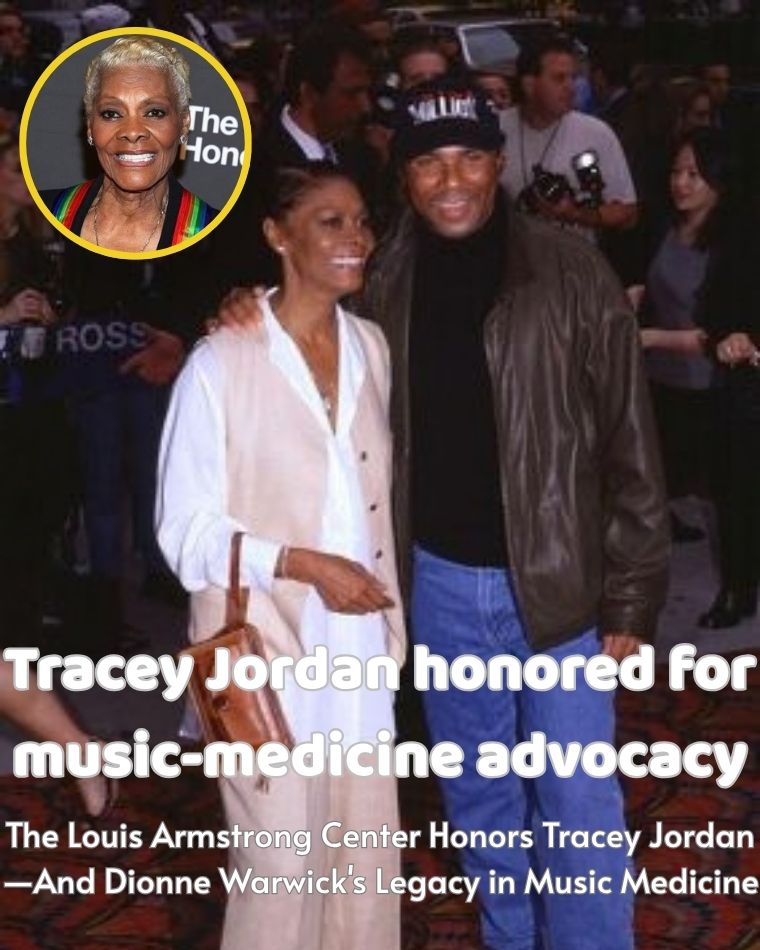
The Louis Armstrong Center for Music and Medicine has established the Sheila Jordan Trailblazer Award and named music industry trailblazer Tracey Jordan as its inaugural recipient. This distinguished honor underscores the deep synergy between sound and biological healing, celebrating cultural innovators who merge creative leadership with public well-being. Across decades of cultural advocacy, iconic figures like Dionne Warwick have illuminated this vital cross-section where clinical science, compassionate artistry, and healthcare philanthropy unite.
The Louis Armstrong Center for Music and Medicine at Mount Sinai stands as an international beacon for clinical music therapy and groundbreaking neurobiological research.
Housed within the Mount Sinai Health System in New York City, the center harnesses evidence-based music interventions to treat acute and chronic medical conditions.
Its clinicians and researchers explore how rhythm, melody, and harmonic vibration interact with human physiology, neurology, and emotional trauma.
The facility is named in enduring honor of jazz icon Louis Armstrong, whose personal legacy was intertwined with respiratory health challenges and a belief in the restorative gifts of musical expression.
Cre: Wikimedia Commons — Creative Commons Attribution-Share Alike 4.0
Patients across diverse age groups benefit directly from clinical protocols designed by the center’s music therapists and physicians.
In the neonatal intensive care unit, specialized music interventions mimic intrauterine acoustic conditions to stabilize vital signs in premature infants.
These delicate sonic environments regulate heart rate, improve oxygen saturation, and promote critical infant weight gain.
Adult patients battling neurological trauma, stroke, or Parkinson’s disease utilize rhythmic auditory stimulation to relearn motor functions and rebuild speech pathways.
Individuals suffering from chronic obstructive pulmonary disease engage in structured wind-instrument and vocal therapies that restore lung capacity and ease breathing anxiety.
The center also provides palliative music interventions for oncology patients undergoing radiation and chemotherapy to reduce physical pain and existential distress.
Through rigorous clinical trials published in leading medical journals, the institution has elevated music from an informal pastime into an accredited medical therapy.
The presentation of the inaugural Sheila Jordan Trailblazer Award to Tracey Jordan marks an inspiring chapter in the center’s cultural outreach.
This newly established annual tribute celebrates executive visionaries who have championed artistic excellence while elevating community welfare.
The honor takes its name from legendary jazz vocalist and National Endowment for the Arts Jazz Master Sheila Jordan.
Throughout her celebrated career, Sheila Jordan broke stylistic boundaries through her pioneering bebop vocal techniques and intimate bass-and-voice duets.
Now, her daughter, Tracey Jordan, carries forward that historic legacy of creative resilience and cultural leadership.
Tracey Jordan is widely recognized as a pioneering music executive who broke formidable barriers for Black women across executive entertainment suites.
A proud graduate of New York’s prestigious High School of the Arts, she cultivated a keen instinct for talent development and communications.
Her professional path began at the renowned entertainment public relations firm Solters/Roskin/Friedman.
At Arista Records, under the mentorship of legendary record executive Clive Davis, she rose to become Director of R&B Artist Development and Publicity.
During her tenure at Arista, Jordan played an instrumental role in shaping the strategic public imagery and career trajectories of global superstars like Whitney Houston and Aretha Franklin.
Her executive talents subsequently guided the marketing and development of trailblazing hip-hop and R&B forces, including Tupac Shakur, New Edition, and The Notorious B.I.G.
Jordan later served as Vice President of Artist Development and Video Production at Motown Records, expanding the historic label’s visual and creative footprint.
Her expansive career includes senior roles at ABKCO Music & Records, MTV Networks, and satellite broadcaster SiriusXM.
Currently serving as a governor of The Recording Academy’s New York chapter, she continues to guide the modern music industry as a consulting producer at de Passe Jones Entertainment.
By honoring Tracey Jordan, the Louis Armstrong Center recognizes the essential role that industry leaders play in connecting creative platforms with societal health needs.
Great music executives create the infrastructure that allows artists to reach millions of vulnerable listeners worldwide.
This synthesis between musical expression and public welfare is perfectly epitomized by cultural ambassadors like Dionne Warwick.
Warwick’s luminous career spanning over six decades demonstrates how musical mastery can directly fund medical breakthroughs and combat global health crises.
Cre: Wikimedia Commons
During the height of the HIV/AIDS epidemic in the mid-1980s, pervasive social stigma and government inaction threatened public health efforts worldwide.
Warwick responded by spearheading the historic charity recording “That’s What Friends Are For” in 1985 alongside Stevie Wonder, Gladys Knight, and Elton John.
The collaboration became an international chart-topping phenomenon and won multiple Grammy Awards.
More importantly, the single generated millions of dollars directly earmarked for the American Foundation for AIDS Research.
Warwick’s vocal performance transformed an elegant pop composition into an indispensable humanitarian lifeline.
Her courage challenged toxic public misconceptions during an era when few mainstream celebrities dared to align themselves with HIV/AIDS patients.
In 1987, Warwick was appointed United States Ambassador of Health by the U.S. Department of Health and Human Services.
In that official capacity, she traveled the globe educating communities on chronic disease prevention, child wellness, and supportive care for underserved families.
Her sustained philanthropy demonstrated that musical artists possess an unparalleled platform to influence public health policy.
The philosophy guiding Warwick’s humanitarian work aligns seamlessly with the mission of the Louis Armstrong Center for Music and Medicine.
Both believe that music must not remain confined to concert halls or streaming charts while human beings suffer in hospital beds.
Music operates on a profound neurological level that bypasses standard cognitive defenses.
Clinical studies demonstrate that listening to preferred music stimulates the release of dopamine, endorphins, and oxytocin in the human brain.
Simultaneously, therapeutic musical interventions systematically reduce cortisol levels and alleviate systemic physiological stress.
For patients facing catastrophic diagnoses, musical therapy offers agency, dignity, and a tangible channel for non-verbal emotional processing.
The Sheila Jordan Trailblazer Award illuminates the profound ancestral lineage connecting jazz heritage with modern healthcare activism.
Jazz music was born from communities navigating systemic oppression, racial trauma, and limited access to institutional medical resources.
Through blues and jazz improvisation, artists transformed deep grief into collective catharsis and psychological stamina.
Louis Armstrong himself maintained an enduring relationship with Mount Sinai Beth Israel hospital, where doctors cared for his throat and cardiac ailments throughout his touring life.
His gratitude prompted the Armstrong educational and medical trusts to champion permanent healthcare facilities bearing his name.
The Louis Armstrong Center for Music and Medicine represents the living, breathing manifestation of Armstrong’s desire to give back to the medical community.
Sheila Jordan, who honed her groundbreaking jazz vocal craft alongside pioneers like Charlie Parker, channeled that same spirit of unwavering artistic perseverance.
Her daughter Tracey Jordan brought that cultural heritage directly into modern corporate music corridors.
Tracey Jordan championed legendary artists whose sonic creations provided comfort and emotional survival for global audiences.
Honoring her achievements reinforces the premise that cultural administrators and healthcare innovators share a common duty to care for the human condition.
Looking to the future, partnerships between commercial entertainment institutions and academic medical centers will become increasingly indispensable.
The current global mental health epidemic requires accessible, non-pharmacological therapies capable of reaching diverse populations.
Hospitals and research facilities are actively integrating certified music therapists into surgical, psychiatric, and rehabilitation wings.
Cutting-edge research at the Louis Armstrong Center continues to evaluate digital auditory interventions, tele-music therapy, and neuro-acoustic mapping.
These scientific frontiers confirm what artists like Dionne Warwick and the Jordan family have intuitively understood for generations.
Music is not merely entertainment; it is an elemental biological instrument for healing, resilience, and human connection.
Through honors like the Sheila Jordan Trailblazer Award, the Louis Armstrong Center ensures that this sacred harmony between melody and medicine continues to flourish for decades to come.
Để lại một phản hồi