Actor Ryan Gosling approached his 2014 directorial debut Lost River not as a traditional Hollywood director, but as a patient documentarian observing wild subjects.
Reporting from Far Out Magazine on October 4 highlights how Gosling compared his creative crew to wildlife documentarians capturing spontaneous behavior in the wild.
The resulting production philosophy prioritized organic discovery over rigid control, reshaping the dynamic between filmmaker, actors, and the surrounding environment.
The Wildlife Lens on Narrative Direction
Traditional cinematic directing often relies on meticulously planned blockings, storyboarded shots, and repeated rehearsals designed to achieve absolute uniformity.
Ryan Gosling departed from standard convention when he stepped behind the camera for his 2014 debut feature, Lost River.
Rather than enforcing rigid choreography on set, Gosling encouraged an observational technique borrowed from environmental non-fiction.
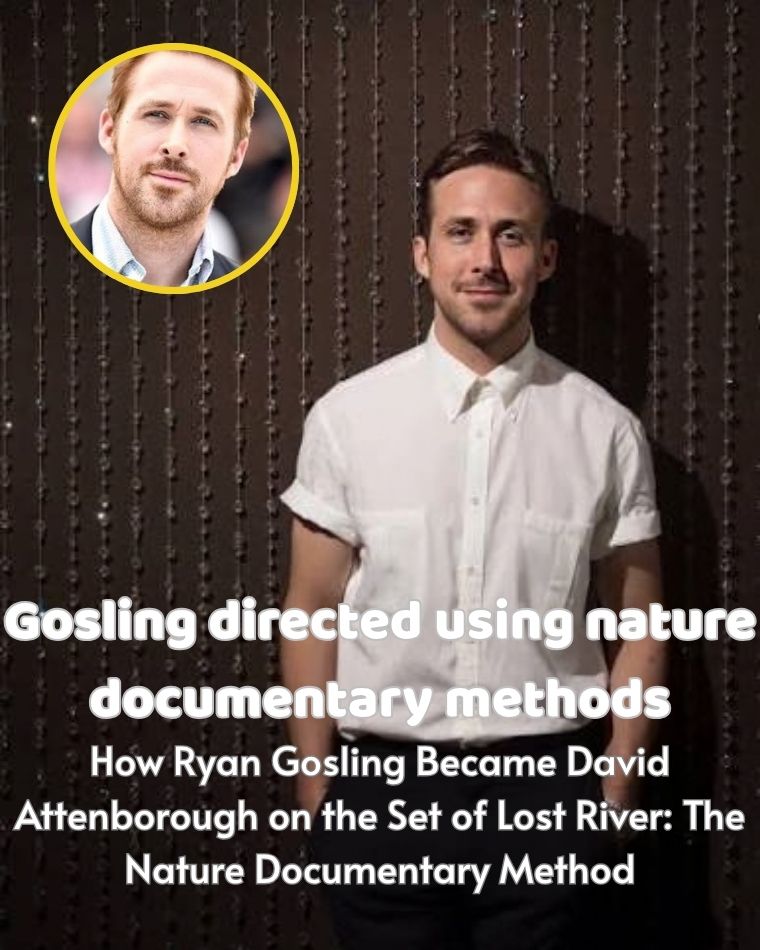
According to Far Out Magazine, Gosling directly referenced legendary naturalist David Attenborough when summarizing the mindset across the set.
Gosling explained the collective mentality by stating, “We had become nature photographers”.
This singular comparison reoriented the entire crew from intrusive controllers to silent witnesses.
In wildlife documentarian work, naturalists do not instruct a predatory animal or a nesting bird on when to execute a movement.
Instead, documentarians station their cameras, observe ambient rhythms, and wait for genuine behavior to present itself naturally.
Gosling applied that identical patience to narrative fiction within the decaying, dreamlike urban landscapes of his film.
The camera crew learned to linger in quiet corners without demanding premature climaxes from the cast.
Every frame was approached with the attentiveness typically reserved for tracking elusive creatures through dense brush.
The production transformed into an ongoing safari through human emotion and tactile decay.
Natural light, unexpected soundscapes, and peripheral movements became central storytelling components rather than background distractions.
Gosling treated each street corner and dilapidated room as a living, breathing ecosystem possessing its own internal laws.
By stepping out of the conventional director’s chair, he relinquished mechanical authority in favor of organic visual exploration.
The result was an atmosphere where spontaneous accidents became valuable creative discoveries rather than production setbacks.
Cre: Wikimedia Commons — Georges Biard, CC BY-SA 3.0
Redefining the Set Atmosphere for Performers
In conventional studio productions, performers depend on formal calls of “action” and “cut” to demarcate their working hours from personal downtime.
Gosling dismantled these standard boundaries to keep his actors in an uninterrupted state of creative intuition.
Performers were never entirely certain whether the camera was rolling or simply adjusting its lens.
Because the crew operated like unobtrusive wildlife photographers, the physical machinery of filmmaking melted into the background.
This persistent vigilance fostered an environment of total psychological immersion for everyone on location.
Actors did not merely recite pre-written dialogue inside artificial pauses; they inhabited the decaying environment continuously.
Conversations were allowed to trail off into extended silences without an anxious director calling for another immediate take.
Gosling recognized that genuine human hesitation rarely survives excessive rehearsal and rigid scripting.
By watching quietly from behind the camera, he afforded the ensemble cast room to breathe within their fictional skins.
Every glance, sigh, and spontaneous physical gesture was treated as authentic behavioral evidence worthy of preservation.
The cast did not experience the standard pressure to deliver polished dramatic peaks on cue.
Instead, they moved through physical spaces naturally, knowing the camera would capture real instinct whenever it surfaced.
The director’s quiet presence instilled confidence throughout the entire ensemble during extended sequence tracking.
Crew members adapted to Gosling’s patient cadence by keeping equipment adjustments silent and swift.
No harsh technical interruptions were allowed to puncture the delicate atmospheric spell settling over each take.
This deep level of immersion blurred the lines between fictional performance and documentary portraiture.
By treating the cast with the reverence shown to rare wild subjects, Gosling harvested unforced vulnerability across difficult scenes.
The on-set experience became a sustained experiment in collective presence, trust, and unhurried observation.
Connecting the Attenborough Model to Gosling’s Sensibility
Gosling’s affinity for observational direction mirrors his own well-documented screen presence as an actor.
Throughout his celebrated acting career, Gosling has built a reputation for profoundly internalized, minimalist performances.
He has long understood that subtext and quiet stillness often convey far more truth than performative theatricality.
When an actor relies on nuance rather than overt exposition, sudden emotional shifts carry immense narrative power.
Transferring that specific sensitivity to the director’s chair was a logical evolution of his artistic temperament.
Gosling understands from years in front of the lens how deeply invasive conventional film gear can feel to a performer.
Heavy lighting rigs, boom microphones, and hovering crew members often suffocate the fragile impulse of a delicate scene.
Adopting the philosophy of a nature photographer allowed him to protect his collaborators from that mechanical intrusion.
He extended the same protective space to his cast that he frequently sought as an introspective leading man.
Nature documentaries do not rush their subjects toward convenient, rapid conclusions.
A classic David Attenborough production spends long, patient minutes lingering on natural cycles before an event unfolds.
Gosling embraced that exact structural stillness while crafting the pacing and texture of Lost River.
He trusted audiences to watch, absorb, and interpret unspoken interactions within the frame.
The camera acted as a curious, detached observer rather than a manipulative narrator forcing specific reactions.
This method demonstrated Gosling’s profound humility toward the visual medium itself.
He refused to view directing as an exercise in imposing ego upon raw material.
Filmmaking became a practice of patient listening and watchful attention.
His artistic sensibility found its clearest expression not in technical control, but in empathetic surrender to the moment.
Reframing Mixed Reception as Bold Artistic Intent
When Lost River premiered on the international festival circuit in 2014, critical reactions were fiercely polarized.
Many traditional commentators struggled with the film’s unconventional narrative momentum and dreamlike pacing.
Mainstream expectations for high-profile actor-turned-director projects typically lean toward accessible genre storytelling.
Instead, Gosling delivered a fragmented, atmospheric meditation steeped in visual poetry and sensory impressionism.
Evaluated through the lens of classical three-act narrative construction, the film puzzled conventional reviewers.
However, viewing the work through Gosling’s stated “nature photographer” methodology reframes its entire creative architecture.
The project was never designed to operate as a tightly wound, mechanical Hollywood machine.
Its deliberate, unhurried pacing was a direct, intentional consequence of patient documentary observation.
What some critics characterized as lack of conventional narrative drive was actually an exercise in atmospheric discipline.
Gosling was not fumbling with storytelling basics; he was deliberately prioritizing environment and behavior over plot velocity.
The film lingered on peeling wallpaper, flickering neon signs, and overgrown weeds because those elements formed the habitat.
Just as a nature documentary values the forest floor as much as the apex predator, Gosling valued texture as much as dialogue.
The dreamlike cadence resulted directly from allowing scenes to develop at their own internal speed.
Revisiting the production through this philosophical framework illuminates the director’s genuine artistic bravery.
Gosling deliberately stepped away from commercial safety to pursue an uncompromising, experimental aesthetic.
He refused to compromise his observational curiosity simply to appease standard festival consensus.
Artistic value often lies in the integrity of the methodology rather than universal commercial acclaim.
Seen from this perspective, Lost River stands as a focused exercise in visual anthropology.
The critical divide confirms that Gosling succeeded in creating something singular, challenging, and unformulaic.
The Evolution of Gosling as an Authorial Visionary
Gosling’s bold conceptual experiments on Lost River revealed unexpected dimensions of his artistic identity.
The project demonstrated that his creative instincts extend far beyond interpreting a single character’s emotional arc.
He approached cinema with the wide, encompassing curiosity of an authorial world-builder.
Rather than relying on his immense personal celebrity to sell a conventional narrative, he hid behind the lens.
He placed his faith entirely in mood, environmental resonance, and unforced human interaction.
This creative willingness to take radical aesthetic risks distinguished him from typical movie star filmmakers.
Many actors who transition to directing replicate safe, performance-driven studio dramas with predictable visuals.
Gosling chose instead to treat the medium as a laboratory for raw sensory and behavioral experimentation.
His fascination with documentary techniques showcased a deep respect for cinematic reality.
Even within an exaggerated, fable-like aesthetic, he chased authentic behavioral truth.
The “Attenborough method” demanded rigorous personal discipline and restraint from behind the monitor.
It required the director to suppress the urge to micro-manage every line reading or actor movement.
True directorial confidence often reveals itself through what an artist chooses not to control.
By granting his cast and crew genuine autonomy within the frame, Gosling fostered pure creative spontaneity.
This hands-off, observational stance established him as an intuitive, artistically ambitious cinematic voice.
It proved that his understanding of film language was rooted in patient contemplation rather than aggressive showmanship.
The experience cemented an authorial identity grounded in observation, atmospheric depth, and visual texture.
His work on the film challenged established dogmas surrounding narrative pacing and scene construction.
Ultimately, Gosling proved that the quietest observer behind the camera often uncovers the most profound discoveries.
Patience Over Precision: The Broader Creative Lesson
The documentary mindset that guided Lost River carries enduring creative implications for modern cinema.
Contemporary filmmaking often suffers from an obsession with absolute technical perfection and clinical control.
Digital cameras and computer-assisted editing suites permit filmmakers to manipulate every single pixel of an image.
Yet this relentless pursuit of technical control frequently strips a project of its organic soul.
When every element is micromanaged, serendipity and natural human instinct are accidentally engineered out of the frame.
Gosling’s nature photography philosophy represents a potent antidote to that sterilized production mindset.
He demonstrated that imperfection, hesitation, and ambient silence are vital components of cinematic truth.
Allowing an environment to dictate its own rhythm produces textures that no rigid storyboard can invent.
Creative discovery requires an artist to sit comfortably with ambiguity and unexpected developments.
Wildlife photographers understand that weeks of uneventful waiting are necessary to capture one transformative image.
Gosling applied that profound humility to fictional dramatic storytelling with remarkable philosophical consistency.
He showed that giving actors space to exist without constant correction unlocks rare, unrepeatable magic.
The film industry frequently prioritizes speed, commercial predictability, and mechanical efficiency over artistic exploration.
Against that industrial backdrop, an observational, patient directing method feels refreshingly radical.
It reminds storytellers that the world in front of the lens is constantly generating its own poetry.
A director’s primary responsibility is often simply remaining quiet enough to notice it unfold.
Watching, waiting, and capturing life as it naturally transpires remains the highest goal of the observational arts.
Gosling’s brief transformation into a cinematic naturalist offers a timeless masterclass in creative patience.
The lasting legacy of his directorial debut rests on this unwavering respect for the spontaneous wildness of human expression.
Để lại một phản hồi