Daniel Radcliffe’s journey from the world’s most recognizable boy wizard to an accomplished, genre-defying character actor is an extraordinary case study in professional reinvention.
Rather than chasing blockbuster security or repeating familiar formulas, Radcliffe systematically dismantled his childhood image through audacious, high-risk artistic gambles.
By analyzing the five critical turning points across his career, it becomes clear that his longevity is the result of deliberate strategy, uncompromising discipline, and an enduring commitment to craft.
Landing the Boy Who Lived: The Transformative Double-Edged Foundation
When eleven-year-old Daniel Radcliffe was cast as the lead in Harry Potter and the Sorcerer’s Stone, his life transformed overnight into a global cultural phenomenon.
The adaptation of J.K. Rowling’s literary juggernaut placed the weight of an unprecedented multi-billion-dollar cinematic franchise squarely on the shoulders of a young child.
For an entire decade across eight monumental films, Radcliffe lived under intense international scrutiny while mastering the rigorous mechanics of large-scale film sets.
Working alongside titans of British acting including Maggie Smith, Alan Rickman, and Michael Gambon provided him with an incomparable practical education in performance.
Yet childhood stardom of that magnitude almost universally functions as an artistic cage in modern entertainment history.
Many former child actors find themselves permanently typecast, trapped forever in the amber of the single character that introduced them to the world.
The sheer commercial dominance of the Wizarding World risked suffocating any individual artistic identity before Radcliffe could even reach adulthood.
Had he succumbed to the traditional path of least resistance, he might have spent his late teens preserving a polished, risk-averse public persona.
Instead, Radcliffe treated the franchise not as a permanent home, but as an intensive creative conservatory that gave him the foundation to explore deeper artistic territory.
The ultimate gain of the Harry Potter era was complete creative autonomy, providing him with a platform that very few working actors ever achieve.
The underlying danger, however, was equally profound: the real risk of never being seen as anything other than Harry Potter by critics and audiences alike.
Recognizing that hazard early on, Radcliffe made the calculated choice to begin subverting expectations before the film series had even concluded.
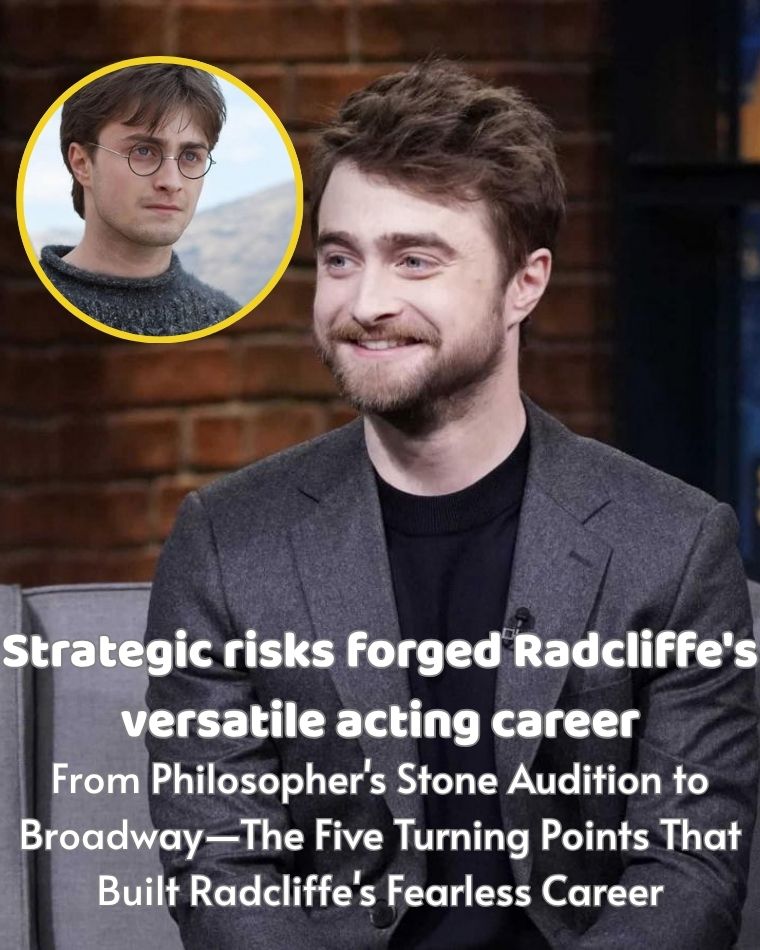
Cre: Wikimedia Commons
Stepping onto Broadway in Equus: Breaking the Child-Star Mold
In 2007, while still actively headlining the Harry Potter franchise, seventeen-year-old Daniel Radcliffe accepted the starring role in Peter Shaffer’s psychological drama Equus on the West End.
The production, which later transferred to Broadway in 2008, required him to portray Alan Strang, a deeply disturbed stable boy with a religious fixation on horses.
The part demanded raw emotional vulnerability, complex psychological anguish, and prolonged full-frontal stage nudity.
For a teen actor whose primary audience consisted of families and young readers, this choice represented an enormous professional gamble.
Pundits and media outlets questioned whether the move was a reckless publicity stunt that would tarnish his squeaky-clean cinematic franchise.
A disastrous theatrical debut could have permanently compromised his credibility as an adult actor before his film commitments were even finished.
Yet Radcliffe approached the demanding stage production with uncompromising discipline and relentless technical preparation.
Night after night, he delivered a ferociously committed, critically acclaimed performance that shocked skeptics and silenced cynical commentary.
The gambit paid off immediately by demonstrating to the global theatre community that he possessed genuine stage presence and raw emotional power.
He proved conclusively that he was not merely a charming screen presence directed by committee, but an actor capable of carrying high-stakes classical drama.
Equus established the foundational blueprint for Radcliffe’s entire post-franchise philosophy: run directly toward the projects that feel truly terrifying.
By shedding his adolescent persona under the unforgiving lights of live theatre, he earned the respect of veteran stage peers and serious drama critics.
This decisive shift proved that he was ready to dismantle his teen-idol legacy in pursuit of artistic truth.
Swiss Army Man: Embracing Surrealism and Absolute Originality
Following the conclusion of the Harry Potter saga, Radcliffe faced an industry eager to cast him as a conventional leading man in mid-budget studio films.
Rather than pursuing conventional romantic comedies or standard action vehicles, he sought out scripts with radical, idiosyncratic visions.
That deliberate quest culminated in his starring role in the Daniels’ 2016 indie feature Swiss Army Man.
In the film, Radcliffe played Manny, a flatulent corpse that washes ashore on a deserted island and is utilized by a suicidal man as a multipurpose survival tool.
On paper, the premise sounded completely absurd, risking outright ridicule and severe critical dismissal upon its festival debut.
When the movie premiered at the Sundance Film Festival, several audience members reportedly walked out within the opening minutes.
Committing to play a talking, flatulent corpse required an utter absence of vanity that few established Hollywood stars would ever dare exhibit.
Radcliffe risked alienating mainstream studio executives who favored safe, commercial properties over eccentric independent experiments.
However, beneath the film’s surreal bathroom humor lay an emotionally poignant exploration of loneliness, shame, and human connection.
Radcliffe threw himself into the physicality of the role with astonishing precision, playing the character with remarkable tenderness and deadpan sincerity.
The film developed a passionate cult following and garnered widespread acclaim for its boundless creativity and emotional depth.
By choosing Swiss Army Man, Radcliffe sent an unmistakable signal to visionary directors worldwide that no concept was too weird for him.
The critical success of the film established him as a daring character actor who prioritized singular authorial voice above commercial palatability.
It cemented his reputation as an adventurous collaborator eager to support original cinematic storytelling.
Merrily We Roll Along: Artistic Commitment and the Twenty-Year Horizon
Radcliffe’s enduring dedication to the theatrical stage reached a triumphant pinnacle with Stephen Sondheim’s musical Merrily We Roll Along.
Taking on the demanding role of lyricist and playwright Charley Kringas, Radcliffe confronted one of the most notoriously difficult scores in modern musical theatre.
The signature song “Franklin Shepard, Inc.” requires an actor to execute a dizzying, hyper-verbal nervous breakdown in precise rhythm.
Radcliffe tackled the vocal and dramatic challenges with razor-sharp precision, anchoring the production’s emotional core alongside Jonathan Groff and Lindsay Mendez.
The Broadway revival became an enormous critical and commercial sensation, transforming Sondheim’s historically misunderstood musical into a celebrated triumph.
At the 77th Tony Awards in 2024, Radcliffe was awarded Best Performance by an Actor in a Featured Role in a Musical.
The Tony victory stood as a definitive validation of his decades-long dedication to theatrical craft over superficial stardom.
Yet Radcliffe’s involvement with Merrily We Roll Along also intersected with an extraordinary cinematic endeavor led by director Richard Linklater.
Linklater embarked on an ambitious film adaptation of the musical, filming sections intermittently over a twenty-year timeframe to mirror the characters’ real aging.
Committing to a two-decade production schedule is an exceptional rarity in an industry governed by immediate commercial returns.
The risk of locking oneself into a generational creative schedule includes creative fatigue, unpredictable scheduling conflicts, and artistic evolution over decades.
Yet the artistic upside is historic: participating in a landmark piece of durational cinema that explores time, friendship, and art like nothing before.
By aligning his career with long-term artistic masterworks, Radcliffe proved that his artistic vision is measured in decades rather than opening weekends.
Subverting Comedy and Playing Weird Al: The Character Actor Reborn
In recent years, Radcliffe has leaned heavily into eccentric character work and deadpan comedic roles rather than conventional Hollywood leading-man vehicles.
Nowhere was this fearless comedic instinct clearer than in his portrayal of parody icon “Weird Al” Yankovic in the satirical biopic Weird: The Al Yankovic Story.
The film deliberately abandoned conventional biographical realism in favor of a completely absurd, hyper-dramatic spoof of music industry clichés.
Radcliffe played Yankovic not as an ironic gag, but with an intense, dead-serious dramatic gravity that heightened the film’s satirical brilliance.
He transformed physically, donning a frizzy wig, a mustache, and accordion gear while radiating wild, unhinged rock-star energy.
The gamble was whether mainstream viewers would embrace a totally fictionalized, surreal farce masquerading as a celebrity biopic.
Had Radcliffe played the role with a knowing wink to the camera, the entire satirical mechanism would have collapsed into self-indulgence.
Instead, his ferocious commitment turned the movie into a critical triumph, earning the Emmy Award for Outstanding Television Movie.
This performance underscored how comfortably Radcliffe has settled into the space of a transformative character actor.
From his recurring comedic roles on television series like Miracle Workers to playing eccentric antagonists in The Lost City, he consistently chooses novelty over prestige conformity.
He avoids vanity at all costs, understanding that the most rewarding roles are often those that require absolute absurdity and vulnerability.
By willingly stepping away from traditional vanity projects, Radcliffe achieved something exceedingly rare among former child prodigies.
He has built a sustainable, endlessly surprising career that keeps critics, collaborators, and global audiences perpetually intrigued by what he will do next.
Each step in his evolution shows that true artistic reinvention requires courage, technical rigor, and a willingness to embrace creative chaos.
The Enduring Legacy of Strategic Risk-Taking
Looking back across Daniel Radcliffe’s trajectory, each major milestone was characterized by an acute willingness to sacrifice comfort for artistic growth.
At eleven, he shouldered the immense weight of an iconic literary figure and turned a studio pressure-cooker into a masterclass in professional discipline.
In his late teens, he braved the intense scrutiny of Broadway in Equus to shatter preconceptions before they could permanently define him.
In young adulthood, he embraced the eccentric absurdity of Swiss Army Man, demonstrating an appetite for boundary-pushing independent storytelling.
On the musical stage and in long-term cinema, his commitment to Merrily We Roll Along demonstrated an enduring patience that culminated in a historic Tony Award.
Finally, his unabashed embrace of satirical comedy in Weird: The Al Yankovic Story affirmed his complete transformation into a fearless, shape-shifting character actor.
The overarching lesson of Radcliffe’s career is that artistic liberation is earned through consistent, courageous choices.
He never allowed the monumental success of his youth to dictate the boundaries of his artistic curiosity.
By refusing to take the path of safe franchise repeats, Radcliffe created a sustainable model for navigating fame with dignity and artistic integrity.
His journey remains an inspiring reminder that genuine longevity in the arts belongs to those who dare to run toward the unknown.
Để lại một phản hồi