The newly released Netflix documentary series “Michael Jackson: The Verdict” has ignited fierce cultural discourse, with critics labeling it a significant challenge to the superstar’s public memory.
Directed by Nick Green and produced by Candle True Stories, the three-part investigative series revisits the musician’s 2005 criminal trial and full acquittal.
The project arrives during an unprecedented commercial renaissance for Jackson’s estate, creating a sharp clash between blockbuster box-office celebration and forensic courtroom re-examination.
A High-Stakes Streaming Premiere Meets a Complex Legacy
The premiere of “Michael Jackson: The Verdict” on Netflix has reopened intense international discussions regarding the legal battles of the late pop icon.
The three-part docuseries, helmed by filmmaker Nick Green and executive produced by Fiona Stourton and David Herman, undertakes a meticulous examination of the 2005 trial in Santa Maria, California.
In its detailed review, The Daily Beast described the production as delivering a “devastating blow to the King of Pop’s legacy.”
The documentary seeks to dissect the courtroom strategy, witness testimonies, and media storm that defined the sensational criminal proceedings over two decades ago.
Unlike fictionalized retrospectives, the series relies heavily on archival footage, investigative reporting, and direct interviews with key legal figures.
Prosecutor Ron Zonen, defense attorney Mark Geragos, and Jackson family legal advisor Brian Oxman participate to provide firsthand legal accounts of the contentious proceedings.
The production also draws upon insights from prominent journalists who covered the Santa Maria proceedings on the ground during 2005.
Viewers are guided through the high-stakes atmosphere that dominated northern Santa Barbara County when the global pop star faced serious felony accusations.
The series concentrates heavily on the claims brought forward by Gavin Arvizo, which formed the foundation of the 2003 indictment and subsequent 2005 trial.
The Daily Beast highlighted the documentary’s uncompromising approach, noting how the presentation presents an uncomfortable, forensic reappraisal of the star’s personal life.
The documentary examines how television news networks turned the trial into an round-the-clock media circus.
Because cameras were banned from inside Judge Rodney Melville’s courtroom, the public received much of its original information through second-hand media commentary.
Director Nick Green aims to reconstruct what actually happened behind those closed courtroom doors.
The docuseries outlines the rigorous cross-examinations conducted by defense attorney Thomas Mesereau during the multi-month trial.
It explores the jury’s intense seven-day deliberations that ultimately led to an acquittal on all counts on June 13, 2005.
Despite that decisive legal victory, the documentary questions whether public perception ever fully aligned with the judicial verdict.
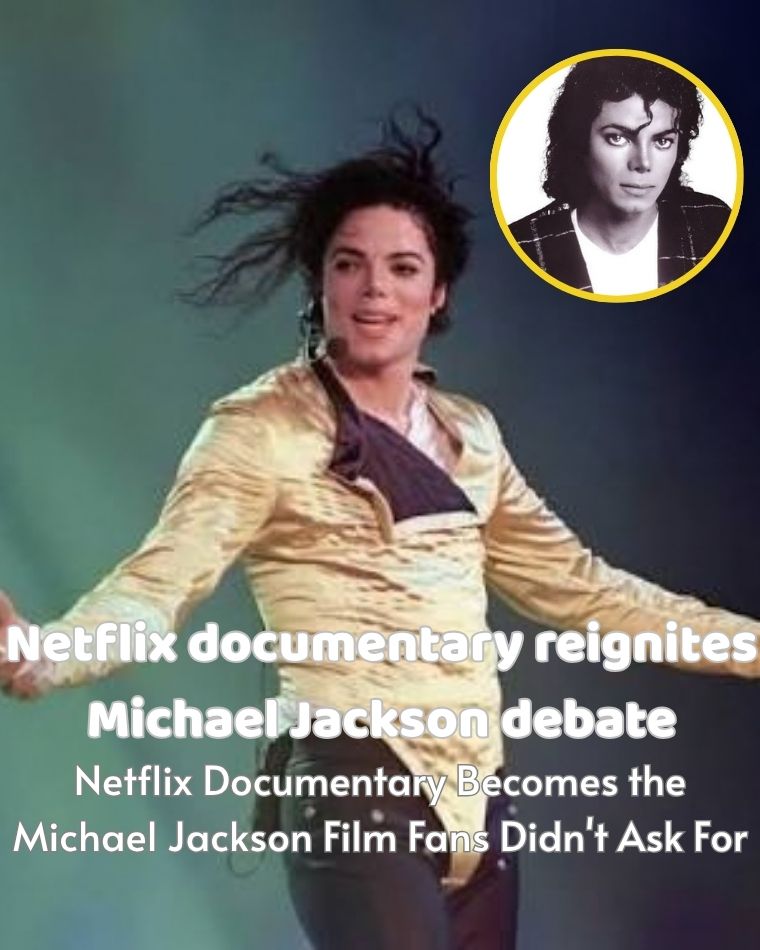
Cre: Wikimedia Commons
The Clash Between Cinema Celebration and Documentary Scrutiny
The timing of the Netflix release stands in striking contrast to recent commercial achievements surrounding the Jackson brand.
The documentary arrived during a landmark year defined by the runaway success of the authorized biographical feature film “Michael.”
Produced with the backing of Jackson’s estate, the Hollywood biopic achieved massive box-office milestones, surpassing expectations across global theatrical markets.
The cinematic dramatization generated over a billion dollars in theatrical ticket sales worldwide.
That box-office triumph triggered a dramatic resurgence of Jackson’s catalog across global music streaming platforms.
Classics such as “Thriller,” “Billie Jean,” and “Beat It” experienced substantial spikes in listenership among younger demographics.
Merchandise sales and themed tribute productions also enjoyed unprecedented retail demand.
For millions of worldwide listeners, the theatrical biopic functioned as a definitive cultural and artistic rehabilitation.
The Lionsgate film focused extensively on Jackson’s exceptional childhood talent, groundbreaking dance innovations, and unparalleled musical achievements.
However, the Hollywood feature notably sidestepped the painful courtroom battles of 2005.
“Michael Jackson: The Verdict” enters that exact narrative void with unsparing documentary realism.
Media analysts note that the juxtaposition of these two screen projects illustrates a split in contemporary pop culture.
On one side stands a lavish, estate-sanctioned celebration designed for stadium-sized communal nostalgia.
On the other side sits a sobering, three-hour journalistic dissection questioning the darker corners of celebrity insulation.
The documentary team at Candle True Stories emphasized their intention to provide forensic clarity rather than celebratory spectacle.
They highlighted that anyone seeking to comprehend the full Jackson phenomenon must confront the legal turmoil that haunted his final decade.
This friction between the musical celebration of “Michael” and the solemn legal inquiry of “The Verdict” has created an undeniable cultural collision.
While theater audiences cheered the singer’s iconic dance routines, streaming viewers were reminded of the devastating allegations that disrupted his career.
Industry observers argue that few deceased figures in modern entertainment evoke such diametrically opposed media portrayals within the exact same release calendar.
The Daily Beast remarked that the stark realism of the documentary serves as a sudden reality check against Hollywood’s idealized biographical storytelling.
Fan Outrage and Objections Over Narrative Framing
The premiere of “Michael Jackson: The Verdict” was greeted with immediate and organized backlash from Jackson’s dedicated global fan base.
Within hours of the series launching on Netflix, organized online fan collectives mobilized campaigns challenging the project’s editorial framing.
Supporters argued that the documentary rehashes previously examined allegations without providing essential exculpatory evidence that led to Jackson’s 2005 acquittal.
Fan researchers pointed to significant inconsistencies in the accusers’ statements that defense counsel successfully exposed during the Santa Maria trial.
They highlighted that the jury heard extensive testimony concerning the financial motivations of the accuser’s family before voting unanimously for acquittal.
Jackson advocates emphasized that the singer endured thorough federal investigations by the FBI that yielded no corroborating criminal evidence.
Online communities flooded social media platforms, accusing the streaming platform of chasing sensationalist viewership at the expense of historical fairness.
Petitions circulated demanding that Netflix highlight the exhaustive trial transcripts and the jury foreman’s public statements following the 2005 verdict.
The 2005 jury foreman had explicitly stated that jurors reviewed all evidence objectively and treated Jackson as an ordinary citizen rather than a protected icon.
Fans expressed deep frustration that mainstream coverage often minimizes the complete judicial exoneration delivered by twelve Californian jurors.
They argued that documentary filmmakers consistently revive allegations against deceased figures who can no longer legally defend their character in court.
The fan community also expressed dismay that the documentary platformed critical voices without matching weight given to Jackson’s surviving defense attorneys.
Supporters noted that Thomas Mesereau’s systematic dismantling of prosecution witnesses remains one of the most successful criminal defenses in American history.
They contended that omitting granular legal transcripts distorts the reality of how thoroughly the prosecution’s narrative collapsed under cross-examination.
The intense fan mobilization underlines the unique loyalty commanded by the late performer more than fifteen years after his passing.
Jackson’s fan base has historically functioned as an active counter-public relations force against critical media projects.
Previous documentary releases, including HBO’s controversial 2019 project “Leaving Neverland,” prompted similar widespread legal and media pushback from the estate and supporters.
The current reaction to “The Verdict” demonstrates that fan engagement has grown even more organized, forensic, and immediate across social channels.
For Jackson’s defenders, the documentary represents an unjust recycling of discredited allegations that ignores established legal fact.
For critics, the fan response reflects an unwillingness to grapple with uncomfortable investigative testimony and complex institutional questions.
The Cultural Battle Over Art Versus Accusation
The emergence of “The Verdict” highlights the unresolved cultural debate surrounding the separation of art from artist.
Michael Jackson remains one of the most commercially significant and stylistically influential artists in human history.
His groundbreaking music videos transformed MTV and established the visual language of modern pop performance.
His philanthropic contributions and record-shattering concert tours set benchmarks that remain unmatched in popular entertainment.
Yet, his exceptional artistic achievements exist alongside recurring accusations that have divided audiences worldwide.
Ethicists and cultural commentators continue to debate whether a creator’s public output can ever truly be untangled from their private biography.
For some listeners, Jackson’s artistic output stands as universal cultural heritage that belongs to global music history rather than any individual.
They argue that millions of listeners find genuine personal comfort, joy, and inspiration in Jackson’s musical catalog.
To cancel or mute that catalog, they suggest, would disregard the collaborative contributions of brilliant producers, musicians, and songwriters like Quincy Jones and Rod Temperton.
Conversely, cultural critics cited by The Daily Beast maintain that continuing to celebrate the artist without reservation normalizes harmful behavioral patterns.
They argue that Jackson’s immense global wealth and fame afforded him extraordinary societal insulation.
According to this perspective, unchecked celebrity worship frequently blinds the public to warning signs surrounding powerful public figures.
The debate becomes particularly intricate when considering Jackson’s status as a pioneering African American artist who broke barrier after barrier in global entertainment.
Scholars emphasize that Jackson faced intense, racially coded scrutiny from sensationalist tabloid outlets throughout the 1980s and 1990s.
His nonconformist lifestyle and eccentric personal habits frequently turned him into a target for invasive media mockery.
Supporters assert that this tabloid hostility fueled an eager willingness among media corporations to exploit any allegation against him.
These conflicting viewpoints reveal why a neutral, consensus understanding of Jackson’s legacy remains fundamentally impossible.
Every new documentary or biographical feature forces audiences to navigate their own moral boundaries as consumers of pop culture.
The question of whether to stream his music, attend tribute concerts, or engage with critical exposés remains an ongoing personal decision for millions.
As streaming catalogs make art universally accessible at the click of a button, these ethical dilemmas only become more immediate.
How Streaming Giants Shape Posthumous Narratives
The release of “The Verdict” illuminates the immense authority global streaming services wield in constructing posthumous celebrity legacies.
Platforms like Netflix, Disney+, Amazon Prime Video, and Apple TV have transformed into primary arbiters of cultural memory.
By commissioning multi-part investigative series, these platforms can instantly reshape public discourse around historical icons.
A documentary released across more than 190 countries reaches tens of millions of viewers within mere days of its premiere.
In its first five days alone, “The Verdict” generated over 17 million views globally, surging into Netflix’s top ten rankings across dozen of territories.
This unprecedented digital distribution scale grants documentary filmmakers tremendous power over historical reputation.
Streaming algorithms actively promote controversial true-crime titles, recognizing that high-profile legal battles generate massive viewer engagement.
Consequently, contentious historical trials are constantly repackaged as episodic streaming entertainment for newer generations.
This algorithmic incentive creates a recurring tension between historical accuracy and sensational entertainment value.
Deceased historical figures cannot sue for defamation under United States law, leaving their legacies uniquely vulnerable to retrospective re-examination.
While estates can issue public condemnations, they possess limited legal mechanisms to prevent streaming corporations from producing critical content.
The Jackson estate has continually defended the late artist’s reputation through corporate statements and licensing initiatives.
However, independent production houses like Candle True Stories operate beyond estate oversight, offering alternative interpretations of historical archives.
Media theorists argue that this dynamic produces an unending narrative tug-of-war in the digital entertainment landscape.
Streaming companies profit from the enduring fascination with Jackson’s complicated personal life and musical genius.
At the same time, platforms benefit commercially from licensing music programming and estate-approved retrospective materials.
This dual monetization strategy ensures that the controversy surrounding Jackson will remain permanently active in the digital entertainment ecosystem.
As documentary platforms search for high-impact content, complex celebrity archives will continue to be mined for investigative multi-part series.
The digital era guarantees that no legacy, no matter how commercially dominant, is ever truly settled or insulated from retrospective critique.
Viewers are consistently invited to function as armchair jurors, re-evaluating historical courtroom proceedings from the comfort of their living rooms.
A Divided Audience and the Enduring King of Pop
Ultimately, “Michael Jackson: The Verdict” illustrates that the world remains profoundly divided over one of its most famous entertainers.
For critical commentators and publications like The Daily Beast, the documentary represents an essential, unflinching re-evaluation of celebrity privilege.
They see the series as a sobering reminder that artistic brilliance does not cancel out the necessity of forensic investigative scrutiny.
From their viewpoint, acknowledging the troubling aspects of Jackson’s biography is crucial for a mature cultural assessment of pop history.
Conversely, for millions of steadfast admirers around the globe, Jackson remains a peerless musical genius and humanitarian who was completely acquitted in a court of law.
Fans maintain that the legal system performed its exhaustive duty in 2005 and found Jackson innocent of every single charge brought against him.
They view ongoing media retrospectives as recurring commercial exploitation of an artist who suffered unprecedented media harassment during his life.
This profound division ensures that every new project concerning Jackson will provoke immediate controversy and fierce debate.
Neither the billion-dollar box-office triumph of the biopic nor the sobering revelations of the Netflix documentary will entirely erase the other perspective.
Instead, both narratives will continue to coexist alongside one another in modern popular culture.
Jackson’s peerless artistic contributions ensure that his music will continue to echo across airwaves, dance floors, and concert halls worldwide.
Simultaneously, the persistent shadows of his controversial life will remain subject to periodic investigative examination.
“The Verdict” does not provide definitive historical closure, nor does it succeed in erasing Jackson’s unmatched artistic achievements from global history.
Rather, the documentary serves as a potent testament to the enduring power and inescapable complexity of Michael Jackson’s monumental legacy.
As generations discover his work and confront his history, the King of Pop remains an endlessly fascinating, tragic, and polarizing figure of modern civilization.
Để lại một phản hồi